National Pension Crisis Coming Storm for Hospitals

http://www.healthleadersmedia.com/finance/national-pension-crisis-coming-storm-hospitals?utm_source=silverpop&utm_medium=email&utm_campaign=20180525_HLM_BestOf%20(1)&spMailingID=13577394&spUserID=MTY3ODg4NTg1MzQ4S0&spJobID=1402234630&spReportId=MTQwMjIzNDYzMAS2#

Image result for cartoon pension funding shortfall


Healthcare organizations are feeling the effects of the national shortfall of $645 billion in pension liabilities and are pursuing the ‘least bad option’ for handling the problem.

The nationwide pension crisis has organizations scrambling to properly fund employee’ retirement packages and represents a self-inflicted dilemma that will have a dramatic impact on the healthcare industry without a clear solution.

Given that healthcare organizations typically operate in low-interest environments on thin margins, hospitals are slated to struggle as much as any organization under new federal accounting rules.

This year is a turning point for pension plans, as reduced corporate deduction rates from the tax reform bill passed late last year come into effect, as well as new rules set by the Governmental Accounting Standards Board, which establish reporting requirements for governments regarding healthcare liabilities.

As aging baby boomers get closer to receiving pension benefits, healthcare liabilities are projected to rise, culminating in an estimated shortfall of $645 billion, according to Pew Charitable Trusts.

Yuri Nisenzon, ASA, EA, MAAA, FCA, assistant vice president at Lewis & Ellis, based in Allen, Texas, told HealthLeaders Media that the federal government and health systems must work to align pension contributions to post-retirement income.

“A lot of people realize that the retirement situation in our country is not great,” Nisenzon said. “The main vehicle for retirement are defined contribution plans, 401(k) plans, and there’s some easy math to show that people are not going to have enough income at retirement based on the average 401(k) balance and people living longer.”

What can be done?

As hospital CFOs consider redesigning pension packages for the future, healthcare organizations are relatively hamstrung. The new GAAP rules have discontinued the practice of delaying how healthcare liabilities are recorded, instead requiring them to be listed on an organization’s balance sheet.

Brian Argo, chief financial officer at Conway Medical Center(CMC) in Conway, South Carolina, told HealthLeaders Media that health systems with active pension plans are “by far in the minority,” adding that they are “all but extinct” in the southeast. This realization among hospital CFOs has forced them to look for solutions, even if they are imperfect approaches.

“I think if you look at the auto industry and look at all industries, it’s what is the least bad option,” Argo said. “[Active pension plans] are unsustainable, and the least bad option, in many cases, is freezing the plan and making sure that when you do that you have a funding scenario in place where you can get it funded to 100% so you can meet that liability.”

One idea floated within the industry as a potential solution is encouraging older employees to retire while recruiting a younger workforce and enrolling them in a defined contribution plan. However, Argo said hospital executives can’t fully mitigate liabilities by shifting to a younger workforce because of the sizable, immediate cash costs for retiring employees.

Argo said the few hospitals remaining with defined benefits plans have started to reduce benefits as a cost-cutting measure, a move that often significantly impacts employees when hospital leadership reduces cost of living expenses and limits spousal benefits.

Another reason health systems have struggled to adequately address the crisis is the tax reform law passed late last year, which reduced the corporate deduction rate from 39% to 21%. Usually hospitals properly fund pension plans in a strong economy, according to Nisenzon, but since the Great Recession pensions have been critically underfunded.

Now, funding is still difficult because hospital CFOs have other priorities to address with limited funds, according to Argo, such as complying with new regulations promoting value-based care, investments in facility infrastructure, and equipment upgrades.

Why do pensions matter?

Pension plans are critical to talent recruitment for hospitals since physicians need assurance that when they switch systems their benefits will follow them, according to Nisenzon. Another incentive for hospitals to maintain pension plans is to retain their best talent after a merger with another organization.

Defined benefit plans, where organizations calculate employee compensation for retirement based on salary and years of employment, also allow organizations to increase their tax deductions, which has made the plan popular with smaller physician groups, according to Nisenzon.

Competitive compensation packages have a place in hospital recruitment efforts, though clinical personnel are “not favorable” for employers, according to Nisenzon, since they consist of older, highly paid doctors who must be salaried appropriately.

This has created another unintended problem for health systems that employ workers who have paid into defined benefits plans for decades.

Argo said that for employees who have worked at the same system for 30 years, they can essentially “double dip” on their salary and defined benefits pensions, creating a fiscal challenge for the hospital.

Pensions in deep freeze

In conversations with fellow hospital CFOs, Argo said most other health systems have continued to focus on material changes to pension plans, addressing growing liabilities by freezing plans, and moving toward defined contribution plans.

Argo said CMC has begun offering defined contribution plans to new hires, such as 401(k) and 403(b) plans. These allocate 5% of an employee’s annual salary into a money market account, which the hospital is not liable for since it is a private, individual account.

Nisenzon said hospital leadership has increasingly embraced defined contribution plans because they minimize market-based investment risks for the organization and provide participants with transparency regarding the balance of their benefits.

While most systems have frozen defined benefits plans to stem fiscal losses and mitigate further risk, Nisenzon said this move has likely agitated hospital employees who work in highly unionized environments and are opposed to a reduced level of expected income after retirement.


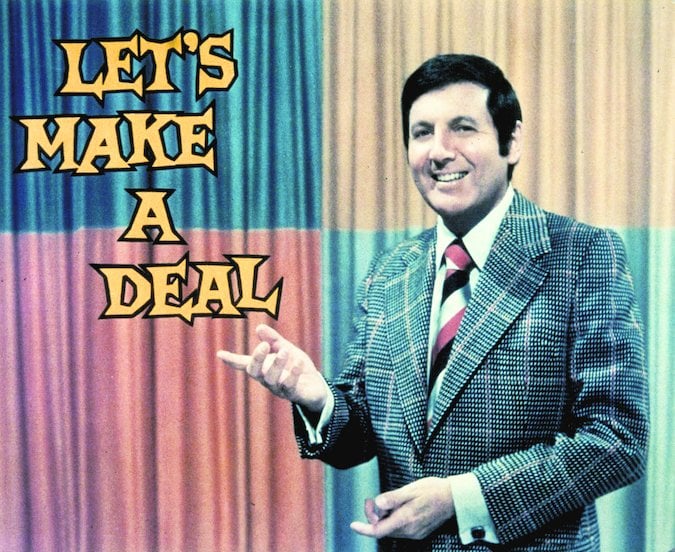
The health care industry is being transformed, one deal at a time

The health care industry is being transformed, one deal at a time

Related image

More than 200 health care deals representing $72.6 billion were announced in the first quarter of 2018, kicking off what will be an active year for deal making in the U.S. Consolidation plans, pent up private equity demand, new entrants, and other market forces will continue to motivate industry players to reflect, reevaluate their business models, and make strategic bets on deals and partnerships.

New business models are emerging. Their common goal is to drive down costs, create value, and compete more effectively. These deals position major players to transition to a system based on value of care versus the volume of services — a system that better aligns with what consumers have come to expect from their health care experience.

Four archetypes of new health care deals are emerging. As I described in a recent PwC Health Research Institute report, they include:

  • Vertical integrators such as Cigna and Express Scripts, which hope to build efficiencies of scale and condense the value chain
  • Employer activists such as Amazon, Berkshire Hathaway, and JPMorgan Chase, who seek a better health care offering for their employees
  • Technology invaders such as Google or Uber aiming to gain better footholds in the industry
  • Health retailers such as Amazon looking to gain market share by better understanding consumer desires and behavior and provide some types of health care directly

If these new models gain steam, disruption will follow.

An arduous journey

Current health care deals have to close in one of the most complex and regulated markets in the world. Before these companies can actually effect change, they will have to create entirely new infrastructures, drive behavior change, and bring on the right leaders to help them navigate twists and turns for years. New entrants — many from fast-paced industries that have long put data analytics and the customer experience at the center of their businesses — will have to endure a grueling pace on the path to change.

The health care industry will transform, but we will likely see more plans on the shelf than in the market. Changes will be slow, but several trends will be more visible this year:

The landscape will keep changing. Announcements of more deals will put pressure on other companies to secure their own acquisitions. Activity begets more activity, and consolidation prompts other companies to acquire — and then likely divest — as they reshape their business. And it’s no secret that private equity has a surplus of cash and its eyes on health care.

Companies will learn to compete differently. As large organizations continue to merge — and they will — small organizations will reposition themselves as more nimble, customer-centric options. They will leverage their size to invest more into building relationships with consumers, winning loyalty points from them along the way.

The customer experience will evolve and drive deals. There is little question among most experts and patients that significant improvements to health services’ customer experience are needed. Health care as an industry has the lowest Net Promoter Score, a tool used to gauge the loyalty of a firm’s customer relationships, of any industry: Health care’s score is 15, compared with tech’s impressive 60. Many companies are looking at ways to use data and technology to improve patients’ experiences.

New models must foster new cultures. For all the reasons it is difficult to enter the health services market, it is even more difficult to create real change that affects the sector’s most important stakeholder: consumers. As companies continue to find ways to deliver more values-based care through acquisition and partnerships, they will also have to explore ways to drive a culture shift. Taking care of doctors so they can spend more time with patients and less time with paperwork and electronic health records, and empowering consumers with the right tools and information to actively participate in their own care, all have distinct roles in the future health economy.

The health services industry can expect to see steady deal making in what will prove to be an exciting time. But amidst all the excitement, we will need to remain cautiously optimistic that this increased consolidation will create value, as the system is incredibly nuanced and slow to change. New entrants will need to have endurance and commitment to succeed.


‘What The Health?’ Campaign Promises Kept, Plus ‘Nerd Reports’

https://khn.org/news/podcast-khns-what-the-health-campaign-promises-kept-plus-nerd-reports/

Image result for Podcast: KHN’s ‘What The Health?’ Campaign Promises Kept, Plus ‘Nerd Reports’

President Donald Trump managed to fulfill — at least in part — two separate campaign promises this week.

To the delight of anti-abortion groups, the administration issued proposed rules that would make it difficult if not impossible for Planned Parenthood to continue to participate in Title X, the federal family-planning program. And Congress cleared for Trump’s signature a “right-to-try” bill aimed at making it easier for patients with terminal illnesses to obtain experimental medications.

Also this week, the National Center for Health Statistics and the Congressional Budget Office issued reports about Americans both with and without health insurance and the cost of subsidizing health insurance to the federal government.

And May’s “Bill of the Month” installment features some very expensive orthopedic screws.

This week’s panelists for KHN’s “What the Health?” are Julie Rovner of Kaiser Health News, Margot Sanger-Katz of The New York Times, Sarah Kliff of Politico and Alice Ollstein of Talking Points Memo.

Among the takeaways from this week’s podcast:

  • The Trump administration’s proposed rule to cut Title X reproductive health funding for groups that perform abortions was designed to meet demands from the president’s religious supporters, but it could backfire by mobilizing liberal voters.
  • The changes being considered might also open the door for some religious-based groups that don’t support abortion — or perhaps even contraception — to get federal Title X funding.
  • Conservatives’ campaign to get a “right-to-try” bill through Congress has been driven in large part by individual patient stories.
  • New data released by the Centers for Disease Control and Prevention this week shows the uninsured rate did not grow in 2017, despite a number of changes that the Trump administration made to the marketplace and federal promotion of it.

Plus, for “extra credit,” the panelists recommend their favorite health stories of the week they think you should read, too.