AHA report: Hospitals spend almost $3 trillion, support more than 16 million jobs

http://www.healthcarefinancenews.com/news/aha-report-hospitals-spend-almost-3-trillion-support-more-16-million-jobs?mkt_tok=eyJpIjoiWkdSaE9UZzRPV0poTW1FeCIsInQiOiJTK1lnZEdEakdOVlZNYWRBSzF5M3o1d3BRWmpQXC8ydVBYN2lFY01mUEQwbnhTVjBIU2NScmdIMWtXcjN3NGpXb1NoSG53clwvXC90TzJ1QWFPRWpoeGFtXC9jSHl4TFwvbDgwMEZYaU1kVmxRa1NCNHloRk9lK0VUZFBkVEVuV1hHTytIIn0%3D

Every dollar a hospital spends yields roughly $2.30 of additional business activity; for every hospital job, another two are supported.

A new report from the American Hospital Association highlights just how much hospitals are driving their local economies, as well the national one, with data showing hospitals directly employ nearly 6 million people and purchase more than $900 billion worth of goods and services from other businesses.

But that’s not all. Enter the ripple effect. The goods and services hospitals buy drive economic vitality throughout their communities, with each hospital job supporting roughly two additional jobs in the community. Every dollar a hospital spends yields roughly $2.30 of additional business activity.

When you incorporate that ripple effects into calculations, the AHA reported hospitals actually support 16.5 million jobs nationwide and almost $3 trillion in economic activity.

“In 2016, America’s hospitals treated 143 million people in their emergency departments, provided 605 million outpatient visits, performed over 27 million surgeries and delivered nearly 4 million babies. Every year, hospitals provide vital health care services like these to hundreds of millions of people in thousands of communities. However, the importance of hospitals to their communities extends far beyond health care,” the AHA said.

When it come to states whose hospitals send the most money into the their economies, it’s no surprise that California is the top spender, with $103 billion in total expenditures. Factor in that ripple effect and the Golden State’s total economic output from its hospitals more than doubles to $230 billion.

New York, Texas, Florida and Pennsylvania rounded out the top five states that are most impacted by hospital expenditures, the report said.

When it comes to a hospitals impact on the state’s labor force, it’s not just about who creates the most. Maine is actually the state most impacted by hospital job creation with total of 38,105 hospital jobs. That hospital workforce makes up a little more than 14 percent of the states overall workforce. Ohio was the second most impacted state, with 298,371 hospital jobs that constitute just almost 13 percent of the state’s workforce.

Minnesota, West Virginia and Massachusetts rounded out the other top five states whose workforce is impacted by hospital jobs. Minnesota’s hospital workforce constitutes a little more than 12 percent of the overall state force, West Virginia’s hospital workforce was nearly 11.7 percent and Massachusetts was almost the same with 11.6 percent.

As both healthcare and economic cornerstones of their communities, the pressure is greater for hospitals leaders to find new ways to add value, maintain financial margins and keep doors open. That is one of the drivers behind the rash of merger and acquisition activity. With ever-increasing regulatory burdens that require more manpower or physician’s time to manage, coupled with the need to make much needed updates in technology, modernize facilities to meet current trends or just maintain appropriate levels of care and accommodation for patients, not to mention staying competitive for hospitals in areas where other systems want to dip into their patient volumes, hospital leaders are eyeing mergers as a means of keeping doors open sot they can continue to support their communities both clinically and economically.


 

Spin Belongs in The Gym, Not The Workplace

Spin Belongs in The Gym, Not The Workplace – 4 Ways to Increase Transparency

Image result for Spin the Truth


I have a motto when it comes to honesty and transparency at work: Spin belongs in the gym, not the workplace.

Spinning the truth is a way of shaping our communications to make our self, the company, or the situation appear better than it is in reality. It’s become so commonplace in the corporate world that many times we don’t even realize we’re doing it. We “spin” by selectively sharing the facts, overemphasizing the positive, minimizing the negative, or avoiding the obvious, all in an attempt to manipulate the perception of others. See if a few of these spins on the truth sound familiar:

  • “We are optimizing and rightsizing our human capital.” (aka, We are eliminating jobs and laying off people.)
  • “Quarterly revenue was adversely affected by marketplace dynamics.” (aka, We failed to hit our revenue goal.)
  • “Brian’s strength as a salesperson is developing creative business deals and client partnerships, as opposed to the tactical elements of his role.” (aka, We can’t or don’t want to hold Brian accountable for his administrative responsibilities as a salesperson because he brings in too much revenue.)

Spinning the truth is one of the most common ways leaders bust trust. It also leads to tremendous inefficiencies because people are confused about roles, they duplicate work, balls get dropped, and people resort to blaming others. Poor morale, cynicism, and political infighting become the norm when honesty and transparency are disregarded.

There are macro-level societal events and trends driving the need for greater transparency in the workplace. We’re all familiar with the digital privacy concerns related to the pervasiveness of technology in our lives, and we’ve witnessed the corporate scandals of blatant deceit and dishonesty that’s contributed to record low levels of trust. The global meltdown of trust in business, government, and other institutions over the last several years has generated cries for more transparency in communications, legislation, and governance. Oddly enough, research has shown that in our attempts to be more transparent, we may actually be suffering an illusion of transparency—the belief that people are perceiving and understanding our motivations, intents, and communications more than they actually are.

But at the individual, team, and organization levels, what can we do to build greater trust, honesty, and transparency? I have four suggestions:

  1. Provide access to information. In the absence of information, people will make up their own version of the truth. This leads to gossip, rumors, and misinformation which results in people questioning leadership decisions and losing focus on the mission at hand. Leaders who share information about themselves and the organization build trust and credibility with their followers. When people are entrusted with all the necessary information to make intelligent business decisions, they are compelled to act responsibly and a culture of accountability can be maintained.
  2. Speak plainly. Avoid double-speak, and reduce or eliminate the use of euphemisms such as right-sizing, optimizing, gaining efficiencies, or other corporate buzzwords. When people hear these words, their BS detectors are automatically activated. They immediately start to parse and interpret your words to decipher what you really mean. Speak plainly in ways that are easily understood. Present complicated data in layman terms and focus on having a dialogue with people, not bombarding them with facts. Our team members are big boys and girls, they can handle the truth. Be a straight-shooter, using healthy doses of compassion and empathy when delivering tough news.
  3. Share criteria for making decisions. When it comes to making tough decisions, I believe that if people know what I know, and understand what I understand, they will be far more likely to reach the same (or similar) conclusion I did. Even if they don’t, they will usually acknowledge the validity of my decision-making criteria and respect that I approached the process with a clear and focused direction. Unfortunately, many times leaders are afraid to share information or their decision-making criteria because they don’t want to be second-guessed or exposed to legal risk. We’ve become so afraid of being sued or publicly criticized that we tend to only share information on a “need to know” basis. Sharing information on your decision-making process will help people buy into your plans rather than second-guessing them.
  4. Create communication forums. A lack of communication is often the root of dysfunction in organizations. The left hand doesn’t know what the right hand is doing and no one seems to take ownership of making sure people are informed. Everyone likes to blame the Corporate Communications department for the lack of information sharing in the organization, but that blame is misplaced. Let me tell you who has the big “R” (responsibility) for communication—YOU! If you’re a leader, it’s your responsibility to create forums to share information with your team. Ultimately, this starts at the top. A President or CEO cannot delegate communications to some other function. It’s the top dog’s responsibility to ensure alignment all throughout the organization and the only way that starts is to frequently and openly communicate. The forums for communication are only limited by your imagination: town hall meetings, email updates, newsletters, video messages, department meetings, lunch gatherings, and team off-site events are just a few examples.

Spin is a great activity for the gym and it keeps you in fantastic shape. However, in the workplace, spin is deadly to your health as a leader. It leads to low trust, poor morale, and cynicism in your team. Keep spin in the gym and out of the workplace.


A Long Road to Care for Rural Californians

A Long Road to Care for Rural Californians

Cramped rural hospital in Happy Valley California

In the northeast corner of California, nearly kissing Nevada and Oregon, lies Surprise Valley. At approximately 70 miles long, the valley is home to 1,232 people, which works out to about two people per square mile. Services are sparse: The Chamber of Commerce website lists two grocery stores, one insurance agency, and one hospital with an emergency room to provide care to its residents.

Essential CoverageThat hospital, Surprise Valley Community Hospital, is a vital institution, but it is bankrupt. Barbara Feder Ostrov of Kaiser Health News reports that years of mismanagement caught up to the hospital in 2017. By the time state inspectors arrived that June, the hospital was in a state of disarray — crushed by debt, it had only one acute care bed and a chief administrator who was MIA. Residents of Surprise Valley were torn between keeping it open and shuttering it even though the nearest hospital with an emergency room is 25 miles away on the other side of a mountain pass. In the June 5 California election, county voters chose to sell the hospital to an out-of-state entrepreneur rather than risk the hospital’s closure.

Surprise Valley isn’t alone in its lack of access to health care. Since 2010, 83 rural US hospitals have closed, Michael Graff writes in the Guardian. For residents of rural areas, the closure of the local hospital can cut off a lifeline. When Portia Gibbs of Belhaven, North Carolina, had a heart attack in 2014, her husband, Barry, had to choose between driving her 60 miles east to a hospital in Nags Head or 70 miles west to a hospital in the town of Washington. Portia never made it to a hospital.

It’s difficult to attract physicians and hospitals to rural areas, where wages and reimbursement rates tend to be lower. “What happens is if you’re a cardiologist you have a tendency to move to the East Coast where you can get paid more for the same procedure,” said US Senator Jerry Moran (R-Kansas) in a meeting with HHS Secretary Alex Azar, according to Modern Healthcare.

Solving the Rural Hospital Puzzle

There is no easy fix for the decline in the number of rural hospitals, but Moran and other senators have proposed fixing the Medicare wage index. The index, which factors into reimbursement of hospitals serving Medicare patients, is a formula that accounts for geographic differences in wages and the cost of living. Some lawmakers contend that the formula penalizes rural hospitals and exacerbates the hospital shortage. Updating the index to increase payments to Medicare providers in underserved areas could draw more physicians to rural hospitals, which could help prevent hospitals from going under.

Some rural hospitals have tried another solution: joining multihospital systems. In California, where 25% of rural hospitals have closed over the past two decades, 19 rural hospitals have combined forces in systems composed of at least two other hospitals. However, our analysis of six of these hospitals showed mixed results for this strategy: The financial status of one rural hospital improved substantially after joining a system, but two others saw lower net income.

Perhaps a more feasible solution to lack of access to care in rural areas can be found in expanding the health care workforce. A study published in Health Affairsfound a growing presence of nurse practitioners (NPs) among rural practices nationwide. From 2008 to 2016, the number of NPs in rural areas increased 43%. Not surprisingly, “states with restricted scopes of practice had lower NP presence and slower growth.” The authors conclude that “adding nurse practitioners is a useful way for practices to align themselves with contemporary efforts to improve access and performance.”

It seems fitting and bittersweet to end this edition of Essential Coverage with our tribute to the late Herrmann Spetzler, the visionary CEO and the heart of Open Door Community Health Centers in rural Humboldt and Del Norte Counties. To underscore his commitment to providing health care in remote locales, he often described himself in meetings and speeches as “Herrmann Spetzler, RURAL.” Spetzler’s unexpected death in March cut short his life’s work to provide health care to everyone, regardless of income or geography. His passing leaves a huge hole in the community he served.


IBM Watson slashed workforce this week

http://www.healthcareitnews.com/news/updated-ibm-watson-slashed-workforce-week?mkt_tok=eyJpIjoiT0dKak9HTXdOek5pT0dNeSIsInQiOiJxb2grV2V6TVJnOHdCaThQZlRLOUxmcEJjTllCcytqVmhzc2JOc25GRWQ3bXBnT25NUTJCekJlTTJMZ1djUWNZQ0tlRmkxVVlFMVNUZjg0WE1tdm9cL3VEN1ZHamFmMTd0Y1Qxa3RLeDdFcmhKSEZZNmM4ZEYyOFUxdzJXeHlWMGQifQ%3D%3D

IBM Watson slashed workforce this week

With one employee describing the layoffs as a cost-cutting measure, estimates say Big Blue may have cut as much as 70 percent of its employees.

After multiple press reports said IBM Watson laid off 50-70 percent of its workforce, a research note published by investment banking company Morgan Stanley on May 31 pushed back on that percentage. IBM, for its part, said the layoffs were small.

“First, any layoffs come on the back of IBM’s reported $613 million restructuring announced on the April 17th earnings call – of which, about $100 million related to the Cognitive business division,” according to Morgan Stanley. “IBM management, as recently as the March 8th, 2018 investor day, discussed aggressive hiring in strategic areas, including Oncology within Watson Health.”

“IBM is continuing to reposition our team to align with our focus on the high-value segments of the IT market,” the company said in a statement. “We’re not discussing specific numbers of employees affected, but it’s a small percentage of our global Watson Health workforce, as we move to more technology-intensive offerings, simplified processes and automation to drive speed.”

That said, the cuts appear to run deep enough to affect some of IBM’s stellar acquisitions: Explorys, Phytel, Merge Healthcare and Truven Health Analytics.

IBM announced at HIMSS15, it would be acquiring population health company Phytel and Cleveland Clinic spinoff Explorys, a cloud-based data analytics vendor. Both Phytel and Explorys would become part of IBM’s new Watson Health unit.

IBM officials also announced then, the establishment of IBM Watson Health, a new business unit that would be headquartered in the Boston area, and a new partnership with leading companies, including Apple, Johnson & Johnson and Medtronic to help optimize consumer and medical devices for data collection, analysis and feedback.

In February 2016, IBM announced it would pay $2.6 billion to acquire Truven Health Analytics for its Watson Health unit. IBM Watson paid $1 billion for Merge in December 2015.

Then in February 2017, MD Anderson, which is part of the University of Texas, ended what had appeared to be a promising partnership with MD Anderson Cancer Center, However, auditors at the University of Texas noted the work cost MD Anderson more than $62 million, without achieveing any of its goals.

With reports suggesting that Big Blue laid off up to 70 percent of the workforce at its Watson Health operation, one former employee wrote on The Layoff.com that

“Watson Health went from 7000 employees to less than 4000 in the last 5 days. All in the Provider business and WH Cloud GONE. The Simpler Provider team will be next month.”


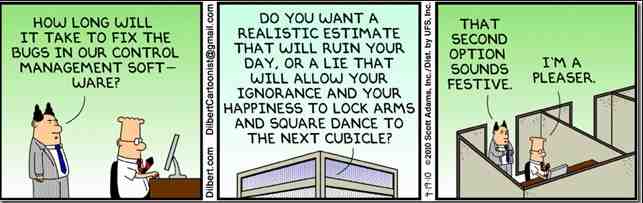
Cartoon – Second Option Sounds Festive

Image result for cartoon out of control leadership