The new year is always an ideal time for healthcare leaders to reflect on the state of our industry and their own organizations, as well as the challenges and opportunities ahead.
As the CEO of a large health system, I always like to reflect on one basic question at the end of each year: Are we staying true to our mission?
Certainly, maintaining an organization’s financial health must always be a priority but we should also never lose sight of our core purpose. In a business like ours that has confronted and endured a global pandemic and immense financial struggles over the past several years, I recognize it’s increasingly difficult to maintain our focus on mission while trying to find ways to pay for rising labor and supply costs, infrastructure improvements needed to remain competitive and other pressures on our day-to-day operations.
After all, the investments we need to make to promote community wellness, mental health, environmental sustainability and health equity receive little or no reimbursement, negatively impacting our financial bottom lines. During an era of unprecedented expansion of Medicaid and Medicare, we get less and less relief from commercial insurers, whose denial and delay tactics for reimbursing medical claims continue to erode the stability of many health systems and hospitals, especially those caring for low-income communities.
Despite those enormous pressures, it’s imperative that we continue to support underserved communities, military veterans struggling with post-traumatic stress, and intervention programs that help deter gun violence and addiction.
The list of other worthy investments goes on and on: charity care to uninsured or underinsured patients who can’t pay their medical bills, funding for emergency services that play such a critical role during public health emergencies, nutritional services for families struggling to put food on the table, programs that combat human trafficking and support women’s health, the LGBTQIA+ community and global health initiatives that aid Ukraine, the Middle East and other countries torn apart by war, famine and natural disasters.
We must also recognize the key role of healthcare providers as educators. School-based mental health programs are saving lives by identifying children exhibiting suicidal behaviors, anger management issues and other troublesome behaviors. School outreach efforts have the added benefit of helping health systems and hospitals address their own labor shortages by introducing young people to career paths that will help shape the future healthcare workforce.
Without a doubt, the “to-do” list of community health initiatives that support our mission is daunting. We can’t do it all alone, but as the largest employers in cities and towns across America, health systems and hospitals can serve as a catalyst to get all sectors of our society — government, businesses, schools, law enforcement, churches, social service groups and other community-based organizations — to recognize that “health” goes far beyond the delivery of medical care.
The health of individuals, families and communities hinges on the prevalence of good-paying jobs, decent and affordable housing, quality education, access to healthy foods, medical care, transportation, clean air and water, low prevalence of crime and illicit drugs, and numerous other variables that typically depend on the zip codes where we live. Those so-called social determinants of health are the driving factors that enable communities and the people who live there to either prosper or struggle, resulting in disparities that are the underlying cause of why so many cities and towns across the country fall into economic decay and become havens for crime and hotbeds for gun violence, which shamefully is now the leading cause of death for children and adolescents.
To revive these underserved communities, many of which are in our own backyards, we have to look at all of the socioeconomic issues they struggle with through the prism of health and use the collective resources of all stakeholders to bring about positive change.
Health is how we work together to build a sense of community. Having a healthy community also requires everyone doing what they can to tone down the political rhetoric and social media-fueled anger that is polarizing our society. Health is bringing back a sense of civility and respect in our public discourse, and promoting the values of honesty, decency and integrity.
As healthcare providers and respected business leaders, we should all make a New Year’s resolution to stay true to our mission and do what we can within our communities to bring oxygen to hope, optimism and a healthier future.
In a matter of months, ChatGPT has radically altered our nation’s views on artificial intelligence—uprooting old assumptions about AI’s limitations and kicking the door wide open for exciting new possibilities.
One aspect of our lives sure to be touched by this rapid acceleration in technology is U.S. healthcare. But the extent to which tech will improve our nation’s health depends on whether regulators embrace the future or cling stubbornly to the past.
Why our minds live in the past
In the 1760s, Scottish inventor James Watt revolutionized the steam engine, marking an extraordinary leap in engineering. But Watt knew that if he wanted to sell his innovation, he needed to convince potential buyers of its unprecedented power. With a stroke of marketing genius, he began telling people that his steam engine could replace 10 cart-pulling horses. People at time immediately understood that a machine with 10 “horsepower” must be a worthy investment. Watt’s sales took off. And his long-since-antiquated meaurement of power remains with us today.
Even now, people struggle to grasp the breakthrough potential of revolutionary innovations. When faced with a new and powerful technology, people feel more comfortable with what they know. Rather than embracing an entirely different mindset, they remain stuck in the past, making it difficult to harness the full potential of future opportunities.
Too often, that’s exactly how U.S. government agencies go about regulating advances in healthcare. In medicine, the consequences of applying 20th-century assumptions to 21st-century innovations prove fatal.
Here are three ways regulators do damage by failing to keep up with the times:
1. Devaluing ‘virtual visits’
Established in 1973 to combat drug abuse, the Drug Enforcement Administration (DEA) now faces an opioid epidemic that claims more than 100,000 lives a year.
One solution to this deadly problem, according to public health advocates, combines modern information technology with an effective form of addiction treatment.
Thanks to the Covid-19 Public Health Emergency (PHE) declaration, telehealth use skyrocketed during the pandemic. Out of necessity, regulators relaxed previous telemedicine restrictions, allowing more patients to access medical services remotely while enabling doctors to prescribe controlled substances, including buprenorphine, via video visits.
For people battling drug addiction, buprenorphine is a “Goldilocks” medication with just enough efficacy to prevent withdrawal yet not enough to result in severe respiratory depression, overdose or death. Research from the National Institutes of Health (NIH) found that buprenorphine improves retention in drug-treatment programs. It has helped thousands of people reclaim their lives.
But because this opiate produces slight euphoria, drug officials worry it could be abused and that telemedicine prescribing will make it easier for bad actors to push buprenorphine onto the black market. Now with the PHE declaration set to expire, the DEA has laid out plans to limit telehealth prescribing of buprenorphine.
The proposed regulations would let doctors prescribe a 30-day course of the drug via telehealth, but would mandate an in-person visit with a doctor for any renewals. The agency believes this will “prevent the online overprescribing of controlled medications that can cause harm.”
The DEA’s assumption that an in-person visit is safer and less corruptible than a virtual visit is outdated and contradicted by clinical research. A recent NIH study, for example, found that overdose deaths involving buprenorphine did not proportionally increase during the pandemic. Likewise, a Harvard study found that telemedicine is as effective as in-person care for opioid use disorder.
Of course, regulators need to monitor the prescribing frequency of controlled substances and conduct audits to weed out fraud. Furthermore, they should demand that prescribing physicians receive proper training and document their patient-education efforts concerning medical risks.
But these requirements should apply to all clinicians, regardless of whether the patient is physically present. After all, abuses can happen as easily and readily in person as online.
The DEA needs to move its mindset into the 21st century because our nation’s outdated approach to addiction treatment isn’t working. More than 100,000 deaths a year prove it.
2. Restricting an unrestrainable new technology
Technologists predict that generative AI, like ChatGPT, will transform American life, drastically altering our economy and workforce. I’m confident it also will transform medicine, giving patients greater (a) access to medical information and (b) control over their own health.
So far, the rate of progress in generative AI has been staggering. Just months ago, the original version of ChatGPT passed the U.S. medical licensing exam, but barely. Weeks ago, Google’s Med-PaLM 2 achieved an impressive 85% on the same exam, placing it in the realm of expert doctors.
With great technological capability comes great fear, especially from U.S. regulators. At the Health Datapalooza conference in February, Food and Drug Administration (FDA) Commissioner Robert M. Califf emphasized his concern when he pointed out that ChatGPT and similar technologies can either aid or exacerbate the challenge of helping patients make informed health decisions.
Worried comments also came from Federal Trade Commission, thanks in part to a letter signed by billionaires like Elon Musk and Steve Wozniak. They posited that the new technology “poses profound risks to society and humanity.” In response, FTC chair Lina Khan pledged to pay close attention to the growing AI industry.
Attempts to regulate generative AI will almost certainly happen and likely soon. But agencies will struggle to accomplish it.
To date, U.S. regulators have evaluated hundreds of AI applications as medical devices or “digital therapeutics.” In 2022, for example, Apple received premarket clearance from the FDA for a new smartwatch feature that lets users know if their heart rhythm shows signs of atrial fibrillation (AFib). For each AI product that undergoes FDA scrutiny, the agency tests the embedded algorithms for effectiveness and safety, similar to a medication.
ChatGPT is different. It’s not a medical device or digital therapy programmed to address a specific or measurable medical problem. And it doesn’t contain a simple algorithm that regulators can evaluate for efficacy and safety. The reality is that any GPT-4 user today can type in a query and receive detailed medical advice in seconds. ChatGPT is a broad facilitator of information, not a narrowly focused, clinical tool. Therefore, it defies the types of analysis regulators traditionally apply.
In that way, ChatGPT is similar to the telephone. Regulators can evaluate the safety of smartphones, measuring how much electromagnetic radiation it gives off or whether the device, itself, poses a fire hazard. But they can’t regulate the safety of how people use it. Friends can and often do give each other terrible advice by phone.
Therefore, aside from blocking ChatGPT outright, there’s no way to stop individuals from asking it for a diagnosis, medication recommendation or help with deciding on alternative medical treatments. And while the technology has been temporarily banned in Italy, that’s unlikely to happen in the United States.
If we want to ensure the safety of ChatGPT, improve health and save lives, government agencies should focus on educating Americans on this technology rather than trying to restrict its usage.
3. Preventing doctors from helping more people
Doctors can apply for a medical license in any state, but the process is time-consuming and laborious. As a result, most physicians are licensed only where they live. That deprives patients in the other 49 states access to their medical expertise.
The reason for this approach dates back 240 years. When the Bill of Rights passed in 1791, the practice of medicine varied greatly by geography. So, states were granted the right to license physicians through their state boards.
In 1910, the Flexner report highlighted widespread failures of medical education and recommended a standard curriculum for all doctors. This process of standardization culminated in 1992 when all U.S. physicians were required to take and pass a set of national medical exams. And yet, 30 years later, fully trained and board-certified doctors still have to apply for a medical license in every state where they wish to practice medicine. Without a second license, a doctor in Chicago can’t provide care to a patient across a state border in Indiana, even if separated by mere miles.
The PHE declaration did allow doctors to provide virtual care to patients in other states. However, with that policy expiring in May, physicians will again face overly restrictive regulations held over from centuries past.
Given the advances in medicine, the availability of technology and growing shortage of skilled clinicians, these regulations are illogical and problematic. Heart attacks, strokes and cancer know no geographic boundaries. With air travel, people can contract medical illnesses far from home. Regulators could safely implement a common national licensing process—assuming states would recognize it and grant a medical license to any doctor without a history of professional impropriety.
But that’s unlikely to happen. The reason is financial. Licensing fees support state medical boards. And state-based restrictions limit competition from out of state, allowing local providers to drive up prices.
To address healthcare’s quality, access and affordability challenges, we need to achieve economies of scale. That would be best done by allowing all doctors in the U.S. to join one care-delivery pool, rather than retaining 50 separate ones.
Doing so would allow for a national mental-health service, giving people in underserved areas access to trained therapists and helping reduce the 46,000 suicides that take place in America each year.
Regulators need to catch up
Medicine is a complex profession in which errors kill people. That’s why we need healthcare regulations. Doctors and nurses need to be well trained, so that life-threatening medications can’t fall into the hands of people who will misuse them.
But when outdated thinking leads to deaths from drug overdoses, prevents patients from improving their own health and limits access to the nation’s best medical expertise, regulators need to recognize the harm they’re doing.
Healthcare is changing as technology races ahead. Regulators need to catch up.
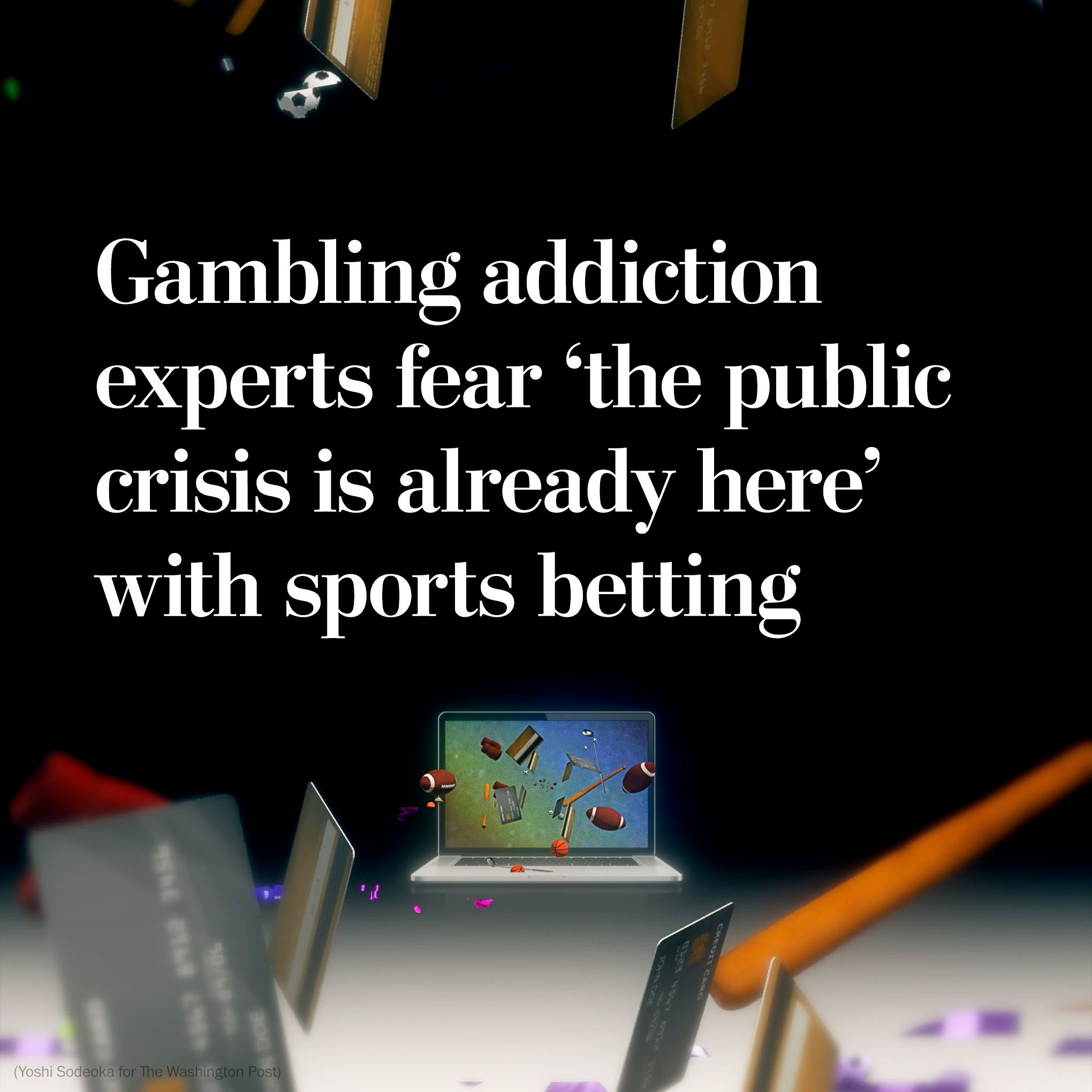
The sports betting market has multiplied tenfold in three years and may have reached $7 billion in 2022. More than half of the nation can now legally gamble on sports. Fifty million Americans are expected to bet on the upcoming Super Bowl.
Five years ago, betting on live games was illegal in most of the United States. A Supreme Court ruling in 2018 removed the ban and transformed the industry. Now, 33 states and the District of Columbia allow wagers on games.
Addiction experts fear a coming national epidemic to rival the opioid crisis.
“Gambling is a very different addiction from drugs or alcohol,” said Lia Nower, a professor and director of the Center for Gambling Studies at Rutgers University. “If I’m drunk or high, at some point my family is going to figure it out. With gambling, I can be sitting with my kids, watching cartoons, and gambling away my house, my car, everything I own, on my mobile phone. How would you know?”
The Supreme Court ruling struck down a federal law that had banned most commercial sport wagering outside Las Vegas. The subsequent spread of legal gambling was stunningly swift.
Lobbyists pampered state lawmakers with parties and promises, predicting millions in new tax dollars. Much of the promised revenue hasn’t reached the states, according to a New York Times investigation.
But gambling dollars have reached the betting operators. The industry reaped $4.3 billion in revenue on $57 billion in wagers in 2021. In the first 11 months of 2022, Americans bet $83 billion on sports and delivered $6.6 billion to betting firms. That figure is 15 times what the sports gambling industry reaped in 2018.
“We have a movement toward expanding what was once considered a sin, what was once considered a vice, and embedding it at every level of American culture, down to kindergarten,” said Timothy Fong, a clinical professor of psychiatry at the Jane and Terry Semel Institute for Neuroscience and Human Behavior at the University of California, Los Angeles.
“Sports gambling market. Ten years ago, those words didn’t exist,” Fong said. “What you have is this massive, exponential expansion of gambling into homes, faster than we can study or monitor it.”
A record 50 million Americans, one adult in five, will bet on Super Bowl LVII, according to an American Gaming Association survey. They will wager $16 billion, twice as much as last year.
Celebrity athletes shill for betting firms on television. Betting firms promote gambling on college campuses. Professional teams court “official mobile sports betting partners.”
“Pete Rose was banned from baseball and blocked from the Hall of Fame because he gambled,” said Nower, of Rutgers. “Now, we’ve got professional ballplayers who are partnering with gambling companies. Now, kids are seeing these things inextricably linked.”
Teams and league owners love sports betting because they “have found that engagement is off the charts among people who are placing bets on games,” said Daniel Barbarisi, author of “Dueling with Kings: High Stakes, Killer Sharks, and the Get-Rich Promise of Daily Fantasy Sports.”
People who bet on games “are not just tuning out if it’s a blowout,” Barbarisi said, because they bet on more than the final score. Fans can place wagers on the margin of victory, the combined point total from both teams and other metrics — such as whether Aaron Judge will hit a home run or Max Scherzer will ring up double-digit strikeouts.
Sports bettors are predominantly male, surveys show. They are mostly under 45. Some are wealthy, but a Rutgers study found that half of sports gamblers earn less than $50,000 a year. Some hail from a distinct subpopulation of Americans who get a thrill from risking money on the Next Big Thing.
“You can kind of draw a through line from the people who were involved in the poker boom in the early 2000s to the daily fantasy thing in the 2010s and then to the crypto thing,” Barbarisi said.
“I don’t know if you can say it’s a small group of guys anymore. It’s a big group of guys.”
Gambling is unquestionably addictive, and arguably immoral: Not for nothing did Las Vegas earn the Sin City sobriquet. Now that betting on sports is broadly legal, however, Americans are warming to the idea.
A poll by The Washington Post and University of Maryland found that 66 percent of Americans approved of legal sports betting in 2022, up from 55 percent in 2017, a year before the Supreme Court decision.
Nower suspects most Americans remain naive about gambling’s ills, much as society once cheerily embraced smoking and drinking. “We are where cigarettes were in the 1940s and alcohol was in the 1950s,” she said.
Most Americans ignored the opioid crisis, a staggering increase in overdose deaths in the 1990s and 2000s, until the government and news media processed the data and tendered a response.
With sports betting, “you have the exact same players you had with opioids,” Fong said. “You have government. You have industry. You have civilians, a lot of whom will benefit from this. And then you have a population who will develop an addiction, let’s say 1, 1.5 percent of the population.”
With legal sports gambling, “It’s a hidden addiction,” Fong said. “You can’t see it, you can’t smell it, you can’t taste it.”
Fong points to one of his patients, a man in his 20s who earns $160,000 a year and owes $40,000 in gambling debts.
“On face value, he can pay his rent, he’s not gonna die,” Fong said. “But he’s miserable. He’s just not happy.”
Over time, researchers say, sports-betting addiction will take a toll in rising rates of bankruptcy, domestic violence, depression, anxiety and suicide.
The federal government takes a keen interest in regulating alcohol, tobacco and drugs. In sports gambling, by contrast, “there is no federal presence at all,” Nower said. “And that is the biggest problem.”
Oversight of the booming sports-betting industry has been mostly left to states.
States that allow legal sports gambling “are not disinterested parties,” the Times wrote in its 2022 investigation. “They collect taxes on gambling, and the more people bet, the more governments get. One result is that states have, in many ways, given gambling companies free rein.”
New Jersey, the state at the heart of the 2018 Supreme Court ruling, offers a rare exception, Nower said.
Gambling regulators in New Jersey studied “the relationship between gambling and problem gambling” before they allowed legal gambling on sports, Nower said. She knows of no other state that took that step.
New Jersey uses gambling data to identify “people who may be exhibiting problem symptoms,” Nower said: Shuffling several payment methods, overdrawing their cards, doubling down on bets, gambling more frequently.
Most other states “are just legalizing this stuff without any idea of the effects,” she said.
The sports betting landscape will remain untamed, researchers say, until governments recognize gambling as a matter of public health.
“I do think there are watershed moments in all public health crises,” Nower said. “Unfortunately, it usually takes some kind of crisis or tragedy to turn the tide.”
Providing close follow-up care from a team of clinical and social workers to the sickest, most vulnerable patients does not reduce hospital readmissions, a new study in the New England Journal of Medicine concludes.
Why it matters: Many doctors and scholars viewed this approach as a promising way to improve care and save money, but it doesn’t appear to do either, Bob writes.
What happened: Unexpected life changes or holes in social programs derailed the lives of many patients who were getting the extra help, and forced them to put their health needs on the back burner.
One patient who participated in the study told the Tradeoffs podcast that he lost contact with his social workers and providers because he was evicted and became homeless — leading to many repeat visits to his hospital.
The bottom line: Giving extra health care support to patients who are struggling with poverty, addiction, hunger and other issues is still the right thing to do.
But that model doesn’t cure the deeper problems within other parts of the country’s social safety net, like housing.
Go deeper: There is an important difference between “social needs” and “social determinants of health,” health economist Austin Frakt wrote last year.




 HENRY KOTULA