Oklahoma Hospital Locks Down Its ICU Following Threats to Staff

Healthcare professionals in Oklahoma who have cared for COVID-19 patients throughout the pandemic are now facing a facility lockdown due to threats made against them.

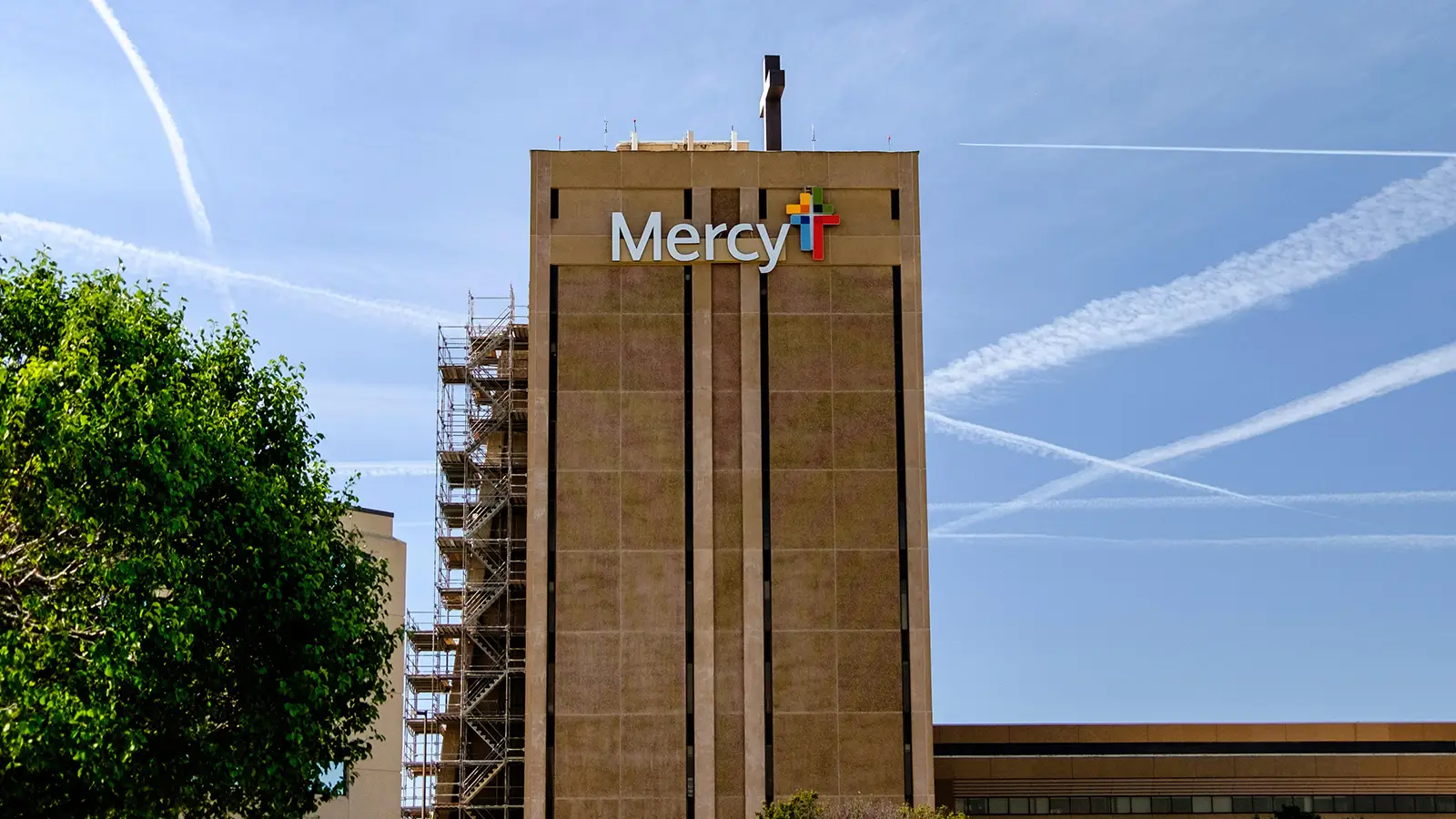
Mercy Hospital Oklahoma City upped its security and locked down its intensive care unit following online threats against the facility and its staff, mostly revolving around COVID treatments and conspiracy theories, Becker’s Hospital Review reported.

Claims made during a recent protest outside the facility and online included that the hospital had a “Fauci protocol,” and that it received government vouchers for using certain medications or treatments for COVID patients, which Mercy Hospital denied, according to Becker’s.

Hospital officials released a statement to staff on Friday, which they shared with MedPage Today. “There is truly nothing more important to us than your safety. We have a team monitoring these online attacks in real time. Every level of our ministry is deeply concerned and committed to doing whatever it takes to protect our co-workers against these baseless attacks,” they said.

“We are proud to serve with you,” they added. “We know you are tired and weary, but please try your best to put these baseless claims out of your mind. Remember, you are called to serve our patients and each other. We are praying for peace and protection over each of you, as well as the protection of all our patients and visitors, while we take action on your behalf.”

Late last week, the hospital filed a restraining order against the founder and director of an Oklahoma church group that has been protesting outside the facility and making threats against its staff online, Oklahoma’s KFOR reported.

In a recent press release, the church group, known as Ekklesia Oklahoma, called Mercy Hospital an “evil Marxist controlled death camp.”

Court documents stated that the founder of the group called one of the hospital’s doctors a “murderer,” noting that members even posted the doctor’s home address online, according to KFOR.

Hospital officials told KFOR that they are thankful for local police departments that are providing extra security for staff and patients.

Other hospitals across the U.S. have also received threats to the safety of healthcare workers in recent days.

Last week, the Massachusetts Medical Society said it was “angered” over the recent neo-Nazi protest outside Brigham and Women’s Hospital in Boston that targeted two doctors whose work focuses on health equity.

Carole Allen, MD, MBA, president of the society, told MedPage Today that the protest outside Brigham and Women’s was a threat to healthcare workers who were just trying to do their jobs, as well as to patients, and was so disruptive that it “could endanger healthcare in general.”

Wisconsin health-care worker ‘intentionally’ spoiled more than 500 coronavirus vaccine doses, hospital says

A hospital employee outside Milwaukee deliberately spoiled more than 500 doses of coronavirus vaccine by removing 57 vials from a pharmacy refrigerator, hospital officials announced Wednesday, as local police said they were investigating the incident with the help of federal authorities.

Initiating an internal review on Monday, hospital officials said they were initially “led to believe” the incident was caused by “inadvertent human error.” The vials were removed Friday and most were discarded Saturday, with only a few still safe to administer, according to an earlier statement from the health system. Each vial has enough for 10 vaccinations but can sit at room temperature for only 12 hours.

Two days later, the employee acknowledged having “intentionally removed the vaccine from refrigeration,” the hospital, Aurora Medical Center in Grafton, Wis., said in a statement late Wednesday.

The employee, who has not been identified, was fired, the hospital said. Its statement did not address the worker’s motives but said “appropriate authorities” were promptly notified.

Wednesday night, police in Grafton, a village of about 12,000 that lies 20 miles north of Milwaukee, said they were investigating along with the FBI and the Food and Drug Administration. In a statement, the local police department said it had learned of the incident from security services at Aurora Health Care’s corporate office in Milwaukee. The system serves eastern Wisconsin and northern Illinois, and includes 15 hospitals and more than 150 clinics.

Leonard Peace, an FBI spokesman in Milwaukee, would not comment on the Bureau’s involvement but said of the episode, “We’re aware of it.” The FDA did not immediately respond to a request for comment.

The tampering will delay inoculation for hundreds of people, Aurora Health officials said, in a state where 3,170 new cases were reported and 40 people died Wednesday of covid-19, the disease caused by the coronavirus, according to The Washington Post’s coronavirus tracker.

“We are more than disappointed that this individual’s actions will result in a delay of more than 500 people receiving the vaccine,” the health system said in a statement.

The Wisconsin incident comes as states continue to grapple with a bumpy rollout of the first doses of the Moderna and Pfizer-BioNTech vaccines, which were approved less than a month ago and prioritized for health-care workers and residents and staff of long-term care facilities. So far, distribution has lagged well behind federal projections, raising doubts about whether the outgoing administration will meet its already revised goal of 20 million vaccines distributed by the end of the year.

As of Wednesday, the Centers for Disease Control and Prevention said 12.4 million doses of the vaccine had been distributed across the United States, but only 2.6 million of those had been administered. (This means that just 1 in 125 Americans has received the first dose of the vaccine.) Trump administration officials have said these numbers lag behind the actual pace of vaccination, which they also vowed would accelerate starting next week.

The Moderna and Pfier-BioNTech vaccines, the first two regimens to gain regulatory approval for emergency use, are two-shot protocols with intricate logistical requirements. Moderna’s vaccine doesn’t require subarctic temperatures, as does the Pfizer product, but it does need to be kept cold. It can be stored at freezer temperatures for six months, the company says, and kept at regular refrigerated conditions for 30 days. It can be maintained at room temperature for only 12 hours, though, and can’t be refrozen once thawed.

Complex storage requirements are among the reasons state officials are imploring providers to administer vaccine quickly once it is received.

In its original statement, Aurora Health said it had successfully vaccinated about 17,000 people over the previous 12 days. Its initial review, it said, had found that the 57 vials were simply not returned to the refrigerator after “temporarily being removed to access other items.”

The hospital apologized, saying, “We are clearly disappointed and regret this happened.”

It is not clear what motive the employee may have had to spoil the vaccine doses. The hospital said it would release more details about its investigation Thursday.

Anthony Fauci’s security is stepped up as doctor and face of U.S. coronavirus response receives threats

https://www.washingtonpost.com/politics/anthony-faucis-security-is-stepped-up-as-doctor-and-face-of-us-coronavirus-response-receives-threats/2020/04/01/ff861a16-744d-11ea-85cb-8670579b863d_story.html?utm_campaign=wp_news_alert_revere&utm_medium=email&utm_source=alert&wpisrc=al_news__alert-hse–alert-national&wpmk=1

Nation's top coronavirus expert Dr. Anthony Fauci forced to beef ...

Anthony S. Fauci, the nation’s top infectious-diseases expert and the face of the U.S. response to the novel coronavirus pandemic, is facing growing threats to his personal safety, prompting the government to step up his security, according to people familiar with the matter.

The concerns include threats as well as unwelcome communications from fervent admirers, according to people with knowledge of deliberations inside the Department of Health and Human Services and the Department of Justice.

Fauci, 79, is the most outspoken member of the administration in favor of sweeping public health guidelines and is among the few officials willing to correct President Trump’s misstatements. Along with Deborah Birx, the coordinator for the White House’s task force, Fauci has encouraged the president to extend the timeline for social-distancing guidelines, presenting him with grim models about the possible toll of the pandemic.

“Now is the time, whenever you’re having an effect, not to take your foot off the accelerator and on the brake, but to just press it down on the accelerator,” he said Tuesday as the White House’s task force made some of those models public, warning of 100,000 to 240,000 deaths in the United States.

The exact nature of the threats against him was not clear. Greater exposure has led to more praise for the doctor but also more criticism.

Fauci has become a public target for some right-wing commentators and bloggers, who exercise influence over parts of the president’s base. As they press for the president to ease restrictions to reinvigorate economic activity, some of these figures have assailed Fauci and questioned his expertise.

Last month, an article depicting him as an agent of the “deep state” gained nearly 25,000 interactions on Facebook — meaning likes, comments and shares — as it was posted to large pro-Trump groups with titles such as “Trump Strong” and “Tampa Bay Trump Club.”

Alex Azar, the HHS secretary, recently grew concerned about Fauci’s safety as his profile rose and he endured more vitriolic criticism online, according to people familiar with the situation. In recent weeks, admirers have also approached Fauci, asking to him sign baseballs, along with other acts of adulation. It was determined that Fauci should have a security detail. Azar also has a security detail because he is in the presidential line of succession.

Asked Wednesday whether he was receiving security protection, Fauci told reporters, “I would have to refer you to HHS [inspector general] on that. I wouldn’t comment.”

The president interjected, saying, “He doesn’t need security. Everybody loves him.”

HHS asked the U.S. Marshals Service to deputize a group of agents in the office of the HHS inspector general to provide protective services for the doctor, according to an official with knowledge of the request.

The U.S. Marshals Service conveyed the request to the deputy attorney general, who has authority over deputations for the purpose of providing protective services, with the recommendation that it be approved, according to the official, who spoke on the condition of anonymity to reveal sensitive plans that the person was not authorized to discuss.

A Justice Department official signed paperwork Tuesday authorizing HHS to provide its own security detail to Fauci, according to an administration official.

An HHS spokesperson declined to discuss details of the doctor’s security but said: “Dr. Fauci is an integral part of the U.S. Government’s response against covid-19. Among other efforts, he is leading the development of a covid-19 vaccine and he regularly appears at White House press briefings and media interviews.”

At the briefings, Fauci, who has advised presidents of both parties as director of the National Institute of Allergy and Infectious Diseases, has spoken authoritatively about the spread of the coronavirus and the sacrifices involved in mitigating its effects.

He has at times corrected the president, in particular when prompted by reporters. After Trump said a covid-19 vaccine would be available in a couple of months, Fauci said it would in fact be available in about a year to a year and a half, at best.

His role has turned him into a hero for some. When he was absent from a briefing last month, followers who had grown accustomed to his frank assessments of the outbreak were alarmed that he might have been sidelined for his forthrightness. Many took to Twitter to ask, “Where is Dr. Fauci?” causing the question to trend on the platform.

He gained viral attention two days later when he placed his hand in front of his face in a gesture of apparent disbelief as Trump referred to the State Department as the “deep state department” from the White House briefing room.

Fauci has also given several interviews in which he has tempered praise for the president with doubts about his pronouncements, including about the viability of anti-malarial drugs as a treatment for the novel coronavirus. Most notably, he told the journal Science that he attempts to guide Trump’s statements but “can’t jump in front of the microphone and push him down.”

These moves have inspired fandom. But they have also drawn scorn from some of the president’s most vocal supporters, even as both men have sought to tamp down the appearance of tension.

“The president was right, and frankly Fauci was wrong,” Lou Dobbs said last week on his show on the Fox Business Network, referring to the use of experimental medicine.

Right-wing news and opinion sites have gone further, launching baseless smears against the doctor that have gained significant traction within pro-Trump communities online.

Outlets such as the Gateway Pundit and American Thinker seized on a 2013 email — released by WikiLeaks as part of a cache of communications hacked by Russian operatives — in which Fauci praised Hillary Clinton’s “stamina and capability” during her testimony as secretary of state before the congressional committee investigating the attacks in Benghazi, Libya.

The headline in the American Thinker referred to Fauci as a “Deep-State ­Hillary Clinton-loving stooge.” The author, Peter Barry Chowka, didn’t respond to requests for comment. When asked about the relevance of Fauci’s emails to his role in advising the White House’s coronavirus response, Jim Hoft, the editor of the Gateway Pundit, said, “I don’t have a problem with more information being shared about the doctor.”

The outlet has continued to criticize Fauci in recent days, saying that by offering new predictions about the possible death toll, Fauci and others were “going to destroy the U.S. economy based on total guesses and hysterical predictions.”

Several senior administration officials said that Trump respects Fauci and that the two generally have a good working relationship. Trump heeded the guidance of Fauci and Birx this week when he announced his administration would extend social-distancing guidelines for another 30 days. Last week, many health officials and experts grew worried when Trump said he hoped to reopen the country by Easter, even as coronavirus cases in the United States continue to rapidly climb.

The immunologist, who graduated first in his class from Cornell’s medical school, has been the director of the National Institute of Allergy and Infectious Diseases since 1984. Between 1983 and 2002, he was the 13th-most-cited scientist among the 2.5 million to 3 million authors worldwide and across all disciplines publishing in scientific journals, according to the Institute for Scientific Information.