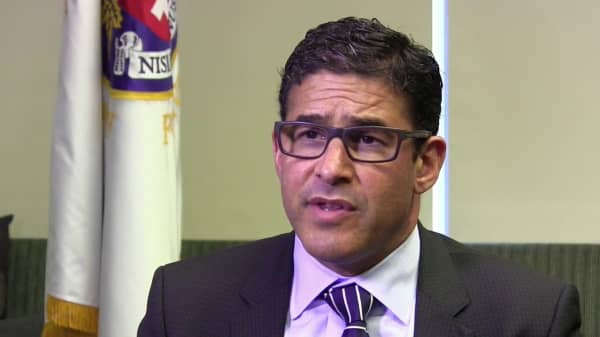
‘Death Certificate Project’ Terrifies California Doctors

https://www.medpagetoday.com/painmanagement/painmanagement/74856?xid=nl_mpt_morningbreak2018-08-31&eun=g885344d0r&utm_source=Sailthru&utm_medium=email&utm_campaign=MorningBreak_083118&utm_term=Morning%20Break%20-%20Active%20Users%20-%20180%20days

Related image

Hundreds threatened with disciplinary action for opioid scripts to patients who overdosed.

Brian Lenzkes, MD, got a letter last December from the Medical Board of California that left him shocked and scared.

The licensing agency told him it had received a “complaint filed against you” regarding a patient who died of a prescription overdose in May 2013 — four and a half years earlier.

In stern bold type, the letter’s second paragraph said the man “died from an overdose of hydrocodone, oxycodone, and zolpidem.” The state’s prescription drug database, CURES(California Controlled Substance Utilization Review and Evaluation System), showed that “Dr. Brian J. Lenzkes had been prescribing long-term excessive amounts of these, including benzos,” and that “it is unknown what conditions the patient suffered from which required such medication.”

The San Diego internist told MedPage Today he’d tried since 2006 to help this complex patient manage pain related to his many problems — so severe they at one point caused him to be admitted to hospice – including diabetic ulcers, congestive heart failure, severe neuropathy, bone infections, and a below-knee amputation, to name a few, he said.

He’d tapered dosages, changed drugs, and tried many other approaches. Though the patient was challenging, he’d “experienced a strong bond” with him, and “he would often bring me homemade barbecue sauce as a thank-you.”

He knew of no complaints about his care of this man. Lenzkes said the patient’s friend told him the man “would have died years earlier if it were not for my encouragement and support.”

If the medical board was after his license, well, the term “witch hunt” crossed Lenzkes’ mind. “I don’t prescribe inappropriately,” he said.

In fact, no patient or family member had filed a complaint against him.

Hundreds threatened

Rather, Lenzkes is one of hundreds of California physicians caught up so far in the medical board’s aggressive “Death Certificate Project,” a program that attempts to stop the epidemic of accidental deaths from prescription opioid overdoses.

The California project takes death certificates in which prescription opioids are listed as a cause, then matches each with the provider — sometimes more than one — who prescribed any controlled substance to that patient within 3 years of death, regardless of whether the particular drug caused the death or whether that doctor prescribed the lethal dose.

At the project’s launch in late 2015, board staff began reviewing 2,694 certificates of death filed in 2012 and 2013 and found 2,256 matches in CURES, showing each provider who wrote an opioid prescription filled by those deceased patients.

Those reports went to medical peer reviewers who, after extensive review, selected 522 prescribers as warranting an investigation of the patients’ files. They included including 450 allopathic physicians against whom the board has opened formal complaints along with 12 osteopathic physicians and 60 nurse practitioners or physician assistants, who were referred to their respective licensing boards. Of the 12 osteopath referrals, seven were closed for insufficient evidence; the other five remain open for investigation.

Of the nearly 450 MDs like Lenzkes who received letters notifying them of a “complaint,” the state Attorney General has filed opioid-related prescribing accusations against nine physicians, Kirchmeyer said. Four of those nine already faced possible disciplinary action on unrelated charges, and saw their accusations amended with new charges regarding opioid prescribing.

For one physician, the accusation referenced deaths of three patients under his care.

The board said 216 cases involving those 450 MDs have now been closed for insufficient evidence or no violation, or the license had already been revoked or surrendered, or the physician had died. As of last week, 38 still await further review of their cases before proceeding; the rest await completion of an investigation.

“Our goal is consumer protection,” the board’s executive director Kimberly Kirchmeyer told MedPage Today. The board wants to “identify physicians who may be inappropriately prescribing to patients and to make sure that those individuals are educated (about opioid guidelines), and where there are violations of the Medical Practices Act, the board takes (disciplinary) action.”

Addressing her board during its quarterly meeting a year ago, Kirchmeyer described the project as an “invaluable” and proactive way to prevent future opioid overdoses by revealing overprescribers — “rather than have to wait for specific complaints to come in,” which are few and far between.

Coroners are required by law to report pathologist findings indicating a death was due to a physician’s gross negligence or incompetence, but the board had received only nine such reports in the prior 2 years, she said.

The board’s project is using death certificates and the CURES database to go beyond the individual fatality and examine a physician’s overall prescribing practices, Kirchmeyer said.

In some cases, investigations triggered by a death certificate identified other, living patients for whom that provider had possibly inappropriately prescribed, she said. That has resulted in a different letter sent directly to such patients saying that the board “is reviewing the quality of care provided to you by Dr. — ” and asking the patient to promptly authorize the doctor to turn over that patient’s medical records to the board. It also threatens to subpoena the records if the patient refuses.

Asked to address physicians’ concerns that these letters could erode patients’ confidence in their doctors, Kirchmeyer reiterated the goal to improve patient safety and said it only sends such letters to patients after a medical consultant “indicated that a physician may be inappropriately prescribing.”

It’s unclear to what extent other states may be targeting putative overprescribers in this way. A California board spokesman said their program was unique, but North Carolina’s medical board also initiates investigations based on patient fatalities involving opioids.

Specifically, North Carolina’s Safe Opioid Prescribing Initiative probes clinicians who’ve had at least two opioid-related patient deaths in the preceding 12 months and who prescribed at least 30 tablets within 60 days of the patient’s death, or when licensees have large numbers of patients on 100 milligrams of morphine equivalents (MME) per patient per day.

Letter ‘changed my practice’

On that December day, Lenzkes gathered his patient’s thick file and spent the next nights carefully writing six pages of the summary the board expected from him. Finally, nearly 3 months later, board analyst Erika Calderon exonerated him with a terse letter saying the review was complete: “No further action is anticipated and the file has been closed.”

Lenzkes was lucky. He’d kept good notes and was cleared. But, he said, “it changed my practice of medicine.” From now on, he’s referring patients like that one to pain specialists. “I’m not taking any more. That’s just how I feel.”

One physician who knows others who received these letters described it as “terrifying.” A typical response is to immediately contact an attorney and the malpractice insurance carrier.

Many doctors interviewed who received these letters say it has riddled their lives with stress and self-doubt, and then anger when they wait as long as 9 months, or longer, to hear they’ve been cleared.

Ako Jacintho, MD, a family medicine physician and addiction medicine specialist in San Francisco got a similar letter Dec. 11 about his patient who died on March 21, 2012, from “acute combined methadone and diphenhydramine intoxication.” He’d refilled the patient’s prescription for methadone 10 mg the day before, Jacintho said, but never prescribed diphenhydramine, the antihistamine sold as Benadryl.

“Back when my patient died, there was little warning on the dangers of prescribed opioids, and the Medical Board supported the treatment of intractable pain with prescription narcotics…. pharmaceutical companies said prescribed opioids were safe,” Jacintho said. “Methadone was in vogue for treating pain.”

He’s been waiting to hear back now going on 9 months of silence, despite several requests for a determination. It’s caused him loss of sleep and made it difficult for him to focus.

“I feel like I’ve been shamed,” Jacintho said. He started advising physician colleagues to stop prescribing opioids as he considered getting out of medicine altogether. He also hired an attorney.

“If they can’t see that this was me as a physician doing the best job that I could to help this patient with intractable pain, what am I supposed to do?” he asked.

Physician flight

“You can’t even begin to understand how disruptive and upsetting this is,” said Paul Speckart, MD, another San Diego internist who in March received a similar board letter about his patient who died in late 2012. The cause, Calderon’s letter said, in boldface type, was “carisoprodol, lorazepam, oxycodone, zolpidem and trazodone toxicity. Coronary artery atherosclerosis was the only medical condition noted…. Three providers prescribed heavily to this patient and one of them was noted to have been you.”

Speckart’s eight-page response went back to 1998 in which he documented his many refusals to give the patient scheduled drugs and his efforts to refer her to a pain specialist. In July, Calderon wrote Speckart “there was no problem” with his treatment of that patient, but “your overall pattern of prescribing opioids looks excessive.” He was told to read the guidelines issued by the board in 2014 and the CDC in 2016 and on prescribing controlled substances for pain, which he did.

He does not overly prescribe, he said. The few for whom he does prescribe opioids genuinely need pain relief for their multiple conditions.

As chair of a San Diego County Medical Society’s Emergency Medicine Oversight Commission, emergency room doctor Roneet Lev, MD, heard the physicians’ outcries. “We’ve definitely heard physicians say, ‘I’m done. I’m not going to see these patients; I don’t need this headache.’ And that’s left California without the doctors we need to treat these patients,” Lev said.

Her own study, published earlier this month in the journal Science, tested a gentler approach — a letter directly from the San Diego County medical examiner notifying physicians that a patient they treated died of an opioid overdose, rapidly informing them what happened to their patients. It served as an informed warning, unlike the medical board’s implied threat of disciplinary action.

Lev’s study found that within 3 months of receiving those letters, those physicians prescribed nearly 10% fewer opioid drugs compared with physicians in a control group who were not sent a medical examiner’s letter.

She said the medical board’s approach is “alarming” for several reasons. For starters, most physicians did not have easy access to the CURES database before 2014 to see what other drugs their patients had been prescribed by other providers, a concern since most patients who overdosed did not do so on one drug alone. Mandatory reporting for the system does not start until Oct. 1, 2018.

Second, at the time, there was no uniform standard on the total morphine equivalent dosage doctors should be prescribing, or how much is too much had been in dispute.

Third, the medical board’s approach is simply unrealistic, she said. “You have to remember, there’s still thousands of Americans who are on high-dose opioids, and you can’t just cut them off. They need to be weaned. Our job is to taper them to be safe.”

Lev said she reached out to Ted Mazer, MD, California Medical Association president, and Kelly Pfeifer, director of the California Health Care Foundation’s High-Value Care staff. She hoped to persuade the board to restructure the Death Certificate Project as an educational tool. Otherwise they worry that physicians will fear disciplinary action so much they feel they must hire lawyers, decide to stop taking patients, or refuse to prescribe pain relief.

The California Academy of Family Physicians declined to comment on the board’s project when approached by MedPage Today, but its web page sternly advises doctors to protect themselves by consulting and retaining an attorney “immediately upon contact” from the board regarding a patient who overdosed. “At no point during an investigation should a family physician be without legal counsel,” the organization said.

The California Medical Association’s associate director, Charlie Lawlor, said his group “remains committed to our continued work on effective policies that increase access to proven treatments for patients with addiction and dependency,” but is still reviewing the board’s program and wouldn’t comment on the merits of the project.

Kirchmeyer sought to refute arguments against the program’s tactics. She said all prescribers were held to the standard of care that was in place in 2012 and 2013. The medical board believes in its current approach because the CURES database shows that many deceased patients had received controlled substances from more than one prescriber, she said, and “it’s unclear whether any of these providers were actually aware that their patients were using multiple prescribers.”

Letter toned down

One criticism of the program, that the letters to physicians were far too threatening and inaccurately implied a family member had filed a “complaint,” has resulted in a major rewording, “based on feedback we received from doctors and consumers,” Kirchmeyer said.

Instead of telling them the board received a “complaint,” new letters sent this summer specify the source — records from the state Department of Public Health — and explain that the inquiry is meant to reduce “the alarming number of overdose deaths.”

It specifies that the review is “routine,” and stresses that “just because a patient death occurred, it does not automatically mean the physician deviated from the standard of care.”

Lenzkes, Jacintho, and Speckart said in separate interviews that the board is right to be concerned about overprescribing. “There’s a lot of abuse, we all agree,” Speckart said.

Added Lenzkes: “When you hear a bunch of doctors all at the same time all getting the same letter, and you realize they’re going through the same thing, you see why some are saying [to patients], ‘Sorry, if you have a lot of medical conditions, we’re not going to take care of you.'”


A Little-Known Windfall for Some Hospitals, Now Facing Big Cuts

A Little-Known Windfall for Some Hospitals, Now Facing Big Cuts

Image result for 340B cuts

Most hospitals are nonprofit and justify their exemption from taxation with community service and charity care. But the Trump administration could require some of them to do more to help the poor, and the hospitals that are in the cross-hairs are those benefiting from an obscure drug discount program known as 340B.

The 340B program requires pharmaceutical manufactures to sell drugs at steep discounts to certain hospitals serving larger proportions of low-income and vulnerable people, such as children or cancer patients. The participating hospitals may charge insurers and public programs like Medicare and Medicaid more for those drugs than they paid for them and keep the difference.

By one estimate, the program saved hospitals $6 billion in 2015 alone. The original intent of the program, enacted in 1992, was for hospitals to use the revenue to provide more low-income patients a broader range of services.

Many institutions that serve mostly low-income and uninsured populations say they need the program. “Most nonprofit hospitals have very slim profit margins, and they’ve come to rely on this revenue,” said Melinda Buntin, chairwoman of the Department of Health Policy at Vanderbilt School of Medicine. A hospital lobbying group said that for some rural hospitals, the funding cut “could actually be the difference between staying open and closing.”

But there is concern that 340B has come to include hospitals that don’t need the extra help and are not using its windfall as originally intended.

The program has grown considerably, most recently as a result of an expansion included in the Affordable Care Act. As of 2004, about 200 hospitals benefited from the 340B program; by 2015, over 1,000 were participating. The program now encompasses 40 percent of all hospitals and an even larger number of hospital-affiliated clinics and pharmacies.

It might seem odd to give discounts on drugs to help hospitals offer care to low-income patients. How can we be sure they’ll use the money for that?

An increasing number of hospitals are not.

A study published in JAMA Internal Medicine found that the early participating hospitals were more likely to be located in poor communities with higher levels of uninsured people, to spend more of their budget on uncompensated care, and to offer more low-profit services than hospitals that started participating later.

“The 340B program may produce the results intended at some hospitals,” said Sayeh Nikpay, an assistant professor at Vanderbilt University and a co-author on the study. “But as the program grew, it benefited many hospitals with less need for assistance in serving low-income populations.”

Other research corroborates that hospitals aren’t using the 340B program as intendedA study in The New England Journal of Medicine was unable to find any evidence that profits from 340B have led to more access to care for low-income patients, or reductions in mortality rates among them. Another study in Health Affairs found that 340B hospitals have increasingly expanded into more affluent communities with higher rates of insurance.

The 340B program may have also inadvertently raised costs — for example, by encouraging care in 340B-eligible hospitals that could have been provided less expensively elsewhere. A study in Health Services Research found that hospital participation in 340B is associated with a shift of cancer care from lower-cost physician offices to higher-cost hospital settings.

The program may also encourage providers to use more expensive drugs. The more hospitals can charge insurers and public programs for a drug — relative to how much they have to pay for it under the program — the greater the revenue they receive. They also receive more revenue when the drugs are prescribed more often.

In January, Medicare lowered the prices it pays for 340B drugs by 27 percent. Although this move chips away at how much hospitals can benefit financially, it does little to address how much insurers and individuals pay for prescription drugs or the value they obtain from them. In addition, the move does nothing to increase hospital spending that could help the poor.

It may even harm some health care organizations, leading to lower-quality care at those institutions that are helping the poor. Studies have shown that, by and large, when hospitals lose financial resources, they make cuts that could harm some patients.

This can happen if cuts lead to reductions in workers who perform important clinical functions. A study in Health Services Research found that hospitals cut nursing staff in response to Medicare payment cuts in the late 1990s. Heart attack mortality rates improved less at hospitals that had larger cuts.

Another response to reduced revenue is cuts to specific services, which would harm patients who rely on them. A study by economists from Northwestern’s Kellogg School of Management found that some hospitals that endured financial setbacks during the Great Recession cut less profitable services like trauma centers and alcohol- and drug-treatment facilities.

Another study looked at a 1998 California law that required hospitals to comply with seismic safety standards — imposing a large cost on those institutions, without providing additional funding. Hospitals that were hit harder financially by this law were more likely to close; government hospitals responded by reducing charity care.

Hospitals could absorb cuts without harming care if they could become more productive — by doing more with less. Historically, there is very little evidence they have been able to do that.

Two powerful lobbies are now battling each other, with the pharmaceutical industry arguing that 340B has grown well beyond its original intent. Hospital lobbying groups are fighting back and also squaring off against the government, suing over the planned federal cuts.

Those are big clashes over a program that began modestly a quarter of a century ago to help the poor, albeit in a most convoluted way.


Take off your clothes?

https://interimcfo.wordpress.com/2018/08/30/take-off-your-clothes/

Image result for organizational culture


Abstract:  This article takes a look at the role of culture in organizational performance.

It has been a while since I have written for my blog.   I’ve been a little busy on an engagement that has taken a lot of my time.   One of the most challenging aspects of working with organizations in transition is dealing with culture.   I have written a lot about culture in my blog and it continues to be one of the most vexing aspects of leadership and Interim Executive Consulting.    The following story is true and it happened almost spontaneously.   I now use this experience to make a point that people will remember about how they allow their cultural limitations to limit their capability.

I was listening to a group of managers debating the hospital’s preparedness for a regulatory survey.   Concern was being expressed about the fact that there were multiple known deviations from standards.   The longer I listened to this, the more frustrated I became.   At the breaking point of my patience, I stood up and said, “OK, that’s enough.”  “Everyone in the room, take off your clothes.”  The shock and awe were palpable.   People sat staring at me as they tried to comprehend what they had just heard.   I said, “I’m serious.   Everyone.   Take off your clothes right now.”  My audience was dumbfounded.   I suspect some of them were wondering if the psychiatrist was in the building.

I said, “Let me ask you folks a question.   If I continue to press this point, my prediction is that at least one of you will take the position that you will not take off your clothes.   You will refuse to do this because you have modesty, morals, ethics, decency and or religious convictions upon which you will base your refusal.”  My question was, “If you have standards that prevent you from taking your clothes off when all that is involved is a simple violation of modesty, how do you rationalize having knowledge of regulatory deficiencies in your areas of responsibility and not having done enough to resolve them when patient safety may be compromised?”  Remember the movie, ‘A Few Good Men?’  Tom Cruise asked, “Can you explain this?”

And so, I had another head-on collision with entrenched dysfunctional culture.   Several years ago, I had the privilege of doing work with Northside Hospital in Atlanta.   Northside’s culture as it relates to regulatory compliance is very simple:  Every department is expected to operate 100% compliant with applicable standards 100% of the time.   As a result, a compliance survey is or should be a non-event at Northside.   This is dramatically different from the culture in other hospitals I have worked in that go through episodes of horror when they are in the survey window and word comes that surveyors have been spotted in the next town.   These hospitals have a culture that says it is OK to have a laissez-fair attitude and approach toward regulatory compliance until they think they might be surveyed.  Then there is a mad rush to get into compliance.

I told the leadership team that the Board of Trustees had decided to commit the hospital to applicable accreditation standards.   Therefore, the question as to whether or not managers are expected to follow regulations is off the table.   Anyone that does not agree with this position of the Board should ‘punch the clock and get over the hill,’ as my dad would say.   I went on to tell the group that in deciding to comply with regulatory standards, the Board had a reasonable right to expect that the standards were being followed on a continuous basis and not just when the hospital was in the survey window.

I told the group that I needed a volunteer, someone that could explain to the Board if the survey turned out as bad as they predicted, how the organization had developed a culture of tolerance of areas of non-compliance with so many standards.   To my chagrin, I did not get a volunteer.   I told the group that this depressed me so much that I was going to go to the store, buy a bottle of wine and drink the whole thing, I was then going to bring the bottle back to the next meeting and use it to play spin the bottle to determine who the spokesman from the group to the Board would be.  I then exited the room.

Over the next couple of weeks, the leadership team of the organization responded admirably.   There was no need to go back to the meeting to play spin the bottle.   Every manager of every department went to work, around the clock in some cases to bring their areas into compliance with regulations.   Sure enough, in less than two weeks, the surveyors showed up.   The hospital had one of the best if not the best surveys in its history.

Was this result due to me making a speech?  I don’t think so.   All I did was challenge the hypocrisy of a dysfunctional culture that in some cases could potentially jeopardize patient safety.   What changed was that a group of managers decided independently that they were no longer going to be associated with substandard compliance in their areas of responsibility.   There is a one-liner that states that “You don’t have to move all of the cattle to change the direction of a herd.   All you have to do is to change the direction of the lead steer.”  Peer influence in an organization is extremely powerful.   This is what led me to redefine my own  understanding of the word ‘culture.’  Webster defines culture as the beliefs, customs, arts, etc., of a particular society, group, place, or time: a particular society that has its own beliefs, ways of life, art, etc.: a way of thinking, behaving, or working that exists in a place or organization.   I define culture as the lowest level of excellence a group will accept as tolerable and normal.   Groups in my experience do a very good job of enforcing the culture of the organization on their peers for better or worse.   When a group decides to hold itself to a higher level of performance or rejects the mediocrity that has held it back, its performance improves measurably.

So, I conclude with questions for you.   To what degree are you being limited by the culture that is surrounding you in your present situation?  What are you doing to change the culture?  Do you have the support you need to get the culture from where it is to where it needs to be?

Remember my challenge to take off your clothes.   Give some thought to where you will draw the line when it comes to the level of mediocrity you will accept and tolerate.

Please feel free to contact me to discuss any questions or observations you might have about these blogs or interim executive services in general.  As the only practicing Interim Executive that has done a dissertation on Interim Executive Services in healthcare in the U.S., I might have an idea or two that might be valuable to you.  I can also help with career transitions or career planning.

The easiest way to keep abreast of this blog is to become a follower.  You will be notified of all updates as they occur.  To become a follower, just click the “Following” link or bubble that usually appears near the bottom of this web page.

There is a comment section at the bottom of each blog page.  Please provide input and feedback that will help me to improve the quality of this work.

If you would like to discuss any of this content or ask questions, I may be reached at ras2@me.com.  I look forward to engaging in productive discussion with anyone that is a practicing interim executive or a decision maker with experience engaging interim executives in healthcare.