


Cartoon – Having Trouble Thinking Outside of the Box


When providers identify a potential M&A candidate and perform due diligence, there are no guarantees that a formal agreement will be concluded. In fact, there are a number of financial and operational ways that a potential deal can be derailed.
According to the 2018 HealthLeaders Media Mergers, Acquisitions, and Partnerships Survey, respondents report that the top three financial reasons an M&A involving their organization was abandoned before or during the due diligence phase are concerns about assumption of liabilities (21%), costs to support the transaction were too high (19%), and concerns about price (19%).
Note that the full extent of a prospective organization’s financial liabilities may not be apparent until the due diligence phase is completed, which may explain why this aspect plays a major role as a deal breaker.
Operational challenges
Respondents say that the top three operational reasons that an M&A involving their organization was abandoned before or during the due diligence phase are incompatible cultures (30%), concerns about governance (24%), and concerns about the operational transition plan (21%).
Interestingly, based on net patient revenue, a greater share of large organizations (47%) than small (25%) and medium (17%) organizations mention incompatible cultures, an indication of some of the challenges providers face when integrating large organizations with disparate cultures.
Pamela Stoyanoff, MBA, CPA, FACHE, executive vice president, chief operating officer at Methodist Health System, a Dallas-based nonprofit integrated healthcare network with 10 hospitals and 28 family health centers, says that organizational culture exists both at the senior leadership level as well as throughout an organization, and problems can arise because sometimes they can be different.
“You have two senior leadership teams sitting in a room trying to agree on deal points and reach a philosophical agreement. Oftentimes, you have cultural compatibility at the senior level (those who are consummating the deal) but find that culture throughout the remaining levels of the organization is not as conducive to a merger. That is something you don’t necessarily see until later, after the deal is done,” she says.

Some of the most expensive medicines are among the least effective. Why does that make sense?
There’s no good reason to pay a lot for prescription drugs that don’t work well. But that’s what lots of Americans are doing.
Some drug prices far outweigh any reasonable measure of the drug’s benefit. This is frequently the case for new cancer therapies. For example, the cancer drug Erbitux costs about $10,000 per month and extends life by an average of about three months when used to treat patients with recurrent or metastatic squamous-cell carcinoma of the head and neck. And the launch price of new cancer drugs is going up 12 percent a year even though the drugs aren’t getting commensurately better. In one recent estimate, the cost of extending a cancer patient’s life by one year is increasing by $8,500 every year.
Some drugs for non-cancer conditions are also unreasonably expensive. The cystic fibrosis drugs Kalydeco, Orkambi and Symdeko each cost almost $1 million for each year of extended life in reasonably good health. (Though there is debate on this point, spending more than about $200,000 per year of life extension is generally considered pricey by health-care economists.)
The mismatch of drug prices and benefits results from a peculiar confluence of American health-care practices, reinforced by American health-care politics. Though political leaders, including President Donald Trump, frequently rail against high drug prices, there has been no meaningful government action on the issue, something that could change with the president’s promised announcement on the issue.
The U.S. health-care system relies heavily on insurance companies. They help determine drug prices by deciding what they’ll cover and how. When faced with requests to pay extremely high prices for new drugs that don’t have good substitutes, they have only two choices: decline to cover the drug, or impose high cost-sharing and other restrictions on patients. Both approaches reduce patients’ access to the drug as well as the drug manufacturer’s potential profit.
There’s no formal mechanism to determine whether a drug manufacturer should accept a lower price for a larger market, which would in turn encourage insurers to cover the drug for more patients.
That’s because Americans have been reluctant to weigh the cost of a lifesaving drug against its practical benefits, as if doing so would become an unseemly exercise in putting a price on human life. Unlike speed limits, industrial-safety rules and other measures that trade off safety and cost — a 20-mile-an-hour speed limit on interstate highways would save many lives, after all — medical technology is thought to be exempt from cost-benefit calculation.
Now that’s beginning to change. Drug manufacturers and payers are starting to consider — and in a few cases, implement — innovative contracts that ground drug prices in the value those drugs provide. But not all such arrangements are as good as they seem.
Approved by the U.S. Food and Drug Administration in 2017, Amgen Inc.’s Repatha was the first of a new class of biologic drugs intended to reduce heart attacks and strokes. After accounting for the discounts that insurers obtain in negotiations with drug manufacturers, Repatha’s price was about $9,000 per year, nearly twice the average health-insurance premium for a working-age adult. But Amgen cut a deal with the insurer Harvard Pilgrim to rebate the price paid for the drug for any patient that had a heart attack or stroke while using it.
This deal sounds great — why pay for a drug if it doesn’t work? — but there’s less to it than meets the eye. About 7 percent of patients taking the drug are expected to have a heart attack or stroke, so Amgen won’t be on the hook for many rebates. The net effect of the outcomes-based contract is the equivalent to, at most, a few hundred dollars in price reduction. Amgen was probably convinced that this level of discount was worth the good publicity it got from the deal, but it’s peanuts relative to the $9,000 price tag.
This is typical of other contracts that attempt to link payment to the benefits provided. A survey of them in the Journal of Health Politics, Policy and Law pointed to another reason drug manufacturers may be reluctant to reduce prices to private insurers: regulations require Medicaid programs to receive discounts at least as large as those afforded to private insurers.
But the biggest problem is that it’s hard to generate enough reliable cost-effectiveness information to give insurers the leverage to say “no” to unreasonably expensive drugs. Any insurer that tries will open itself up to attack from pharmaceutical manufacturers and patient-advocacy organizations. By statute, Medicare cannot consider costs when it makes coverage decisions, so it has no incentive to lead in this area. Any insurer that does the work on its own to make cost-effectiveness part of its coverage decisions would be generating information at its own expense that another insurer could copy for free.
The nonprofit and privately financed Institute for Clinical and Economic Review 1 has proposed a way to solve that problem. Largely funded by the Laura and John Arnold Foundation, 2 it is an independent organization that weighs the benefits of medical technologies against their prices.
For each new drug that comes to market, the organization conducts a clinical and economic analysis that’s available to the public. It then suggests to payers and manufacturers a price range that’s aligned with benefits and budgets.
There’s evidence that the exercise is helping insurers cut better deals. For example, Dupixent, the first cure for eczema, was expected to launch last year at a price of $60,000 per year of treatment. At a cost this high, many insurers would have imposed onerous cost-sharing requirements on patients before covering it.
Instead, Dupixent manufacturers Regeneron Pharmaceuticals Inc. and Sanofi sought a value-based price from ICER before setting the list price for the drug. Then, during negotiations with payers, the companies argued that the outside assessment established a fair price that warranted lower cost sharing and fewer barriers for patient access.
A similar story arose with Praluent, for high cholesterol. Regeneron and Sanofi struck a deal with the pharmacy benefits manager Express Scripts to reduce Praluent’s price to one that ICER believed aligned better with benefits. In exchange, patients will get easier access to the drug.
By providing cost-effectiveness analysis to the market, ICER is not facilitating what many patient advocates and drug manufacturers fear — reducing access to lifesaving treatments. Instead, it is helping to expand it through voluntary exchange in a market, not government price control.
Bringing information to the market that demonstrates that proposed launch prices are way out of line may shame drug manufacturers into coming to the bargaining table. Working with payers to remove barriers to access in exchange for lower prices helps seal the deal. It’s a carrot and stick approach that addresses the worst drug-pricing excesses. Finally.
http://www.thefiscaltimes.com/2018/05/11/Why-Trumps-Plan-Isnt-Cure-High-Drug-Prices

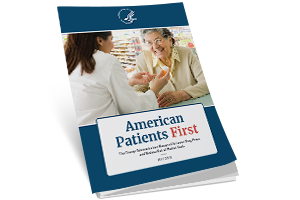
President Trump on Friday delivered a long-awaited speech outlining his administration’s blueprint for lowering prescription drug prices. Calling his plan “the most sweeping action in history to lower the price of prescription drug for the American people,” Trump promised “tougher negotiation, more competition and much lower prices at the pharmacy counter.”
Overall, Trump emphasized how businesses all across the pharmaceutical supply chain, from drugmakers to insurers to the pharmacy benefits manager “middlemen” and the government, are hurting Americans who take prescription drugs. And, in keeping with the blueprint’s title, “American Patients First,” the president called for other developed countries to pay more for medicines.
“When foreign governments extort unreasonably low prices from U.S. drugmakers, Americans have to pay more to subsidize the enormous cost of research and development. In some cases, medicine that costs a few dollars in a foreign country costs hundreds of dollars in America, for the same pill with the same ingredients in the same package made in the same plant, and that is unacceptable,” Trump said. “It’s time to end the global freeloading once and for all.”
The blueprint is centered on four broad strategies:
• Increasing competition in drug markets. The administration says it will look to advance generic drugs and biosimilars to promote price competition and will “take steps to end the gaming of regulatory and patent processes by drug makers to unfairly protect monopolies.”
• Better negotiation, including tools for Medicare Part D plans to negotiate for discounts.
• Creating incentives for drugmakers to lower list prices, including having the Food and Drug Administration evaluate the idea of requiring manufacturers to cite list prices in their advertising. The plan also calls for streamlining and speeding up the approval process for over-the-counter drugs.
• Reducing out-of-pocket costs for patients. The administration would, for one example, stop limiting pharmacists’ ability to tell Medicare Part D patients when they could pay less by not using insurance. And it would require prescription drug plans for Medicare patients to pass on some of the discounts and rebates they receive from pharmaceutical companies. “Health policy experts like this idea because it reduces the burden on patients with serious chronic illnesses and spreads the expense of needed medications across the entire insured population,” The New York Times said.
Why Trump’s Plan Isn’t a Cure
Health care analysts and observers were — well, lets’ just say underwhelmed by Trump’s presentation, with many saying that the details of the blueprint didn’t live up to the president’s tough talk. Notably absent from the plan, for example, was the idea of allowing Medicare to negotiate lower drug prices directly, which Trump had promised during his election campaign. The blueprint also does not call for allowing Americans to import cheaper drugs from foreign countries.
Here’s an overview of the drug-pricing problem and the Trump administration’s proposals:
The Problem: Americans spend more on prescription drugs — more than $1,100 per person, on average, in 2015 — than anyone else in the world. Drug prices here are high and have been rising rapidly, with patients who pay out of pocket for brand name drugs especially vulnerable to crushing costs.
As a Political Issue, This Has Plenty of Potential: The vast majority of Americans say that drug prices are too high and that the pharmaceutical industry has too much sway in Washington. And in a new poll released Thursday by the Kaiser Family Foundation, 66 percent of Republicans, 72 percent of independents and 78 percent of Democrats said they would be more likely to vote for a candidate vowing to lower prescription drug costs.
But This Might Be About Politics More Than Results: “The president’s tough talk on drug prices will no doubt be popular with the public. Will the fact that the specifics of the plan don’t seem to deliver on that tough talk ultimately matter?” Larry Levitt of the Kaiser Family Foundation asked on Twitter.
Trump’s Plan Includes Plenty of Steps He Can Take Without Congress: “It’s framed as a pro-competitive agenda, and touches on a range of government programs that the administration can change through regulation — so that the president can take unilateral action,” Daniel N. Mendelson, the president of research consultancy Avalere Health, told The New York Times.
But It Seems to Have More Questions Than Answers: A number of health care experts noted that the 44-page blueprint includes dozens and dozens of questions. “A lot of good questions in the plan but very little actual action, especially against PBMs,” Walid Gellad, who heads the Center for Pharmaceutical Policy and Prescribing at the University of Pittsburgh, tweeted.
Raising Drug Prices in Other Countries Won’t Help Here: “There’s not a sensible health economist alive, or any economist, that will tell you that higher prices abroad will lead to lower prices here,” Andrea Harris, senior vice president of health care at Height Capital Markets in Washington, told Bloomberg.
Ultimately, the Plan Could Have a Very Limited Effect: “This is not doing anything to fundamentally change the drug supply chain or the drug pricing system,” Gerard Anderson, a health policy professor at Johns Hopkins University, told CNNbefore the blueprint’s release.
And the Pharmaceutical Industry Doesn’t Seem Too Worried: Just check out how pharma stocks — and those of pharmacy benefit managers like Express Scripts — shot higher despite Trump’s harsh rhetoric.
But Big Pharma Should Still Be On Notice: “The industry is among the most profitable of any industry in the U.S. and as such probably has room to give,” Wells Fargo analyst David Maris told Bloomberg. “If it doesn’t reform itself, it will be reformed and this is the beginning of that reform.”
Did We Really Expect Anything Else from Trump? “I’m shocked!” tweeted Michael Linden of the liberal Roosevelt Institute. “You mean the guy who just gave drug companies a massive tax cut and then appointed a drug CEO as HHS secretary and has spent his entire time as president favoring the rich and powerful, that guy wasn’t genuine about lowering drug prices? Shocked.”
https://www.healthcaredive.com/news/pharma-breathes-easy-as-trumps-drug-pricing-plan-fizzles/523387/
President Donald Trump took to the Rose Garden Friday, unveiling the “American Patients First” blueprint that senior administration officials touted as “the most comprehensive plan to tackle prescription drug affordability.”
Despite the rhetoric, Wall Street analysts, lobbyists and academics say the plan, which heavily targets the role pharmacy benefit managers play in the healthcare system, will do little to put downward pressure on healthcare spending.
Drugmaker stocks jumped immediately following the President’s speech.
“There are no major surprises, it spares the pharmaceutical industry of the reform that they most vehemently oppose,” a pharmaceutical lobbyist told BioPharma Dive in an interview following the Trump speech.
“Real reforms that advocates say will move the needle, none of them are included. There’s a lot of tinkering around the edges,” the lobbyist said. “By and large, the amount of money that this health system, that government and private payers are going to be spending on prescription drugs is probably not going to change significantly.”
The blueprint, which echoes many of the ideas first put forward in Trump’s FY 2019 proposed budget and the White House Council of Economic Advisers drug pricing report, focuses on four areas: lowering high list prices set by manufacturers; equipping government and private payers with new tools to negotiate prices; lowering out-of-pocket costs for consumers and taking steps to stop other countries from “freeloading” off of American innovation.
Notably, however, the blueprint only states that “HHS may” take many of proposed actions in response to Trump’s call to lower drug prices.
Since Trump took office, most of the action on drug pricing has come from the Food and Drug Administration, which has gone about as far as it legally can on the issue by pushing for greater competition in drug markets.
The blueprint echoes some of those initiatives and says curbing abuse of FDA’s Risk Evaluation and Mitigation Strategy (REMS) programs will be a priority to help generic drugs come to market faster. It also seeks to promote uptake of biosimilars.
“We are getting tough on drugmakers that exploit our patent laws to choke out competition. Our patent system will reward innovation, but it will not be used as a shield to protect unfair monopolies,” Trump said.
The generic drug lobby immediately praised Trump’s speech.
“President Trump’s embrace of generic and biosimilar competition as a key to lowering brand-name drug prices is an important step forward for patients coping with skyrocketing health care costs,” Association for Accessible Medicines CEO Chip Davis said in a statement.
Perhaps the only notable deviation from ideas already hinted at in prior speeches by officials was a call for the FDA to evaluate whether direct-to-consumer drug advertising should include list prices.
”Think about all the time everybody spends watching drug company ads, and how much information companies are required to put in them. If we want to have a real market for drugs, why not have them disclose their prices in the ads, too?” said Department of Health and Human Services Secretary Alex Azar, who spoke at the Rose Garden after Trump. “We’re immediately going to look into having the FDA require this.”
Proposed Part D reforms would allow greater benefit design flexibility; provide free generic drugs to low-income seniors; require such plans to pass on a minimum percentage of drug rebates with patients; disincentivize plans to accelerate beneficiaries into catastrophic coverage through branded drugs by establishing a new out-of-pocket maximum.
Requiring Part D plans to pass on rebates to consumers is one idea PBMs have rallied against. But the President’s blueprint hinted at further action the government could take, mentioning reexamination of how drug rebates are currently treated under safe harbor laws as a future “opportunity.”
Yet investors in PBMs didn’t appear to take that threat all that seriously. Shares in Express Scripts, one of the largest PBMs, traded up Friday afternoon, as did shares in UnitedHealth Group, which owns Optum.
“Getting rid of rebates and other price concessions would leave patients and payers, including Medicaid and Medicare, at the mercy of drug manufacturer pricing strategies,” said the Pharmaceutical Care Management Association, a lobby for PBMs, in a statement following Trump’s speech. “Simply put, the easiest way to lower costs would be for drug companies to lower their prices.”
CVS, which runs a large PBM, said policies that lowered drug prices would be aligned with its business model and are unlikely to have a negative impact on profitability.
The blueprint also proposes changing Part D plan formulary standards to require a minimum of one drug per category or class instead of two.
PhRMA immediately cautioned that any changes to the system could potentially limit access to new drugs. “The proposed changes to Medicare Part D could undermine the existing structure of the program that has successfully held down costs and provided seniors with access to comprehensive prescription drug coverage,” the drug lobby said in a statement.
The plan also will target Medicare Part B by limiting price increases that exceed the inflation rate within the program and restricting incentives for providers to prescribe high-cost drugs. Specifically, the blueprint calls for HHS to leverage the Competitive Acquisition Program for Part B.
Some more substantive changes are contemplated by the blueprint, although the document didn’t lay out any concrete steps for how to achieve them.
One question raised by the plan, for instance, asks whether PBMs should have a fiduciary duty to act solely in the interest of whoever they are managing benefits for, soliciting input on how this might impact PBMs’ ability to negotiate drug prices.
“Depending on how that is done, it could have a substantial effect,” Allan Coukell, a drug pricing expert at Pew Charitable Trusts, told BioPharma Dive in an interview.
One big idea not included in the blueprint is a call for the federal government to have Medicare negotiate drug prices. “We’re not calling for Medicare negotiation in the way that Democrats have called for,” one of the senior officials told reporters Thursday night.
Democrats blasted the speech, saying that Trump is turning his back on his campaign promise to stop the pharmaceutical industry from “getting away with murder.”
“The President spent last year pressing Congress to pass a massive tax cut — which gives away billions of dollars to drug companies and their executives who are already rich — but this year the President is apparently abandoning his campaign promise to authorize Medicare to negotiate directly with drug companies to lower prices,” House Committee on Oversight and Government Reform Ranking Member Elijah Cummings said in a statement Friday.
The pharmaceutical industry has spent heavily this year on lobbying the federal government, perhaps with Trump’s twice-delayed drug pricing plan in mind. According to a database maintained by the Center for Responsive Politics, spending by industry on lobbying this year totaled $84.8 million through April 24.
Click to access AmericanPatientsFirst.pdf


 HENRY KOTULA