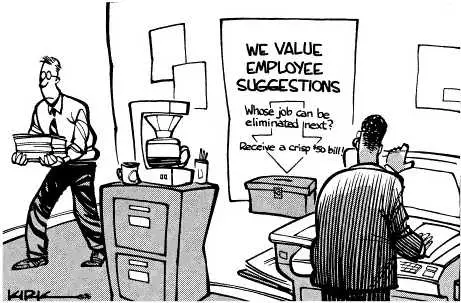
Cartoon – I was looking for a little stronger mission statement


The corpse of the Republican Senate’s Affordable Care Act repeal effort wasn’t even cold before the reanimation effort began on Friday morning. Just hours after what looked like a last ditch bid by the GOP to get something done went down to defeat in a 51-49 vote that featured three Republican defections, members of the House of Representatives were claiming that the GOP’s goal for the past seven years — elimination of President Obama’s signature domestic policy accomplishment — was still in reach.
“We should not give up,” House Speaker Paul Ryan said on Friday morning, though he admitted to being “frustrated” by the Senate’s failure to pass a bill that might have allowed it to move into a conference committee with the House, which passed its own legislation earlier this year.
But Ryan was subdued compared to North Carolina Rep. Mark Meadows, the chairman of the conservative Freedom Caucus, who promised that a new health care bill is on the way — one that he believes at least 50 senators will be willing to support.
“We continue to work on two different plans with our Senate colleagues,” Meadows said in an interview with The Washington Examiner.
“I believe we deliver, still, on healthcare,” Meadows told the Examiner. “To suggest that everything is over is not understanding the dynamics going on right now in the Senate. It’s not over.”
Meadows certainty seemed at odds with the gloomy assessment that Senate Majority Leader Mitch McConnell offered on the floor in the early hours of Friday morning, after the dramatic vote.
“This is clearly a disappointing moment,” he said. “I regret that our efforts were not enough, this time.”
He added, “It’s time to move on.”
But moving on apparently means different things to different lawmakers under the circumstances — not to mention what it means to a President Trump who appears to be angry that one of his major policy promises has been in limbo since he took office in January.
There are, at this point, several paths available to Republicans and the White House.
1. Try, Try Again
Just because everyone thought the failure last night of the so-called “skinny repeal” of the ACA was the Senate’s final effort doesn’t mean it really is.
Meadows point, and it is a valid one, is that there are at least two more versions of a Senate repeal plan that have not been given consideration by the upper chamber yet, both of which have reportedly been sent to the Congressional Budget Office for scoring. That will help lawmakers understand whether or not they fit into the relatively narrow constraints of the Senate budget reconciliation process.
One is a proposal from Texas Sen. Ted Cruz that is similar to the Better Care Reconciliation Act, a measure that has already failed before the Senate, but with some crucial differences. The Cruz amendment’s key provision is that it would allow insurers to offer policies that do not comply with various requirements imposed by the ACA, so long as they also offer plans that do comply.
The Cruz plan would not constitute a full repeal of the ACA. However, like the BCRA, it would eliminate government mandates. Government subsidies for premiums would still be in place, but the proposal appeals to some conservatives because it offers insurers a way around many of the restrictions they currently operate under. It would also likely lower premiums, on average, although that would be largely a factor of plans offering dramatically less coverage.
A second plan is radically different from all of the others that have been proposed so far. South Carolina Sen. Lindsey Graham and Louisiana Sen. Bill Cassidy have proposed a plan that would effectively punt most of the hard decisions about how to reform health care to the states.
The Graham-Cassidy bill would turn most federal spending on health care into block grants, money that would be passed on to the states with limited restrictions, allowing them to retain the general ACA system if they prefer, or to construct their own system, funded in large part by federal dollars.
2. Burn It All Down
In this scenario, President Trump makes good on his threats and wages all-out war to bring the operation of the Affordable Care Act to its knees. It would be an act of retribution that he thinks would bring the Democrats to the bargaining table and result in enactment of legislation close to what the Republicans have been seeking all along.
After the disastrous early morning vote, Trump tweeted that he would “let ObamaCare implode, then deal.”
There is no question that Trump has the administrative power to accelerate the decline of Obamacare if that’s what he ultimately decides to do.
For instance, he could direct the Internal Revenue Service to curtail enforcement of the individual mandate, which is at the core of the subsidized health insurance program. He could also order his administration to cease providing millions of dollars in cost-sharing subsidies to insurance companies that helps reduce co-payments and other out of pocket costs for low and moderate-income Americans.
Senate Minority Leader Chuck Schumer (D-NY) said Friday that Trump’s plans to “sabotage” the ACA would hurt millions of innocent Americans and hurt Trump and the Republicans politically down the road. If Trump does indeed make good on his threat, congressional Republicans will have to decide whether to aid and abet the president or go their own way.
3. Make Up and Play Nice
The Republicans clearly hold the whip hand on Capitol Hill, and will have much to say on whether the GOP continues to exclude the Democrats from important decision making or begin to bring them into the fold. Sen. Lamar Alexander (R-TN), the chair of the Senate Health, Education, Labor and Pensions Committee, and other senior Republicans plan hearings in the coming weeks to begin a process of regular order to seek compromises on fixing Obamacare.
The dramatic floor speech earlier this week by Sen. John McCain (R-AZ) — pleading for bipartisanship and a return to “regular order” shortly after learning that he was suffering from an aggressive form of brain cancer – might result in a softening of the Republicans’ rhetoric and a willingness to consider a different pathway.
After watching the last of his proposals for repealing portions of the ACA go down in flames early this morning, a somber Mitch McConnell looked across the Senate floor at the Democrats and said “So now I think it’s appropriate to ask what are their ideas.”
Schumer for months has said that he and other Democrats were eager to negotiate with Trump and the Republicans over compromise language to fix Obamacare, but only if the Republicans abandon their efforts to destroy the 2010 health insurance legislation and replace it with a Republican alternative.
On Friday, Schumer renewed his call for negotiations and outlined several possible areas of agreement. Those include measures to make permanent the cost-sharing subsidy for insurers; further protect insurers against excessive losses through a “reinsurance” program; and addressing the plight of some rural counties that that currently lack coverage.
“Nobody has said Obamacare is perfect, nobody has said our health care system doesn’t need fixing,” Schumer told reporters. “The problem was when they [the Republicans] tried to just pull the rug out from under the existing health care system. So change it, improve it, but don’t just take a knife and try to destroy it and put nothing in its place.”

Controlling the growth rate of health care spending is central to the success of the Affordable Care Act or any subsequent reform. Because labor represents more than 50 percent of health care costs and the clinical workforce drives use and prices, the size and composition of the health care workforce has important ramifications for spending growth. We set out to understand the trends underlying the growth in the clinical workforce and their potential implications for health care spending, health policy, and health system design.
A large literature establishes a link between primary care–oriented health systems and lower spending. Areas with a higher concentration of primary care physicians have much lower spending per beneficiary, higher-quality care, better patient satisfaction, and lower mortality rates. Given this, many existing payment reform strategies prioritize primary care, and the success of these reforms will require a vibrant—and likely growing—primary care workforce.
To observe the evolution of the clinical workforce, we used the Bureau of Labor Statistics’ Occupational Employment Statistics files between 2005 and 2015. This data set is released in May of each year and records the number of jobs (not the number of full-time–equivalent employees) by industry, occupational type, and geography. Using the North American Industry Classification System (NAICS), we limited our analysis to NAICS 621 (ambulatory health care services), 622 (hospitals), and 623 (nursing and residential care facilities). We defined “primary care physicians” as family and general practitioners, general internists, obstetricians and gynecologists, and general pediatricians, and categorized all other physician categories as “specialists” (Note 1).
Overall, there was a net increase of 2.6 million jobs in the health care sector between 2005 and 2015, accounting for 35 percent of total job growth in the United States during that period. Six percent of these jobs were for physicians. The number of primary care physician jobs grew by approximately 8 percent, while the number of jobs for specialists grew about six times faster (see Exhibit 1). In an era when we might have expected (and hoped for) rapid primary care physician growth, the share of the physician workforce devoted to primary care actually decreased from 44 percent to 37 percent, and the number of primary care physicians per capita has remained roughly flat.
Given the aging of the population and expanded coverage, these findings raise concerns about access to care. Many have suggested expanding the role of non-physician primary care providers to fill the gap between the need for primary care and the supply of primary care physicians. When we broadened our definition of primary care to include the physician assistants and nurse practitioners working in primary care, the total primary care workforce grew considerably faster (17 percent between 2005 and 2015), although still much slower than specialists (Note 2). It seems we are addressing our increasing primary care needs with non-physician labor, but more research is needed to understand the clinical and economic ramifications of that trend.
Under the right conditions, the rapid growth in specialists would not necessarily be negative for health care spending. If health care markets were competitive, one might expect a greater supply of specialists to lead to lower prices for specialist care and greater competition for referrals. With the right incentives in place, this increased competition could lead to lower spending and better outcomes.
Yet, there are reasons to be skeptical of this competitive model. Fees from public payers are set administratively and unlikely to be responsive to competitive pressures. Integration between hospitals and physicians, strong patient preferences for particular specialty groups or affiliated hospitals, and the numerous information problems in health care may dampen the ability of competition to drive down specialist prices.
Moreover, it is likely that the greater number of specialists working within health systems that charge facilities fees on top of expensive specialty care will lead to more expensive care. Furthermore, specialists are paid a larger salary; a recent salary survey found the four highest-paying occupations in the United States were physician specialists. These factors will work in opposition to efforts to control health care spending growth.
The data raise concerns in light of the belief that we need to increase the share of primary care providers (both physicians and non-physicians) to reduce the rate of growth in health care spending. They also add urgency to recommendations made by the Medicare Payment Advisory Commission (MedPAC), the Health Resources and Service Administration (HRSA), and the Association of American Medical Colleges (AAMC) to support the growth of primary care.
MedPAC suggested in both its 2016 and 2017 reports that the disparities in physician payment resulting from the Medicare fee schedule undervalue primary care and over-compensate certain specialists, and that the fee schedule ought to be amended to reflect the value generated by primary care physicians. In 2013, the HRSA recommended that graduate medical education funding be directed more toward students who will work in family medicine, geriatrics, general internal medicine, general surgery, pediatrics, and psychiatry. In 2012, the AAMC recommended that half of newly created residency positions should be for primary care and generalist disciplines.
While these recommendations are consistent with the goal of reorienting the health care system toward primary care, efforts to expand the primary care workforce are not new. As our data suggest, past initiatives such as low interest loan programs, training grants, or service programs such as the National Health Service Corps, which provides students with loan forgiveness in exchange for a commitment to practice primary care in underserved areas, have met limited success. The workforce continues to shift toward specialists. If we are to bend the cost curve, we likely need to move more aggressively on fee schedule changes, payment reform, and workforce policies.
This included anesthesiologists, psychiatrists, surgeons, and the Bureau of Labor Statistics (BLS) group physicians, all other. This final group accounts for “all physicians not listed separately.” Ophthalmologists, dermatologists, gastroenterologists, and cardiologists are given by the BLS as representative occupations. The Occupational Information Network includes a few more detailed occupations under this heading: allergists and immunologists, dermatologists, neurologists, nuclear medicine physicians, ophthalmologists, pathologists, radiologists, preventative medicine physicians, sports medicine physicians, urologists, and preventive medicine physicians.
The Bureau of Labor Statistics did not track nurse practitioners separately before 2012. We constructed this statistic using published numbers from the American Association of Nurse Practitioners, the Government Accountability Office, and the Agency for Healthcare Research and Quality.

House Republicans appeared divided and frustrated Friday morning about their next steps on health care legislation, hours after their Senate colleagues fell short of passing a scaled-back repeal.
House Republicans attending a conference meeting Friday morning described a disappointed mood hanging over them as Speaker Paul D. Ryan of Wisconsin read lyrics from the song “The Wreck of the Edmund Fitzgerald.” The ballad, by Gordon Lightfoot, is about a Great Lakes shipwreck that the song suggests could have been avoided if the crew had decided to keep sailing through a storm.
Earlier Friday morning, GOP Sens. Susan Collins of Maine, Lisa Murkowski of Alaska and John McCain of Arizona had voted against a “skinny repeal” amendment, forcing Majority Leader Mitch McConnell, R-Ky., to pull the bill from the Senate floor.
Some House Republicans appeared ready Friday to move on to a tax overhaul and fiscal issues, while others insisted the health care effort could be revived.
Those who were optimistic that work on health care could continue differed about the shape it would take. While moderates such as Reps. Charlie Dent, R-Pa., and Leonard Lance, R-N.J., stressed the importance of working with Democrats, more conservative members advocated continuing a Republican-only approach.
Rep. Mark Meadows, leader of the conservative House Freedom Caucus, thought the Senate would keep working out its differences. “I’m still optimistic we’ll have another motion to proceed and put something on the president’s desk,” he said. “The reconciliation process is not dead.”
Some House members vented about their frustrations with the Senate’s inability to come together on a repeal.
“It’s a huge disappointment,” said Rep. Richard Hudson, R-N.C. “How dare these senators not deliver on the promise we all made, that they all campaigned on? They can’t stop now.”
Republican Study Committee Chairman Mark Walker, R-N.C., suggested there should be some kind of consequences.
“Senate guys are part of our team so we can’t be out saying this or whatever, but there’s still a lot of frustration that exists,” Walker told reporters. “And I think at some point, accountability is not out of order for our Senate companions.”
But other Republicans suggested the need to move on to other health care priorities with the hope that aspects of repeal could be addressed at the same time.
A number of health care insurers have abandoned marketplaces in several states, citing the uncertainty in Washington as a major factor.
“We’ve got more work to do going forward, clearly, to rescue these markets,” said Rep. Greg Walden, R-Ore., chairman of the Energy and Commerce Committee.
Walden noted that a variety of legislative efforts could be vehicles for aspects of repeal legislation, including an expected renewal of expiring funding for the children’s health insurance program or reauthorization of community health centers. He thought that a repeal of the Independent Payment Advisory Board, a controversial commission the 2010 health care law called for but which has never been established, could still have traction in Congress. He noted the importance of paying the law’s cost-sharing reductions, which the Trump administration controls and insurers say are critical.
Walden did not rule out working with Democrats.
Any pieces of health care legislation also will be targets for industry groups who were disappointed along with Republicans last night. JC Scott, chief advocacy officer for the medical device trade group Advanced Medical Technology Association, said the group is examining the calendar to see where a repeal of the medical device tax might fit in, noting that members on both sides of the aisle support the repeal.
The trade group America’s Health Insurance Plans, which has stayed largely neutral during the repeal debate, said it will continue to work with both parties going forward.
Ryan indicated in a statement that the House is moving on to a tax overhaul and urged the Senate not to give up on changing the health care law.
“We have so much work still to do, and the House will continue to focus on issues that are important to the American people,” he said in a statement. “At the top of that list is cutting taxes for middle class families and fixing our broken tax code. I’m glad that members will now take time to hear directly from those they represent and make the case for historic tax reform that we intend to pursue in the fall.”
But doing tax legislation without completing a health care bill first will be tricky, Rep. Trent Franks, R-Ariz., acknowledged.The health care bill would have repealed taxes, leaving fewer tax changes to be addressed in the tax bill.
“Obamacare was the biggest tax increase in the history of the human family,” he said. “We have to deal with that so we have a baseline to deal with the tax code. I’m afraid at this point we’re going to have to work around that, because I’m not sure there’s going to be time.”
Given the outcome on in the Senate, it seems unlikely that any health care repeal legislation could pass the Senate. Hours before the vote Thursday, McCain told reporters he would not vote for the bill, but then backtracked.
“I never voted for a bill that I didn’t want to become law,” he said.
McConnell indicated he thought Democrats would face a political pushback on their health care policy ideas.
“It’s time for our friends on the other side to tell us what they have in mind,” he said in a speech after the vote. “And we’ll see how the American people feel about their ideas.”

President Donald Trump spent a grey and sometimes rainy Saturday at the White House on a Twitter binge, firing off a late-afternoon tweet instructing Republican senators to demand another vote on a measure that would repeal and replace the 2010 health care law.
In the morning, the president threatened lawmakers’ health insurance and attacked members of his own party, saying they “look like fools” because they cannot pass major bills.
Trump had some different advice for Republican senators later in the day, amid talk from both sides of the Senate chamber about working through the relevant committees to craft a possible bipartisan health care overhaul: Don’t be quitters. Try again.
“Unless the Republican Senators are total quitters, Repeal & Replace is not dead! Demand another vote before voting on any other bill!” the president tweeted.
A bill that would have partially done that, but mostly would have set up a conference with the House, failed in the wee hours of Friday morning when Arizona Sen. John McCain shocked the political world by joining fellow Republican Sens. Susan Collins of Maine and Lisa Murkowski of Alaska in voting against a Republican “skinny” repeal bill.
Trump’s tweet was yet another new stance from him on just what he wants the next step to be on health care.
On Friday, during a speech to law enforcement officials in New York, the president — in a rambling address about a wide range of things on his mind — suggested McCain’s dramatic vote would clear the path to an idea he has long seemed to favor over all others.
“I said from the beginning, ‘Let Obamacare implode and then do it.’ I turned out to be right,” Trump said Friday.
But just over 24 hours later, the president once again appeared to have changed his mind.
Trump has been visiting his golf club in nearby Sterling, Virginia, on most weekends that he is in Washington. Saturday’s rainy weather and unseasonably cool temperatures kept him at the executive mansion, but apparently with his phone handy.

You’ve probably heard the term “emotional intelligence.” It’s come into vogue in recent years, with numerous books being written about the subject. Businesses are increasingly focusing on emotional intelligence and researchers are increasingly learning its importance.
But what exactly is emotional intelligence? How can you determine if you have those characteristics? And why is it so important?
The term “emotional intelligence” (EI or EQ) was coined by researchers Peter Salavoy and John Mayer. Author Dan Goleman made the term mainstream in his book “Emotional Intelligence.”
Typically, EQ includes two related, but distinct items:
Those who have a high EQ are highly in tune with both their own emotions and the emotions of those around them. They can recognize and understand the various feelings that sweep through them and are able to appropriately manage them.
Those with a low EQ find themselves unable to understand why they feel a certain way and unable to process the emotions they’re feeling.
David Caruso distinguished between EQ and IQ this way:
It is very important to understand that emotional intelligence is not the opposite of intelligence, it is not the triumph of heart over head—it is the unique intersection of both.
Emotional intelligence is hugely important in terms of success. Those who want to excel in life and work need a high EQ. If you can’t understand yourself or others, you simply won’t be able to improve in specific, important areas.
Discussing the interplay between IQ and EQ, Michael Akers and Grover Porter write:
How well you do in your life and career is determined by both. IQ alone is not enough; EQ also matters. In fact, psychologists generally agree that among the ingredients for success, IQ counts for roughly 10% (at best 25%); the rest depends on everything else—including EQ.

Sen. John McCain of Arizona’s vote against the “skinny repeal” of Obamacare may have been the most dramatic, but the objections of Republican Sens. Lisa Murkowski of Alaska and Susan Collins of Maine had already put the bill’s fate in jeopardy.
The Senate’s Republican women, including Sen. Shelley Moore Capito of West Virginia, had been left out of the initial drafting process and derailed the Majority Leader’s mid-July effort to repeal Obamacare in order to replace it further down the road.
While Capito ultimately voted for the bill, Murkowski and Collins held firm on Friday morning and, along with McCain, joined with Democrats to kill the bill.
Here’s who they are.
Lisa Murkowski has been a U.S. Senator since 2002, when she was appointed to finish out her father Frank’s term when he was elected governor of the state. She ran for the seat in 2004 and won, but in 2010 she lost the GOP primary to a Tea Party challenger. But ultimately, Murkowski beat both the Tea Party and Democratic candidates and became the first successful write-in candidate since South Carolina’s Strom Thurmond in 1954. She won reelection in 2016.
Murkowski has been wary of the process to replace the Affordable Care Act since it began. She has said she could not support a bill that did not expand coverage and left costs high, but was largely concerned with the approach to Medicaid. She was also against including cuts to Planned Parenthood in a repeal measure. According to the Alaska Dispatch News, a quarter of Alaskans receive health coverage via the entitlement program. In July, Murkowski said that while some Alaskans had told her that she should “stick with the president,” most wanted her to put her state’s citizens first. “Almost without exception, it was, ‘Please Lisa. Protect Alaska’s interests,” the Dispatch News reports she said. “Help us with ensuring that the most vulnerable are cared for, and that when it comes to the access issues that we face, the costs that we face, that you can help us address these.'”
Murkowski vocalized her displeasure with the secretive Obamacare repeal process in late June, telling an Independent Journal Review reporter that she had not seen a draft of the bill because she is “not a reporter and I’m not a lobbyist.” She, along with Sens. Collins and Capito of West Virginia, later came out against Majority Leader Mitch McConnell’s plan to immediately repeal the Affordable Care Act, but hold off on replacing it, effectively killing that effort.
Her opposition to the health care plan made her a target of President Donald Trump, who tweeted that she had “really let the Republicans, and our country, down” when she voted against a motion that led to the Friday morning vote. The administration also reportedly called Murkowski and Alaska Sen. Dan Sullivan threatening that there would be consequences over her position on the repeal.
Susan Collins, of Maine, was first elected to the U.S. Senate in 1996 and was last reelected in 2014. She will be up for reelection again in 2020, though she is said to be seriously considering a run for governor of Maine. It would be her second time vying for the governorship—she lost to independent Sen. Angus King in 1994.
Collins has said she could not support the Obamacare repeal because of the impact it would have had on Americans seeking coverage. “I can’t support a bill that will greatly increase premiums for our older Americans,” Collins told MSNBC in June. “I cannot support a bill that is going to result in tens of millions of people losing their health insurance.”
The Maine Republican was also dismayed by the deep cuts to Medicaid that had been proposed under the repeal legislation and the impact it would have on vulnerable citizens including disabled children and poor seniors.”We should not be making fundamental changes in a vital safety net program that’s been on the books for 50 years … without evaluating what the consequences will be,” she said on CNN‘s State of the Union.
In a lengthy statement issued Friday, Collins explained the many reasons why she voted against the measures, including her opposition to proposals that would have stripped funding from Planned Parenthood. “Let me be clear that this is not about abortion,” she said. This is about interfering with the ability of a woman to choose the health care provider who is right for her. This harmful provision should have no place in legislation that purports to be about restoring patient choices and freedom.
Like Murkowski, Collins faced threats as a result of her position on the repeal. The Associated Press reported Texas Rep. Blake Farenthold complained about the opposition the repeal effort had faced from “some female Senators from the northeast.” During a radio interview, he reportedly said, “if it was a guy from south Texas, I might ask him to step outside and settle this Aaron Burr-style.”
She was later caught on a hot mic discussing the threat, with a Senate colleague telling her he thinks she could “beat the s–t” out of the Representative. “Well, he’s huge,” she said in response. “And he — I don’t mean to be unkind, but he’s so unattractive it’s unbelievable.”

In a dramatic, late-night vote, the Senate narrowly rejected an effort to repeal portions of the Affordable Care Act. Does that mean the effort to repeal and replace the law — a cornerstone of the Republican agenda for seven years — is over?
Where Senate Majority Leader Mitch McConnell, R-Ky., is concerned, it’s foolish to write off any possibility, said Josh Ryan, a political scientist at Utah State University.
“Every time we thought it was over, he thought of a different legislative maneuver and, except for one shocking vote by Sen. John McCain, it would have worked,” Ryan said. “I don’t think it’s likely, but I wouldn’t count McConnell out just yet.”
That said, key senators have not given early indications that they plan to pursue that approach, and experts, including Ryan, agreed that there are likelier scenarios than a full repeal-and-replace bill.
• Do nothing and wait for health markets to deteriorate enough that lawmakers are pressured to act.
“Congress and the administration could do as little as possible to help support the marketplaces, or even take active steps to destabilize them, such as not funding cost-sharing reductions or not actively enforcing the individual mandate,” said Christine Eibner, a senior economist at the RAND Corp. “They could then attempt to pass a bill hoping that — if the marketplaces are in dire straits, more senators will be willing to vote to repeal and replace.”
Eibner noted that President Donald Trump seems to be advocating for this approach on Twitter, where he wrote “let ObamaCare implode, then deal!”
• Look for common ground where a bipartisan approach could work.
Senate Minority Leader Charles Schumer, D-N.Y., said after the vote that he is open to working with the Republicans on a plan.
“Nobody has said Obamacare is perfect. Nobody has said our health care system doesn’t need fixing. The problem was when they started, when they tried to just pull the rug out from under the existing health care system,” Schumer said at a July 28 press conference. “So, change it, improve it, but don’t just take a knife and try to destroy it and put nothing in its place. And so, we can work together.”
Joseph R. Antos, a health policy specialist at the conservative American Enterprise Institute, said he doesn’t see much likelihood of changes beyond well-established political and financial boundaries. “Don’t look for any significant changes from what is now in place,” he said. “Any attempt to do more will only reopen the fresh political wounds on both sides.”
Here are some areas that might fit this description.
• Shore up cost-sharing reductions under the Affordable Care Act.
Insurers are on the hook for these subsidies, which are given to eligible Affordable Care Act enrollees, regardless of whether the federal government reimburses them. But they have been a bone of contention between Republicans and Democrats, leading to uncertainty about whether the federal spigot will remain on.
“The single reason most insurers cite for withdrawing from marketplaces, or for requesting higher premiums to continue participating in marketplaces, is the uncertainty over whether the federal government will reimburse them for cost-sharing subsidies,” said Linda Blumberg, who studies health care policy at the Urban Institute.
There is evidence that both parties could find common ground here, Antos said. A two-year extension of payments was in the Senate Republican health care proposal known as BCRA.
• Add a reinsurance program.
Reinsurance helps protect private, non-group insurers so they can pay off unusually high claims from their enrollees, thus enabling them to stay in business. Reinsurance was part of the Affordable Care Act for its first three years but no longer is.
Blumberg said making reinsurance a permanent part of the law could bring down premiums and help insurer confidence and participation.
Reinsurance could be funded either through direct public support or through a tax levied on insurers, which was the method used during the first few years of the Affordable Care Act, Eibner said. She added that Alaska recently reduced premiums through a state-funded reinsurance program.
• Find a way to lower premiums for young, healthy Americans.
There is widespread agreement that, if more young and healthy people were to join the marketplaces, premiums would fall. Eibner suggested a few options for doing that. Congress could allow insurers to charge older people five times as much as younger people, rather than three times as much, or it could enhance tax credits for young people, she said.
• Do more to encourage the use of catastrophic coverage.
Such plans don’t kick in until an enrollee has a very expensive condition. The downside is that if someone signs up for these plans and gets seriously ill, they would have to pay a significant amount from their own pocket. The upside is that premiums would be lower, and it might open new opportunities for insurers in certain markets.
Currently, such plans are only available in the Affordable Care Act marketplaces for younger adults and individuals who can demonstrate financial need. But one of the provisions pursued by Senate Republicans would have widened access to these plans. “It’s possible that this provision could be revived as part of bipartisan legislation,” Eibner said.