


Cartoon – Have you tried Wishful Thinking?

Three consumers filed a lawsuit accusing Mylan Pharmaceuticals of paying kickbacks to pharmacy benefits managers in order to boost EpiPen sales, which caused them to unfairly overpay for the allergy-reaction device that has been at the center of the national debate over the high cost of medicines.
Their allegations take aim at the convoluted interplay between drug makers and pharmacy benefit managers, which are middlemen that negotiate favorable insurance coverage for medicines on behalf of insurers. The PBMs attempt to extract the best prices from drug makers and, for their trouble receive rebates, some of which are held back as fees.
The lawsuit, which charges Mylan engaged in racketeering, seeks class action status and claims that Mylan “gamed the system” and pretended to blame PBMs for demanding ever-higher rebates for its decisions to regularly raise the price for EpiPen.
The consumers maintain that Mylan paid continually higher rebates in order to book larger sales and ensure favorable insurance coverage, especially as competition to EpiPen arrived. The lawsuit, however, argued that the rising rebates “saddled” consumers who either did not have insurance or have high-deductible plans with “crushing out-of-pocket expenses.”
One of the women who brought the suit, Lisa Vogel of Takoma Park, Md., purchased EpiPen Jr. two-packs several time for her son, who is allergic to peanuts and amoxicillin, according to the lawsuit. Her family has a high-deductible plan from Aetna and, on June 13, 2014, her out-of-pocket cost was $351.73. A year later, on June 22, 2015, her share of the cost $453.49, the lawsuit stated.
The lawsuit also pointed to recent research in the Journal of the American Medical Association that found between January 2007 and December 2014, out-of-pocket spending for each EpiPen patient rose nearly 124 percent, to $75.50 from $33.80. “Mylan’s list price has become an artificial and phony price established and driven up as part of a kickback scheme from Mylan to the PBMs,” the lawsuit argued.
“Mylan is no victim,” the lawsuit continued. “Instead, Mylan participated in and benefited from the high list price scheme and from paying high rebates or kickbacks to PBMs to ensure EpiPen’s market dominance. In fact, from at least 2008 until 2011, when Mylan stopped reporting this information, EpiPen had a 95 percent market share” for auto-injector allergy devices.
There are no PBMs named as defendants. A Mylan spokeswoman declined to comment.

As President Trump said, health care is “complicated.”
When it comes to health care in America, virtually everyone claims to have the same broad goals: Accessibility to decent care that is affordable and not have it cost businesses and government (read: taxpayers) a fortune.
Good intentions abound, but politically feasible solutions are in short supply, and many bad or simplistic ideas are bandied about by policymakers on both sides of the aisle. A case in point is a Maryland bill that would crack down on “price gouging” by prescription-drug makers. The bill, which passed the House of Delegates on March 20 with an overwhelming, bipartisan margin of 137-4 and will probably be taken up by the Senate in the next few days, seems like a no-brainer. As Maryland Attorney General Brian Frosh said: “We’ve seen in Maryland and all over the country drug prices [are] skyrocketing.
However, the devil is in the details, and devilish it is. The bill, H.B. 631, excludes pricey brand drugs and only targets generic-drug makers, whose medicines save Maryland residents and taxpayers about $3.7 billion a year. If the bill becomes law, the state Attorney General could take generic drug makers to court for price increases that are vaguely described as “unconscionable.” Unconscionable is a legal doctrine used when consumers have no option to purchase an essential product at inflated prices. However, under the proposed Maryland law, it could be invoked when a generic maker increases the price of a pill from 15 cents to 50 cents but not when the manufacturer of a brand drug increases its price from $300 to $500 per pill.
Generics are a proven solution to high drug costs that saved America approximately $227 billion in 2015, including $90 billion for Medicare and Medicaid. Generics account for 89 percent of all prescriptions written, but only 27 percent of U.S. spending on medicines. In short, generics and a new class of off-brand drugs called biosimilars reduce health care costs and get affordable medicines into the hands of patients who need them most.
U.S. health care has many well-documented shortcomings. However, it is often assumed that, because we invest so heavily in technology and specialists, our health care system performs well for patients who have rare or complex diseases.
New research shows that we should be skeptical of that assumption. A recent study in the Annals of Internal Medicine compares the health outcomes of U.S. and Canadian patients with cystic fibrosis, an incurable, genetic disease that affects about one in 10,000 people in both countries. The results are disturbing: on average, Canadian patients live 10 years longer than American patients. And the gap has been widening for the past two decades (see exhibit).
Median Age of Survival for Patients with Cystic Fibrosis over Time

The researchers suggest the likely culprit is the significant gaps in health insurance coverage among U.S. children and adults under age 65. Uninsured patients with cystic fibrosis, they find, face a much greater risk of early death than their insured peers. Of particular note, given recent events in Washington, D.C., Medicaid patients have significantly better health outcomes than those without insurance, despite the fact that they tend to be poorer and more socially vulnerable.
In Canada, of course, there are no uninsured: the government provides universal health coverage for all residents, without copayments for physician visits or hospital stays. (The study also finds that Canadian patients are much more likely to receive a lung transplant than U.S. patients—shattering another common assumption about the U.S. health system’s technological superiority.)
When one considers the medical needs of people with cystic fibrosis, it is obvious why lacking health insurance could lead to an early death. The disease causes abnormal secretions to impair functioning of the lungs, pancreas, and other organs, which in turn leads to infections and lung damage, and prevents the body from properly digesting food. Inhibiting the build-up of these secretions and ensuring proper nutrition and wellness are crucial to preventing the rapid progression of the disease. In this context, staying well requires constant self-management and frequent contact with the health care system—which comes at a cost. Coverage gaps and financial barriers to care are incredibly dangerous for these patients and can quickly undermine their health.
And while several promising pharmaceuticals that treat cystic fibrosis have hit the market in recent years, these are priced at a quarter of a million dollars . . . per year. High-quality care is simply out-of-reach for patients without insurance.
In medical terms, we might call uninsurance a “comorbidity”—one unique to the United States among all industrialized nations, and just as deadly as pneumonia or diabetes.
The study is a reminder, if one was needed, of the fundamental problem with the U.S. health insurance system: not everyone is covered. The focus of would-be health reformers should be—not solely on whether the 20+ million Americans who gained coverage under the ACA should be allowed to keep it—but rather how to extend those gains to the 28 million remaining uninsured. For some, their lives will depend on it.

This story originally appeared in Kaiser Health News.
Few patients pay a hospital’s full price for a procedure or test. But a new study shows why those charges still matter.
Economists at the Federal Reserve Board and the American Enterprise Institute found that list prices, often dismissed as meaningless by the hospital industry, are a critical gauge of which hospitals ultimately receive higher payments.
An additional dollar in list price was associated with an additional 15 cents in payment to a hospital for privately insured patients, according to the study, which relies heavily on data from California. It was published Monday in the journal Health Affairs.
The researchers, Michael Batty and Ben Ippolito, also found key differences in list prices across hospitals and how much they were marked up, compared to operating costs. A large, for-profit urban hospital that was part of a chain had list price markups that were 360 percent higher than those of a small, independent nonprofit hospital in a rural area. (The hospitals were not named in the study.)
Consumers might assume that higher prices indicate better care and improved outcomes for patients. However, the study looked at rates of hospital readmission—a potential indicator of poor outcomes—and couldn’t find any evidence that higher list prices corresponded with better quality.
Hospital care accounts for a third of the nation’s $3.4 trillion in annual health spending. Hospital prices and payments are key to any discussion about bringing the high cost of healthcare under control for U.S. employers, government programs and consumers.
“High list prices do matter for patients,” said Ippolito, one of the study’s co-authors and a healthcare economist at the American Enterprise Institute, a conservative think tank in the District of Columbia. “This directly contradicts the mantra you hear from providers that there’s no reason to pay attention to this.”
http://www.fiercehealthcare.com/healthcare/who-puts-medication-related-errors-global-hit-list
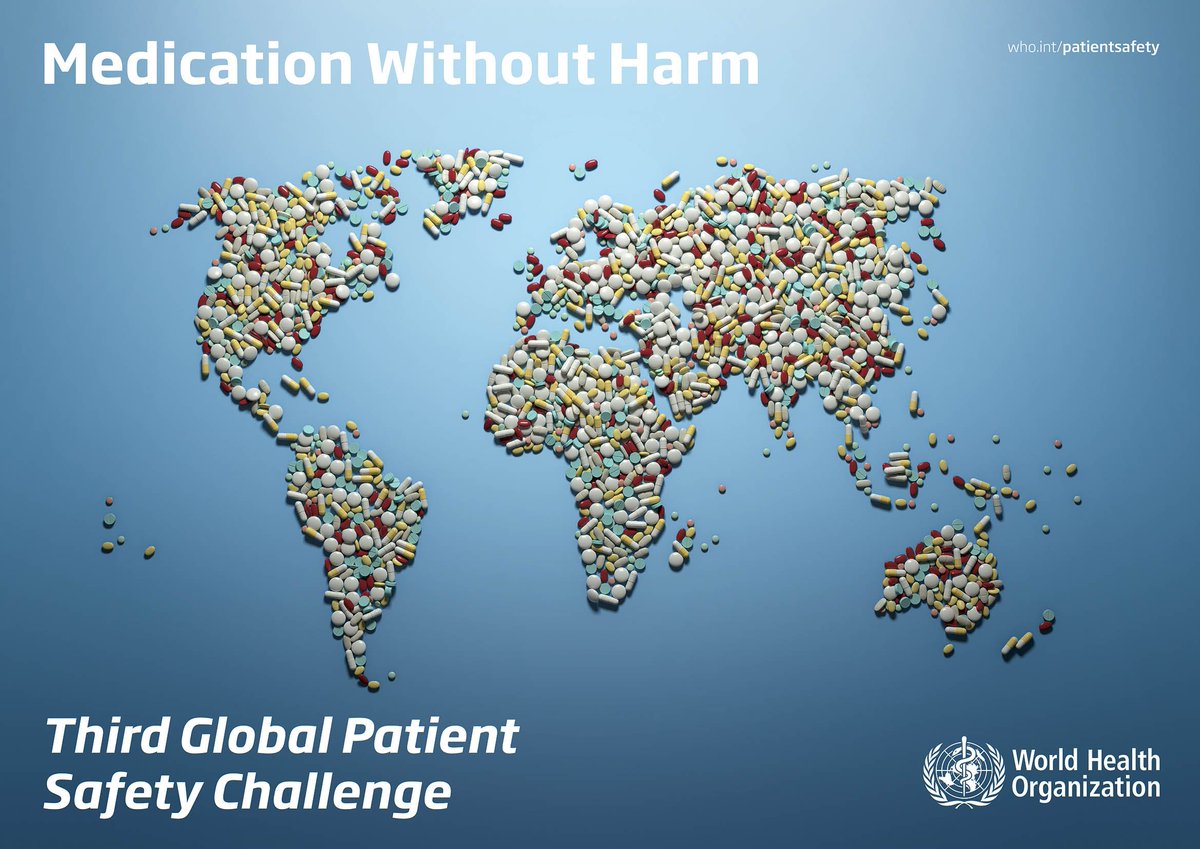
Medication errors cause at least one death every day and injure roughly 1.3 million people each year in the United States alone. But it’s not only a national problem, and the World Health Organization is taking action to reduce these preventable adverse events worldwide.
The WHO aims to reduce severe, avoidable medication-associated harm in all countries by 50% over the next five years.
“We all expect to be helped, not harmed, when we take medication,” said WHO Director-General Dr. Margaret Chan in an announcement about its new initiative. “Apart from the human cost, medication errors place an enormous and unnecessary strain on health budgets. Preventing errors saves money and saves lives.”
Indeed, the costs related to medication errors are high. The WHO estimates the costs are $42 billion worldwide, almost 1% of total global health expenditure
To reduce these errors, the WHO intends to address weaknesses in health systems that lead to medication errors, offer ways to improve the way providers prescribe and distribute medicine, and increase patient awareness about the risks associated with the improper use of medication.
Reasons for the errors are often associated with health worker fatigue, overcrowding, staff shortages, poor training and wrong information given to patients. In many cases any of these causes or a combination of them can affect the prescribing, dispensing, consumption and monitoring of medications, according to WHO.
But all of these medication errors are potentially avoidable, according to WHO, if organizations put systems and procedures in place to ensure the right patient receives the right medication at the right dose via the right route at the right time.
“Most harm arises from systems failures in the way care is organized and coordinated, especially when multiple health providers are involved in a patient’s care. An organizational culture that routinely implements best practices and that avoids blame when mistakes are made is the best environment for safe care,” the WHO said in the announcement.
Although many organizations rely on health IT systems that are designed to improve prescription ordering and medication administration, a recent study finds these systems can actually contribute to medical errors. Some experts warn that digital prescription systems miss potential drug errors, and the Office of the National Coordinator for Health IT has called on vendors and providers to reduce the number of “pick list” medication errors.
To achieve its goal of cutting the number of these mistakes by half, WHO is calling on countries to focus on medicines with a high risk of harm if used improperly, patients who take multiple medications for different diseases and conditions, and patients who are going through transitions of care.
The initiative aims to make improvements in each stage of the medication use process including prescribing, dispensing, administering, monitoring and use. WHO aims to provide guidance and develop strategies, plans and tools to ensure that the medication process has the safety of patients at its core, in all healthcare facilities.

Henry Ford Health System, Kaiser Permanente Health Plan and Hospitals and Rush University Medical Center are among nine healthcare systems working on a new initiative to reduce inequities in health and healthcare access, treatment and outcomes.
The Institute for Healthcare Improvement (IHI) launched its two-year “Pursuing Equity” initiative on Monday. Its goal is to break new ground by explicitly addressing institutional racism and by identifying ways healthcare organizations can reduce clinical disparities of care as well as improve equity in employee wellness and social determinants of health.
The other systems participating in the project include HealthPartners in Bloomington, Minnesota; Main Line Health in Newton Square, Pennsylvania; Methodist Le Bonheur Healthcare, Memphis, Tennessee; Northwest Colorado Health, Steamboat Springs, Colorado; and Southern Jamaica Plain Health Center, Brigham & Women’s Hospital, Jamaica Plain, Massachusetts.
Each system will build on the work they’ve already done within their institutions, including launching programs to reduce clinical disparities, track equity in process and outcomes data, and improve knowledge and capability.
“We see a future where every healthcare system in the country pursues equity as part of daily work and core skills, ensuring that individuals and communities can attain their full health potential—and we believe Pursuing Equity is an important step in creating a blueprint for other organizations to follow,” said Derek Feeley, IHI president and CEO, in an announcement (PDF). “Pursuing Equity is part of the next phase of IHI’s ongoing commitment to address the unjust, costly, and persistent inequities in health and healthcare across the nation. We are energized and ready to continue this critical work.”
The initiative will be funded by theRx Foundation, Bristol-Myers Squibb Foundation, and the participating health systems.


