


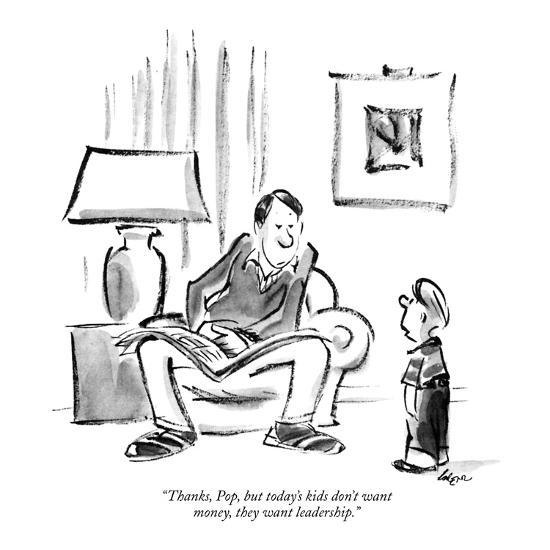
Cartoon – Content vs. Thought Leadership

https://www.healthleadersmedia.com/strategy/theyre-called-critical-access-hospitals-reason

They’re called “Critical Access Hospitals” for a reason. These tiny healthcare outposts provide “critical access” to people who live in remote areas.
That was the intent of the legislation that created CAHs in 1997 at a time when rural hospitals were shuttering at an alarming rate. Congress understood that rural America needed extra Medicare dollars to keep the doors open at hospitals that serve an older, sicker and poorer patient mix.
It’s staggering to think of the challenges that CAHs face:
Unfortunately, some people in Washington, DC have short institutional memories.
For the past couple of years, reports from the Office of the Inspector General at the Department of Health and Human Services have made it clear that they believe the CAH designation and funding scheme should be overhauled.
In its latest shot across the bow, OIG this week called for a re-examination of the swing bed program that allows CAHs to provide long-term care. The OIG audit claimed that the federal government has overpaid CAHs $4.1 billion over the past six years for services that could have cost less in relatively nearby skilled nursing and long-term care facilities.
Tavenner Pushes Back
Rural healthcare advocates rallied around the reply to the OIG recommendations from former Centers for Medicare & Medicaid Services Administrator Marilyn Tavenner, who challenged the OIG findings and recommendations in her formal response, and suggested that auditors don’t understand healthcare delivery in rural areas.
In that same response to OIG, however, Tavenner said the Obama 2016 budget has called for reducing the Medicare reimbursement that CAHs receive from 101% to 100% of allowable costs, and reassessing and eliminating CAH status for hospitals that are within 10 miles each other.

For a patient’s knee replacement, Medicare will pay a hospital $17,000. The same hospital can get more than twice as much, or about $37,000, for the same surgery on a patient with private insurance.
Or take another example: One hospital would get about $4,200 from Medicare for removing someone’s gallbladder. The same hospital would get $7,400 from commercial insurers.
The yawning gap between payments to hospitals by Medicare and by private health insurers for the same medical services may prove the biggest obstacle for advocates of “Medicare for all,” a government-run system.
If Medicare for all abolished private insurance and reduced rates to Medicare levels — at least 40 percent lower, by one estimate — there would most likely be significant changes throughout the health care industry, which makes up 18 percent of the nation’s economy and is one of the nation’s largest employers.
Some hospitals, especially struggling rural centers, would close virtually overnight, according to policy experts.
Others, they say, would try to offset the steep cuts by laying off hundreds of thousands of workers and abandoning lower-paying services like mental health.
he prospect of such violent upheaval for existing institutions has begun to stiffen opposition to Medicare for all proposals and to rattle health care stocks. Some officials caution that hospitals providing care should not be penalized in an overhaul.
Dr. Adam Gaffney, the president of Physicians for a National Health Program, warned advocates of a single-payer system like Medicare for all not to seize this opportunity to extract huge savings from hospitals. “The line here can’t be and shouldn’t be soak the hospitals,” he said.
“You don’t need insurance companies for Medicare for all,” Dr. Gaffney added. “You need hospitals.”
Soaring hospital bills and disparities in care, though, have stoked consumer outrage and helped to fuel populist support for proposals that would upend the current system. Many people with insurance cannot afford a knee replacement or care for their diabetes because their insurance has high deductibles.
Proponents of overhauling the nation’s health care argue that hospitals are charging too much and could lower their prices without sacrificing the quality of their care. High drug prices, surprise hospital bills and other financial burdens from the overwhelming cost of health care have caught the attention (and drawn the ire) of many in Congress, with a variety of proposals under consideration this year.
But those in favor of the most far-reaching changes, including Senator Bernie Sanders, who unveiled his latest Medicare for all plan as part of his presidential campaign, have remained largely silent on the question of how the nation’s 5,300 hospitals would be paid for patient care. If they are paid more than Medicare rates, the final price tag for the program could balloon from the already stratospheric estimate of upward of $30 trillion over a decade. Senator Sanders has not said what he thinks his plan will cost, and some proponents of Medicare for all say these plans would cost less than the current system.
The nation’s major health insurers are sounding the alarms, and pointing to the potential impact on hospitals and doctors. David Wichmann, the chief executive of UnitedHealth Group, the giant insurer, told investors that these proposals would “destabilize the nation’s health system and limit the ability of clinicians to practice medicine at their best.”
Hospitals could lose as much as $151 billion in annual revenues, a 16 percent decline, under Medicare for all, according to Dr. Kevin Schulman, a professor of medicine at Stanford University and one of the authors of a recent article in JAMA looking at the possible effects on hospitals.
“There’s a hospital in every congressional district,” he said. Passing a Medicare for all proposal in which hospitals are paid Medicare rates “is going to be a really hard proposition.”
Richard Anderson, the chief executive of St. Luke’s University Health Network, called the proposals “naïve.” Hospitals depend on insurers’ higher payments to deliver top-quality care because government programs pay so little, he said.
“I have no time for all the politicians who use the health care system as a crash-test dummy for their election goals,” Mr. Anderson said.
The American Hospital Association, an industry trade group, is starting to lobby against the Medicare for all proposals. Unlike the doctors’ groups, hospitals are not divided. “There is total unanimity,” said Tom Nickels, an executive vice president for the association.
“We agree with their intent to expand coverage to more people,” he said. “We don’t think this is the way to do it. It would have a devastating effect on hospitals and on the system over all.”
Rural hospitals, which have been closing around the country as patient numbers dwindle, would be hit hard, he said, because they lack the financial cushion of larger systems.
Big hospital systems haggle constantly with Medicare over what they are paid, and often battle the government over charges of overbilling. On average, the government program pays hospitals about 87 cents for every dollar of their costs, compared with private insurers that pay $1.45.
Some hospitals make money on Medicare, but most rely on higher private payments to cover their overall costs.
Medicare, which accounts for about 40 percent of hospital costs compared with 33 percent for private insurers, is the biggest source of hospital reimbursements. The majority of hospitals are nonprofit or government-owned.
The profit margins on Medicare are “razor thin,” said Laura Kaiser, the chief executive of SSM Health, a Catholic health system. In some markets, her hospitals lose money providing care under the program.
She says the industry is working to bring costs down. “We’re all uber-responsible and very fixated on managing our costs and not being wasteful,” Ms. Kaiser said.
Over the years, as hospitals have merged, many have raised the prices they charge to private insurers.
“If you’re in a consolidated market, you are a monopolist and are setting the price,” said Mark Miller, a former executive director for the group that advises Congress on Medicare payments. He describes the prices paid by private insurers as “completely unjustified and out of control.”
Many hospitals have invested heavily in amenities like single rooms for patients and sophisticated medical equipment to attract privately insured patients. They are also major employers.
“You would have to have a very different cost structure to survive,” said Melinda Buntin, the chairwoman for health policy at the Vanderbilt University School of Medicine. “Everyone being on Medicare would have a large impact on their bottom line.”
People who have Medicare, mainly those over 65 years old, can enjoy those private rooms or better care because the hospitals believed it was worth making the investments to attract private patients, said Craig Garthwaite, a health economist at the Kellogg School of Management at Northwestern University. If all hospitals were paid the same Medicare rate, the industry “should really collapse down to a similar set of hospitals,” he said.
Whether hospitals would be able to adapt to sharply lower payments is unclear.
“It would force health care systems to go on a very serious diet,” said Stuart Altman, a health policy professor at Brandeis University. “I have no idea what would happen. Nor does anyone else.”
But proponents should not expect to save as much money as they hope if they cut hospital payments. Some hospitals could replace their missing revenue by charging more for the same care or by ordering more billable tests and procedures, said Dr. Stephen Klasko, the chief executive of Jefferson Health. “You’d be amazed,’ he said.
While both the Medicare-for-all bill introduced by Representative Pramila Jayapal, Democrat of Washington, and the Sanders bill call for a government-run insurance program, the Jayapal proposal would replace existing Medicare payments with a whole new system of regional budgets.
“We need to change not just who pays the bill but how we pay the bill,” said Dr. Gaffney, who advised Ms. Jayapal on her proposal.
Hospitals would be able to achieve substantial savings by scaling back administrative costs, the byproduct of a system that deals with multiple insurance carriers, Dr. Gaffney said. Under the Jayapal bill, hospitals would no longer be paid above their costs, and the money for new equipment and other investments would come from a separate pool of money.
But the Sanders bill, which is supported by some Democratic presidential candidates including Senators Kirsten Gillibrand of New York, Cory Booker of New Jersey, Elizabeth Warren of Massachusetts and Kamala Harris of California, does not envision a whole new payment system but an expansion of the existing Medicare program. Payments would largely be based on what Medicare currently pays hospitals.
Some Democrats have also proposed more incremental plans. Some would expand Medicare to cover people over the age of 50, while others wouldn’t do away with private health insurers, including those that now offer Medicare plans.
Even under Medicare for all, lawmakers could decide to pay hospitals a new government rate that equals what they are being paid now from both private and public insurers, said Dr. David Blumenthal, a former Obama official and the president of the Commonwealth Fund.
“It would greatly reduce the opposition,” he said. “The general rule is the more you leave things alone, the easier it is.”

Industry consolidation was listed as the most important trend of the year, leading the way with 25.2% of the votes, followed by consumerism at 14.4%.
Definitive tracked 803 mergers and acquisitions along with 858 affiliation and partnership announcements last year, a trend that is not expected to slow in 2019.
Thirty-five percent of healthcare M&A activity occurred in the long-term care field, according to CEO Jason Krantz.
Widespread industry consolidation as well as the growing influence of consumerism registered as the most important trends healthcare leaders are paying attention to in 2019, according to a Definitive Healthcare survey released Monday morning.
Industry consolidation was listed as the most important trend of the year, leading the way with 25.2% of the votes, followed by consumerism at 14.4%.
Other topics that received double-digit percentages of the vote were telehealth at 13.8%, AI and machine learning at 11.4%, and staffing shortages at 11.1%. Cybersecurity, EHR optimization, and wearables rounded out the list.
The top results are generally in-line with some of the top storylines from the past year in healthcare, including focus on several vertical megamergers and longstanding business models being redefined by consumer behavior.
Jason Krantz, CEO of Definitive Healthcare, told HealthLeaders that healthcare is becoming increasingly more complicated and leaders are looking at a host of business strategies to navigate industry challenges or emerging market conditions.
“Something that’s on the mind of all of the people that [Definitive Healthcare] has been talking to, whether they are pharma leaders, healthcare IT companies, or providers, is that they’re constantly grappling with all of these new regulations, consolidation, and new technologies,” Krantz said. “[They’re asking] ‘What does that mean for my business and how do I address my strategy as a result?'”
In 2018, Definitive tracked 803 mergers and acquisitions along with 858 affiliation and partnership announcements, a trend Krantz does not expect to slow in 2019.
While Krantz cited some of the major health system mergers from last year as examples, he said another area that is experiencing widespread M&A activity is the post-acute care side.
Thirty-five percent of healthcare M&A activity occurred in the long-term care field, according to Krantz, and this is indicative of hospitals seeking to control costs and drive down rising readmission rates.
It also relates to another issue likely to accelerate in the coming years, which are the staffing shortages facing providers.
The sector currently suffering the most are long-term care facilities, which struggle to maintain an adequate nursing workforce due to the advanced age of most doctors and nurses in the face of the rapidly aging baby boomer generation. Krantz warns that all providers are likely to face these issues going forward.
Krantz also expects consumerism to hold steady as a top issue facing healthcare, citing the growing popularity of urgent care centers and the interconnection of telehealth services to provide patients with care outside of the traditional delivery sites.
However, the growth of these are reliable business options are all dependent on figuring out an adequate reimbursement rates for telehealth services rendered, Krantz said, which has not been fully addressed.
“I think until [telehealth reimbursement rates] get completely figured out, it’s hard for the providers to invest heavily in it,” Krantz said. “This is why you see a lot of non-traditional providers getting into telehealth, but I think it is something that people are thinking about and they know they need to adjust to, though nobody’s stepping up and being first in [telehealth] right now.”
For AI, machine learning, wearables, and cybersecurity, though the responses are split into smaller amounts, Krantz emphasized their combined score, which encompasses more than 25% of total votes, as a sign that healthcare leaders are paying attention to the area despite market complexity.
He added that they are all interconnected issues that deal with technological changes health systems are aware they will have to address in the coming years.
One issue related to harnessing technological change is EHR optimization, which Krantz believes leaders on the provider side are finally starting to gain excitement around. He said most leaders who have waited years to set up a comprehensive EHR system and input data are in-line to now utilize the data in their respective system.
“There’s a lot of great data in there and people are starting to figure out how to utilize that and improve patient outcomes based on the sharing of data,” Krantz said.

Kroger is look to assist customers who have issues with the accessibility and affordability of prescription drugs.
To that end, the Cincinnati-based grocery store giant launched a pharmacy savings club in partnership with GoodRx last December.
Lindholz also impressed the need to incorporate ‘food as medicine’ into the company’s healthcare plans.
Cincinnati-based grocery and retail giant Kroger Co. has ambitions to continue its healthcare expansion mission, according to Colleen Lindholz, president of Kroger Health.
Kroger is one of the largest grocery stores and retail companies in the country, with about 2,300 pharmacies and 221 retail clinics, offering it a sizable footprint to compete in healthcare. Lindholz has been with the company for more than two decades and has helped craft its business strategy focused on health and wellness.
“Our vision is to help people live healthier lives, and our mission statement states that we’re going to simplify healthcare by creating solutions that combine health, wellness, and nutrition to connect with people on a personal level,” Lindholz told HealthLeaders.
From Lindholz’s perspective, there are several opportunities for Kroger to grow in healthcare, most notably through improving prescription drug delivery in a way that benefits consumers and focuses on promoting ‘food as medicine.’ However, she also spoke to the lingering challenges Kroger faces, including industry consolidation, difficult negotiations with pharmacy benefit managers (PBM), and rising direct and indirect remuneration (DIR) fees.
Below are some takeaways from Lindholz on what lies ahead for Kroger in the healthcare sphere.
Lindholz said that Kroger, like other healthcare players, is subject to the pressures produced by widespread vertical integration and consolidation. Kroger’s strategy to drive prescriptions into its stores has been affected by the fact that it contracts with multiple PBMs, the major ones being owned by large health plans.
“We’re seeing a lot of pressure as far as reimbursements are concerned and DIR fees, which are escalating out of control,” Lindholz said. “I know there’s some activity going on in Washington right now with a call for DIR reform and where should most of the cost reduction be.”
Lindholz added that Kroger remains a supporter of the concept of DIR fees, citing the purpose for their initial creation as a way to provide a higher quality of care for patients.
“However, we are getting hit with DIR fees that are 300% ahead of where we were in 2016,” Lindholz said.
PBMs also compound the problem for Kroger, according to Lindholz, since they act as a negotiator with the drugmakers but ultimately set the standards for how rebates are passed through to pharmacies.
“The way that they measure us and the way that we compete to get those rebates back, where 2,300 pharmacies are compared to an independent that has five pharmacies, is crazy,” Lindholz said. “I think the way that they’re measuring it is all for their gain, not necessarily for the patient’s gain. We want the lowest cost to be at the point of sale where the patient actually is.”
A key component to addressing chronic disease is addressing what people eat, Lindholz said. Kroger introduced its free “OptUp” app in an attempt to correct some of the root problems that contribute to chronic disease.
In 2017, Kroger conducted a study to analyze A1Cs, the average blood sugar over 90 days, and blood pressure in diabetic employees and leverage nutritional science to assist them in making food purchasing decisions.
Kroger was so encouraged by the results of the study that it had nutrition and technology experts at the company design an app driven by the Kroger loyalty card as a way to “simplify Kroger customers’ ability to shop for healthier foods.”
“The results were so statistically significant that we decided to bring the app to the market because we believe that over time it can sustain behavior change,” Lindholz said. “What we’re trying to do is be in the prevention space, specifically around diabetes, where we’re helping our diabetics make those food choices that they critically need in order to keep from progressing with their disease and going from two oral medications onto insulin.”
A spokesperson from Kroger said the company will soon be rolling out an update to the app to allow customers the ability to shop for healthier foods, even if they do not shop at Kroger.
Lindholz also commented that healthcare is a fragmented industry, citing the lack of communication between different electronic medical records (EMR) systems.
Lindholz said the company sought to create a solution to foster a better line of communication with systems that run on Epic and Cerner.
“We’re building a platform that we’re going to be able to see across all of our pharmacies and will connect with the top 17 EMRs in the country,” Lindholz said. “It’s important in our quest to go after the triple aim and to decrease some of this fragmentation while closing gaps in care.”
“One of the unique pieces of that new platform is that it will be the first time that anyone’s ever included a food score. We’re going to test in Cincinnati with a cardiologist and an endocrinologist around getting to look at how customers eat, if we can help change their behavior, and will their overall outcomes be better over time?”
Given Lindholz’s background as a pharmacist, it should come as no surprise that one of her major initiatives at Kroger is improving the availability and affordability of prescription drugs for customers. To that end, Lindholz noted that Kroger currently has three central prescription fill facilities around the country that fill prescriptions overnight so Kroger can have the lowest cost to fill.
“This allows us to spend more time with the patients that are in the store and deliver the highest quality of care that we can at the lowest cost,” Lindholz said. “We’re doing a lot more one-on-one counseling with customers, both at the counter and also through a center of excellence that we have. We’re up 320% in clinical interventions versus a year ago and that is due to us putting a system in place that queued up pharmacists at the time either when they’re with patients at the store or through our call center.”
Kroger also launched a pharmacy savings club in partnership with GoodRx last December to assist customers dealing with high prices and limited access to prescription drugs.
“What that club does is it brings transparency and pricing directly to the customer. It costs $36 for an individual, $72 for a family, and we are delivering a significant amount of savings to the consumer,” Lindholz said. “What we’re doing with the savings club is cutting out the middleman. We’re taking all the rebates that we would get from the manufacturers and passing them directly down to our customers, which is saving them a whole lot of money.”
CMS opening up options for states to better manage dual-eligible patients

The Centers for Medicare & Medicaid Services is looking to partner with states to determine better models to treat the 12 million dual-eligible Medicaid and Medicare beneficiaries in the country.
CMS and states spend more than $300 billion annually on this patient population, many of whom suffer from multiple chronic conditions made more difficult to treat by social and economic barriers.
The cost for dual-eligible population is outsized when compared to its size. According to data from CMS, while dual-eligible patients make up only 15 percent of Medicaid enrollees, they are responsible for 33 percent of the program’s expenditures.
“Less than 10 percent of dually eligible individuals are enrolled in any form of care that integrates Medicare and Medicaid services, and instead have to navigate disconnected delivery and payment systems,” CMS Administrator Seema Verma said in a statement.
“This lack of coordination can lead to fragmented care for individuals, misaligned incentives for payers and providers, and administrative inefficiencies and programmatic burdens for all.”
The goal from the agency is to promote new models which can better integrate Medicare and Medicaid services and create a more seamless experience for both beneficiaries and providers working across the two programs.
One major goal is to allow states to share in savings and benefits gained from investment in better care for the dual-eligible population.
In a letter addressed to state Medicaid leaders, Verma laid out a few potential payment approaches to address the issue of dual eligible patients, including a capitated payment model which would provide the full array of Medicare and Medicaid services with a set dollar reimbursement amount.
Nine states are currently piloting the model, which creates a three-way contract between the state, CMS and Medicare-Medicaid Plans. So far, CMS said state savings for states have averaged 4.4 percent in these test markets.
Through the experiments, Verma said the agency has been able to foster a competitive marketplace with multiple offerings that incentivizes health plans to invest in services that address the patient population.
CMS said it is currently open to extending the initial state pilots and expanding the geographic scope of the capitated programs.
For states that administer dual-eligible patients on a fee-for-service basis, Verma laid out a merged managed care model that would allow states to share in Medicare savings for metrics like reducing hospital readmissions.
Washington and Colorado are currently testing out the model. In one instance, providers in Washington are using Medicaid health homes to deliver high-intensity care to high-risk beneficiaries and sharing in the cost savings.
CMS said preliminary data from Washington’s program has been positive, with gross savings for Medicare Part A and Part B of 11 percent over three years. This has resulted in $36 million in performance payments to the state.
The letter from CMS also opens up the opportunity to potentially partner on state-specific models developed internally meant to better serve dual eligible patients and reduce Medicare and Medicaid expenditures.
CMS has made payment delivery reform a key initiative, with the ultimate goal of moving towards a outcomes-based payment system and reducing expenditures as Medicare faces an uncertain future.
A few recent initiatives include the launch of the agency’s Primary Cares Model, as well as the recent expansion of supplementary benefits for Medicare Advantage beneficiaries meant to tackle social determinants of health.

“Healthcare is always going through a lot of change, and sometimes employees, managers and even physicians think we are making those changes because somebody in administration decided it’s the right thing to do. The reality is, we’re reacting to what’s changing in the marketplace or what we believe will be coming in the marketplace. If we don’t adjust fast enough then it will negatively affect our organization and employees.”
From police officer to healthcare executive, Chris Van Gorder’s career trajectory is far from ordinary.
Mr. Van Gorder began his career as a police officer in a town bordering Los Angeles. After being injured on the job and retiring from the police force, Mr. Van Gorder had to reinvent himself.
He eventually took a job as a hospital security director for the facility where he received care for his injury. This job, unbeknownst to him at the time, would shape the rest of his work life.
After spending time in the hospital as a guard and observing leadership, Mr. Van Gorder decided to return to school to get a degree in healthcare administration.
Since, Mr. Van Gorder has held several prominent healthcare leadership positions, including vice president, COO and CEO of Anaheim Memorial Hospital and CEO of Long Beach (Calif.) Memorial, the flagship facility of MemorialCare Health System in Fountain Valley, Calif.
Now Mr. Van Gorder serves as CEO of one of the top medical institutions in the U.S., San Diego-based Scripps Health, a $3.1 billion integrated network with 15,000 employees and 3,000 physicians. He has held the role since 1999.
Here, Mr. Van Gorder spoke with Becker’s Hospital Review for our “Living like a leader” series, which examines influential decision-maker’s daily routines to offer readers an idea of how they manage their energy, teams and time.
Question: What is the first thing that you do when you wake up?
Chris Van Gorder: Get a cup of coffee. Then I go to my home office and prepare what I call “market news.” I do this every day of the year, including holidays, vacations and weekends. The market news is a summary of all the major healthcare and business articles that I think may have an impact on Scripps Health. I’ll scour several websites, including The San Diego Union Tribune, The Los Angeles Times, The New York Times, The Washington Post and Becker’s, among other healthcare publications. I’ll put those links into a document and send them to my senior leadership team, most doctors and the alumni of our leadership academies. It takes me about an hour.
My rationale for sending the relevant links to my team is that healthcare is always going through a lot of change, and sometimes employees, managers and even physicians think we are making those changes because somebody in administration decided it’s the right thing to do. The reality is, we’re reacting to what’s changing in the marketplace or what we believe will be coming in the marketplace. If we don’t adjust fast enough then it will negatively affect our organization and employees.
Q: What is the first thing you do when you arrive at work?
CVG: I will grab another cup of coffee. Then I log onto the computer and start answering emails. Daily, I will answer every email that comes to me. I don’t go to bed at night without looking at my iPhone and making sure I’ve responded to every email that came to me during the day. So the first thing I do when I get to work is respond to any emails that came during the middle of the night. One of our core values is respect, and I think it is a sign of respect when I am responsive to the people who work in this organization and people outside of it.
Q: Is there any work that you like to get done before lunch or work that you save for the afternoon?
CVG: Unless it’s a lunch meeting, I never eat lunch. What I usually do is read my own market news, because when I put it together, I don’t have enough time to thoroughly read the articles. But my daily routine is so variable. Sometimes we have board meetings that start at 7:00 a.m. It’s rare if I don’t have something that starts very early in the morning. From there, my schedule is packed, but it is always different.
Q: Is there anything that makes your physical office setup unique?
CVG: I have a Microsoft hub on the wall that allows me to have video meetings with anybody in leadership across the system. In the case of a natural disaster, the hub also allows me to monitor what’s going on inside and outside of Scripps.
I also have a picture of a patient’s heart hanging on my wall. I was working in trauma with our physicians one night and a younger patient came to the hospital with a stab wound to the heart. We cracked this patient’s chest open, stapled the heart shut and took the patient upstairs to heal. The patient came into our hospital almost dead, but the patient went home a week later. I have a picture of that heart on my wall to remind me of the work that we do every single day — the most important work we do.
I also have a few awards and about 100 challenge coins that law enforcement, fire and military units have given me. I also have my own challenge coin that I give out to employees when they’ve done something extraordinary outside their normal work responsibilities.
Q: How often do you meet with clinical staff or perform rounds?
CVG: Several times a week. I’m in a corporate office but not far from the hospitals, so I spend a lot of time with them. I also teach our leadership academies and most of the people in attendance are clinical staff. Usually rounds are on Fridays.
Q: How much of your time is spent with direct reports?
CVG: I do not have standing regular meetings with my direct reports. They are all on the same floor as me and I have an open-door policy. Some of them will schedule meetings with me to brief me on certain items, but I’m a big believer in not having redundant meetings that are just happening because they’re scheduled. I want people to meet with me when they need to meet with me. My staff are in and out of my office all day long. I see all of them daily. I have one scheduled meeting with all of them as a group once a week, but the rest of the meetings are ad hoc.
Q: How do you think your routine is different from that of other healthcare executives?
CVG: I spend a lot of time with management and employees. I suspect more than most CEOs do, because I’ve made it a personal commitment since joining Scripps. I spend a lot of time with the front-line staff and our front-line management team. The key leaders in an organization are those front-line supervisors and managers. Because of that belief, I created the Scripps Leadership Academy 18 years ago, the Front-Line Leader Academy in 2015 and The Employee 100 in 2010. These academies help develop leaders at every level.
I also spend a lot of time teaching. And after I teach, I stay. I don’t teach, make a presentation and leave. My understanding of most CEOs is that they’re very busy, and I don’t blame them, but most would depart to make it to the next meeting on time. I will never leave right at the end of the class. The reason for that is it builds trust and gives employees who may have been too shy in the lecture a chance to ask questions.
Additionally, things are constantly changing in healthcare. The “whats” and “whys” this year will likely be different next year, so I also make a point to meet with the alumni of the leadership academies once a month where we just do a Q&A about leadership and any changes.
Q: What is the hardest part of your day?
CVG: Running a big organization like Scripps is like running a city. There are great things that are happening all the time, and there are bad things that happen occasionally. That burden falls on me, and that’s probably the worst part of the job. Fortunately, those bad things don’t happen often, but when something happens to a patient that shouldn’t have happened or if one of my employees is attacked by a patient, those days are difficult. At Scripps, we’re trying to push forward legislation on workplace violence, because I’m very concerned that workplace violence is on the rise in hospitals. CMS has very strict rules about what we’re allowed to do to protect our staff, because they’re looking out for the wellbeing of the patients, as are we, but we have an obligation to protect both. That’s a very difficult thing to do.
Q: What is the most rewarding part of your day?
CVG: Any time the organization succeeds, one of our employees thrives or I get a chance to award a challenge coin — those are the rewarding moments. A few weeks ago, one of our environmental service workers broke up a fight where one patient was choking another. He broke it up and called the police. He could have very easily stood back and done nothing. He would not have been in trouble, because he’s not trained to intervene in situations like this, but he did and in a safe way. He prevented people from getting hurt or killed. That was one of our environmental service employees, who is phenomenal. So, when our employees excel and go beyond what was expected of them, it is extraordinarily rewarding. Additionally, I’m going to go visit a patient who struggled and was very sick but is now getting better. This patient and the family are thrilled with the care they received and they asked to see me. Obviously, those moments with patients are also highlights.
Q: What is the last thing you do before you leave the office?
CVG: Mother Mary Michael Cummings started the Catholic side of the health system in 1890. Ellen Browning Scripps founded the Scripps side of the system in 1924. Today, we are one system. One of the funny things I do when I get in the car at the end of the day is pause for a minute I and just ask myself, “Would Mother Mary Michael Cummings and Ellen Browning Scripps be proud of what we did today?” And the answer is almost always, “Yes.” When I answer that question, I feel good about that day. Then I drive home and start my post-work routine.
Q: Do you do any work at home?
CVG: Yes. Beyond checking emails and creating the market news reports, I also take home longer reports if I didn’t have time to read them at work. So often, I’ll just take those home and read and study those at night when I have more time.
Q: How do you unwind at the end of the day?
CVG: I volunteer with the sheriff’s department. A lot of that work is done in the evenings and on weekends. I’m a reserve assistant sheriff, which means I’m in charge of the reserves and the search and rescue team. I’m also an instructor of first aid and CPR at the search and rescue academy. My volunteer work is a complete diversion because I’m very often the caregiver, not the supervisor. It’s a great mental change from what I do on a day-to-day basis. I think that creates some balance. I also have family time. I have two boys and a wife. I always consider the weekends my family time.

Imagine for a second that your boss is miles away from the day-to-day. A sufferer of Corner Office Syndrome he or she continues to make command decisions without consulting the team. The decisions are astounding to you and you start to question these far-off choices.
Now, your attention isn’t on doing the right thing for the business, but on how to stop the wrong thing your boss has put in play. You have two options. You could bite your lip and go with the flow. …Or …try to address this head-on which is no easy feat.
It could be too big of a risk to put your livelihood at stake. Your mind drifts again — pondering if this company is the right place for you. You wonder why you care so much. The easy thing to do would be to care less.
The truth is your faith in the business has splintered.
This inner conversation happens to many of us. When it does, you are officially not a believer anymore. You are transgressing into a fake believer.
When you lose belief, or don’t have something to believe in, it’s easy to fake believe.
But as Navy SEALs Jocko Willink & Leif Babin remind us in their book, “Extreme Ownership: How U.S. Navy SEALS Lead & Win”, “They must believe in the cause for which they are fighting, they must believe in the plan they are asked to execute, and most important, they must believe in and trust the leader they are asked to follow.”
Building a cultural rocket ship is more rocket art than rocket science.
If your responsible for hiring talent in your company, then you already know it comes down to creating, retaining and sustaining internal believers.
Why is this so important?
Because believers aren’t just wanted—they are needed in order to create the necessary conviction that makes your organization thrive.
Consider these questions for a second: Do you often feel like you are on an island alone in your company? Do you have coworkers you can genuinely trust? Do you feel you’re being sucked into corporate politics? Are you in a Watch-Your-Back Culture or a Got-Your-Back Culture?
These are the questions that need to be openly talked about with your teams. And these are the types of conversations that are welcomed by true leaders.
This might be a good time to share a truth. I have a major gripe with the word leadership. Make no mistake that I believe we are in dire need of courageous leaders. However, I’ve seen too many poor leaders turn leadership into cheerleadership.
Poor leaders start ra ra’ing to their employees, which may work with some of your workforce, but your elite producers can see right through it. Internal discord starts the minute you send staff down inside themselves questioning, wondering and calling out a faulty decision.
Management guru Ken Blanchard is spot on when he writes……“It takes a whole team of people to create a great company but just one lousy leader to take the whole business down the pan.”
Making Believers all starts at the top with what I call your Believership.
I’m sure you noticed the world choice. The clear mission of leadership is to transform into the company’s Believership. The Believership’s job is to create believers in all directions: making believers out of your employees, your prospects, your customers and, when appropriate, your board.
One final reason I like calling it a “Believership” is because successful leading is not simply about one person. There’s a checks and balances system working together at the top – if you’re lucky, that group shares values but brings breadth of experience to the table. Courage and business are both team games.
Having an aligned Believership makes it easy for employees to believe. They set the vision for the company, deliver the truth (no matter how hard the circumstance) and create trust – the most essential ingredient – that unlocks a successful team.

