Why A Single-Payer Healthcare System Is Inevitable

http://www.huffingtonpost.com/entry/why-a-single-payer-healthcare-system-is-inevitable_us_57bb38d0e4b0b51733a4e665?&utm_campaign=KHN%3A+Daily+Health+Policy+Report&utm_source=hs_email&utm_medium=email&utm_content=33278487&_hsenc=p2ANqtz–pFhM1yVmgKE5kBJSkJqgzGm6EX86cVbU_jxP8glbnNrQH2CY9ktk8qbzIisOdLEgV0JX5fgsxqoDwrFym5ZxmTnCJOw&_hsmi=33278487

The best argument for a single-payer health plan is the recent decision by giant health insurer Aetna to bail out next year from 11 of the 15 states where it sells Obamacare plans.Aetna’s decision follows similar moves by UnitedHealth Group, the nation’s largest health insurer, and by Humana, another one of the giants.

All claim they’re not making enough money because too many people with serious health problems are using the Obamacare exchanges, and not enough healthy people are signing up.

The problem isn’t Obamacare per se. It lies in the structure of private markets for health insurance – which creates powerful incentives to avoid sick people and attract healthy ones. Obamacare is just making this structural problem more obvious.

In a nutshell, the more sick people and the fewer healthy people a private for-profit insurer attracts, the less competitive that insurer becomes relative to other insurers that don’t attract as high a percentage of the sick but a higher percentage of the healthy.

Eventually, insurers that take in too many sick and too few healthy people are driven out of business.

If insurers had no idea who’d be sick and who’d be healthy when they sign up for insurance (and keep them insured at the same price even after they become sick), this wouldn’t be a problem. But they do know – and they’re developing more and more sophisticated ways of finding out.

The Life-Changing Magic of Choosing the Right Hospital

There’s an exceedingly simple way to get better health care: Choose a better hospital. A recent study shows that many patients have already done so, driving up the market shares of higher-quality hospitals.

A great deal of the decrease in deaths from heart attacks over the past two decades can be attributed to specific medical technologies like stents and drugs that break open arterial blood clots. But a study by health economists at Harvard, M.I.T., Columbia and the University of Chicago showed that heart attack survival gains from patients selecting better hospitals were significant, about half as large as those from breakthrough technologies.

That’s a big improvement for nothing more than driving a bit farther to a higher-quality hospital.


NY attorney general settles with insurer to provide coverage

http://www.foxbusiness.com/markets/2016/08/22/ny-attorney-general-settles-with-insurer-to-provide-coverage.html

New York’s attorney general has reached a settlement requiring a Buffalo-based insurer to pay thousands of improperly denied claims for outpatient psychotherapy and about 125 claims for nutritional counseling for eating disorders. Investigators found more than $1.6 million in wrongful insurance denials by HealthNow New York Inc., which covers more than 573,000 New Yorkers, according to the attorney general’s office. The investigation followed consumer complaints last year.

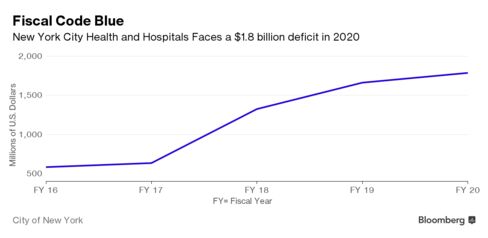
New York Hospitals Facing Fiscal Code Blue

http://www.bloomberg.com/politics/articles/2016-08-22/new-york-city-hospitals-seen-unwilling-to-take-stronger-medicine?utm_campaign=KHN%3A+Daily+Health+Policy+Report&utm_source=hs_email&utm_medium=email&utm_content=33278487&_hsenc=p2ANqtz–Ua5Q-PC5Hs3i1ni8bTaDNOfHhzF8R8meSEL9ZdWL6LejSQMUC3wLCDN9J_cuBB9IHRmZmF7BdmyqhMlNtFPa8KBOrzA&_hsmi=33278487

New York City’s public hospitals are in critical condition with rising costs and plummeting revenue. There’s no dispute about that diagnosis. The problem is with Mayor Bill de Blasio’s proposed cure, according to health policy makers, hospital administrators and budget watchdogs.

As NYC Health + Hospitals President Ram Raju describes it, the largest U.S. municipal-healthcare provider is an ailing system of 11 hospitals that’s losing revenue because of increased competition from non-profit hospitals for Medicaid patients and drastic cuts in federal and state aid for indigents.

His prescription: shift its 40,000-plus employees into a system of neighborhood clinics and transform campuses into affordable housing and long-term care, build enrollment of its MetroPlus insurance plan and persuade federal and state governments to spend more. That aid is projected to fall by almost $1 billion -– from $2.2 billion in FY16 to $1.4 billion in 2020.

How Zika could change the politics of late-term abortion

http://www.politico.com/story/2016/08/zika-abortion-politics-227285?utm_campaign=KHN%3A+Daily+Health+Policy+Report&utm_source=hs_email&utm_medium=email&utm_content=33278487&_hsenc=p2ANqtz-_oxvuB3q6E_-044MGqxHtZQvfsBmiNGjJ6fhDWinIz5SWjIXisl0VNUffuVw69iSsL03ukORkzNYUAORiNdKivUbCiKg&_hsmi=33278487

Barbara Betancourt holds her baby after being given a can of insect repellent by a City of Miami police officer on August 2.

The virus causes birth defects, a factor that might influence some views on abortion.

Public Health Officials Struggle To Identify Sepsis Before It Becomes Deadly

http://khn.org/news/public-health-officials-struggle-to-identify-sepsis-before-it-becomes-deadly/?utm_campaign=KHN%3A+Daily+Health+Policy+Report&utm_source=hs_email&utm_medium=email&utm_content=33278487&_hsenc=p2ANqtz-_8KIyYxXNIF-21jTIsaT1TCz3UXX37BTMaIxr7_hnAyIOw4I6NhoeCq28LgUM3bjzRgNkA6fCTpslqrXZ1qMCGsCvXeQ&_hsmi=33278487

After Rory Staunton fell at the gym and cut his arm in March of 2012, the 12-year-old became feverish and vomited during the night, complaining of a sharp pain in his leg. When his parents called his pediatrician the next day, she wasn’t worried. She said there was a stomach virus going around New York City, and his leg pain was likely due to his fall.

However, she advised his parents, Orlaith and Ciaran Staunton, to take the youngster to the emergency department because he might be dehydrated. There hospital workers did some blood work, gave him fluids and sent him home.

The next day Rory’s pain and fever were worse. His skin was mottled and the tip of his nose turned blue. The Stauntons raced back to the hospital, where he was admitted to intensive care. The diagnosis: septic shock. Rory was fighting a system-wide infection that was turning his skin black and shutting down his organs. On Sunday, four days after he dove for the ball in gym class, Rory died.

“It was frightening to think that something could kill my son so fast and it would be something that I had never heard of,” said Orlaith Staunton.

She’s not alone. Sepsis kills more than 250,000 people every year. People at highest risk are those with weakened immune systems, the very young and elderly, patients with chronic diseases such as diabetes, cancer or kidney disease and those with illnesses such as pneumonia or who use catheters that can cause infections. But it can strike anyone, even a healthy child like Rory.

Sepsis is a body’s overwhelming response to infection. It typically occurs when germs from an infection get into the bloodstream and spread throughout the body. To fight the infection, the body mounts an immune response that may trigger inflammation that damages tissues and interferes with blood flow. That can lead to a drop in blood pressure, potentially causing organ failure and death.

Drug and Device Makers Pay Thousands of Docs with Disciplinary Records

http://www.healthleadersmedia.com/physician-leaders/drug-and-device-makers-pay-thousands-docs-disciplinary-records?spMailingID=9400653&spUserID=MTMyMzQyMDQxMTkyS0&spJobID=981898992&spReportId=OTgxODk4OTkyS0

Physicians whose state boards have sanctioned them for harming patients, unnecessarily prescribing addictive drugs, bilking federal insurance programs, and even sexual misconduct nonetheless continue to receive payments for consulting, giving talks about products, and more.

Aetna CEO’s $131 Million Parachute Biggest Among Health Targets

http://www.bloomberg.com/news/articles/2015-06-17/aetna-ceo-s-131-million-parachute-biggest-among-health-targets


Aetna Inc. CEO Mark Bertolini has the most to gain among top executives at the three U.S. health insurers seen as targets in a potential wave of industry consolidation. Bertolini could receive $131.3 million should he lose his job in a takeover, according to data compiled by Bloomberg. Cigna Corp. Chief Executive Officer David Cordani would get $58.7 million, while Humana Inc. CEO Bruce Broussard’s so-called golden parachute is valued at $26.1 million.

The five biggest publicly traded insurers are all eyeing potential combinations after a two-year lull in big managed-care deals. Anthem Inc. has explored a takeover of Cigna and Humana, and Aetna and Cigna have considered buying Humana, Bloomberg has reported. The Wall Street Journal has said UnitedHealth Group Inc. might be interested in Aetna or Cigna.

We “expect this merger frenzy will culminate in a ‘Big Three’ that is a more efficient industry landscape,” Ana Gupte, an analyst at Leerink Partners, said Tuesday. Humana is likely to be acquired by Aetna or Anthem for $200 to $225 a share, she wrote.

The change-in-control payouts are meant to keep investor interests in mind.

“These protections provide a certain level of comfort for executives to put aside their personal issues and think, ‘What’s in the best interest of shareholders?’” said Yonat Assayag, a partner at ClearBridge Compensation Group, an executive pay consulting firm. “The amounts may seem large, but the cost compared to the value that’s created for shareholders is usually a very small percentage.”