Already Taxed Health Care Workers Not ‘Immune’ From Layoffs And Less Pay

https://khn.org/news/already-taxed-health-care-workers-not-immune-from-layoffs-and-less-pay/
Already Taxed Health Care Workers Not 'Immune' From Layoffs And ...

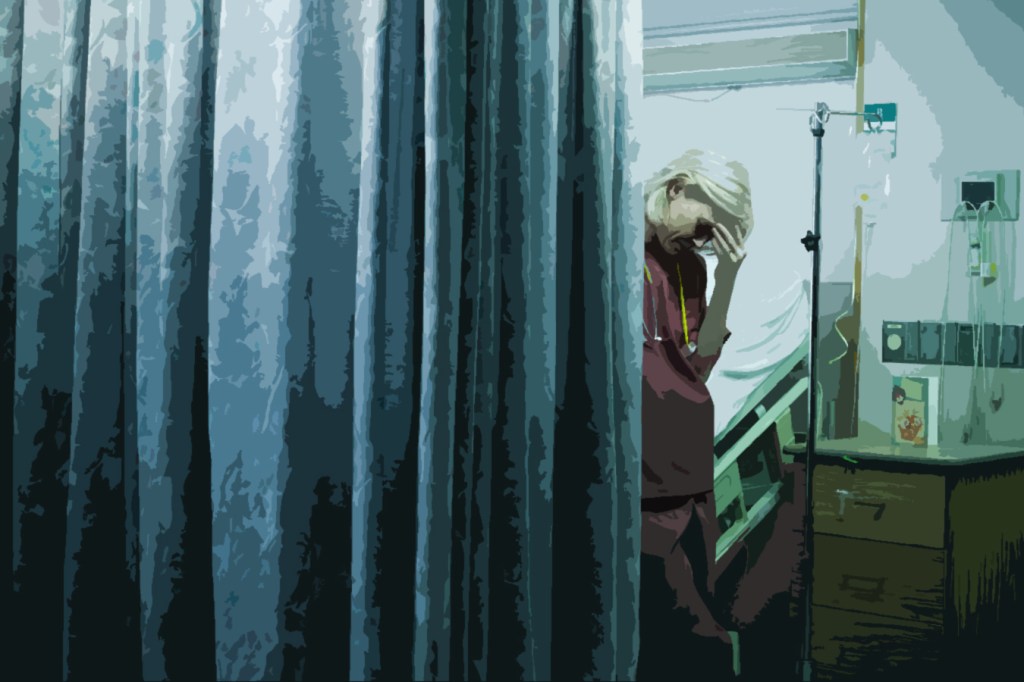
Just three weeks ago, Dr. Kathryn Davis worried about the coronavirus, but not about how it might affect her group of five OB-GYNs who practice at a suburban hospital outside Boston.

“In medicine we think we’re relatively immune from the economy,” Davis said. “People are always going to get sick; people are always going to need doctors.”

Then, two weeks ago, she watched her practice revenue drop 50% almost overnight after Massachusetts officials told doctors and hospitals to stop performing elective tests and procedures. For Davis, that meant no more non-urgent gynecological visits and screenings.

Late last week, as Davis and her partners absorbed the stunning turn of events, they devised a stopgap plan. The 35 nurses, medical assistants and secretaries they employ would have two options: move from full-time to part-time status or start collecting unemployment. Doctors in the practice would take a substantial pay cut. Davis said she’s hearing from colleagues who may have to permanently close their offices if the focus on crisis-level care continues for months.

“It’s shocking,” she said. “Everyone has been blindsided.”

Atrius Health, the largest independent physician group in Massachusetts, said patient volume is down 75% since mid-March. It is temporarily closing offices, placing many nonclinical employees on furlough and withholding pay for those who remain. The average withholding is 20%, and the company pledges that pay withheld will be returned. The lowest-paid workers, those earning up to $55,000, are exempt.

“What we’re trying to do is piece together a solution to get through the crisis and keep employed as many people as we can,” said Dr. Steven Strongwater, Atrius Health’s CEO.

Atrius cares for 745,000 patients in clinics that often include primary care, specialists, radiology and a pharmacy under one roof.

Strongwater said physician groups must be included when the federal government distributes $100 billion to hospitals from the $2 trillion stimulus package.

It’s not clear if that money will stop the tide of layoffs and lost pay at hospitals as well as in doctor’s offices. A Harvard Medical School physician group will suspend retirement contributions starting April 1.

Beth Israel Lahey Health, the second-largest hospital network in Massachusetts, announced executive pay cuts Monday.

“The suspension of elective procedures and decline in visits to our primary care practices and urgent care centers have resulted in financial challenges,” wrote CEO Dr. Kevin Tabb in an email to employees. Tabb said he would take a 50% salary cut. Other executives and hospital presidents in the system will forgo 20% of their salaries for the next three months.

“Although executive leadership compensation is being reduced, we will never compromise on doing the things that are essential to protect your safety and the safety of our patients,” Tabb told staff.

Dallas-based Steward Health Care has told hospital employees in Massachusetts and eight other states where it operates to expect furloughs focused on nonclinical staff. In a statement, Steward Health Care said it prepared for the pandemic but is experiencing a “seismic financial shock.”

“Elective surgeries are the cornerstone of our hospital system’s operating model — and the negative impact due to the cancellations of these procedures cannot be overstated. In addition, patients are understandably cautious and choosing to defer any nonemergency treatments or routine visits until this crisis has passed.”

Dr. Kaarkuzhali Babu Krishnamurthy, an assistant professor of neurology at Harvard Medical School who studies medical ethics, said employers need to think more carefully about the ethics of asking doctors and nurses to live on less when many are working longer hours and putting the health of their families at risk.

“At a time when health care systems are calling on doctors and nurses to do more, this is not the time to be making it more difficult to do that,” said Krishnamurthy.

There’s talk of redeploying laid-off health care workers to new COVID-19 units opening in shuttered hospitals or to patient overflow sites. Tim Foley, executive vice president for the largest health care union in Massachusetts, 1199SEIU, is promoting the development of a staff registry.

“It is more important, now more than ever, to explore all options to maintain the level of urgent care needed across the state and we look forward to working with all stakeholders to do just that,” Foley said in an email.


If the U.S. economy is in good shape, why is the Federal Reserve cutting interest rates?

https://www.washingtonpost.com/business/2019/07/31/if-us-economy-is-good-shape-why-is-federal-reserve-cutting-interest-rates/?utm_term=.1346fb3da080&wpisrc=nl_most&wpmm=1

Federal Reserve Board Chair Jerome Powell speaks during a Senate Banking Committee hearing on July 11.

The Federal Reserve is all but certain Wednesday to do something it hasn’t done in more than a decade: cut interest rates. The question on a lot of people’s minds is why.

Lowering interest rates, the Fed’s main way to boost the economy, is typically used in dire times, which it’s difficult to argue the United States is experiencing right now. Instead, top Fed officials are defending this as an “insurance cut” that’s akin to an immunization shot in the arm. They want to counteract the negative effects of President Trump’s trade war and prevent the United States from catching the same cold that Europe, China and elsewhere seem to have.

The Fed’s big decision comes at 2 p.m. Wednesday and will be followed by a 2:30 p.m. news conference from Fed Chair Jerome H. Powell, a frequent target of Trump’s criticism.

The Fed is widely expected to do a modest cut on Wednesday, probably lowering the benchmark interest rate from about 2.5 percent down to just shy of 2.25 percent. But the Fed seldom does just one cut, which is why Trump, Wall Street and much of the world will be listening closely to Powell for signs of when another cut is likely.

Wall Street is pricing in that the Fed will lower interest rates to about 1.75 by the end of the year, a far more dramatic move. And Trump has been blasting the Fed for months, saying he wants to see a “large” cut.

“The Fed is often wrong,” Trump said this week, reiterating his view that the stock market would be up 10,000 more points if the Fed had not raised interest rates four times last year. “I’m very disappointed in the Fed. I think they acted too quickly, by far. I think I’ve been proven right.”

But there are plenty of economists and prominent investors saying the Fed shouldn’t cut at all because it is not justified and will look as though the Fed is caving in to Trump’s bullying — or Wall Street’s.

“I have to conclude the Fed has lost some independence here,” said Blu Putnam, chief economist at CME Group.

The last time the Fed cut rates was in December 2008, when unemployment was over 7 percent (and rising quickly), the stock market had lost a third of its value, and a major financial institution, Lehman Brothers, had just declared bankruptcy, rocking the financial system.

Today unemployment is at a half-century low (3.7 percent), the economy is growing at a healthy pace (over 2 percent) and the stock market is sitting at record highs.

Congress gave the Fed two mandates: to keep unemployment low and prices stable. By about any measure one can look at, the Fed has achieved those goals. The job market is strong, and inflation remains surprisingly low.

The world will be listening closely for Powell’s rationale for lowering rates during fairly good economic times — and for his signal about whether another cut is coming in the fall.

It’s a tricky calculus. The one thing nearly everyone agrees on is this would be the biggest gamble yet for Powell, who took over as the central bank’s chair in early 2018.

The likely cut on Wednesday should make loans a little cheaper for businesses and Americans looking to buy homes and cars or start a company. But realistically, one cut won’t do much. The reason the stock market has rallied sharply in recent weeks is an expectation that this is the first of several cuts.

If the Fed does not do three cuts this year, the market could pull back, making financial conditions “tight” again, even though the Fed is cutting rates to try to loosen conditions.

Top Federal Reserve leaders see three key reasons to cut now.

1. Trump’s trade war. There is concern about the trade war, as well as weakness overseas, dragging down the U.S. economy. A closer look at the U.S. economy reveals there are already a few yellow, if not red, flags. Manufacturing was in a “technical recession” the first half of the year, the housing market remains sluggish, and business investment tanked in the spring as corporate leaders grow more wary of the ongoing trade tensions.

Powell and Fed Vice Chair Richard Clarida refer to these as “head winds” and “downside risks” that are picking up, and they prefer to address them before they grow into deeper problems. Clarida often points to 1995, when the Fed did three modest rate cuts (starting in July 1995 and ending in January 1996) that helped keep the economy growing for years to come.

2. The Fed needs to act sooner rater than later. New York Fed President John Williams, among others, has made the case that the Fed has limited medicine in the medicine cabinet to aid the economy and that it’s better to administer the pills at the first signs of trouble rather than waiting for full-blown illness when there might not be enough medicine left to make a difference. “When you only have so much stimulus at your disposal, it pays to act quickly to lower rates at the first sign of economic distress,” Williams said in a speech earlier this month.

Interest rates are very low by historical standards. For example, the benchmark rate was over 5 percent before the Fed started reducing it in 2007. Now the benchmark rate is half that amount, meaning there will be less stimulus this time around from cutting rates.

3. Inflation is too low. The Fed wants to see inflation of about 2 percent a year. For the past several years, it’s been running below that threshold and is currently sitting around 1.6 percent. Some Fed leaders, such as St. Louis Fed President James Bullard, say the Fed should cut rates to try to run the economy a bit hotter to boost inflation. They see little risk in doing this since inflation is so low, but they see great risk in not getting inflation back to target because business leaders will stop believing that 2 percent is the true target if it is never achieved.

While there are reasons to cut, some Fed leaders, including Boston Fed President Eric Rosengren and Kansas City Fed President Esther George, have raised doubts about whether it makes sense to cut now, before there are clear signs of trouble in the United States.

Rosengren has warned in recent speeches that insurance cuts do not come without a cost. Keeping rates low tends to spur bubbles that can come back to harm the economy later on. Already there are concerns about too much risky corporate lending, and lower rates are only likely to encourage more of those loans. He and others have also pointed out that using up the medicine now doesn’t leave much left to fight worse problems later on.

There are 10 members on the Fed’s committee that decides interest rate policy, and they do not appear to be in unison on this decision, let alone what to do in the fall, a reminder of just how much debate there is about the right course of action.

The U.S. economy is in the midst of a record-breaking expansion that has been growing for more than a decade, the longest expansion in U.S. history. Powell says keeping it going is his top goal.