More States To Expand Medicaid Now That Obamacare Remains Law

https://www.forbes.com/sites/brucejapsen/2017/03/26/more-states-to-expand-medicaid-now-that-obamacare-remains-law/#13cbbeaa19a6

Image result for More States to Expand Medicaid Now That Health Law Remains

More states will pursue expansion of Medicaid health benefits for poor Americans under the Affordable Care Act after Republicans failed to repeal and replace the law.

The American Health Care Act, also known as Trumpcare, would’ve rolled back the ACA’s Medicaid expansion and put restrictions on states that tried to expand such coverage. But Speaker of the U.S. House of Representatives Paul Ryan Friday pulled the ACHA legislation Friday, making, “Obamacare the law of the land,” as he said.

At least two states– Kansas and North Carolina–are already working toward becoming the 32nd and 33rd states to expand Medicaid  under the ACA. They would join 31 states plus the District of Columbia that have taken advantage of generous federal funding available under the law, President Obama’s signature legislative achievement, according to the Advisory Board.

 And there may be even more states that will resurrect state legislative efforts to expand Medicaid. Before Trump was elected, Georgia, Idaho, Nebraska and South Dakota were considering Medicaid expansion. But Trump’s election, along with Republican control of Congress, prompted these states to put on the brakes for Medicaid expansion when an ACA repeal looked likely. “The effort to expand Medicaid in Georgia just died,” the Atlanta Journal-Constitution said Nov. 9, 2016, the day after Trump won the electoral college.

From 2014 through 2016, the ACA’s Medicaid expansion population is funded 100% with federal dollars. Beginning this year, states gradually have to pick up some costs, but the federal government still picks up 90% or more of Medicaid expansion through 2020. It was a better deal than before the ACA, when Medicaid programs were funded via a much less generous split between state and federal tax dollars.

With the federal funding still part of the ACA, Kansas lawmakers just last week were forging ahead and now have a hurdle lifted with the law in place for the “foreseeable” future, as Speaker Ryan said. A so-called “manager’s amendment” in Ryan’s failed ACHA bill took specific aim at Kansas and North Carolina, making the states “long shots” at expanding Medicaid until Friday’s failed Obamacare repeal.

What now? Health insurers still face uncertainty after AHCA’s demise

http://www.fiercehealthcare.com/aca/what-now-health-insurers-still-face-uncertainty-after-ahca-s-demise?utm_medium=nl&utm_source=internal&mrkid=959610&mkt_tok=eyJpIjoiWVROa1lUWmxZV1l6Wm1SayIsInQiOiJkQ01ndjkrMEp6dzFQNGk0T3grck1cL2dBUVBXR2lqeDY1TXF6NHVmcmVZNVJjaUltVUtLd3lcL2Z4RFpOTjNMaUxxVGhXK1ZET2hWYXpyaExmSGRyYTY1d3BXSTMzRnNPSjdIbnFrKzVURkdOdXpLdkxJczRud2hlekJQb3RycGhsIn0%3D

Signs saying healthcare reform

Now that the American Health Care Act is officially off the table, health insurers that had been bracing for a major policy overhaul are once again left to figure out how to thrive under the old rules of the game.

Right before the AHCA was set to go up for a vote on the House floor Friday, Republican leadership decided instead to pull the bill, as they failed to win over enough right-wing GOP lawmakers to pass it.

With the Affordable Care Act in place for the foreseeable future, it “sharpens the focus” of insurers’ evaluation of whether they want to participate in the individual marketplaces next year and how to price their plans, Sandi Hunt, a principal at PwC, said in an interview.

“It means they’re going to have to sit down on Monday and really evaluate—OK, the world is not going to change now, let’s figure out how we want to proceed with that set of circumstances,” she said.

Ceci Connolly, president and CEO of the Alliance of Community Health Plans, noted that some factors may still make that difficult for the insurers she represents.

“Our nonprofit plans are committed to serving their communities but need clarity in order to make sound business decisions before the June filing deadline,” she said in an email. “ACA subsidies, reinsurance and risk adjustment must all be in place to ensure a functioning market.”

The future of one type of ACA subsidy—cost-sharing reduction payments—is of particular concern, as a federal judge ruled in a case brought by House Republicans that the funding for CSRs was illegally appropriated. The Obama administration appealed the decision, but the case had been put on hold since President Donald Trump took office.

For its part, America’s Health Insurance Plans had asked policymakers to fund CSRs through at least until 2019—a suggestion recently echoed by Anthem CEO Joseph Swedish.

Following news of the AHCA’s demise, AHIP spokeswoman Kristine Grow said the group looks forward to collaborating with policymakers and regulators on making improvements to the exchanges.

“Americans deserve a strong, stable individual market that delivers affordable coverage and access to quality care,” she said in an email. “We remain committed to working with Congress and the administration in a bipartisan fashion on solutions.”

Five Lessons From The AHCA’s Demise

http://healthaffairs.org/blog/2017/03/27/five-lessons-from-the-ahcas-demise/

Image result for lessons to learn

While the keyhole of history has had insufficient time to bring the failed launch of the American Health Care Act (AHCA) into focus, it’s not too soon to begin learning some of the lessons it can teach us. Legislative efforts have a lifespan but our health care system does not. So whether we are still rejoicing or recriminating, let’s take a look at some timeless principles we can apply to the ongoing effort to improve health care in the United States.

House cancels ObamaCare repeal vote as GOP defections mount

http://thehill.com/policy/healthcare/325690-house-expected-to-pull-obamacare-vote-from-schedule

House cancels ObamaCare repeal vote as GOP defections mount

Republicans are pulling their ObamaCare repeal bill from a scheduled Friday afternoon vote, an acknowledgement that it was headed toward a defeat.

President Trump asked Speaker Paul Ryan Paul RyanHouse cancels ObamaCare repeal vote as GOP defections mountWhite House: Vote at 3:30; Trump left ‘everything on field’Pelosi: GOP will need 215 votes to pass health billMORE (R-Wis.) to pull the measure a day after issuing an ultimatum that the House should vote on it, a GOP aide said.

Ryan is announcing the decision at a closed-door conference meeting, a Ryan aide told The Hill.

The decision is a huge setback for Trump, Ryan and the GOP, which has promised for years to repeal ObamaCare.

But the legislation that was headed toward the vote seemed doomed to failure. A Whip List kept by The Hill said 36 Republicans would vote no, with many more possibly voting against the measure.

The GOP could only afford 22 defections.

The bill came under fire from conservatives in the House Freedom Caucus, who demanded a number of changes to the bill that were intended to lower premium costs.

Trump and GOP leaders agreed to some of those changes, but that appeared to cost them the support of centrists.

One startling move came near midday Friday, when House Appropriations Committee Chairman Rodney Frelinghuysen Rodney FrelinghuysenHouse cancels ObamaCare repeal vote as GOP defections mountThe Hill’s 12:30 ReportLive coverage: Trump, GOP scramble for ObamaCare votesMORE (R-N.J.) said publicly that he was likely to vote against the bill.

Rep. Barbara Comstock (R-Va.), who represents a district won by Hillary Clinton Hillary Rodham ClintonHouse cancels ObamaCare repeal vote as GOP defections mountKeystone approval kicks off new fight over pipelineMnuchin: Trump has ‘perfect genes’MORE, also came out against the bill on Friday.

The decision to pull the vote came after Ryan met with Trump at the White House.

Senate GOP Holdouts Split Into Camps on Obamacare Overhaul

https://www.bloomberg.com/politics/articles/2017-03-21/senate-gop-holdouts-split-into-rival-camps-on-obamacare-overhaul?utm_campaign=KHN%3A%20Daily%20Health%20Policy%20Report&utm_source=hs_email&utm_medium=email&utm_content=48325710&_hsenc=p2ANqtz-_zZDM8228WNi-Ku9hXuUFw27f4BUDn6lsIYfUqZar2oZrygrjbPp0rdvggJk8hf5kffQobhhC6n8LUKzS1NC6wPw9iqw&_hsmi=48325710

Image result for GOP split

The House is racing to find enough votes for its health-care bill this week, but even if it passes, prospects in the Senate have only darkened.

More than enough Senate Republicans oppose the House bill to kill it — with rival camps insisting on pulling the bill in opposite directions to meet their demands. With just a 52-48 majority, the bill would fail if three or more Republicans vote against it.

Republican leaders face a conundrum: If they move the bill to the right, moderates go running; move it to the left, and conservative opponents dig in.

“We’re not slowing down,” Majority Leader Mitch McConnell told reporters Tuesday. “We will reach a conclusion on health care next week.”

Whether Republicans would actually tank something they’ve promised for the past seven years is unclear. All of them say they want something to pass, although it’s not clear any have been swayed by the tweaks to the bill House leaders unveiled Monday evening.

A look at how Senate GOP opposition to the measure breaks down:


House Proposal to Promote Association Health Plans Poses Risks for Insurance Markets, Consumers

http://www.commonwealthfund.org/publications/blog/2017/mar/house-proposal-to-promote-association-health-plans-poses-risks-for-insurance-markets-consumers?omnicid=EALERT1182419&mid=henrykotula@yahoo.com

While the nation is focusing on the American Health Care Act, the most recent proposal to repeal and replace the Affordable Care Act (ACA), another Republican proposal is quickly advancing through Congress. The Small Business Health Fairness Act, H.R. 1101, allows small employers to band together and buy health insurance though federally certified associations. Despite its name, the bill would have a considerable and likely detrimental impact on the private health insurance market and undermine the ability of states to protect small employers and their employees.

The concept of federally certified Association Health Plans (AHPs) is not new. AHP proposals similar to H.R. 1101 are prominently featured in many of the legislative proposals to replace the ACA. Similar versions of this legislation were defeated in the early 2000s with opposition from a broad spectrum of stakeholders. One important critic, the National Association of Insurance Commissioners (NAIC), strongly opposes federal AHP legislation, including H.R. 1101, because the approach would “strip states of the ability to protect consumers and create competitive markets.”

H.R. 1101 would encourage professional and trade associations to offer health insurance coverage to their members nationwide. Proponents suggest that AHPs will offer lower premiums to members, primarily through increased bargaining power and fewer regulatory requirements. Under the bill, AHPs would be certified by the federal government and regulated under minimal federal standards for premiums, benefits, and financial solvency.1  In general, these federal standards would be less stringent than those required of insurers under state insurance law.

While some members of AHPs may benefit, this proposal would undermine states’ ability to regulate health coverage sold to their residents and to implement local standards and protections. Ultimately, federally certified AHPs under H.R. 1101 have the potential to negatively impact consumers and health insurance markets in the following ways:

Approximated Employment Effects of the American Health Care Act

https://www.americanprogress.org/issues/economy/news/2017/03/20/428761/approximated-employment-effects-american-health-care-act/

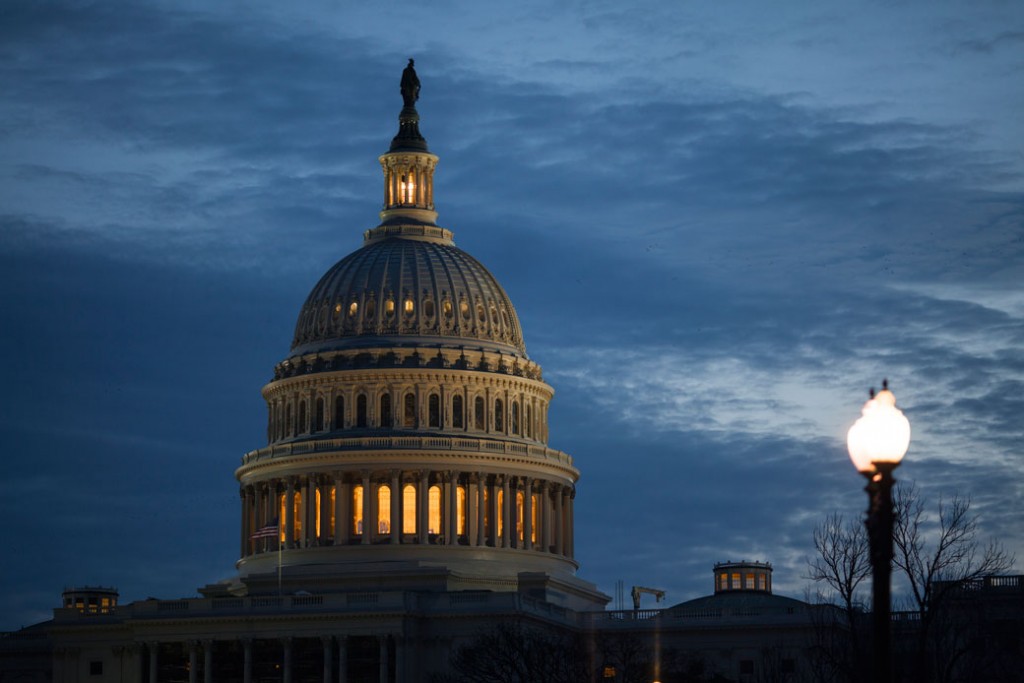
The lamp remains illuminated in the top of the Capitol Dome, February 2017.

Undoing the Affordable Care Act, or ACA, will likely mean less government spending on Medicaid and subsidies for private insurance and thus less spending on health care in general. At the same time, the new proposed law, the American Health Care Act, or AHCA, would also cut taxes for higher-income Americans. All three of these factors will likely impact the economy and, thus, employment. Less spending on health care due to cuts to Medicaid and health insurance subsidies will lower employment in the future, while tax cuts could result in some positive effects on jobs. As a result, there will be 1.8 million fewer jobs in 2022 than otherwise would have been, in our estimates.

GOP health overhaul puts pressure on state governments

http://abcnews.go.com/Health/wireStory/gop-health-overhaul-puts-pressure-state-governments-46136392

Image result for aca repeal and replace

The Republican health care plan means less money for states and gives them a tough choice: Find a pot of cash to make up the difference or let coverage lapse for millions of lower-income Americans.

Governors and state lawmakers analyzing the Republican plan to replace former President Barack Obama’s Affordable Care Act fear a return to the past, when those without health coverage used emergency rooms for their medical needs. That uncompensated care was written off by hospitals or billed to the state.

The ax would fall especially hard on Medicaid, the state-federal program that provides health care to the poor and lower-income workers.

In Washington, for example, state officials say they would have to come up with $1.5 billion a year starting in 2020 to keep coverage in place for about 600,000 residents who gained coverage through the Medicaid expansion that was a key part of Obama’s health care law.

“It would actually leave our nation worse off than before the ACA was implemented,” Gov. Jay Inslee, a Democrat, said in a written statement.

Most states don’t yet have firm cost estimates on the consequences of the proposal by Republicans in the U.S. House. A Congressional Budget Office analysis released Monday said the GOP plan would lead to 24 million Americans losing health care coverage over the next decade but did not provide a state-by-state breakdown.

In addition to Medicaid, states are concerned about the Republican plan to replace federal premium subsidies for people who buy private insurance with tax credits that would be adjusted based on age, with older people paying more. If the cost of health insurance is too great under the GOP plan, people might drop coverage and rely instead on emergency rooms.

Connecticut estimates that 34,000 people who buy policies in the insurance marketplace would drop their coverage under the GOP plan. Overall, it would add about $1 billion in annual costs for the state, equivalent to 5 percent of its budget.

It is the GOP’s proposed changes to Medicaid, which has become the largest source of federal revenue for states, that have drawn the most reaction since the CBO report was released.

Under the Affordable Care Act, 31 states and the District of Columbia expanded their Medicaid programs, providing coverage to about 11 million Americans. That included a number of Republican-led states, including Indiana under Vice President Mike Pence when he was governor there.

Among those benefiting from Indiana’s expansion is Michael Boone, a 55-year-old cook from Gary.

Boone said it was the first time he has had health coverage as an adult, and it allowed him to get treatment for medical problems he didn’t know he had. They included high cholesterol, high blood pressure and a hernia.

His coverage could be a casualty if the Medicaid cuts take effect and Indiana cannot find a way to pay for a larger share.

“I really don’t have a full grasp of the situation yet,” Boone said. “But right now, I’m scared to death.”


The Lessons of Obamacare

http://www.vox.com/policy-and-politics/2017/3/15/14908524/obamacare-lessons-ahca-gop

Image result for lessons to learn

On January 6, President Barack Obama sat down with us for one of his final interviewsbefore leaving the White House. The subject was the Affordable Care Act — the legislation that has come to carry his name and define his legacy.

It was strange circumstances Obama found himself in. He was leaving office an unusually popular president, with approval numbers nearing 60 percent. But his most important domestic achievement was imperiled. Republicans had spent years slamming Obamacare for high premiums, high deductibles, high copays, and daunting complexity. Donald Trump had won the White House in part by promising to repeal the ACA and replace it with “something terrific.” Both houses of Congress would be controlled by Republicans who appeared set to carry out his plan.

But over the course of the next 70 minutes, it became clear that Obama didn’t think they would get the job done. If he sounded unexpectedly confident, it’s because he believed the wicked problems of health reform — problems that bedeviled him and his administration for eight years — would turn on the GOP with equal force.

“Now is the time when Republicans have to go ahead and show their cards,” he said. “If in fact they have a program that would genuinely work better, and they want to call it whatever they want — they can call it Trumpcare or McConnellcare or Ryancare — if it actually works, I will be the first one to say, ‘Great; you should have told me that in 2009. I asked.’”

Two months later, the release of House Republicans’ replacement plan — the American Health Care Act — has made Obama look prescient. The bill quickly placed Republicans under siege from both the left, which has found more to like in Obamacare as its survival has become threatened, and the right, which attacked the replacement as unrealistic and ill-considered, and, most damning of all, as “Obamacare 2.0.”

The biggest problem Republicans face, though, isn’t from activists in either party. It’s from the tens of millions of Americans who now depend on Obamacare, and their friends, families, co-workers, and neighbors. They have been promised a replacement that costs less and covers more, and the GOP’s plan does neither.

According to the Congressional Budget Office, the AHCA would throw 24 million people off health insurance over the next 10 years and leave the remnant in plans with higher deductibles, higher copays, and less coverage. The law would let insurers charge older Americans 500 percent more than younger Americans, and the sparer subsidies wouldn’t adjust to the local cost of insurance coverage, and thus would be insufficient in many areas. This is not the “something terrific” Trump promised, nor the kind of health care that polling shows Americans want.

We are reporters who have covered health care, and the legislative ideas that became the Affordable Care Act, since before Obama’s election. In the course of that reporting, including recent conversations with Obama and dozens of elected officials and staffers responsible for the Affordable Care Act’s design, passage, and implementation, we have unearthed several lessons from the law, which current and future health reformers should heed.

At the moment, Republicans are ignoring most of them.


The Wrong Way to Lower Health-Insurance Premiums

https://www.bloomberg.com/view/articles/2017-03-17/the-wrong-way-to-lower-health-insurance-premiums

Image result for high deductible health plan

For proponents of the American Health Care Act, perhaps the most encouraging nugget in the Congressional Budget Office’s otherwise critical analysis is that insurance premiums could fall by 10 percent on average by 2026. Even this prediction is more mirage than reality, however, in part because of an obscure concept known as “actuarial value.”

As many opponents of the Republicans’ Obamacare replacement legislation have already noted, for many people, the decline in premiums would be smaller than the cutback in their subsidies, so they would still end up paying more. And in any case, the predicted fall in premiums partly reflects a troubling rise in the share of older Americans without insurance, a change that would shift the enrollment pool to younger, less expensive beneficiaries.

Another factor, however, has received less attention, though it is hidden in plain sight in the CBO analysis: The premium reduction would occur in no small part because the insurance products wouldn’t be as good. In other words, their actuarial value would fall.

An insurance policy’s actuarial value is the share of total health-care costs paid by the plan rather than the policy holder, through deductibles and copayments. A plan with an actuarial value of 80 percent will pick up, on average, 80 percent of the cost of care. Plans with higher actuarial values have higher premiums, not surprisingly, because they provide deeper insurance. And if a plan’s actuarial value is very low, it may not really qualify as insurance at all.

The Affordable Care Act sets minimum actuarial values for each of the four tiers of plans that can be sold on the exchanges; the lowest, for bronze plans, is about 60 percent. The new legislation would repeal these minimums.

 In its analysis of the Republican proposal, the CBO found that insurers would offer lower-value policies “because they could offer a plan priced closer to the amount of the premium tax credit so that a younger person would have low out-of-pocket costs for premiums and would be more likely to enroll.” Similarly, insurers would hesitate “to offer plans with high actuarial values out of a fear of attracting a greater proportion of less healthy enrollees to those plans.” Since plans would still be required to cover 10 categories of essential health benefits, and since out-of-pocket limits would remain in place, plans would not dip too far below 60 percent, in the CBO’s estimation. But more plans would drop toward that level.

To see how big a deal this is, it is instructive to study the table toward the end of the CBO’s analysis, which calculates premiums under current law and under the AHCA. A 40-year-old single person could see his or her premium fall 7 percent — to $6,050, from $6,500. That’s only slightly less than the average 10 percent premium decline. Yet the actuarial value of the person’s plan would decline to 65 percent, from 70 percent or 87 percent, depending on his or her income.

To get some sense of what these lower actuarial values mean in terms of higher deductibles, we can look to the most recent Centers for Medicare and Medicaid Services calculator. It suggests that a plan with a $1,500 deductible, an 80 percent coinsurance rate (the plan pays 80 percent of costs above the deductible and below the maximum out-of-pocket threshold), and a $7,200 maximum out-of-pocket limit would have an actuarial value of 73 percent. The same plan with a $5,000 deductible would have an actuarial value of 61 percent. In other words, a decline in actuarial value of about 12 percentage points (not far from the average decline in the CBO examples) would raise the policy’s deductible by $3,500.

It’s no wonder that the premium for such a plan would be lower — in the same way that it’s no wonder a 12-ounce can of soda costs less than a 35-ounce bottle. It’s no great accomplishment to lower premiums by increasing other consumer costs.

As the CBO concluded, under the Republicans’ system, “individuals’ cost-sharing payments, including deductibles, in the nongroup market would tend to be higher than those anticipated under current law.” Indeed, according to an analysis from the Center for American Progress, average total costs to consumers would be significantly higher.

If you think that competition can fix this, note another problem that the CBO points out: Under Obamacare, the actuarial value requirements allow for easy comparison shopping; plan A can be directly compared with plan B. Under the Republican system, it would be harder to shop for a policy based on price.

Health-care reform is indeed complicated. Esoteric concepts like actuarial value have big effects on every family’s bottom line.