


Who are the GOP senators who worked on the American Health Care Act behind closed doors? You’ve likely heard they are all white men chosen by Majority Leader Mitch McConnell. Here are some of their vital stats that may have influenced the outcome.
Who are the GOP senators who worked on the American Health Care Act behind closed doors? You’ve likely heard they are all white men chosen by Majority Leader Mitch McConnell. Here are some of their vital stats that may have influenced the outcome.

Issue: Prior to the Affordable Care Act (ACA), people with preexisting health conditions could be denied insurance coverage or charged higher rates. If the law is repealed, these protections could be diluted or lost altogether.
Goals: Assess the ACA’s impact on coverage and access for people with preexisting conditions and compare their coverage gains with state high-risk-pool enrollment pre-ACA.
Methods: Analysis of Behavioral Risk Factor Surveillance System data for the period 2011–13 to 2015.
Key Findings and Conclusions: Between 2013 and 2015, 16.5 million nonelderly adults gained coverage following full ACA implementation. Of those, 2.6 million had preexisting conditions that could have otherwise precluded them from coverage because of discriminatory denials and pricing; 9.4 million had conditions that could have otherwise affected insurance cost. We found strong correlations between these coverage gains and access to care. Coverage and access gains for people with preexisting conditions were unrelated to the size or existence of the state high-risk pools that 35 states funded for such individuals pre-ACA. Our findings suggest that proposals to replace current protections for people with preexisting conditions with high-risk pools are unlikely to be sufficient to maintain the ACA’s gains.
Americans with chronic health conditions are at the center of the debate over access to health care coverage. The U.S. Department of Health and Human Services’ Office of the Assistant Secretary for Planning and Evaluation (ASPE) estimates the number of Americans with such “preexisting conditions” ranges from 19 percent to 50 percent of all nonelderly Americans.1,2 This range represents the difference between conditions that fit into a “narrow” definition of preexisting conditions (19%), and a “broad” definition (50%). The narrow definition includes very costly health conditions that would cause insurers to refuse coverage absent the Affordable Care Act’s (ACA) provisions; the broad definition includes slightly less expensive chronic health conditions that could nevertheless make the cost of insurance in the individual market without the ACA largely unaffordable for most patients.
In 2016, the Henry J. Kaiser Family Foundation, in its review of pre-ACA medical underwriting practices, estimated that 27 percent of nonelderly American adults had health conditions that “would likely leave them uninsurable if they applied for individual market coverage.”3 Similarly, a Commonwealth Fund study found that, in 2010, 36 percent of adults ages 19 to 64 who had tried to buy a plan in the individual market over the prior three years were turned down, charged a higher price, or had a condition excluded from their coverage because of a health problem.4
The presence of preexisting conditions is particularly important for the millions of Americans who have gained coverage under the ACA, which Congress and the Trump administration are seeking to repeal.5 The Commonwealth Fund study found significant improvements in the ability of people with health problems to purchase plans on their own in 2016 relative to 2010.6
In this issue brief, we observe whether the coverage gains for people with preexisting conditions also have resulted in better access to care. Better access is defined as a greater likelihood of having a regular health care provider (whether one or more than one clinician) and having less trouble seeing a provider because of the cost.
Prior to passage of the ACA, many states had high-risk pools that sought to provide coverage to individuals locked out of the individual insurance market because of expensive preexisting conditions. Between 2010 and 2013, the ACA funded the Pre-Existing Condition Insurance Program, a set of federally funded high-risk pools to provide interim coverage for those with such conditions. If these pools had been successful in addressing coverage for those with preexisting conditions, we would expect to see a smaller gain in access to care for this population in those states that had previously enrolled substantial shares of the nongroup market in the pools.
For this brief, we considered both the narrow and broad definitions of preexisting conditions. Among the general population surveyed between 2011 and 2015, data from the Behavioral Risk Factor Surveillance System (BRFSS) indicate that 20 percent of Americans have preexisting conditions under the narrow definition and 61 percent of Americans have these conditions under the broader definition. Using the BRFSS data, we estimate that 16.5 million more people were insured in 2015 than in the 2011–2013 period.7 Among this newly insured group, 2.6 million had one or more preexisting conditions under the narrow definition and 9.4 million had one or more under the broader definition (Exhibit 1).
Click to access SENATEHEALTHCARE.pdf

A discussion draft of the Senate bill has been posted. The full text of the 142-page bill can be read here.
The Senate draft includes deep cuts to Medicaid and would fundamentally reshape it from an open-ended government commitment to a system of capped federal payments that limit federal spending.
The bill repeals billions of dollars ObamaCare taxes used to raise money for the law’s coverage expansion and also abolishes the law’s mandates to buy coverage.
The health law’s tax credits to help people buy private coverage would be kept, but would be reshaped so that they are less generous and cost the government less money.
It also phases out the federal funding for ObamaCare’s expansion of Medicaid over four years — from 2020 to 2024 –less than the seven-year phase out favored by more moderate Republicans.
A draft of the long-awaited Senate healthcare bill, crafted behind closed doors, will be publicly unveiled on Thursday.
Just a day before the bill’s scheduled release, some senators said they still didn’t know the details of some key provisions, creating uncertainty as Senate Majority Leader Mitch McConnell (R-Ky.) pushes toward a vote next week.
Here’s what to watch for.

Insurers hit a major deadline Wednesday: They must inform regulators in 39 states whether they will sell insurance on many Affordable Care Act marketplaces and, if so, how much they would like to charge.
It’s something of a moment of truth for the Affordable Care Act’s marketplaces, whose health depends in large part on the participation of private insurers. And so far, states are seeing mixed results: One major insurer has made a big pullout, while a different one announced it would expand into new states.
Insurance giant Anthem announced it would leave the marketplaces — also called exchanges — where individuals can use federal subsidies to buy health plans in two states in 2018, Indiana and Wisconsin. Oscar Health, a start-up company that was co-founded by Ivanka Trump’s brother-in-law, announced it would expand in Ohio, New Jersey, Texas, Tennessee, California and New York.
The deadline applies to all 39 states whose marketplaces are run by the federal government. An evolving map by the Kaiser Family Foundation showing which counties are at risk of having no insurance options next year highlights 44 counties in four states, where about 30,000 people buy insurance through the marketplaces.
People who buy individual insurance plans in the marketplaces can take advantage of federal tax credits that are pegged to income and reduce monthly premium payments. To date, there has not been a county with zero insurers selling policies on its marketplaces, and it’s not totally clear what will happen if a county is left without any plans. It’s possible, however, that without a functional exchange, would-be participants would have to shoulder the full costs of their health insurance — or go without.
The future of the marketplaces has become a major political talking point, with the White House declaring the marketplaces a failure. Democrats blame the struggles of the market on Republicans’ failure to offer insurers reasonable clarity about the future. In particular, insurers have complained that decision-making has been difficult without certainty that cost-sharing reduction subsidies, federal payments that help bring down the out-of-pocket costs for lower-income Americans, will be paid next year.
The business of selling health coverage on the Affordable Care Act marketplaces has become “difficult due to a shrinking and deteriorating individual market, as well as continual changes and uncertainty in federal operations, rules and guidance, including cost sharing reduction subsidies and the restoration of taxes on fully insured coverage,” Anthem said in a statement announcing the decision.
“When the dust settles, there is more work to be done on the regulatory side to make sure it will be stable, but I’m confident we will see a stable market there,” Schlosser said.
MDwise Marketplace, an insurer in Indiana also announced it would leave that state’s exchange. That could put four counties at possible risk of having no insurer next year, according to Kaiser, although that is uncertain because a different insurer, Centene, has announced it is expanding in the state. A spokeswoman for Centene said the company was still working through the filing process and would not share information until it was complete.
Kaiser found counties in Ohio, Missouri and Washington are at risk of having no insurers.

Democrats will begin slow-walking Senate business on Monday as part of their opposition to Republican attempts to overturn the Affordable Care Act.
Senate Minority Leader Chuck Schumer of New York said Democrats will object to requests for “unanimous consent” to set aside rules and expedite proceedings. The procedural move is a tactic the minority party can use to draw out the legislative process for days, forcing Republicans to jump through procedural hurdles to get anything done.
The goal, he said, is to refer the GOP health care bill to a committee where it can be debated and amended publicly. Republicans are writing their bill “under the cover of darkness because they’re ashamed of it,” he said.
“This is a bill that would likely reorder one-sixth of the American economy and have life-and-death consequences for millions of Americans, and it’s being discussed in secret with no committee hearings, no debate, no amendments, no input from the minority,” he said. “This is the most glaring departure from normal legislative procedure that I have ever seen.”
The move coincides with a new #AmericaSpeaksOut campaign Senate Democrats launched Monday urging Americans to “speak out against Trumpcare and share their stories.” They also plan to hold the Senate floor tonight with speeches about health care.
The House passed its Obamacare repeal bill in May, but Senate Republicans have been drafting their own bill behind closed doors.
In a letter, Democrats provided some Senate Republican leaders with a list of all 31 potential Senate rooms “to assist” Republicans in scheduling a hearing.
They wrote that Democrats, by comparison, held about 100 hearings and meetings, accepted more than 150 amendments sponsored or cosponsored by GOP senators and spent 25 days in floor debate during the drafting of the Affordable Care Act.
The move by Democrats to slow Senate business will not impact consideration of President Trump’s nominee to lead the Federal Emergency Management Agency, Brock Long, who is expected to be confirmed Tuesday, according to a Senate Democratic aide. Schumer said Democrats would not object to requests for unanimous consent on honorary resolutions, either.
The greater impact likely will be the interruption of the legislative process and routine Senate business.
Speaking on the Senate floor, Schumer asked Senate Majority Leader Mitch McConnell of Kentucky to hold an all-senators meeting to discuss a bipartisan way forward on lowering the cost of health care, raising the quality of care and stabilizing the insurance marketplaces.
McConnell responded that senators would meet on the Senate floor with an unlimited amendment process. He said there would be “ample opportunity” to read and amend the bill when Schumer asked whether Democrats would have more than 10 hours to review it.
“I rest my case,” Schumer said.
Republicans blame Democrats for refusing to negotiate on a health care bill.
“Democrats for MONTHS have stated they have no interest in working with Republicans on fixing Obamacare,” Michael Reed, the Republican National Committee’s research director and deputy communications director, wrote in a statement. “Now, Democrat efforts to feign outrage over health care negotiations should be seen for what it is — a pure partisan game aimed at placating the far-left.”
McConnell, in a Senate floor speech, said Obamacare has increased costs and reduced choice, causing Americans to drop coverage. He said the entire Senate Republican conference has been “active and engaged” for months on legislation that would stabilize insurance markets, remove mandates to buy insurance, and preserve access to care for those with pre-existing conditions.
“We believe we can and must do better than Obamacare’s status quo,” he said.
The House-passed health care bill, called the American Health Care Act, would lead to 23 million fewer people having health insurance by 2026, according to the Congressional Budget Office. If the Senate is able to pass health care legislation, the two chambers will have to come to a compromise to get a final bill to Trump’s desk.
As Democrats prepared for battle over the Senate bill, conservative House Republicans planned to send a letter to McConnell warning against letting the legislation get too moderate if he wants to keep support from the House after it passed the Senate.
The letter from the Republican Study Committee, which has more than 150 members, states that its members have “serious concerns regarding recent reports suggesting that the Senate’s efforts to produce a reconciliation bill repealing the Affordable Care Act are headed in a direction that may jeopardize final passage in the House of Representatives,” according to a copy of the draft obtained by USA TODAY.

The 52 Republican senators have been meeting several times a week behind closed doors to develop a bill to repeal and replace the Affordable Care Act. At least 50 of them must be on board for the bill to pass, and they could try as soon as next week.
Healthcare Triage: Employer-Based Insurance Can Trap You at Work

Here’s another possible consequence of repealing the Affordable Care Act: It would be harder for many people to retire early. That’s the topic of this week’s Healthcare Triage.
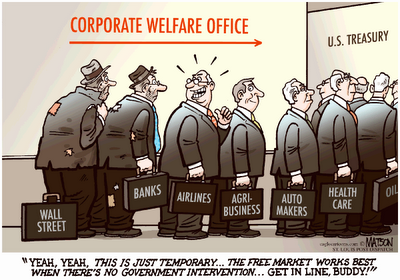
Redistribution of wealth — one of the most radioactive subjects in American politics — has moved from being a subtext in the national debate over health care to being the core of it.
Politicians prefer to talk about health reform in terms of benefits — extending medical coverage to those who lack it, curbing increases in costs and improving quality.
They offer gauzy, have-it-all promises to make the system better, more efficient and more generous, as though it can all be done without anyone having to sacrifice anything.
House Republicans, led by Speaker Paul D. Ryan (R-Wis.), say that the measures they introduced Monday will increase competition and give consumers more choices.
What makes the latest health-care battle different from past ones is that it is not about building a new government program. This time, the question is whether to abolish one — and replace it with something else.
That means it is harder to gloss over a bedrock philosophical and ideological question that has always been in the background of any argument about the government’s role in health care: What is the minimum that society should provide for its poorest, most vulnerable citizens, and how much should be taken from the rich and powerful to do it?
“Even though it is a technical discussion, it’s a really big value discussion,” said Robert Blendon, a professor of health policy and political analysis at Harvard University.
Democrats, who had passed the seven-year-old system known as Obamacare without a single Republican vote, say that the GOP proposal to repeal more than 20 taxes enacted under the law amounts to a windfall for the rich and for corporate interests.
The Republican plan also probably would make Medicaid, the program that provides coverage to the poor, less generous.
Overall, it would be “a big transfer. This is a massive tax cut for unpopular industries and wealthy individuals,” said Andy Slavitt, who was acting administrator of the Centers for Medicare and Medicaid Services during the final years of the Obama administration. “It is about cutting care for lower-income people, seniors, people with disabilities and kids to pay for the tax cut.”
Meanwhile, conservative critics argue that the blueprint goes too far the other way. In their view, for instance, the individual tax credits included in the Ryan-backed plan to offset the cost of insurance are actually a new entitlement, not all that different from the subsidies provided under the Affordable Care Act.
“The House Republican proposal released last night not only accepts the flawed progressive premises of Obamacare but expands upon them,” said Michael Needham, the chief executive of Heritage Action for America.
However, economic historian Bruce Bartlett, who served in the administrations of Ronald Reagan and George H.W. Bush, said that argument ignores that health insurance itself is a means of spreading the cost of health-care around.
“Republicans argue that redistribution is inherently immoral without acknowledging that the very nature of insurance is per se redistributive,” Bartlett said. “You’re taking money from people whose houses don’t burn down to give it to the people whose houses do burn down.”
There were many ways that Obamacare also redistributed the burden of medical costs — from the sick to the healthy, with provisions such as the one denying insurers the ability to refuse coverage to people with preexisting conditions; from the old to the young, with a mandate that everyone have coverage or pay a penalty; from the rich to the poor, with an array of new taxes.
By contrast, “the Republican plan, as outlined right now, really is centrally about income redistribution, of the reverse Robin Hood variety,” said Austan Goolsbee, a University of Chicago economics professor who was chairman of Obama’s Council of Economic Advisers.
Democrats are framing their argument against the Republican approach in precisely that way.
“If Republicans have their way, working families, older Americans, and people with disabilities will face huge new health costs. Families across America are going to be pushed off their health coverage just so Republicans can hand a massive tax break to the wealthy,” House Democratic leader Nancy Pelosi (Calif.) said in a statement.
By producing their own proposal, Republicans are wandering into a familiar political thicket.
“The problem that the Republicans are going to have is anything they do makes them the inheritor of anger at the health system. That’s not a pleasant place to be, and now, they’re going to own it. All the Democrats know exactly how that feels,” Goolsbee said.
White House press secretary Sean Spicer insisted that widespread dissatisfaction is going to help the Republicans pass their plan to replace the Affordable Care Act. Health-care costs have continued to rise, and in many states, insurance companies are pulling out of the health-care exchanges that were set up under the law.
“What we’ve seen over the last few years with Obamacare is you can have an insurance card, but that doesn’t mean that someone’s going to take it, and it sure doesn’t mean that it’s going to be affordable,” Spicer said.
“When it comes to communication, I think, one of the things that’s really helpful is that part of the sell is done for us,” Spicer said. “We don’t have to explain the problem: People are living it.”
The question now is how to come to grips with the fact that it will not be painless to fix it.
http://www.politico.com/story/2017/06/18/medicaid-overhaul-kentucky-matt-bevin-trump-country-239655

Kentucky Gov. Matt Bevin’s planned overhaul of Medicaid is running into the unforgiving reality of impoverished small towns like this one, which voted overwhelmingly for President Donald Trump.
Making adults work as a condition for getting health benefits is popular with the conservatives running many state capitals and Washington, D.C. But here in Magoffin County, where one of the last coal mines shuttered two years ago, there is little work to be had.
Trump’s Health and Human Services Department is expected to bless Bevin’s plan requiring poor adults to work to enroll in Medicaid in a first test of the GOP idea nationwide. Arizona, Arkansas, Indiana, Maine and Wisconsin have already asked the federal government for similar permissions, or will do so soon.
Trump’s top health officials, along with many Blue Grass Republicans, argue the work and other new requirements would bring much-needed discipline to a program that’s grown by more than 11 million people nationally under Obamacare’s coverage expansion.
“If I had my way, everybody who is able to work would be required to work for any program there is,” said Sen. Rand Paul (R-Ky.). “I think work is a good thing, not a bad thing. I don’t think work is punishment.”
“I think it incentivizes people to get out there,” agreed Kentucky state Sen. Ralph Alvarado, a physician, who said that able-bodied individuals relying on public assistance should find ways to give back to their communities.
Medicaid was never meant for “able-bodied” adults who obtained coverage under Obamacare and the program must be protected for more vulnerable populations, Alvarado said.
Under Kentucky’s proposal, able-bodied, low-income adults would be required to work up to 20 hours per week, or pursue activities such as job training or volunteer work to be eligible for Medicaid coverage. The state is also seeking federal approval for other conservative policies, including instituting monthly premiums ranging from $1 to $15 for certain low-income adults and parents, and co-pays if individuals miss premium payments.
 HENRY KOTULA