Hospital CEOs could face new taxes 

The Republican tax overhaul bill also includes a small section that would levy a 20% excise tax on any wages of more $1 million for executives who work at tax-exempt organizations. Guess who’s not thrilled about that? Hospitals.

What they’re saying: The American Hospital Association said it was “concerned” about that provision because “there is already a rigorous process prescribed by the Internal Revenue Service for setting up executive compensation.”

Go deeper: As Axios’ Bob Herman has reported, hospital and health system CEOs command some of the highest salaries in the not-for-profit world.

The value of hospitals’ tax exemptions

http://www.aha.org/content/17/benefit-of-tax-exemption.pdf?utm_source=newsletter&utm_medium=email&utm_campaign=newsletter_axiosvitals&stream=health-care

Image result for community benefit


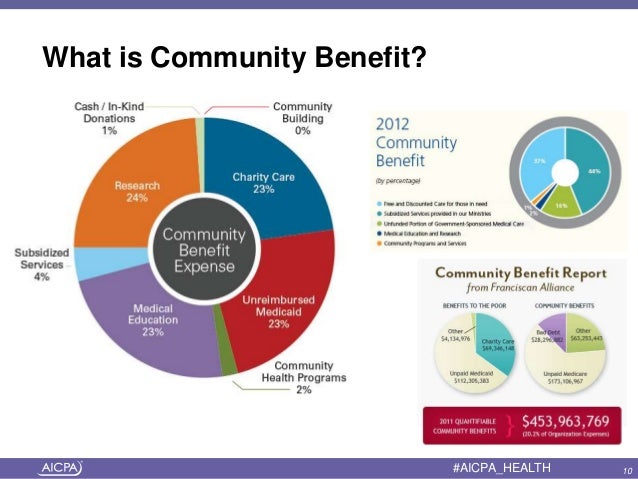
The American Hospital Association released a report last week that said the benefits that not-for-profit hospitals provide to their local communities far outweigh foregone federal tax revenue. But Axios’ Bob Herman talked to some experts who said the AHA’s report has flaws and omissions that exaggerate hospitals’ community roles and understate the power of their tax exemptions.

  • The AHA did not account for the giant tax break hospitals get on their property, “which is just a joke,” said Craig Garthwaite, a health economist at Northwestern University.
  • “Exclusion of property taxes would be a very major problem,” added Gary Young, a health policy professor at Northeastern University who has studied tax exemptions for not-for-profit hospitals.
  • Calculating shortfalls from Medicare as a community benefit also raises a red flag. For-profit hospitals that pay taxes treat Medicare patients. The IRS doesn’t acknowledge Medicare shortfalls as a community benefit.
  • Plus, research shows hospitals often lose money from Medicare because of their high fixed costs and inefficiency, not because payments are too low. “That’s really just trying to get that (community benefits) number as high as possible,” Garthwaite said.

AHA’s response: Mindy Hatton, the AHA’s top lawyer, responded with a statement to Axios. The report did not include property tax values, she said, because the analysis only covered federal exemptions, which “Congress has jurisdiction over.”

Hospitals Attack GOP Health Bill in $1 Million Ad Campaign

https://www.bloomberg.com/news/articles/2017-06-27/hospitals-attack-gop-health-bill-in-1-million-new-ad-campaign

Image result for american hospital association

Powerful hospital and medical school lobbying groups are spending at least $1 million on television ads opposing Senate Republicans’ plan to repeal and replace Obamacare.

The ads ask viewers to consider whether they’ll be among the millions of Americans projected to lose their health coverage under the Senate proposal, Rick Pollack, chief executive officer of the American Hospital Association, said Tuesday in a conference call with reporters.

The bill, which Republicans have put on hold until after the July 4 recess amid growing opposition within their own party, would leave an additional 22 million people in the U.S. without insurance, the non-partisan Congressional Budget Office estimated. Hospitals have a lot to lose under the current version of the bill, and the AHA, which represents about 5,000 institutions, last week told GOP senators to “go back to the drawing board.”

It’s the second time that the coalition will run ads opposing Republicans’ attempts to replace the Affordable Care Act, often called Obamacare. The group also ran ads opposing the House’s health bill, which passed in May. The House proposal would also increase the number of uninsured by more than 20 million, according to the CBO.

Samantha Dean, a spokeswoman for the AHA, said the campaign’s ads have already begun running and will cost seven figures. She wouldn’t give a precise amount.

The advertisements will continue to run “for as long as needed,” Dean said.

Hospitals Pan Senate ACA Repeal Plan

http://www.healthleadersmedia.com/health-plans/hospitals-pan-senate-aca-repeal-plan?spMailingID=11326677&spUserID=MTY3ODg4NTg1MzQ4S0&spJobID=1182001298&spReportId=MTE4MjAwMTI5OAS2#

Image result for Hospitals Thumbs Down

he hospital sector offers unanimous thumbs down to the Senate’s proposal to repeal and replace the Affordable Care Act.

The nation’s largest hospital associations united in rejecting the Senate’s proposal to repeal and replace the Affordable Care Act, and urged lawmakers to “hit reset” and “go back to the drawing board.”


Senate Airs Obamacare Repeal ‘Draft’


The response to the Senate plan released Thursday was virtually identical to the unanimous disdain shown this spring for the House Republicans’ American Health Care Act.

That is not surprising because the two bills are fundamentally the same on key points. They both eliminate the individual mandate, slash Medicaid, and eliminate a 3.8% tax on investment income above $200,000 that is a key funding source for Obamacare.

Moody’s Investors Service said Thursday the Senate bill would hurt hospitals.

“Under the proposed Senate bill, both for-profit and not-for-profit hospitals would face weaker demand for services and higher rates of uncompensated care expense, with the most significant impact on the sector occurring after 2020 when the changes to federal Medicaid funding are phased in,” said Daniel Steingart, a vice president at Moody’s.

“Transitioning federal Medicaid payments to a per-capita, or block grant system, and freezing Medicaid expansion would reduce the number of people with insurance and increase hospitals’ exposure to bad debt and uncompensated care costs.”

The nonpartisan Congressional Budget Office has yet score the bill, but by some estimates as many as 11 million people who gained coverage under the Medicaid expansion would be booted from the rolls under the Senate plan.

Hospitals Say ‘Hit Reset’

Rick Pollack, president and CEO of the American Hospital Association, said the Senate Better Care Reconciliation Act “moves in the opposite direction” from “key principles” the AHA had set down to protect health insurance coverage, particularly for vulnerable patients.

Hospitals add $2.8 trillion to US economy, AHA report says

http://www.healthcarefinancenews.com/news/hospitals-add-28-trillion-us-economy-aha-report-says

American Hospital Association estimates that each hospital job supports about two additional jobs.

Hospitals support 16 million total jobs, or one in nine jobs in the United States, according to an annual survey from the American Hospital Association. They also support more than $2.8 trillion in economic activity.

Those numbers don’t reflect direct hospital employment, but rather the “ripple effect” the AHA said hospitals exert across the broader economy. Directly, hospitals employ about 5.7 million people. That’s good enough to make them one of the top sources of private sector jobs, according to the AHA.

The group calculated the ripple effect by factoring in the $852 billion that hospitals spend on goods and services from other businesses. The AHA estimates that each hospital job supports about two additional jobs, and every dollar spent by a hospital supports roughly $2.30 of additional business activity.

According to figures from the Bureau of Labor Statistics, healthcare added more than 35,000 jobs per month in 2016. In 2015, hospitals treated 142 million people in their emergency departments, provided 581 million outpatient visits, performed close to 27 million surgeries and delivered nearly 4 million babies, the AHA said.

The healthcare industry added about 18,300 jobs last month.

Hidden Conflicts of Interest Found Throughout Medicine

http://www.medpagetoday.com/PublicHealthPolicy/Ethics/62565?xid=fb_o_

Image result for conflicts of interest

JAMA Internal Medicine series highlights pervasiveness of problems

AMA: Insurance megamergers ‘threaten healthcare access, quality and affordability’

http://www.healthcaredive.com/news/ama-insurance-megamergers-threaten-healthcare-access-quality-and-afforda/426745/

  • The merger of health insurance giants “would significantly compromise market competition in the health insurance industry and threaten health care access, quality and affordability,” the president of the AMA said as the group released new analyses of the mergers.
  • In the analysis, the AMA claims the Anthem-Cigna merger would diminish competition in 121 metro areas across 14 states, and that the Aetna-Humana merger would diminish it in 51 metro areas across 15 states.
  • The studies also note an “unprecedented lack of competition” that already exists in many states, the AMA says.

http://www.ama-assn.org/ama/pub/news/news/2016/2016-09-21-ama-analyses-support-blocking-mergers.page


AHA urges CMS to withdraw Medicaid DSH proposal

http://www.beckershospitalreview.com/finance/aha-urges-cms-to-withdraw-medicaid-dsh-proposal.html

Image result for hospital revenue cycle management initiatives

Click to access 160914-cl-medicaid-dsh.pdf

The American Hospital Association submitted a letter Tuesday to CMS, asking the agency to withdraw a proposed rule to include third-party payments when calculating the hospital-specific limitation on Medicaid disproportionate share hospital payments.

In its proposal, CMS says the rule is simply a clarification on existing policy.

“Specifically, the rule would make clearer in the text of the regulation that uncompensated care costs include only those costs for Medicaid eligible individuals that remain after accounting for payments received by hospitals or on behalf of Medicaid eligible individuals, including Medicare and other third-party payments that compensate the hospitals for care furnished to such individuals,” the proposed rule states.

In the letter to CMS, the AHA argues the proposed rule is more than a clarification and actually establishes new policy. According to the AHA, CMS proposed the rule to avoid potentially unfavorable rulings in cases pending in federal court that address the DSH payment calculation.

It’s NC Hospitals vs. Koch Brothers in CON Battle

http://www.healthleadersmedia.com/community-rural/its-nc-hospitals-vs-koch-brothers-con-battle?spMailingID=9138342&spUserID=MTMyMzQyMDQxMTkyS0&spJobID=942934540&spReportId=OTQyOTM0NTQwS0

Koch Brothers

The push to eradicate certificate of need statues in several states is spearheaded by a political advocacy group that claims a repeal of the regulations would “lower healthcare costs and improve medical access for millions of citizens.”

CERTIFICATE OF NEED: STATE HEALTH LAWS AND PROGRAMS

http://www.ncsl.org/research/health/con-certificate-of-need-state-laws.aspx

Map of 50 states with or without CON programs, 2015


Certificate of Need (C.O.N.) programs are aimed at restraining health care facility costs and allowing coordinated planning of new services and construction.  Laws authorizing such programs are one mechanism by which state governments seek to reduce overall health and medical costs.  Many “CON” laws initially were put into effect across the nation as part of the federal “Health Planning Resources Development Act” of 1974.  Despite numerous changes in the past 30 years, about 36 states retain some type of CON program, law or agency as of 2016.