


Tag Archives: Competition
Advanced Analytics: A Triple Win for Payers
http://www.healthcarefinancenews.com/sponsored/advanced-analytics-triple-win-payers

Virtually every organization working in healthcare – payers, hospitals, physicians, and employer group health plans – must do more with fewer resources. That’s especially true for payers.
The Affordable Care Act may have created what Gartner Research estimates to be a $33 billion opportunity for payers in the form of new individual customers, but it also generated new demands. For starters, payers are now held to a higher standard for administrative spend. The ACA’s Medical Loss Ratio (MLR) provisions require payers to spend at least 80 percent and 85 percent of premium dollars, for individuals/small groups and large employer group health plans respectively, on medical care and quality activities or issue a rebate to customers. As intended, this limits profits, salaries and broker commissions and administrative spend on business activities such as customer service, network and product development, and information technology.
In many markets, premium pressures have increased. As the result of the ACA and healthcare exchanges, there is a much higher level of transparency about individual and small group premiums, often leading to price competition. Large employer group health plans too have more options, including contracting directly with provider groups, all of which translates to premium challenges for most payers.
Elliot, Dartmouth-Hitchcock merger could face antitrust challenge

The recently announced decision by Dartmouth-Hitchcock in Lebanon and Elliot Health Systems in Manchester to pursue an alliance is just the latest move in a wave of consolidation that’s altering the health-care landscape in the Granite State.
The next stage in health reform
Health reform (aka Obamacare) is entering a new stage. The recent announcement by United Health Care that it will stop selling insurance to individuals and families through most health insurance exchanges marks the transition. In the next stage, federal and state policy makers must decide how to use broad regulatory powers they have under the Affordable Care Act (ACA) to stabilize, expand, and diversify risk pools, improve local market competition, encourage insurers to compete on product quality rather than premium alone, and promote effective risk management. In addition, insurance companies must master rate setting, plan design, and network management and effectively manage the health risk of their enrollees in order to stay profitable, and consumers must learn how to choose and use the best plan for their circumstances.
Payer Consolidation Expected to Roll on Over Next Decade

Senior-level healthcare industry stakeholders believe that consolidation in the payer space is likely to continue over the next ten years—and not to the benefit of consumers.
What to Look for in 2017 ACA Marketplace Premium Changes

Hospitals claim the ACA demands mergers: Are judges warming up to the argument?

Judges have largely dismissed the argument that hospitals need to merge to meet the demands of the Affordable Care Act, but a Pennsylvania judge recently accepted the “Obamacare-made-me-do-it” defense, according to the National Law Review. In defense to an antitrust challenge by the FTC, plenty of hospitals have argued mergers are necessary to meet ACA goals, such as moving away from the fee-for-service model and providing high quality care more efficiently.
Here’s Why Your Health Insurance Premiums Are Going Up Again
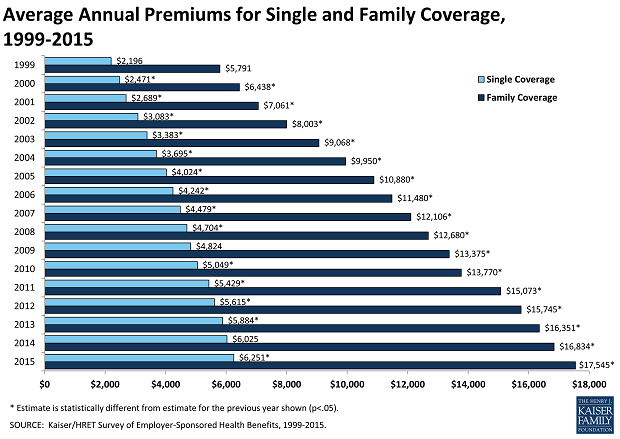
A new report from the American Academy of Actuaries outlines the trends that will impact health insurance premiums next year. “There are both upward and downward pressures on premiums for 2017, but for the individual and small group markets as a whole, the factors driving premium increases up dominate,” senior academy health fellow Cori Uccello said in a statement.
FTC Chair Makes Clear Hospital Consolidation Hurdles

Exterior of the Federal Trade Commission (FTC) in Washington, D.C.
Hospital and health system mergers and acquisitions have grown by 70% since 2010. That means “vigorous enforcement of the antitrust laws is more important than ever,” says the chair of the Federal Trade Commission.
This health-care trend could make your hospital stay $2,000 more expensive

Federal Trade Commission chairwoman Edith Ramirez is concerned that consolidation in health care is driving up prices for consumers.
 HENRY KOTULA