


Cartoon – This Plastic Surgeon is a GENIUS!

http://www.healthaffairs.org/do/10.1377/hblog20171024.907844/full/

The US health care system is plagued by the use of services that provide little clinical benefit. Estimates of expenditures on overuse of medical services range from 10–30 percent of total health care spending. These estimates are typically based on analyses of the geographic variation in patterns of care. For example, researchers at the Dartmouth Institute focused on differences in care use between high-spending and low-spending regions with no corresponding reductions in quality or outcomes. An analysis by the Network for Excellence in Health Innovation (formerly known as the New England Healthcare Institute) identified significant geographic variation in the rates of both surgical and non-surgical services such as coronary artery bypass grafting, back surgery, cholecystectomy, hip replacements, diagnostic testing, and hospital admission.
This variance-based approach to estimating overuse has been very useful at highlighting the problem of inefficiency in the health care system but has done little to direct initiatives designed to reduce unnecessary tests and procedures. The aggregate approach does not help clinicians or managers identify exactly how they should change their practice patterns. As a result, it has been hard to reduce overuse. Identifying the significant overuse of medical services in the health care system is only the first step; now we need to develop evidence-based solutions to reduce unnecessary services and improve efficiency.
The Choosing Wisely initiative, announced in 2012 by the ABIM Foundation and Consumer Reports, was designed to spark conversations among physicians, patients, payers, and purchasers about the overuse of tests and procedures, and to support physician efforts to help patients make smart and effective care choices. Specialty societies identified specific services that were unnecessary in specific situations. With more than 80 participating specialty societies, Choosing Wisely has identified more than 500 commonly overused tests and procedures and published recommendations for their proper use. For example, the American College of Emergency Physicians recommends avoiding computed tomography (CT) scans in low-risk patients with minor head injury.
The Choosing Wisely campaign began in an environment when efforts to reform health care were polarized by discussions of “rationing” and “death panels.” The initiative focused on quality, safety, and doing no harm to counter suspicions of dual agency and cost reductions motivated by profit; this allowed both the public and clinicians to begin to see reducing unnecessary care as in the best interest of the patient.
Choosing Wisely appealed to the professionalism of physicians and other clinicians as articulated in the Physician Charter on Medical Professionalism, which included a commitment to manage health care resources. The campaign was conducted in a way that respected the autonomy of physicians, relying on and enhancing their professional pride and sense of mastery, instead of functioning as yet another quality initiative imposed from above. Specialty societies took a leadership role in partnership with a wide swath of consumer and patient groups, helping physicians and patients accept the message of “more is not always better.”
Through Choosing Wisely, physicians were socialized toward a new norm in the culture of medicine against low-value care, which was reflected in the medical literature. From 2014 to 2015, the number of articles on overuse nearly doubled. The adage that “culture eats strategy every day” became a guiding light. Manya Gupta, MD, from Rush University Medical Center, summed it up as, “Once culture change starts, improvements become expected.”
The unexpected nature of societies taking the lead on this issue, potentially in conflict with their members’ economic self-interest, helped make the campaign stick. Similarly, the simplicity, concreteness, and credibility of the recommendations allowed them to be deployed in a variety of settings at a variety of levels in the organization.
Implementation has been accelerated through the support of the Robert Wood Johnson Foundation (RWJF), which has provided two grants to support putting the Choosing Wisely recommendations into practice.
The front line empowerment fostered by Choosing Wisely was evident when the University of Vermont Medical Center asked faculty and residents to submit ideas for high-value care projects targeting tests and treatments that could be performed less frequently. Interventions on seven projects were completed. Key reported outcomes included:
Vanderbilt University Medical Center drove cultural change through a “challenge” to all house staff and residents aimed at reducing unnecessary daily lab orders. After educational sessions, teams were sent weekly emails on tracking use in a friendly monthly competition. This resident-originated focus and intervention resulted in significant reported decreases of daily blood counts and basic metabolic panels.
Crystal Run Healthcare, a multispecialty practice with 350 clinicians, also sponsored a contest designed to advance Choosing Wisely recommendations. Eric Barbanel, MD, a practicing physician at the clinic, was the champion for the winning project, which focused on four recommendations from the American Academy of Family Physicians. The interventions included peer education, clinical decision support, and data feedback. Decreases in annual electrocardiograms (EKGs), magnetic resonance imagings (MRIs) for low back pain, and DEXA screening were reported.
The campaign has also relied on regional health collaboratives to help drive local public awareness of the issue of overuse. Two grantees supported by RWJF, HealthInsight Utah and Maine Quality Counts, have used town hall meetings to engage in conversations with patients and the broader public about Choosing Wisely.
The Choosing Wisely campaign has focused first on adaptive change—on “why” there is concern about overuse by clinicians and patients, and on developing a consensus set of common values and purposes. The campaign has emphasized evidence about benefits and harms and the pursuit of enhancing quality, safety, and doing no harm. The aim has been to win both the hearts and minds of physicians so that they would be more engaged in improvement efforts, something often missing in efforts to change behaviors in clinical practice. The rapid introduction of purely technical solutions (that is, clinical decision support through electronic medical records) often alienates clinicians who don’t know the values and motivation behind the need for such solutions.
Choosing Wisely has had some success in raising awareness of overuse and incorporating recommendations into practice. But results from national studies have been mixed, highlighting the need for further formal evaluation of the initiative’s impact.
More importantly, other strategies needed to complement Choosing Wisely must be jumpstarted. Specifically, more needs to be done to address some of the other underlying drivers of overuse in the health care system, notably perverse payment incentives; eliminating unnecessary services will be challenging as long as providers face financial incentives to provide more care and patients have no incentives to avoid care. Choosing Wisely is an attempt to change attitudes and mindset, but changing attitudes is hard when incentives are misaligned.
Payment reform can play a role in changing physician behavior by minimizing rewards for doing unnecessary tests and procedures. In fact, some evidence suggests population payment has disproportionately reduced use of potentially unnecessary tests and procedures. But it is not always easy to design payment reform such that the incentives are fully experienced at the point of care. Moreover, although evidence suggests these payment models lower spending without sacrificing quality, the effects have generally been modest and surely more could be done. And reinforcement works both ways: Just as payment reform can make the task of changing attitudes through Choosing Wisely easier, winning hearts and minds can amplify the effectiveness of any payment reform strategy.
Benefit design can also help reduce use of potentially unnecessary services by increasing patient out-of-pocket spending for those services. However, higher out-of-pocket spending can be a significant financial burden on patients, and in many cases they are not well suited to make nuanced decisions about care. Most evidence suggests that when faced with higher cost sharing, patients reduce use of appropriate and inappropriate care in similar proportions. Value-based insurance design (VBID)—which aims to increase cost-sharing for less effective treatments and decrease cost sharing for more effective treatments—can help encourage patients to specifically reduce overuse of low-value care. However, VBID is not a panacea and must be implemented in a way that avoids adverse selection and excessive complexity. Engaging clinicians in explaining and implementing benefit design changes will be necessary to help patients better navigate the choices they will confront.
Even if Americans were not grappling with high health care spending, avoiding potentially unnecessary services would be important. But with fiscal pressures driving changes by private and public purchasers that often have deleterious consequences, eliminating potentially unnecessary services—and thus delivering cost savings while increasing quality—is more important than ever. Choosing Wisely exemplifies efforts of the professional societies to engage on the issue; by appealing to the professionalism of physicians and other clinicians, it can provide the foundation for promoting delivery of appropriate care.
Professionalism as a force to improve quality has an opportunity to show its value along with the technical approaches and the environmental changes needed (for example, payment reform). The design of Choosing Wisely, which included few rules, much autonomy for engagement and design, and little central control, produced an activated professionalism. Appealing to the intrinsic motivations of physicians offers an underused path to achieve widely shared policy goals such as reducing the cost of our health care system while enhancing its quality. Professionalism can also appeal to patients and give them confidence in their physicians’ counsel that unnecessary care truly is unnecessary. Given the activity that has been unleashed in health systems and clinical practices throughout the United States, professionalism should not be overlooked as part of our broad health care transformation strategy.
https://hbr.org/2017/10/the-critical-skills-for-leading-major-change-in-americas-health-system
At a time of profound volatility in the U.S. health system, change management is an essential skill for public and private leaders alike. For these leaders — and young people aspiring to careers as health care managers — one very practical question emerges: What are the critical skills for leading major change in our health system?
As someone who has led large change management projects in both the federal government and a large private health system, my view is that effective leadership of fundamental change requires the following: a commitment to transparency; involving stakeholders so they feel that their voices are heard; making listening a personal priority of the leader; going overboard in communicating; emphasizing that the sought-after change is achievable; and developing a motivating narrative.
Two personal stories illustrate these points.
The first concerns the challenge of creating the meaningful use program for the HITECH Act when I served as national coordinator of health information technology from 2009 to 2011, at the beginning of the Obama administration. The second involves the task of replacing the electronic health record system (EHR) at Harvard-affiliated Partners HealthCare, the largest health system in New England. The latter was a project I led after returning to Partners in 2011. This was a $1.2 billion capital investment, the biggest in the organization’s history.
Both challenges were fundamentally political with a small “p.” And the road to success was in many ways the same.
The HITECH Act, which was part of the federal stimulus program enacted in response to the financial crisis of 2008, tasked the Obama administration and its Department of Health and Human Services with creating a nationwide, interoperable, private, and secure electronic-health-information system. The president made this goal even more formidable by promising that every American would have an electronic health record by 2014.
The HITECH Act provided a wide array of authorities:
The HITECH Act also included constraints — many about timing. Regulations setting out standards had to be issued within about nine months from the time I arrived. Furthermore, payments to providers for conforming to meaningful use were to be available under the law in less than two years — by January 1, 2011. So any infrastructure supports to assist providers in becoming meaningful users had to be in place very fast — by early 2010 at the latest.
Still another constraint — one of those important details that are appreciated by students of management — was that the Office of the National Coordinator that I inherited was tiny (a total of 35 FTEs) and had never written a regulation or made a grant before. There was, for example, no grants-management office even though we were expected to rapidly expend $3 billion in infrastructure grants and contracts to prepare the nation for meaningful use.
Though the implementation of the HITECH Act seemed superficially like a technology project, I gradually came to realize that it was much more than that. Nothing in the law required hospitals or doctors to adopt or meaningfully use electronic health records. They had incentives to do so, but they could easily refuse.
In fact, we were actually engaged not in a technology-implementation program but in a huge change-management initiative. We had to convince hundreds of thousands of health professionals and thousands of hospitals and hospital managers to take on the difficult, complex, costly, disruptive, and frustrating task of changing the way they managed what is arguably the most critical resource used in daily patient care: information. We were in a contest for the hearts and minds of professionals running our health care system. This larger battle for hearts and minds conditioned everything we did in applying our authorities and meeting our practical challenges.
First, to create the credibility and trust we needed to lead this movement, we insisted on transparency. We formulated the meaningful-use regulation in public through a series of hearings and public deliberations, which were streamed live. Whenever we faced the option of whether to make a decision in public or private, we chose the public approach. We held scores of open meetings involving our advisory committees during the two years I was national coordinator.
Second, to deepen public trust, we made listening a priority. Understanding that people affected by government policy want to be heard, I took every meeting I could with representatives of health care stakeholders, especially physicians and hospitals. After one meeting, I got feedback about what a great exchange we had. In fact, I had said nothing at all beyond introducing myself at the outset.
Third, we communicated extensively. When we released the proposed rule, we did so with a press event in the Great Hall of the Department of Health and Human Services with a packed crowd. I then went on a national tour — to Tampa, Minneapolis, Tucson, Salt Lake City, Omaha, Burlington, Buffalo, Houston, and beyond — to explain the proposed regulation.
Fourth, we emphasized the feasibility of complying with the meaningful-use rule. We needed to make clear that becoming a meaningful user was not a superhuman task. We wanted adoption to be so manageable that non-adopters would be embarrassed among their peers at golf outings or weekend cocktail parties.
Fifth, we sought narratives — metaphors for what we were trying to accomplish — and I used them repeatedly in my speeches. The one that stuck was an escalator image: We were getting on an escalator toward increasingly sophisticated and powerful uses of EHRs. We were starting on the first step, but the rest would follow in due time.
We also spoke of inevitability. It was inconceivable, we argued, that within 10 years, physicians and hospitals would still be walled off from the information age. They could make the conversion now — with government support — or they could wait and do it on their own. But either way, they were going to have to make the change. They were going to have to get on that escalator.
The meaningful-use program has had its problems, but it did succeed in one of its most fundamental purposes: the adoption of EHRs, which are now ubiquitous in medical practice. In the end, the program got very close to fulfilling President Obama’s promise that every American would have an electronic health record by 2014.
Now let’s turn to the task of implementing a new EHR in a large operating health system that included two major teaching institutions (Massachusetts General Hospital and Brigham and Women’s Hospital); multiple community hospitals; a rehab hospital; a nationally-known, inpatient, psychiatric facility; a half-dozen community health centers; a home-health-care agency; thousands of community-based physicians; and the largest non-profit, private, biomedical-research program in the world.
The Partners HealthCare System was already sophisticated electronically. The problem was that it had multiple, homegrown, electronic health records onto which local physician-developer teams had layered a wide variety of specialty specific applications. The result was an electronic tower of Babel that was becoming increasingly expensive to service and modernize. But the key problem was that the records were not internally interoperable, which had become a growing barrier to improving quality and efficiency in an increasingly demanding local-health-care environment.
Before I arrived in 2011, Partners leadership had made the decision to replace all this complexity with a single, commercial EHR. It was my job to lead the process of picking one and rolling it out.
Now, though Partners was legally a single health-care-delivery system, I knew from having worked there for much of my professional life that it was in fact a loose confederation of independent institutions populated by equally independent and skeptical professionals. Winning their support, and that of managers throughout the system, was critical to success. Once again, we were battling for hearts and minds, which meant that many of the approaches we relied on in government were relevant.
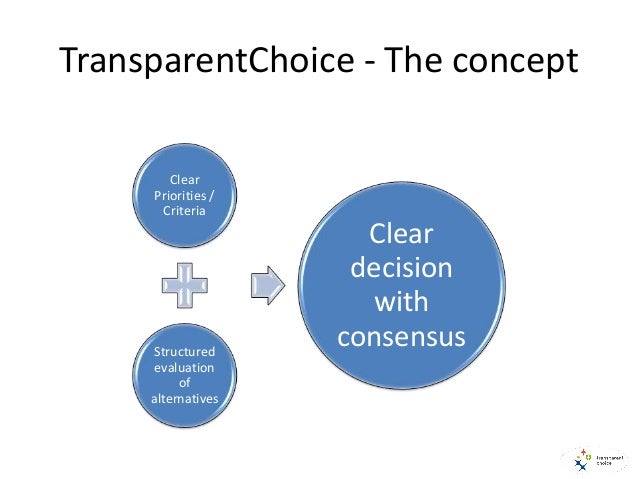
Building trust through a transparent decision process was the first strategy we pursued. The initial and critical decision we faced was which EHR to purchase. There were two finalists. To choose, we collected evidence, evaluated the alternatives, and made decisions in highly public and inclusive ways. We invited thousands of professionals to test and rate the two products. We reported the results publicly on a project website. We conducted site visits to health care organizations around the country using the products we were considering. Site visit teams were diverse and representative of major Partners institutions and stakeholders. They rated the sites’ experiences with the EHRs, using a standardized protocol. We reported results on the website.
Then, we held a public debate between advocates of the two contending records — in which teams argued about relative merits before the audience voted. The vote was highly influential in our final choice. This transparent and inclusive decision-making process included an enormous amount of built-in listening and feedback from affected staff, another critical part of the change-management process.
To address the need for inclusive governance and representative decision making, we put in place a governing council for the EHR project. Members included representatives of critical Partners institutions and stakeholder groups. This council approved all major decisions with respect to the choice of the EHR and implementation policy. We then took those approved decisions to senior management of Partners, and ultimately to the Partners board, for final endorsement. Obviously, the fact that a representative body had approved our recommendations enormously increased their weight with management and board members.
As in the case of the meaningful-use program, communication was important. It didn’t require traveling the country, but it did require visiting all the major Partners institutions to speak with their staff and management, to answer questions, and to take in feedback.
Finally, we needed a rationale and a narrative that conveyed the necessity of undertaking this admittedly expensive and disruptive change in Partners affairs. The rationale and narrative focused on the institution’s obligation to its patients. This was conveyed first in a motto: one patient, one record, one billing statement. To make this motto concrete, we made a video of a patient describing how she had had to carry a paper record from one Partners institution to another — all of which had siloed EHRs — as she got care for her breast cancer: surgery at Newton-Wellesley Hospital, chemotherapy at Dana-Farber Cancer Institute, and radiation at the Massachusetts General Hospital. I recall vividly the impact this video had during a presentation I made to the academic chairs of departments at Mass General. Patients’ stories had an almost unimpeachable legitimacy, even with the most senior Harvard academic leaders.
Before I left Partners to join the Commonwealth Fund in 2013, we had chosen the EHR and begun the rollout of the new IT infrastructure. While that rollout has not been perfect and, typical of such massive implementations, there have been plenty of complaints about the difficulty of using the new record, it has largely proceeded according to plan.
Change management is at the core of everything that public and private institutions are striving to achieve in reforming national policy and care-delivery approaches in order to improve the quality and cost of health care services provided daily to Americans. The effectiveness of leaders in both the public and private sectors in managing ambitious change efforts will determine their ultimate success. And my experience suggests that the skills required in these two sectors are remarkably similar — because change management, regardless of setting, involves convincing human beings to give up something they know for something new and uncertain.


“Choose Character First. To have credibility with your team or organization, choose to do the right thing regardless of the situation.” – Lee Ellis

As reported here May 5, Sharp Grossmont Hospital’s goal was to catch whoever was taking sedatives from anesthesia carts and work to curtail their license. But former chief of anesthesiology Dr. Patrick Sullivan, said in his screed — in so many words — that Sharp’s operation was outrageously, morally and ethically bereft.

 HENRY KOTULA