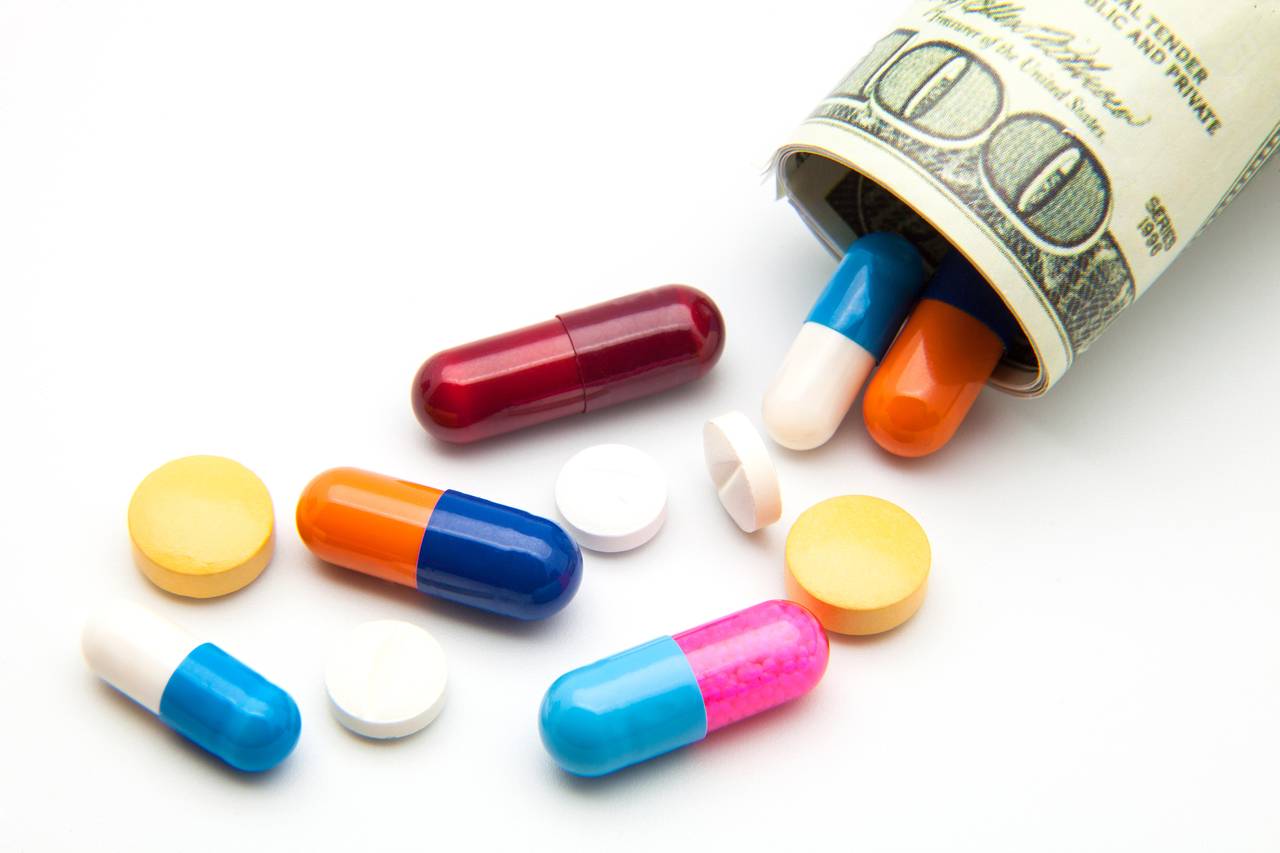
Soaking the Sick to Make the Rich Even Richer

https://www.realclearhealth.com/articles/2019/02/13/pbms_soaking_the_sick_to_make_the_rich_even_richer_110866.html?utm_source=morning-scan&utm_medium=email&utm_campaign=mailchimp-newsletter&utm_source=RC+Health+Morning+Scan&utm_campaign=db14e4ebca-MAILCHIMP_RSS_EMAIL_CAMPAIGN&utm_medium=email&utm_term=0_b4baf6b587-db14e4ebca-84752421

Related image


Congressional Democrats have quickly lined up to oppose the Trump Administration’s proposal to eliminate regulations that make it illegal for drug companies to reduce – or eliminate – what Medicare consumers pay for prescriptions under the Part D program.

Instead, they are pushing plans to give health insurers and the pharmacy benefit management (PBM) companies they run and own even more control over what medicine consumers can choose and how much they cost.  In doing so, Democrats are backing a government-sanctioned drug pricing cartel that extorts nearly a quarter of trillion dollars a year from prescription drug rebates, discounts, and patients (in the form of out-of-pocket costs), and shares a pittance with the patients who need medicines the most. Eighty percent of drug benefits are managed by the 3 largest PBMs, which in turn are owned by or in part by the 3 largest insurance companies.

Current Medicare regulations makes it illegal for any firm other than PBMs to handle drug prices and distribution.  Specifically, PBMs are given free rein to determine what medicines patients can and can’t use.  This power allows them to reduce the list price of drugs by obtaining rebates in exchange for encouraging the use of some treatments while discouraging the use of other medicines.  PBMs either require patients to try drugs that generate the most rebates first or force people to pay part or all of the list price of medicines that don’t generate much money.

As a result, of $140 billion Medicare Part D spent on medicines, $64 billion was pocketed by PBMs and health plans.  And of the $460 billion all Americans spent on drugs in 2018 nearly $166 billion went to discounts and rebates.

Parroting the PBM/insurer talking points, Nancy Pelosi’s health policy advisor, Wendell Primus, said prices – not rebates – are the cause of high drug costs, and savings from rebates negotiated by pharmacy benefit managers go toward reducing insurance premiums.

In fact, PBMs keep Part D premiums artificially low by collecting rebates and other fees at the retail counter. Because Medicare starts paying for 80 percent of drug costs after seniors shell out over $4500 at the pharmacy, plumping up the retail price with rebates means PBMs and insurers reduce premiums by shifting more cost to the government and ultimately by forcing seniors to pay more for medicines.

Moreover, PBMs are using rebates extracted from the medicines the most seriously ill patient uses to subsidize the drug spending and premiums of everyone else. People with cancer, HIV, Parkinson’s, autoimmune diseases are only 2 percent of the population. But in 2017 the drugs they use generated $53 billion, or 32 percent of all rebates and discounts.

These rebates could be used to reduce out-of-pocket costs of even the most expensive drugs to 50 dollars or less.  Instead PBMs and plans actually make seniors pay a large percentage of the retail cost of the rebated drugs  In fact, as rebates have increased, plans have made more consumers of these so-called specialty drugs to pay up to 50 percent of the retail price of medicines instead of a small copay.  Nearly 25 percent of all consumers now pay full price for drugs. As an IQVIA report found: “people who use specialty medicines are 10 times more likely to pay full price for the most expensive medicine. On average, they are 10 times more likely to pay over $2500.”

In 2017, 2 percent of the most vulnerable consumers paid PBMs and health plans $16 billion in out-of-pocket costs.  Soaking the sick to make the rich even richer.  The quickest way to cut the cost of medicines to what they are in Europe is to eliminate the PBM protection racket and give drug companies the freedom to dramatically reduce the out-of-pocket cost for the most expensive medicines.  To be sure, a growing number of drug firms and insurers are working together to eliminate out-of-pocket costs as part of programs to improve health by reducing barriers to access.  Indeed, because PhRMA and BIO have stated that consumers should pay less, the Trump proposal is truly a ‘put up or shut up’ moment for the industry.

Under the current rules, it doesn’t pay for PBMs and insurers to choose a drug with lower out-of-pocket costs, and drug companies have no incentive to tie out-of-pocket costs to better care.  Under current rules, patients are unable to afford the medicines that keep them alive. The Trump proposal would change all that.  It’s up to Democrats to explain why, instead of cutting drug costs dramatically and directly, they want to line the pockets of big corporations with money from the sickest patients.



Drug Rebates Reward Industry Players — And Often Hurt Patients

http://khn.org/news/drug-rebates-reward-industry-players-and-often-hurt-patients/

Medicare and its beneficiaries aren’t the winners in the behind-the-scenes rebate game played by drugmakers, health insurers and pharmacy benefit managers, according to a paper published Tuesday in JAMA Internal Medicine.

The paper, which dives into the complex and opaque world of Medicare drug price negotiations, finds that rebates may actually drive up the amount Medicare and its beneficiaries pay for drugs — especially for increasingly common high-priced drugs — and it offers some systemic solutions.

“How these rebates and price concessions happen between the manufacturer of the drug and the PBMs [pharmacy benefit managers] and health plans can directly impact patient cost in a big way,” said the paper’s lead author, Stacie Dusetzina of the University of North Carolina-Chapel Hill’s pharmacy school.

The paper’s findings and proposed solutions come as President Donald Trump’s administration, Congress and state lawmakers grapple with ways to control drug prices and overall health spending. Trump’s administration has said it wants to lower drug prices and hinted at mandating rebates in Medicare. Leaders on Capitol Hill have called for Medicare price negotiations.

In the JAMA paper, Dusetzina cites the EpiPen as one example. Last year, executives at Mylan, the maker of the EpiPen, said the list price of the drug for life-threatening allergic reactions was $600, but the company earned $274 after rebates and other fees.

That savings, though, isn’t necessarily passed on to patients in Medicare’s system. Instead, the money tends to be swallowed up by health insurers and middlemen like pharmacy benefit managers.

And, even though patients don’t pay list prices for their drugs, those high prices (like $600 for the EpiPen) are used to calculate how much Medicare covers for any individual patient — and sometimes what patients pay out-of-pocket, Dusetzina said.

“We’ve heard over the years that the list price doesn’t really matter, that it’s not the real price,” Dusetzina said. “It matters.”

The way it matters is not easily apparent. Here’s what happens: When a Medicare patient picks up a prescription, what they pay toward it is generally based on that higher list price and not the price after rebates, so the amount the beneficiary pays is scaled upward as a result.

And Medicare uses that high-end list price to calculate how rapidly beneficiaries reach the dreaded doughnut hole, where patients pay a bigger share of the price of the drug after their spending hits $3,700, the 2017 benchmark. Once through the doughnut hole, Medicare picks up the bulk of the drug’s cost.

High list prices drive patients into and out of the doughnut hole faster, raising their out-of-pocket costs and Medicare expenditures.

Dusetzina and co-authors Rena Conti, assistant professor of health policy and economics at the University of Chicago, and Dr. Peter Bach, director of Memorial Sloan Kettering Cancer Center’s Center for Health Policy and Outcomes, propose solutions to this problem.

Bach called the current Medicare system “absolutely devastating for people on high-cost specialty drugs.”

Bach’s drug pricing lab at Memorial Sloan Kettering offers an interactive tool for comparing how dollars shift when using the list price and post-rebate price.

The authors recommend that patients should be charged flat-dollar copays rather than coinsurance charges, which are based on a percentage of the drug’s price. The copays could be tiered, depending on the cost of the drug, the paper suggested.

This solution comes, in part, because the number of Medicare enrollees paying coinsurance for their drug, rather than a flat fee, has increased to 58 percent last year from 35 percent in 2014, the paper notes.

Another tactic would be to address the underlying disconnect between rebate negotiations and savings for Medicare and beneficiaries. The authors suggest that incentives for health insurers need to change to require health plans to pay more of the drugs’ costs after beneficiaries pass through the doughnut hole.

In addition, Dusetzina said, using the post-rebate amount in Medicare’s calculations would allow Medicare beneficiaries to move through the doughnut hole more slowly. That would save both patients and Medicare money.

“It really just stops us from accelerating people through the benefit,” Dusetzina said.

Last month, the Pharmaceutical Research and Manufacturers of America, which represents the pharmaceutical and biotechnology industry, launched a “Share the Savings” advertising campaign calling for public education about how the savings from rebates don’t actually get passed on to commercial insurance patients.

In an email, PhRMA’s Holly Campbell said the group’s commissioned research has found that rebates and discounts have nearly doubled from 2013 to 2015. Campbell said PhRMA believes “insurance companies should share more of the rebates and discounts they receive with patients.”

America’s Health Insurance Plans, which represents the insurance industry, calls the assertion that rebates and other discounts aren’t passed along “absolutely inaccurate” and noted the “true issue” is that drug prices continue to skyrocket “with no clear explanation as to how prices are set.” Insurers pass the savings from rebates on in different ways, including lower monthly premiums and co-pays, said AHIP’s Cathryn Donaldson.

Dusetzina said there is one caveat to the Medicare study: It is unclear how many drugs get a rebate and for how much because there is lack of transparency when it comes to rebates.

The paper’s final suggestion is about transparency. It says that federal regulators should require rebate data to be reported for individual drugs and then use that information to change Medicare’s benefit design in a way that “would lead to savings” for Medicare and its enrollees.

Wyeth and Pfizer Agree to Pay $784.6 Million to Resolve Lawsuit Alleging That Wyeth Underpaid Drug Rebates to Medicaid

https://www.justice.gov/opa/pr/wyeth-and-pfizer-agree-pay-7846-million-resolve-lawsuit-alleging-wyeth-underpaid-drug-rebates

DOJ Building

http://www.fiercehealthpayer.com/antifraud/story/pfizer-pays-785-million-resolve-drug-pricing-allegations/2016-05-02?utm_medium=nl&utm_source=internal&mrkid=959610&mkt_tok=eyJpIjoiTWpVd1lqSTNZalZsWWpReCIsInQiOiJINE9BNitVSm1VYUR3NFVOZG1YMFFiVFQ2d2lmRGtEZ01NdjVpY0x2bmZUSmxTVFFcL2NcL3FMTmlGaXJqRFhSUHI2Tm1yK0Q1MHU1R3U2OWlGQ3NVYU9uTll2VXMxcEJSdUxlcGlYSjJEV1ZBPSJ9