CEO of U of Maryland Medical System to take leave of absence amid scandal

https://www.beckershospitalreview.com/hospital-management-administration/ceo-of-u-of-maryland-medical-system-to-take-leave-of-absence-amid-scandal.html

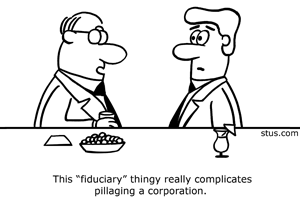
Image result for fiduciary duty

The president and CEO of Baltimore-based University of Maryland Medical System agreed to take a leave of absence, effective March 25, amid a scandal involving business deals between the system and several of its board members, according to The Washington Post.

Six things to know:

1. UMMS Board Chairman Stephen Burch announced the board’s unanimous decision March 21 to have President and CEO Robert Chrencik take a leave of absence. The system will also hire an independent accounting and legal firm to audit the board’s contracts, and the search for an independent third party will begin immediately.

“Over the past week, I’ve had the proper time to listen to concerns and reflect. The board and I am firmly committed to evolving our governance principles and operating with even more transparency,” Mr. Burch said.

2. John Ashworth, senior vice president of network development at UMMS and associate dean at the Baltimore-based University of Maryland School of Medicine, will serve as interim president and CEO of the 13-hospital system.

3. The leadership changes follow the resignations of three UMMS board members, including Baltimore Mayor Catherine Pugh. At least four other board members have taken a leave of absence. The deals have been sharply criticized by state lawmakers, including Gov. Larry Hogan.

4. Ms. Pugh resigned from the board after facing criticism for a $500,000 book deal she made with UMMS. A spokesperson for the mayor’s office said March 20 Ms. Pugh has returned $100,000 in profit to the health system because production on the books was delayed and they were not actually delivered to UMMS, which had planned to distribute the books to city schools.

5. Hours before Mr. Burch notified the public of Mr. Chrencik’s leave of absence, the Maryland House of Delegates unanimously fast-tracked a bill to overhaul UMMS’ 27-member board of directors, The Washington Post reports.

6. Amid the scandal at UMMS, The Baltimore Sun reviewed state disclosure and tax forms for several other health systems in the state and found at least five other systems have engaged in business deals with members of their board. The American Hospital Association’s guidance on the issue does not prevent such deals from taking place, but asks that leadership ensure “certain preconditions … to make sure that the organization’s interests prevail in the board’s decision-making.


CEOs shouldn’t pick their replacements

https://www.beckershospitalreview.com/hospital-management-administration/viewpoint-ceos-shouldn-t-pick-their-replacements.html?origin=ceo&utm_source=ceoe

Image result for ceo succession

While CEOs may be intimately familiar with their companies, their opinion should take a backseat to the organization’s board of directors, according to Stanford (Calif.) University business school professor David Larcker, PhD, and researcher Brian Tayan.

In an op-ed for The Wall Street Journal, the authors note that while it was once general practice for CEOs to pick their successors, changes to corporate governance in recent years have shifted the balance of power to a company’s “independent, professional, outside directors.”

The authors claim that allowing a company’s CEO outsize influence on the hiring of their successor is a mistake because the CEO may not have the right perspective on evaluating candidates and may intentionally or unintentionally control the information presented to the board about candidates, shaping the board’s decision about those individuals.

“At the end of a long career, many CEOs are concerned about their legacy. This can bias them toward favoring candidates who will guide the company in the same direction — and in the same manner — that they themselves led it,” they write.

Instead, the authors argue that a company’s board should be responsible for the final hiring decision and use the CEO’s input to help come to that conclusion.

“Hiring the CEO is a fiduciary duty. The board owes it to the shareholders … to get it right. A subcommittee of independent directors with previous experience in succession at other companies should manage the process, with an open invitation to all board members to participate. If the board doesn’t have depth of experience in place, it can bring in an outside adviser to help,” they write.

To access the full report, click here.


Drug and Device Makers Pay Thousands of Docs with Disciplinary Records

http://www.healthleadersmedia.com/physician-leaders/drug-and-device-makers-pay-thousands-docs-disciplinary-records?spMailingID=9400653&spUserID=MTMyMzQyMDQxMTkyS0&spJobID=981898992&spReportId=OTgxODk4OTkyS0

Physicians whose state boards have sanctioned them for harming patients, unnecessarily prescribing addictive drugs, bilking federal insurance programs, and even sexual misconduct nonetheless continue to receive payments for consulting, giving talks about products, and more.

Hospital board members in joint venture ASCs: 3 key thoughts from Regent Surgical Health CEO Thomas Mallon

http://www.beckershospitalreview.com/hospital-management-administration/hospital-board-members-in-joint-venture-ascs-3-key-thoughts-from-regent-surgical-health-ceo-tom-mallon.html

cropped-leaders-in-healthcare-blog-logo.jpg