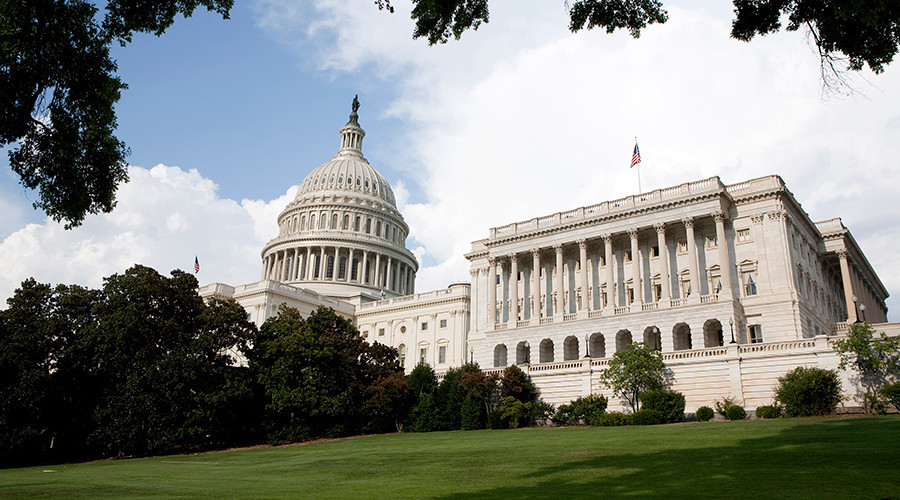
Five things to watch for in CNN’s ObamaCare repeal debate

Five things to watch for in CNN’s ObamaCare repeal debate

Related image


CNN will host a health care debate Monday night between Senators as the GOP makes a last-ditch effort to repeal ObamaCare.

The debate pits GOP Sens. Lindsey Graham (S.C.) and Bill Cassidy (La.) against Sens. Bernie Sanders (I-Vt.) and Amy Klobuchar (D-Minn.) in a town hall-style event.

The debate will be moderated by CNN anchor Jake Tapper and chief political correspondent Dana Bash live from Washington, D.C.

Graham and Cassidy are the authors of the latest Republican ObamaCare repeal effort, which appears to be on life support given GOP defections from the right and center.

Sanders brings political star power to the debate, as well as some risk for Democrats. He is championing a single-payer bill that would revolutionize the nation’s health-care system, something Graham has lambasted as socialism. Republicans are expected to try to attack the Sanders proposal during the debate.

Here are five things to watch for.

Will Republicans turn Monday into a debate on single-payer?

If ObamaCare is not repealed, Graham says the U.S. will head toward a single-payer system.

“It’s coming down to a choice between Federalism vs. Socialism,” Graham tweeted Monday morning. “I chose federalism.”

Graham will likely put a big focus on Sanders’s “Medicare for all” bill, which he recently introduced with the support of 16 of his Democratic colleagues — though not Klobuchar.

Sanders is more likely to defend the Affordable Care Act than seek to tout his own bill.

“The focus is going to be on exposing Graham-Cassidy as the most destructive piece of legislation in the modern history of our country,” a Sanders aide told The Hill.

He will be “defending the ACA, as he has for the last nine months.”

Debating pre-existing conditions and Jimmy Kimmel

Sanders and Klobuchar are expected to zero in on Democratic arguments that the GOP bill would hurt people with pre-existing conditions.

While the bill would leave intact an ObamaCare rule banning insurers from denying coverage to people based on their medical history, Graham-Cassidy lets states waive requirements barring insurers from charging higher premiums to people with pre-existing conditions.

States may also waive out of essential health benefit requirements, which mandate what services insurers must cover.

The bill does require states to show how they will maintain access to “adequate and affordable health insurance coverage for people with pre-existing conditions,” but what that means is open for interpretation by the administration.

“Insurers might have to sell coverage to people with preexisting conditions, but it could be very expensive,” Tim Jost, a emeritus professor at the Washington and Lee University School of Law who opposes the bill, wrote in a blog Monday morning.

Democrats have an ally in the late-night comedian Jimmy Kimmel, who has advocated against several GOP repeal bills, including Graham-Cassidy.

Kimmel, whose son was born with a serious heart condition, last week accused Cassidy of lying to his face over the bill’s treatment of people with pre-existing conditions.

Cassidy had said the bill meets what he had called the “Jimmy Kimmel test” that all children would be ensured coverage. But Kimmel argues the provisions allowing waivers to states could put coverage out of the price-range of millions of Americans.

Which side will be more divided?

Graham and Cassidy are generally united on health-care policy as the authors of the latest repeal plan. But some Republicans have issues with it.

Sen. Rand Paul (R-Ky.) argued the proposal doesn’t go far enough in repealing ObamaCare and has said he won’t vote for it unless certain demands are met.

Among other things, he wants to substantially reduce the amount of funding states would be given through block grants. A number of states are already slated to lose funding under the bill, and cutting funding even more would further alienate moderates.

Sen. John McCain (R-Ariz.) announced his opposition to the bill Friday, saying Congress should return to “regular order” for health care changes.

Moderates like Sens. Susan Collins (R-Maine) and Lisa Murkowski (R-Alaska), who voted against the last repeal bill, haven’t come out against the bill, but have said they have concerns about its impact on their states.

A number of Republican governors have also opposed the bill, citing concerns about how it will impact their states.

On the other side, Sanders and Klobuchar support ObamaCare, but aren’t united on single payer. Klobuchar wasn’t one of the 16 Senate Democrats to co-sponsor Sanders’s “Medicare for all” bill last month.

How will Democrats defend ObamaCare?

Democrats have defended ObamaCare amid efforts from Republicans to dismantle it, but they’ve also acknowledged it needs improvements.

Klobuchar and Sanders will have to have good answers about the double-digit premium increases forecast for 2018.

They’re likely to point to what Democrats have described as “sabotage” from the Trump administration. Insurers across the country have hiked premiums for 2018 amid uncertainty over whether key ObamaCare payments called cost-sharing reductions will be paid.

Democrats also are likely to note that bipartisan efforts to lower premiums and stabilize ObamaCare’s insurance markets for next year were put on hold after the Graham-Cassidy proposal began to gather support in the Senate.

But the increasing costs of premiums has been a criticism of ObamaCare before President Trump was elected. Democrats might have to answer questions about what they would do to improve ObamaCare, while still trying to defend the law.

How will the moderators handle it?

ObamaCare is a testy issue that Democrats and Republicans have been unable to find compromise on in its seven years of being law.

It will be interesting to see what questions Bash and Tapper ask and if they’ll interject to correct the record.

Audience members will also be able to ask questions.

CNN said it selected audience members with varying political affiliations with a focus on those who would be impacted by the proposed repeal plan.
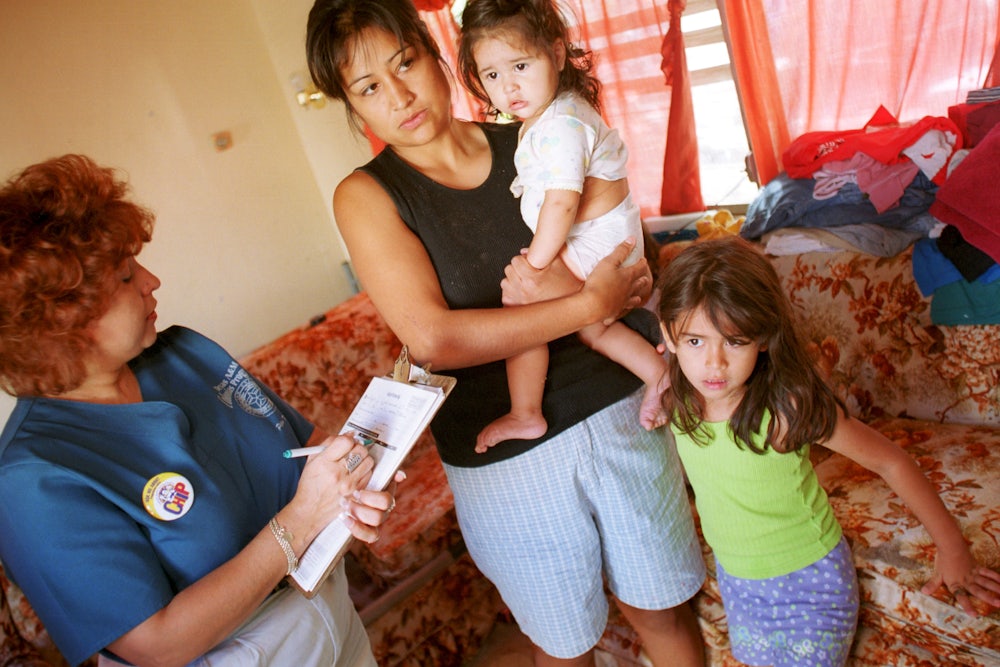
The GOP can’t quit Obamacare repeal because of their donors

https://www.vox.com/policy-and-politics/2017/9/25/16339336/graham-cassidy-republican-donors

Image result for you work for who pays you

Graham-Cassidy has gained steam because many Republican senators care primarily about pleasing their donors.

Senate Republicans are trying yet again to repeal Obamacare, despite seemingly having all the political and substantive reasons in the world not to.

Like all the other bills, the newest one, sponsored by Sens. Lindsey Graham and Bill Cassidy, is horrendously unpopular, with only 24 percent support. The rushed and slipshod process around the bill means its consequences still aren’t well understood, but it’s clear enough that tens of millions of people would likely lose coverage if it passes, that several statesrepresented by Republican senators would lose billions of dollars in federal funding, and that the bill badly violates President Trump’s campaign promise not to cut Medicaid.

Instead of putting repeal to the side after its failure in the Senate in July, though, Republicans just keep coming back to it, and are pushing toward a Senate vote on Graham-Cassidy this week. They’re doing so in part because they feel obligated to fulfill a longtime campaign promise, and because they fear electoral consequences for being viewed as failures.

But one more crucial motivator explains a whole lot: Republican Party donors want it.

The evidence that the GOP is trying to please donors here is adding up. An anonymous Republican senator told Politico that McConnell might be returning to health care to show donors “that the Senate GOP tried again.” Senate Republicans were warned at a private meeting that fundraising was slow because donors were disappointed at their lack of accomplishments, per the New York Times. And in recent months, senators “faced an unrelenting barrage of confrontations with some of their closest supporters, donors and friends” over Obamacare repeal’s failure, according to the Washington Post.

This pressure seems to be able to move votes. One moderate senator, Dean Heller (R-NV), conspicuously switched from being a public critic of repeal efforts to a strong supporter of Graham-Cassidy. That came after he reportedly got an earful from Sheldon Adelson and Steve Wynn, two billionaire GOP donors in his state.

Steve Schmidt, who ran John McCain’s presidential campaign in 2008, told Vox recently that donor concerns seem to be dictating the GOP’s legislative strategy. “There’s not an actual human constituency for any aspect of the Republican Congressional agenda,” Schmidt says. “Instead it’s an inside game that is judged, win or lose, on the basis of which entrenched permanent interests gain advantage or disadvantage, and how that affects the endless fundraising process.”

“You’re voting to reorganize one-sixth of the economy without any sense of how much it costs, or who it’s gonna affect, and with 13 percent approval of it at a national level,” Schmidt continues. “The drivers of it are something other than the voters.”

And if you assume the goal of passing repeal is primarily to please donors and goose fundraising, a whole lot about congressional Republicans’ bizarre approach to repeal — particularly, their disinterest in policy details or in how restructuring the health system will impact their constituents — makes a lot more sense.

What, exactly, do these donors want?

One interesting feature about this donor pressure Republicans are facing is that it does not appear to be coming from insurance companies or other health care industry stakeholders hoping to profit greatly from changes to the Affordable Care Act. (Health industry lobbyists in fact have been caught by surprise by the Graham-Cassidy boomlet.)

Instead, it appears to be a sentiment broadly shared among much of the GOP donor class. Paul Kane, who wrote a Washington Post report on pressure Republican senators faced after their initial failure on repeal, tweets that he’s heard “local Chamber types” or “longtime supporters” who’ve donated to them for years were particularly influential.

But super-wealthy donors are making their voices heard too. Doug Deason of Texas, who is part of the Koch brothers’ donor network, said earlier this year that his “piggy bank” would be closed until congressional Republicans “get some things done,” according to the Associated Press.

In trying to understand why these donors want Obamacare repeal so badly, I think it’s helpful to think of two somewhat overlapping sets of motivations.

The first is, essentially, a desire for their political “team” to win. These donors have been funding GOP candidates for years, and those candidates have been campaigning on repealing Obamacare. And while they may not care all that much about health policy, they care about broader matters like whether the Republican Party can get things done, or whether they feel their team is fighting for its principles.

Ken Vogel, who’s covered megadonors for years at Politico and now the New York Times, has said that he thinks a lot of them “treat this almost like a hobby” or game that they’re trying to win. “These folks have all this money, and they’re doing something they believe in. If they win, great; if they don’t win, they had fun doing it.”

In this case, the donors spent on the 2016 election, won, and now feel they’re owed a prize. If they don’t get a prize, then, well, they might not be so eager to open their wallets again. However, they don’t have particularly strong views or interests in the details of Obamacare repeal or how it should be replaced — so it makes sense that many Republican senators channeling their views would be similarly indifferent to what their bill actually does.

The ideological motivation: Obamacare repeal is the best chance to slash government spending

But a second set of donor motivations — that do help explain one major feature of nearly all the repeal bills we’ve seen — are ideological.

Across nearly every major version of Obamacare repeal that the House and Senate considered this year, there’s been one constant: hundreds of millions of dollars on cuts to government spending on health insurance. (Even the massive tax cuts for the wealthy in earlier versions of the bill were eventually scaled back to protect these spending cuts.)

The persistence of these cuts has been odd. If the GOP’s goal was simply to pass something, scaling back the cuts could have helped improve coverage numbers and win over wavering moderates. Furthermore, the bills’ deep cuts to traditional Medicaid go beyond merely rolling back Obamacare, as well as violating President Trump’s campaign promises not to cut that program.

These cuts make a whole lot more sense, though, when you view them as part of a long-term ideological project.

In addition to more traditional business and corporate donors, the GOP gets a great deal of its financial backing from megadonors with ideological motivations, like Charles and David Koch. These donors just don’t want to feel good by winning — they want to dramatically shrink the size of the federal government. And the way that’s done is by cutting spending.

In recent years, they’ve had little success. President George W. Bush found it to his political benefit to hike spending, and Donald Trump promised to protect entitlement programs. While an appealing slogan in the abstract, cutting spending usually proves to be difficult and unpopular in practice.

But Obamacare repeal is different, politically. It’s tied to the despised (on the right) figure of Barack Obama, it can be sold as a fix for the health system’s woes more generally, and the entire Republican Party (including the president) have campaigned on it for years. And it can be done through the budget reconciliation process.

As such, it’s clearly the Republican majority’s best chance for enacting deep spending cuts — and a fantastic Trojan horse if that is the true goal of some of their donors.

Dean Heller looked like he’d stop repeal in his tracks. Then he changed his mind.

Now, as Republicans are facing a tough fight to hold onto Congress in 2018, they’re reportedly finding that fundraising is more difficult than they’d expected.

Sen. Cory Gardner (R-CO), who runs the Senate GOP’s fundraising arm, warned his colleagues at a lunch two weeks ago that their legislative failures, including on Obamacare repeal, were badly hurting fundraising. That’s according to a fascinating report by the New York Times’ Carl Hulse, who writes:

[Gardner] warned that donors of all stripes were refusing to contribute another penny until the struggling majority produced some concrete results.

“Donors are furious,” one person knowledgeable about the private meeting quoted Mr. Gardner as saying. “We haven’t kept our promise.”

Donor influence has been the most obvious in the case of Sen. Dean Heller.

Heller is facing a tough reelection fight in 2018. Hillary Clinton won his state, which also happens to have benefited greatly from Obamacare’s Medicaid expansion. Naturally, then, Heller was hesitant to support an Obamacare repeal bill that would gut Medicaid. So in June, he publicly announced his opposition to one version of the Senate health bill alongside Nevada’s popular moderate Republican Gov. Brian Sandoval.

What happened right afterward, according to a report by the New York Times’ Jonathan Martin and Kenneth Vogel, was that two Nevada billionaires and leading GOP donors let him know that they were very unhappy with him:

Mr. Adelson and Mr. Wynn, two of Las Vegas’s leading gambling titans, each contacted Mr. Heller at the request of the White House last week to complain about his opposition to the Republican-written health overhaul, according to multiple Republican officials.

One ally of Mr. Heller’s acknowledged that Mr. Adelson and Mr. Wynn were unhappy with the senator at the moment and that their relationship needed some repair work.

Soon after this, Heller’s approach to the issue changed dramatically. He stopped sticking his neck out with public opposition. And though he did vote no on two versions of the Senate’s bill in July, he was willing to vote yes when it really counted, on the “skinny repeal” bill. Then, to rebuild his conservative cred further, he added his name to the Graham-Cassidy repeal proposal.

Now, with Graham-Cassidy becoming essentially the Senate GOP’s main repeal plan, Heller doesn’t even seem to be considering a no vote — even though, like the version of the bill he opposed back in June, this bill would make deep cuts to Medicaid and is opposed by Gov. Sandoval.

Heller likely didn’t change his mind only because of annoyed billionaires. After all, in August, Nevada business executive Danny Tarkanian announced he would challenge Heller in the Republican primary, presenting a threat to his right. Since President Trump is still quite popular among GOP primary voters, defying him may have seemed increasingly dangerous after that.

But as Heller runs for reelection in what’s expected to be a hugely expensive race, it would certainly be nice if he had the backing of a pair of deep-pocketed billionaires who can donate unlimited amounts to outside groups who will run ads supporting his candidacy, both in the primary and the general. And his political logic seems to be shared by most of the Senate GOP.


This Week’s Other Looming Health Care Crisis

https://newrepublic.com/article/144979/weeks-looming-health-care-crisis

The Republicans’ latest Obamacare repeal attempt may fail, but two vital programs that serve 18 million Americans are set to expire.

This week, 18 million of the most vulnerable people in America will wait nervously to see if Republicans in Washington will axe their health coverage. I’m not talking about the repeal of Obamacare. Two other programs expire at the end of this week, and without their reauthorization, millions of impoverished children and the desperately poor will be cut off from the only source of health care coverage they could ever hope to obtain. It’s an example of how Obamacare has overwhelmed every other health care public policy issue, and the results could be catastrophic.

As of Monday morning, we’re still not sure that there will even be a Senate vote on the latest repeal effort, Cassidy-Graham. With two Republicans (Rand Paul and John McCain) firmly opposed and one more, Susan Collins, all but against it, there seems to be no path to the necessary 50 votes. Even Ted Cruz begged off on Sunday. But Republicans have backed themselves into such a corner with their base, promising repeal for seven years, that the leadership keeps plugging away. That’s likely to continue until the September 30 deadline under current reconciliation rules.

This uncertainty is toxic for other important measures that face the same deadline. As of last year, 8.9 million children, mostly those whose families earn less than 200 percent of the poverty line, get covered through the Children’s Health Insurance Program (CHIP), which also pays for thousands of births and postpartum care services for low-income pregnant women. CHIP operates like Medicaid, as a state-federal partnership, and federal funding must be reauthorized by the end of the month.

Children wouldn’t be cut off right away; it depends on how states manage their programs. But at least ten, including California and its two million enrollees, would see fairly immediate impacts, including enrollment freezes and a shortfall in paying for care. The Senate Finance Committee announced an agreement on a five-year extension last week, but with the Cassidy-Graham mess, it’s unclear if they’ll get the floor time to pass it. And the House hasn’t acted at all.

But that’s not all. Enhanced funding for thousands of community health centers, which have provided care for underserved communities since being established during Lyndon Johnson’s War on Poverty, also faces a Saturday expiration date. Community health centers are the dirty little secret of the U.S. system—a safety net that looks as much like Britain’s National Health Service as anything. In most cases, anyone can enter a center for care, regardless of ability to pay or even immigration status. More than single payer, this is actually socialized medicine.

It’s also astonishingly popular. If no action is taken this week, 70 percent of current funding levels for community health centers would be lost, likely forcing the closure of 2,800 facilities nationwide and the loss of 50,000 provider and staff jobs. Twenty-five million Americans use these centers each year, nearly three-quarters of them below the poverty line. An estimated nine million would be left with no medical home if funding expires.

These clinics serve a diverse set of communities—downtrodden urban areas and low-density rural regions with no other health care providers. One in ten Montanans get some health care from a community health center. Four hundred thousand Tennesseans use them, and almost that many South Carolinians. With that deep a funding cut, all of these facilities, in red states and blue states, are at some level of risk, forced to bar new patients, scale back services like dental care or drug treatment, or shut down. And local papers from California to North Carolina are raising the alarm.

Maybe no other major issue could get 70 senators from both parties on a letter of support, but Democrat Debbie Stabenow and Republican Roy Blunt did it for community health center funding last week. For all the ideological hot air, Democrats and Republicans are perfectly thrilled to support something as centrally planned and disruptive to the marketplace than any single payer system. Independent Bernie Sanders and Republican Bill Cassidy will be debating health care on CNN on Monday night, but both of them signed this letter to expand a government-funded health care provider network. (Sanders was actually instrumental in getting five years of enhanced community health center funding into the Affordable Care Act. Congress extended the funding in 2015, but only through September.)

Despite this rare bipartisan support, nothing has been done to extend the funding. A five-year extension has been introduced in the House, but no floor time has been scheduled. Consumed with the war over Obamacare, Congress has let this enormously successful program get lost in the shuffle.


Put together the patients at risk from expiring CHIP funding and community health center funding, and you get 18 million. And this population of Americans, which includes the homelesspoor pregnant women, the uninsured, the addicted, and the undocumented, is by and large more vulnerable to loss of health care access as those at risk in Obamacare repeal.

Obamacare has taken on a meaning that goes far beyond its actual function. It has helped to dramatically lower the uninsured rate, no doubt. But it’s still just part of a series of programs that assist people with coverage. Allow any one of those to falter and the whole system buckles. Obamacare could be working spectacularly, but without CHIP or community health center funding, the nation’s health care system would sink into absolute crisis.

Maybe you believe, as I do, that such a Rube Goldberg delivery system for health care makes no logical sense. In fact, the looming CHIP/community health center deadline serves as a good argument for a single-payer system where no one part of the program can fall through the cracks so easily. But that’s not where we are this week. We’re staring down the barrel of a health care catastrophe, and congressional leaders are busy trying to salvage campaign promises and play to their most ideological of supporters.

Medicaid Has A Bull’s-Eye On Its Back, Which Means No One Is Entirely Safe

http://khn.org/news/medicaid-has-a-bulls-eye-on-its-back-which-means-no-one-is-entirely-safe/?utm_campaign=KHN%3A%20First%20Edition&utm_source=hs_email&utm_medium=email&utm_content=56665328&_hsenc=p2ANqtz–jvGnchtUjK6wqfwtrlprJ5BzhHvyK_pxMcOnRWk1VUYBKzAt-i10s3Z-tSObu1Q3YZ4uRmvRvDmo2oj1lc5IskCe0tA&_hsmi=56665328

Image result for Kaiser Health News: GOP Health Bill Changes Go Far Beyond Preexisting Conditions


When high levels of lead were discovered in the public water system in Flint, Mich., in 2015, Medicaid stepped in to help thousands of children get tested for poisoning and receive care.

When disabled children need to get to doctors’ appointments — either across town or hundreds of miles away — Medicaid pays for their transportation.

When middle-class older Americans deplete their savings to pay for costly nursing home care, Medicaid offers coverage.

The United States has become a Medicaid nation.

Although it started as a plan to cover only the poor, Medicaid now touches tens of millions of Americans who live above the poverty line. The program serves as a backstop for America’s scattershot health care system, and as Republicans learned this year in their relentless battle to replace the Affordable Care Act, efforts to drastically change that can spur a backlash.

The latest Republican proposal — by Sens. Lindsey Graham (S.C.) and Bill Cassidy (La.) — is being pummeled by doctors, insurers, hospitals and patient advocates because it would scrap the health law’s Medicaid expansion and reduce federal funding for Medicaid. Senate leaders are trying to get a vote before Sept. 30, when special budget rules would allow the package to pass with only 50 votes.

Today, Medicaid is the nation’s largest health insurance program, covering 74 million, or more than 1 in 5 Americans. Over the next weeks, Kaiser Health News will explore the vast reach of the program. Twenty-five percent of Americans will be on Medicaid at some point in their lives — many are just a pink slip away from being eligible.

Medicaid funding protects families from having to sell a home or declare bankruptcy to pay for the care of a disabled child or elderly parent. It responds to cover disaster relief, public health emergencies and programs in schools that lack other sources of funding.

Millions of women who don’t qualify for full Medicaid benefits each year obtain family planning services paid for by Medicaid. These women have incomes as high as triple the federal poverty rate, or over $36,000 for an individual. And thousands of women, who otherwise don’t qualify for the program, get treated each year for breast and cervical cancers through Medicaid.

“Instead of cutting Medicaid, [lawmakers] increased public awareness of its value and made it even harder to cut in the future,” said Jonathan Oberlander, professor of health policy and management at the University of North Carolina-Chapel Hill and a supporter of the federal health law. The Medicaid cuts passed the House, but the ACA overhaul legislation fell short in the Senate in July.

Medicaid is the workhorse of the health system, covering:

  • 39 percent of all children.
  • Nearly half of all births in the country.
  • 60 percent of nursing home and other long-term care expenses.
  • More than one-quarter of all spending on mental health services and over a fifth of all spending on substance abuse treatment.

Unlike Medicare beneficiaries, who keep that insurance for life, most Medicaid enrollees churn in and out of the program every few years, depending on their circumstances.

Such numbers underline the importance of Medicaid, but also provoke alarm among conservatives and some economists who say the U.S. cannot afford the costs over the long run.

Bill Hammond, director of health policy of the fiscally conservative Empire Center for Public Policy in Albany, N.Y., said Medicaid has been a big help for those it was designed to cover — children and the disabled. But it has grown so big that the cost hurts state efforts to pay for other necessary public services, such as education and roads. “I can’t think of any other anti-poverty program that reaches so many people. … It’s too expensive a benefit.”

“We need to transition people to get coverage in the private sector,” he said, noting how millions on the program have incomes above the federal poverty level.

It May Be The Person Down The Block

Joana Weaver, 49, of Salisbury, Md., who has cerebral palsy, has been on and off Medicaid since birth. For the past few years, it’s paid for home nursing services for six hours a day to help her get dressed, bathed and fed. That’s kept her out of a nursing home and enabled her to teach English part time at a local community college.

“For me, Medicaid has meant having my independence,” Weaver said.

Like Weaver, many people getting Medicaid today are not easily typecast. They include grandmothers — one-quarter of Medicaid enrollees are elderly people or disabled adults.

Or the kid next door. About half of Medicaid enrollees are children, many with physical or mental disabilities.

Many of the rest — about 24 million enrollees — are adults under 65 without disabilities who earn too little to afford health insurance otherwise. About 60 percent of non-disabled adult enrollees have a job. Many of those who don’t work are caregivers.

“It’s the mechanic down the street, the woman waiting tables where you go for breakfast and people working at the grocery store,” said Sara Rosenbaum, a health policy expert at George Washington University in Washington, D.C.

While all states rely on Medicaid, it’s used more in some places than others because of varying state eligibility rules and poverty rates. As of August, about 44 percent of New Mexico residents are insured by Medicaid. In West Virginia and California, the rate is nearly 1 in 3.

peak or walk. It also covers costs for his wheelchair, walker and home health care. (Nick Krug/Lawrence Journal-World)

Jane and Fred Fergus, in Lawrence, Kan., said Medicaid has been a cornerstone in their lives since their son, Franklin, was born eight years ago with a severe genetic disability that left him unable to speak or walk. He is blind and deaf on one side of his body.

Although the family has insurance through Fred’s job as a high school history teacher, Franklin was eligible for Medicaid through an optional program that states use to help families let their children be cared for at home, rather than moving to a hospital or nursing home. Medicaid pays all his medical bills, including monthly transportation costs to Cincinnati Children’s Hospital, where for the past 18 months he has been receiving an experimental chemotherapy drug to help shrink tumors blocking his airway, Jane Fergus said. It also covers his wheelchair, walker and daily nursing care at home.

“We have such great health care for him because of Medicaid,” his mother said.

Jane Fergus was never politically active until this year, when she feared that the GOP plans to cut Medicaid funding would reduce services for her son.

“If there is a silver lining in all this debate, it’s that we have been given a voice, and people in power are being educated on the role of Medicaid,” she said.

Moving Beyond Its Roots

Medicaid was born in a 1965 political deal to help bring more support for President Lyndon Johnson’s dream of Medicare, the national health insurance program for the elderly.

Over the past 40 years and in particular since the 1980s, Medicaid expanded beyond its roots as a welfare program. In 1987, Congress added coverage for pregnant women and children living in families with incomes nearly twice the federal poverty level (about $49,200 today for a family of four).

In 1997, Congress added the Children’s Health Insurance Program to help cover kids from families with incomes too high for Medicaid.

And since September 2013, Obamacare allowed states to expand the program to anyone earning under 138 percent of poverty (or $16,394 for an individual in 2016), adding 17 million people.

In addition, more than 11 million Medicare beneficiaries also receive Medicaid coverage, which helps them get long-term care and pay for Medicare premiums.

“Medicaid is plugging the holes in our health system,” said Joan Alker, executive director of the Georgetown University Center for Children and Families, “and our health system has a lot of holes.”

But that comes at a steep price. 

A Blessing And A Curse

With increasing enrollments and health costs steadily rising, the cost of Medicaid has soared. Federal and state governments spent about $575 billion combined last year, nearly triple the level of 2000.

Those dollars have become both a blessing and a curse for states.

The federal government matches state Medicaid spending, with Washington paying from half to 74 percent of a state’s costs in 2016. Poorer states get the higher shares.

The funding is provided on an open-ended basis, so the more states spend the more they receive from Washington. That guarantee protects states when they have sudden enrollment spikes because of downturns in the economy, health emergencies such as the opioid crisis or natural disasters such as Hurricane Katrina.

The program is the largest source of federal funding to states. And Medicaid is often the biggest program in state budgets, after public education.

“Medicaid is the elephant in the room for health care,” said Jameson Taylor, vice president for policy for the Mississippi Center for Public Policy, a free-market think tank. He said states have become dependent on the federal funding to help fill their state budget coffers. While the poorest states, such as Mississippi, get a higher percentage of federal Medicaid dollars, that still often isn’t enough to keep up with health care costs, he said.

Extensive Benefits

Medicaid provides significant financing for hospitals, community health centers, physicians, nursing homes and jobs in the health care sector.

But the revenue stream flows further. Billions in annual Medicaid spending goes to U.S. schools to pay for nurses; physical, occupational and speech therapists; and school-based screenings and treatment for children from low-income families, as well as wheelchairs and buses to transport kids with special needs.

Medicaid also often covers services that private health insurers and Medicare do not — such as non-emergency transportation to medical appointments, vision care and dental care. To help people with disabilities stay out of expensive nursing homes, Medicaid pays for renovations to their homes, such as wheelchair ramps, and personal care aides.

Rena Schrager, 42, of Jupiter, Fla., who has severe vision problems, has relied on Medicaid  for more than 20 years. Although she often has difficulty finding doctors who will accept Medicaid’s reimbursements — which are often lower than private insurance and Medicare — she is grateful for the coverage. “When you do not have anything else, you are glad to have anything,” Schraeger said.

As it’s grown, Medicaid has become more popular, another reason why politicians are cautious to curtail benefits or spending.

A recent survey by the Kaiser Family Foundation showed three-fourths of the public, including majorities of Democrats (84 percent) and Republicans (61 percent), hold a favorable view of Medicaid. That’s nearly as high as Americans’ views on Medicare. (Kaiser Health News is an editorially independent program of the foundation.)

But it may still have a bull’s-eye on its back.

“The fact that the House passed a bill to cut $800 billion from Medicaid and it came one vote short to passing the Senate shows Medicaid is stronger than maybe many Republican leaders anticipated,” said Oberlander. “But politically it is still in a precarious position.”

A closer look at how the revised health bill would benefit key senators’ states

https://www.washingtonpost.com/news/powerpost/wp/2017/09/25/revised-health-bill-gives-states-limited-leeway-while-steering-more-money-to-alaska-maine/?_hsenc=p2ANqtz-_clpt8SgNxZ9kwl4KEWIyIxO-je4y4txwZTcf-IInlxUuZJsK0VGVNSt2v8TXrZ7Ec4rx3Jmad_zexDD63e8n4EmPw2A&_hsmi=56665328&utm_campaign=KHN%3A%20First%20Edition&utm_content=56665328&utm_medium=email&utm_source=hs_email&utm_term=.06260e61626c

Image result for Kaiser Health News: GOP Health Bill’s Changes Go Far Beyond Preexisting Conditions

The revised Republican health-care bill that senators unveiled Monday would partly even out wide gaps between states that would win and lose financially, providing more generous funding to states of some reluctant GOP lawmakers, but would give states less freedom to unwind federal health insurance rules.

The new version of the Cassidy-Graham legislation eliminates what had been one of the measure’s most controversial features, which would have enabled states to get federal permission to let insurers charge higher prices to customers with preexisting medical conditions. In addition, states now would not be able to allow health plans to impose annual or lifetime limits on coverage, as the original bill would have done.

Yet for the health-care standards that the bill would let states ignore if they wanted, the latest legislative language no longer would require states to get formal permission from the government through a waiver process. Instead, states would simply have to explain to federal officials what they intend to do. The standards that could be sidelined include the benefits that health plans sold to individuals and small businesses must cover and limits on how much more plans may charge older customers than younger ones.

While still giving states block grants for their programs and much more freedom to create their own rules than under the Affordable Care Act, this second draft of the plan would be less punitive financially than the first one for states that have most significantly expanded their residents’ access to insurance under the 2010 law. At the same time, the figures provide no indication that the bill’s chief sponsors have abandoned their plan to make steep cuts to Medicaid through a per-capita cap. Such a move would end up cutting federal funding by billions of dollars by 2026.

The plan update emerged late Sunday after its primary sponsors, GOP Sens. Bill Cassidy (La.) and Lindsey O. Graham (S.C.), worked through the weekend on changes designed to both bolster support on the right and win over a handful of centrists who have been balking.

The latest version would steer more money to states with key senators in a few ways.

One provision would direct $500 million in funding to states like Alaska — whose senior senator, Lisa Murkowski (R), is viewed as a crucial potential holdout — that have been granted waivers under a specific part of the ACA. Section 1332 aims to give states more flexibility in implementing the law, in order to set up a reinsurance program to help lower premiums on a state’s individual insurance market. With this provision included, Alaska will get to keep the federal funds it has been slated to receive.

Another part of the revised bill would give one-fourth of a $6 billion contingency fund to states with the lowest-density population — Alaska among them.

Separately, the law provides $750 million for states that expanded Medicaid after Dec. 31, 2015. That language means additional financial assistance for Montana and Cassidy’s home state of Louisiana.

Another addition to the plan, perhaps intended to appeal to another skeptical Republican, Maine Sen. Susan Collins, would require states to demonstrate that their health-care rules meet several federal standards, including parity for mental health care, reconstructive surgery after mastectomies and minimal hospital stays for newborns, among others.

To even out the checkerboards of winners and losers among states, the bill’s new version substantially revises the formula that would determine the allotment of money through block grants starting in 2020. Among other changes, the revision would spread the change over a decade, rather than the original half-dozen years.

Two of the states that now would fare the worst, Oregon and Minnesota, would lose 17 percent and 15 percent, respectively, of their federal funding between 2020 and 2026 relative to the current law. The two states have only Democrats in the Senate and in the governor’s mansion. It is a topic that is likely to come up on Monday during a Senate Finance Committee hearing on the bill; Sen. Ron Wyden (D-Ore.) is the panel’s ranking member.

The revised Cassidy-Graham legislation doesn’t change the total sum the federal government would spend on the block grants from 2020 to 2026. Instead, it tries to smooth over the formula of how the money would be distributed in an effort to put the states on a more equal footing.

Independent analysts had estimated a wide variation in block grant funding that states could get under the initial version of Cassidy-Graham: Mississippi would get 148 percent more relative to current law, while New York would get 35 percent less, according to an analysis by the Kaiser Family Foundation.

The range in state funding would now be narrower. South Dakota would see the largest funding increase at 88 percent, Oregon the greatest decrease.

The latest version notably retains more funding for states represented by key holdout senators. Kaiser had estimated that Maine would get 8 percent more under the initial Cassidy-Graham; it would get 43 percent more under the revised bill, according to the state-by-state summary.

But the state funding estimates don’t take into consideration the bill’s additional cuts to regular Medicaid spending. If those were considered, states like Alaska would still be losing out on federal funds overall. And the GOP estimates also assume that states would slash their own funding for coverage and then factor that into the final number as “state savings.”

Everyone Says We Must Control Exorbitant Drug Prices. So, Why Don’t We?

http://khn.org/news/everyone-says-we-must-control-exorbitant-drug-prices-why-dont-we/?utm_campaign=KHN%3A%20First%20Edition&utm_source=hs_email&utm_medium=email&utm_content=56665328&_hsenc=p2ANqtz-9USOT0grPw1hzokGXo1o2yZpkeK_yElBlZuogjpoOqpU54jPwx69fYfzoFtMPrwagSQbNEBdDCEjNHni7S4JYPKxtmxQ&_hsmi=56665328

Of all the promises President Donald Trump made for the early part of his term, controlling stinging drug prices might have seemed the easiest to achieve.

An angry public overwhelmingly wants change in an easily vilified industry. Big pharma’s recent publicity nightmare included thousand-percent price increases and a smirking CEO who said, “I liken myself to the robber barons.” Even powerful members of Congress from both parties have said that drug prices are too high.

But any momentum to address prescription drug costs — a problem that a large number of Americans now believe government should solve — has been lost amid rancorous debates over replacing Obamacare and stalled by roadblocks erected via lobbying and industry cash.

“There is a very aggressive lobby that is finding any and all means to thwart any reform to a system that has produced very lucrative profits,” said Ameet Sarpatwari, an epidemiologist and lawyer at Harvard Medical School who follows drug legislation. “Everything that’s coming out is being hit and hit hard — even stuff that’s commonsensical.”

Those in Congress concerned with health policy have spent much of the year advancing proposals to overhaul the Affordable Care Act, none of which would affect pharmaceutical pricing. The latest Republican proposal, by Senators Lindsey Graham of South Carolina and Bill Cassidy of Louisiana, is no different.

Meanwhile, more than two dozen bills aimed at curbing drug costs have been introduced in this or the previous Congress, according to the Drug Pricing Lab, a Memorial Sloan Kettering Cancer Center program that has catalogued ideas for reducing prices. Many have bipartisan support.

Proposals include importation from other developed countries, where regulations keep prices down; allowing government to negotiate the price of Medicare-covered drugs; speeding approval of cheaper generics; requiring notification before raising drug prices; and restricting consumer drug ads.


GOP Health Bill’s Changes Go Far Beyond Preexisting Conditions

http://khn.org/news/gop-health-bills-changes-go-far-beyond-preexisting-conditions/?utm_campaign=KHN%3A%20First%20Edition&utm_source=hs_email&utm_medium=email&utm_content=56665328&_hsenc=p2ANqtz–ZI38jB-Q3DBjlVthIR8_nnmgcoxfyJLZ9FCxu25Vns-FVgJBWtw1tRz0B56_htHMObxO9FiyR2pBssUiWbtjvN-hZeg&_hsmi=56665328

Image result for Kaiser Health News: GOP Health Bill Changes Go Far Beyond Preexisting Conditions

The latest GOP effort to “repeal and replace” the Affordable Care Act is getting a lot of attention, even if its passage seems unlikely. But there is far more to the measure than its changes to rules regarding preexisting health conditions.

In fact, the bill proposed by Sens. Lindsey Graham (R-S.C.) and Bill Cassidy (R-La.) would disrupt the existing health system more than any of the measures considered so far this year, according to supporters and critics.

For backers of the bill, that disruption is a good thing. But others are appalled. As insurance industry analyst Robert Laszewski put it in a note to clients this week, “Would you rather lose your Republican Senate seat because you couldn’t pass an Obamacare repeal-and-replace plan or because you blew up the health insurance system?”

Some of those alterations have generated little discussion but would have major impacts. Here are four unheralded changes:

— The Bill Caps Federal Funding To Medicaid

Much focus has been placed on the bill’s funding formula, which would take money from states that expanded the Medicaid program for the poor. Less notice has been paid to the fact that this bill, like some other GOP options over the summer, would, for the first time, cap overall federal Medicaid funding. The federal government has provided an open-ended funding match since the program’s creation in 1965 — meaning the federal government has provided its share of whatever states spend to care for low-income children, pregnant women, seniors and people with disabilities. More than 70 million people are covered by Medicaid, including those added as a result of the ACA.

Republicans have been pushing unsuccessfully to limit the federal government’s funding of Medicaid to states since the 1980s.

State Medicaid directors — including both Republicans and Democrats — are alarmed at the idea that something of such magnitude could be done with so little debate or consideration. “Graham-Cassidy would completely restructure the Medicaid program’s financing, which by itself is three percent of the nation’s Gross Domestic Product and 25 percent of the average state budget,” said a statement from the group.

The Congressional Budget Office estimated in June that an earlier version of the cap would reduce federal Medicaid spending 35 percent by 2036. As a result, said CBO, states would “need to … decide whether to commit more of their own resources, cut payments to health care providers and health plans, eliminate optional services, restrict eligibility for enrollment, or adopt some combination of those approaches.”

“There won’t be enough money to do what’s authorized under current law,” said Jessica Schubel of the left-leaning think tank the Center on Budget and Policy Priorities.

— The Bill Gives Unprecedented Power To The Secretary Of Health And Human Services

Republicans complained bitterly about the power delegated by Congress to the secretary of Health and Human Services in the ACA. But conservative analyst Chris Jacobs pointed out that the Graham-Cassidy bill gives the HHS secretary more power still.

The bill creates a dizzyingly complex formula for the funds now being spent on the ACA, which is intended to draw money away from wealthier states (that mostly expanded Medicaid under the health law) toward poorer ones (that mostly did not). But there is a huge loophole, noted Jacobs. The bill gives the HHS secretary authority to change the formula on his or her own.

“That’s a trillion-dollar loophole that leaves HHS bureaucrats with the ultimate say over how much money states will receive,” Jacobs wrote.

And, he said, it’s the opposite of “federalism,” or giving states more authority, which the bill’s sponsors claim to be advancing.

“Draining the swamp shouldn’t involve distributing money from Washington out to states, whether under a simple formula or executive discretion,” he wrote. “It should involve eliminating Washington’s role in doling out money entirely.”

— The Bill Cuts Off All ACA Funding After 2026

The bill would lump together all funds being spent under the health law to help people pay premiums, out-of-pocket health costs and expand Medicaid to non-disabled adults and redistribute those funds to the states in the form of block grants. States could then use that money for almost anything health-related.

What few people have noticed, however, is that those block grants end abruptly after 2026. Originally, many thought this was because of congressional budget rules that limit new programs to no more than 10 years.

In fact, those rules only say that a program cannot add to the deficit after 10 years. The block grant is paid for by ongoing taxes generated from the ACA, so there is no budget requirement to end the block grant.

The reason seems to be a desire to require Congress to come back and revisit the program. A spokesman for Cassidy said the program “just has to be reauthorized in 2026 just like the CHIP program.” CHIP is the Children’s Health Insurance Program, also created in a budget bill in 1997. Congress was supposed to reauthorize that program by the end of September, although it looks as if lawmakers will miss that deadline, despite bipartisan support.

Others, however, worry that cutting the money off after 2026 means Congress could no longer use the current funding mechanism. Instead, lawmakers would have to come up with massive cuts to other programs or new tax increases if they wanted to continue providing the money for health care.

— The Bill Could Roil The Individual Insurance Market In Some States By Banning Abortion Coverage In Private Health Plans.

In keeping a promise to anti-abortion lawmakers, the bill would prohibit all private insurance plans receiving any federal funds from providing abortion coverage.

As part of a delicate compromise that got the ACA enacted in 2010, states were given the option to ban abortion coverage in plans on their health exchanges. Half of them did.

But some states, notably California, New York and Oregon require plans they regulate to offer coverage of elective abortions.

The problem is that the deadline for insurers to opt into coverage under the ACA is next Wednesday. If Congress were to pass the bill after that, it is unclear what would happen to those plans. In California, the requirement for abortion coverage is based on the state’s Constitution, so it would be possible that no plans could be offered to people who are eligible for federal help.

“There aren’t clear answers” to what would happen if the bill becomes law in its current form and takes effect in January, said Debra Ness, president of the National Partnership for Women and Families, a reproductive rights advocacy group. “I think it’s going to create chaos.”

GOP facing likely failure on ObamaCare repeal

GOP facing likely failure on ObamaCare repeal

Image result for GOP facing likely failure on ObamaCare repeal

Congressional Republicans are facing the prospect of failing this week — perhaps for a final time — in their bid to repeal ObamaCare.

Senate Republicans have yet to throw in the towel, but it seems more than likely their nine-month odyssey will be unsuccessful, with Sens. John McCain (R-Ariz.) and Rand Paul (R-Ky.) opposed to the measure and Sen. Susan Collins (R-Maine) leaning strongly against it.

Republicans can lose just two votes and still muscle the bill through the Senate in the face of unanimous Democratic opposition.

They also face a Sept. 30 deadline. After this week, they will lose the ability to use special budgetary rules on ObamaCare repeal that prevent a Democratic filibuster.

GOP Sens. Lindsey Graham (S.C.) and Bill Cassidy (La.), aiming to keep their bill alive, made last-minute changes to the legislation over the weekend, including directing more funding toward states of holdout senators.

Collins told CNN’s “State of the Union” on Sunday that she had “a number of serious reservations” about Cassidy and Graham’s bill, which would end ObamaCare’s expansion of Medicaid and repeal much of the law, replacing it with block grant funding for states.

Her comments did nothing to assuage GOP fears that there is little chance of winning her vote.

Separately, Sen. Ted Cruz (R-Texas) said that as the bill now stood, he would be a no vote, as would fellow conservative Sen. Mike Lee (R-Utah). Cruz said the duo wants changes made that they believe would lower premium costs.

While some believed Cruz and Lee can be won over, it’s harder to see Republicans convincing Paul, Collins and McCain to reverse course. And a fourth GOP senator, Lisa Murkowski of Alaska, voted against the “skinny” repeal bill earlier this summer and may also be a no vote.

It’s a surprise position for the GOP, which had high hopes about repealing ObamaCare after President Trump won the White House, leaving Republicans in control of both ends of Pennsylvania Avenue.

Nearly a year later, the consensus among Republican lawmakers, aides and strategists is that the job of dismantling ObamaCare turned out to be a lot tougher than they ever expected.

“I think they confused sloganeering with planning and they fell more in love with the slogan than actual governing,” said John Weaver, a Republican strategist.

“We never repealed an entitlement program in this country. Why they thought this would be something simple, easy or even appropriate is beyond me,” he added.

Paul and Collins both expressed irritations over the GOP’s effort in their separate Sunday show appearances.

“When we’re dealing with a sixth of our economy and millions of people, you can’t do sound health insurance policy this way,” Collins said Sunday on CBS’s “Face the Nation.”

“You need to have extensive hearings. The Democrats must come to the table,” said Collins, echoing complaints McCain made when he issued a statement on Friday afternoon opposing the bill.

Republicans face a difficult balancing act in trying to win over McCain, Murkowski and Collins as they also face complaints from the right.

Paul warned Sunday on NBC’s “Meet the Press” that if Republicans vote for a replacement plan that keeps core elements of ObamaCare in place, “the Republican name will be on health care and this isn’t going to work.”

“You’re going to end up having Republicans absorb the blame for a terrible health-care system,” he said.

Senate Majority Leader Mitch McConnell (R-Ky.) has come under enormous pressure to make progress on ObamaCare repeal from Trump, who was furious when McCain voted no on a slimmed-down version of repeal in July.

Trump and McConnell also have plenty of stake this week in Alabama, where Sen. Luther Strange (R) is facing a tough primary challenge from conservative Roy Moore, a former state Supreme Court chief justice. Moore has been ahead in polls despite Trump and McConnell’s backing of Strange. Voters go to the polls for the primary runoff on Tuesday.

A Strange defeat coupled with another loss on ObamaCare threatens to sink the Trump-McConnell relationship to a new low — which just adds to the pressure of the week.

As Republicans near what might be a decisive defeat on health care, some in the GOP argue their party made a mistake in tackling the decisive issue as the first order of business instead of tax cuts, which is more of a GOP specialty and more popular politically.

“We should have started with taxes,” said one Senate GOP aide. “It’s not easy for Republicans to coalesce around health care. We know how to cut taxes.”

No matter what happens this week on health care, tax reform is the next item on the Trump-GOP agenda.

But the effort will go forward on a whimper if the party suffers yet another disappointment on health care this week.

HERE’S HOW MUCH MONEY EVERY SENATOR RECEIVED FROM HEALTH-INSURANCE COMPANIES IN THE LAST ELECTION CYCLE

https://psmag.com/news/health-insurance-senate-money-connections

Image result for HERE'S HOW MUCH MONEY EVERY SENATOR RECEIVED FROM HEALTH-INSURANCE COMPANIES IN THE LAST ELECTION CYCLE

On average, senators who don’t support Bernie Sanders’ single-payer plan received more money from insurance companies.

Senator Bernie Sanders introduced a radical bill last week that would overhaul America’s health-insurance system. The Medicare for All Act of 2017 would turn the American government into the country’s only payer—besides individuals—for health care. While the bill has virtually no chance of passing the Republican-controlled Congress, it’s still symbolically important because it shows the Democrats’ shift to the left on health care. Case in point: The last time Sanders (I-Vermont) introduced a similar bill, in 2013, he wasn’t able to garner a single co-sponsor; this time, 16 Democratic senators signed on as co-sponsors.

What’s driving this change of heart? According to University of Southern California political scientist Christian Grose, many of these co-signers are thought to have presidential ambitions and therefore may be “trying to peel off some support from Bernie Sanders voters were they to run in 2020,” he writes in an email. In addition, the number of Americans who say they want to have a single-payer health-care system is growing, although they remain in the minority.

Might other interests be at work as well? MapLight, a non-profit that tracks how campaign donations affect politicians’ voting, ran the numbers to see how much accident- and health-insurance companies have donated to sitting senators in their most recent election campaigns. Pacific Standard re-ran MapLight’s analysis using the organization’s “Find Contributions” tool and came up with similar results: On average, senators who didn’t sign Medicare for All received about $48,000 from these industries between November of 2010 and November of 2016. That’s nearly twice as much as the 17 senators who signed it, who received an average of $27,000. Democratic senators who didn’t sign on received an average of more than twice as much in donations as Sanders and his 16 co-signers: $56,500. You can see our full results below:

Of course, these numbers don’t show the whole picture. It’s very difficult to track all the ways a company can donate to a political candidate. MapLight analysts sought to identify donations from companies, company employees, and relevant political action committees, but they may have missed some major contributions. “The money is more than likely grossly undercounted,” says Paul Jorgensen, a political scientist who studies campaign finance at the University of Texas–Rio Grande Valley and is not involved with MapLight. “What it may not account for are the other committees that those sitting senators will be a part of that receive cash. The committee system in Congress is very complicated and the flow of money is very complicated. Just looking at the primary campaign committee is not sufficient for looking at an aggregate of campaign donations.” Candidates may receive support from super political action committees, or super PACs, run by their party leadership, for example, which wouldn’t show up in the data MapLight uses, which is drawn from the Center for Responsive Politics.

It’s possible that the ratios we found—twice as much money given to Medicare for All’s non-supporters—might be different in a full accounting of donations. Still, nearly all of the political scientists Pacific Standard consulted thought it was reasonable to report these numbers as a rough estimate of industry money involved in the Senate’s votes on health care. They also said the ratios are plausible and, if correct, significant. (Jorgensen was the exception because he thought the undercount might be so severe.)

These numbers don’t prove that industry donations made senators not support Medicare for All. To argue that, analysts would have to rule out other reasons senators may not support the bill, such as their personal ideologies or the desires of their constituents. Plus, the line of reasoning may run the other way. “It’s just as likely that these senators were openly unfriendly to legislation such as the Sanders bill and that that is why the industry donated to them in the first place,” George Mason University political scientist Jennifer Nicoll Victor writes in an email. “The reason for the donation isn’t to ‘corrupt’ the senator or to buy their position on a bill, rather the donation is more like an expression of commonality, friendship, or alliance because they already agree with one another.”

There’s other evidence that shows money influences votes, at least for other bills. Jorgensen himself worked on a white paper for the Roosevelt Institute, a think tank that supports stricter regulation on business, that linked industry donations to congressional votes on the Dodd-Frank Act. MapLight’s analysis isn’t set up to make that same argument for Sanders’ Medicare for All Act. MapLight spokesman Alec Saslow admits as much, but adds, “At a minimum, the outsized influence of money in politics gives the public reasonable cause to question our lawmakers’ motivations.”