WHAT’S TO KEEP AMAZON FROM COMPETING IN BRICK-AND-MORTAR HEALTHCARE? NOT MUCH

https://www.healthleadersmedia.com/strategy/whats-keep-amazon-competing-brick-and-mortar-healthcare-not-much

Amazon could join retail clinics already competing with hospitals and health systems to provide outpatient healthcare services.


KEY TAKEAWAYS

Amazon’s launch of new ‘urban grocery stores’ could serve as a possible beachhead for expansion into outpatient medical care services.

Amazon plans to offer goods besides food in the grocery stores, creating a potential entry point for it to get into brick-and-mortar retail healthcare.

Even in a digital age where more services are headed online, e-commerce retail giant Amazon could be poised, alongside retail healthcare clinics, to compete with hospitals and health systems on their brick-and-mortar playing fields.

And there’s little preventing Amazon from doing this, especially after news the company is looking to launch new “urban grocery stores,” which could serve as a possible beachhead for expansion into outpatient medical care services. Amazon would join retail providers Walgreens, CVS Health, and Walmart, which are competing already with hospitals and health systems to provide outpatient services in their communities.

This potential competition to hospital outpatient business comes as CVS is testing a “HealthHub” store concept in Houston following its acquisition of health insurer Aetna, and as Walgreens is dedicating armies of Microsoft scientists to a “store of the future.” Analysts expect these retail clinics to change the way U.S. healthcare is delivered, which includes efforts to give patients less need to use the hospital and its ancillary outpatient services.

And why not Amazon as well?

“Amazon’s basic approach has been to create a transactional platform that supports an ecosystem of interrelated products and services,” says Ken Kaufman, managing director and chair of consulting firm Kaufman Hall. “Adding brick-and-mortar stores to its online platform will support Amazon’s grocery business and its competition with Walmart but could be applied to other products and services, including healthcare, which is very much on Amazon’s radar.”

Amazon last year acquired the online pharmacy PillPack and formed a new venture recently named Haven with Berkshire Hathaway and JPMorgan Chase to examine ways to lessen the cost of care and improve health outcomes for the three corporate giants’ 1.2 million employees. Amazon’s announcements don’t directly impact hospitals and health systems, though analysts say Amazon, like Walmart, has a laboratory in its large workforce to test what works.

For now, Amazon “plans to launch urban grocery stores that could offer a spectrum of goods that include beauty products alongside food,” as The Wall Street Journal reported. Amazon declined HealthLeaders‘ request for comment on its plans.

But Kaufman sees this as a potential entry point for Amazon to get into brick-and-mortar retail healthcare, given its history to add on services over time from the successful platforms.

For example, Amazon in recent years has opened brick-and-mortar bookstores in New York, Chicago, and Washington, D.C. Earlier this month, Amazon said it is closing 87 of the pop-up kiosk variety stores in malls and Kohl’s stores, but it is maintaining Amazon Books and Amazon “4-star” stores that are largely stand-alone sites.

Amazon is looking at a grocery store model that includes leases with more flexibility than traditional commercial leases, as the Journal reported. That could allow Amazon to jump into healthcare services more quickly.

Though it’s unclear what kind of healthcare services and products Amazon could offer, Kaufman thinks that there’s not much keeping Amazon from exploring brick-and-mortar healthcare delivery in the future.

“It is always difficult to predict the long-term intentions behind Jeff Bezos’ short-term moves,” Kaufman said.

“The more comfortable Amazon gets with physical commerce, the easier it will be to pivot toward healthcare,” he added.


CHI Franciscan settles antitrust case: 5 things to know

https://www.beckershospitalreview.com/legal-regulatory-issues/chi-franciscan-settles-antitrust-case-5-things-to-know.html?origin=cfoe&utm_source=cfoe

Image result for hospital antitrust lawsuit

An antitrust lawsuit filed by the Washington state attorney general against CHI Franciscan will not go to trial, according to the Kitsap Sun.

Five things to know:

1. The lawsuit, filed in 2017, alleged Tacoma, Wash.-based CHI Franciscan’s affiliation with two physician groups in Kitsap County raised healthcare prices and decreased competition.

2. “Both transactions also enabled CHI Franciscan to capture more patient referrals and shift services to its wholly owned hospital, Harrison Medical Center, the only civilian acute care hospital in Kitsap County,” states an August 2017 press release from the Washington state attorney general’s office. “The transactions have hobbled CHI Franciscan’s competitors while allowing it to reap the benefit of more expensive, hospital-based rates.”

3. A trial in the case was slated to begin March 19 but was called off March 15 after the parties notified the court that the matter was resolved.

4. Specifics about the settlement have not been released. The parties have until April 29 to file documents outlining the settlement and requesting the case be dismissed, according to the Kitsap Sun.

5. A CHI Franciscan spokesperson told the Kitsap Sun that the settlement will ensure the health system’s affiliations with the two physician groups remain in place.

“This is good for patients and doctors on the peninsula, keeps our highly skilled doctors in our community, and ensures everyone has access to great care close to home,” the spokesperson said.

Access the full Kitsap Sun article here.


7 blockchain companies to know in 2019

https://www.beckershospitalreview.com/healthcare-information-technology/7-blockchain-companies-to-know-in-2019.html

Image result for hospital blockchain technology

Healthcare leaders are all on different pages when it comes to blockchain. Nonetheless, tech companies continue to invest their efforts in blockchain.

Here are seven top blockchain companies to know in 2019, according to digital media website Coindoo.

1. IBM

2. Intellectsoft Blockchain Lab

3. LeewayHertz

4. Innovecs

5. MLG Blockchain

6. Coinfabrik

7. Empirica Software

To read the complete report, click here.


Industry Voices—This is the real issue that should be driving the national healthcare conversation

https://www.fiercehealthcare.com/hospitals-health-systems/industry-voices-real-issue-should-be-driving-healthcare-conversation?mkt_tok=eyJpIjoiTUdFNU9UQTFaV1U1TWpsayIsInQiOiJuOXFyQVwvWGx0NUFJdnhjK0ZEZ0ZwamdmMU8wXC9ZWkNPZkMydnJIOHR4eW9mT0RJVmphWGd5b3F4aFB6RTZaOG8yU21uZm91UVJFUGU4UWxBXC9DdXdoaWIwTFRFYW53dTlRWVwvRUs1dUN4WWtONjF1ZEJJemVCM2ZnQURGWnB1Z1EifQ%3D%3D&mrkid=959610&utm_medium=nl&utm_source=internal

Healthcare is traditionally one of the top issues voters say they want Congress to address. This year, the sentiment has intensified. From presidential town hall meetings to congressional hearings to recent public opinion polling, an overwhelming majority of Republican and Democratic voters want Congress to address rising healthcare costs.

But employers and their employees have more at stake than just the cost of utilizing a drug or service, the narrative that is driving today’s healthcare discussion in Congress.

Indeed, employers are at a crossroads in addressing the critical issue of healthcare costs. The fact of the matter is that most employers have no idea how their benefit programs affect employee health outcomes. While it sounds logical that employers understand the link between the benefits they purchase and their employees’ long-term health status, they don’t. Most employers manage their benefits program in separate silos with a single-minded focus only on short-term costs.

When employers focus only on unit costs and transactions in healthcare, employees are undertreated and employers overpay.

Instead of a short-term cost approach, designing healthcare benefits that align the interests of employees and employers around health, and focus on connecting employee health status, care options and outcomes will help employers attain the ultimate goal of a healthy, productive workforce that drives business value for the company.

Employers are recognizing the urgency of this choice but aren’t yet doing enough to address it. If employers don’t start doing a better job of purchasing benefits that help keep employees healthy and productively at work, in part through effective treatment of manageable diseases, our future global competitiveness will be greatly challenged.

For example, better use of medicines can improve health and overall quality of life, which can lead to improved productivity from lower disability and fewer missed days of work. A study found adults with multiple sclerosis that improved medication adherence by 10 percentage points decreased the likelihood of an inpatient or emergency room visit by 9% to 19% and days of work lost by 3% to 8%. Another study found that for workers with asthma or chronic obstructive pulmonary disease, better medication adherence resulted in less time out of work and more than $3,100 in savings on average per worker annually.

Yet, time and again when it comes time to decide on benefits coverage, the choice offered to employers by payers centers on the cost of therapy and not the value it delivers.

What should employers do to define the best path ahead? We believe that when it’s time to negotiate benefits packages with payers, employers must take a more holistic approach to foster key components of healthy, productive workers by addressing the following guiding principles:

  • The health and well-being of a workforce is a long-term investment for employers.
     
  • Tangible outcomes for both employers and employees should be clearly defined and include input from both stakeholder communities.
     
  • Benefits should be designed to optimize positive outcomes (both health-related and readiness for work) for the heterogenous population of covered lives.
     
  • Employers should be able to access data to see both unit cost and total cost of care for any given mix of interventions. Employers should evaluate currently available data to define gaps and call on vendors to aid in bridging those information voids.

As price and upfront cost continue to dominate the headlines, a substantive policy conversation among all different healthcare stakeholders about what constitutes value is needed. Without such inclusive dialogue, the value narrative will continue to revolve solely around “whether to pay or not to pay” for a particular intervention. For employers at the crossroads who know that determining value isn’t a binary exercise, the correct path forward is focusing on a definition of value that includes broader outcomes and recognizes the heterogeneity of covered lives.

Our employees depend upon it.


SURVEY SAYS POPULATION HEALTH INITIATIVES ARE STALLING

https://www.healthleadersmedia.com/innovation/survey-says-population-health-initiatives-are-stalling

Population health initiatives are stalling

Numerof’s annual report indicates some disturbing trends are emerging in industry’s progress to new models of care. Financial loss, culture, and cancelation of mandatory bundled pricing programs may be to blame.

While healthcare executives agree that population health is essential, most organizations are dragging their feet when it comes to embracing these new models of care, according to The State of Population Health Fourth Annual Numerof Survey Report.

The report, produced by global healthcare consultancy Numerof & Associates in partnership with David B. Nash, MD, MBA, founding dean of the Jefferson College of Population Health at Jefferson in Philadelphia, is based on surveys and interviews conducted with more than 500 C-Suite healthcare executives between August and October 2018.

PROGRESS HAS STALLED

While 94% of respondents agree that population health is the future, and 99% predict that they will have revenue in upside gain/downside risk models in the next two years, the majority of respondents in risk-based agreements report that 10% or less of revenue came through such contracts. Compared to earlier surveys conducted by Numerof, this measure remains flat and fell significantly short of the projections by previous respondents regarding how much revenue would be at risk in 2018.

A Numerof executive posits that the absence of external pressure may be partially responsible for the stall in population health initiatives, but warns that that outside forces may change the game.

“Healthcare delivery organizations may breathe a sigh of relief as policymakers ease the pressure for change, but their comfort should be short-lived, as a slew of nontraditional competitors like Amazon, JPMorgan, Berkshire Hathaway, Apple, Google and others are on the prowl,” said Michael Abrams, managing partner of Numerof & Associates in the news release. “A $3 trillion industry with a deeply dissatisfied customer base is attracting a wave of innovation from entities that aren’t beholden to the old ways of doing business.”

OTHER KEY FINDINGS

The report also provides other details:

  • Financial loss is the largest barrier to assuming risk. Nearly 25% of respondents cited financial loss as the biggest challenge for adapting to models based on risk. Other roadblocks include challenges related to changing the culture. In addition, policy uncertainty at the federal level also may contribute to hesitancy. “The cancellation of several mandatory bundled pricing programs in favor of voluntary versions has raised questions about the future of value-based care, just as many administrators were beginning to accept it as inevitable,” according to a news release.
  • Smaller organizations are behind. The survey indicates 90% of large hospitals had at least one contract based on risk, compared to the 71% of smaller organizations.
  • Despite some progress, cost and quality management is lacking. When asked about management in cost variation, 61% of respondents rated their organization as average or worse than average. This reflects an improvement of only 8% over three years.

“Healthcare is an industry in transition, but the resistance to necessary change is deeply entrenched,” said Numerof President Rita Numerof, PhD in the release. “Rather than embracing new models that they perceive as risky and difficult to manage, providers are trying to muddle their way through as long as possible.”

METHODOLOGY

Numerof’s fourth annual State of Population Health survey report summarizes online responses gathered between August to October 2018 from more than 500 executives in urban, suburban, and rural locations across the United States. Open-ended interviews with select executives provided deeper insights. Participants include physician group executives and vice presidents, as well as individuals working in U.S. provider organizations including healthcare systems, hospitals, and academic medical centers. Respondents represent a wide range of delivery organizations, including standalone facilities, small systems, and IDNs; for-profit, not-for-profit and government institutions; and academic and community facilities.


4 hospitals file for bankruptcy in Oklahoma, Kansas

https://www.beckershospitalreview.com/finance/4-hospitals-file-for-bankruptcy-in-oklahoma-kansas.html?origin=rcme&utm_source=rcme

Image result for hospital bankruptcy

Four hospitals in Oklahoma and Kansas, all owned by affiliates of EmpowerHMS, filed for Chapter 11 bankruptcy on March 17.

Three of the four hospitals that filed for bankruptcy are in Oklahoma. According to the bankruptcy petitions for Fairfax (Okla.) Community Hospital, Drumright (Okla.) Regional Hospital and Haskell County Community Hospital in Stigler, each hospital entered bankruptcy with less than $50,000 in assets and at least $1 million in liabilities. Drumright Regional has upward of $10 million in estimated liabilities.

Oswego (Kan.) Community Hospital, which abruptly closed Feb. 14, also entered bankruptcy on March 17. It is the third hospital in Kansas owned by Kansas City, Mo.-based EmpowerHMS that has filed for bankruptcy in recent weeks. Hillsboro (Kan.) Community Hospital and Horton (Kan.) Community Hospital entered Chapter 11 bankruptcy earlier this month.

Two other hospitals owned by EmpowerHMS — Lauderdale Community Hospital in Ripley, Tenn., and Washington County Hospital in Plymouth, N.C. — have entered bankruptcy since late February.


Ex-CEO of Louisiana hospital’s fundraising arm allegedly embezzled $810K

https://www.beckershospitalreview.com/legal-regulatory-issues/ex-ceo-of-louisiana-hospital-s-fundraising-arm-allegedly-embezzled-810k.html?origin=rcme&utm_source=rcme

Related image

The former president and CEO of Our Lady of The Lake Foundation, the fundraising arm that supports Baton Rouge, La.-based Our Lady of the Lake Regional Medical Center, stole more than $810,000 of donations, according to an independent auditor’s report cited by The Advocate.

John Paul Funes headed the foundation for more than 10 years and led several multimillion-dollar fundraising campaigns for the hospital. He was fired in November after a third-party investigation revealed “a pattern of forgery and embezzlement of funds.

The hospital hired Deloitte Touche Tohmatsu to review documentation that led to Mr. Funes’ firing.

“We’ve identified approximately $810,000 lost due to fraudulent activity committed by Mr. Funes,” Baton Rouge-based Franciscan Missionaries of Our Lady Health System, which owns Our Lady of the Lake Regional Medical Center, told The Advocate. “Over several years, he orchestrated a series of fraudulent transactions that involved the purchase and distribution of gift cards, charter flights and payments to individuals, including forged documents, invoices and signatures. He misled hundreds of people in and outside of our organization.”

Over the next 30 days, the Franciscan Missionaries will replace the $810,00 in lost funds. The organization plans to seek restitution from Mr. Funes.

HOW EMPLOYERS ARE FIXING HEALTHCARE

https://hbr.org/cover-story/2019/03/how-employers-are-fixing-health-care

https://www.healthleadersmedia.com/strategy/how-employers-are-fixing-healthcare?utm_source=silverpop&utm_medium=email&utm_campaign=ENL_190314_LDR_FIN_resend%20(1)&spMailingID=15292235&spUserID=MTY3ODg4NTg1MzQ4S0&spJobID=1601132792&spReportId=MTYwMTEzMjc5MgS2

Image result for HOW EMPLOYERS ARE FIXING HEALTHCARE

A 56-year-old man who works at Walmart — we’ll call him Bill — had been suffering from mild neck pain for years. Recently the pain had worsened, and his wife noticed a subtle tremor in his hands. An MRI showed some narrowing of the spinal column along with disc degeneration. A local surgeon explained that Bill’s best option was spine surgery.


Doddering Doctors: Hospitals Take a Stab at Weeding Them Out

https://www.medpagetoday.com/publichealthpolicy/generalprofessionalissues/78554?xid=nl_popmed_2019-03-14&eun=g885344d0r&utm_source=Sailthru&utm_medium=email&utm_campaign=PopMed_031419&utm_content=B&utm_term=NL_Gen_Int_PopMedicine_Active

Image result for PAPA, the University of California, San Diego's PACE Aging Physician Assessment program

Screening programs take shape in San Diego as nationwide trend gains steam.

Interventional cardiologist Jerrold Glassman, MD, spent the first week of March schussing down Park City’s powdery slopes. He even braved black diamond runs, belying the fact that this July, he’ll be 69 years old.

“A 60-year-old today is not the 60-year-old of three decades ago,” he said proudly. “Skiing is my passion and I’m going back up tomorrow.”

He and his ski buddies, older physicians like himself, dodge moguls some 30 days a year. A new app tracks his stats, like altitude, speed and distance, and said he did 25 downhill miles that day.

Glassman has no plans to retire from the cath lab — or from skiing — anytime soon. But in coming weeks, medical executive committees for his 3,000-physician Scripps Health system in San Diego are expected to require screening for all physicians age 70 and older for cognitive impairment, among other things. It’s to be a condition for recredentialing every two years.

Doctors up for review will sit in a room alone, with no pencil or mobile aid, while they answer dozens of questions in the MicroCog, a computer-based test also used by the Air Force. The test scores thinking skills, such as the ability to solve simple math problems, count backwards from 100, or find similarities among shapes or pictures.

Following the computer test comes history, physical, and mental health screens that review issues like substance use and tests for hearing and vision. They fill out a form that asks about sleep patterns, continuing medical education, patient load, and typical hours at work. The entire process takes about three or four hours.

The policy is a major change for the system, acknowledged James LaBelle, MD, chief medical officer for Scripps Health. “About 150 physicians 70 or older are due to be recredentialed in 2019 and all would be subject to the policy,” he said. LaBelle did not respond when asked whether the two-year recredentialing cycle would subject a similar number to mandatory screening in 2020 — which would bring the total to about 10% of Scripps’ medical staff.

An undisclosed number of allied health professionals such as dentists and optometrists who seek status as a Scripps staff member are also covered by the policy, LaBelle said.

For most hospitals around the country, “this is pretty new. I do think Scripps is leading in trying to understand how to manage the aging physician,” he said, adding, “I hope it’s going to be easier than I think it’s going to be.”

Failing the MicroCog won’t automatically end a physician’s credentialing at Scripps. But it will flag him or her for further evaluation, perhaps prompting recommendations for more rigorous fitness-for-duty review lasting several days. Physicians who perform poorly there would see their ability to practice limited or revoked.

Come to PAPA

For Scripps and many other organizations, the plan is for screening to be done by PAPA, the University of California, San Diego’s PACE Aging Physician Assessment program — said to be the largest to provide this service in the nation. (PACE is an acronym for Physician Assessment and Clinical Education.) Many other organizations perform various screenings in house, with or without cognitive computer tests, or are working on plans to contract with four other service providers.

Surgeons and interventionalists like Glassman will likely also undergo PAPA’s 15-minute dexterity screen — in which they must correctly place shaped pegs into grooves in a board.

Although leadership’s commitment to a uniform policy is set at Scripps, some details are still being worked out, like how the system’s peer review committees will repurpose those long-time senior physicians who fail the tests but can still provide value to the workforce. LaBelle suggested the exact process Scripps will adopt “is a moving target” that may change, but added, “I have no doubt we’re going to learn a lot over the next few years around how to do this right.”

PACE is a multiple-day testing program which began 22 years ago to assess doctors referred by the Medical Board of California after negligence or behavioral issues threatened their license. Of the 1,000 physicians referred to PACE, an undisclosed number had age-related cognitive impairment that resulted in colleagues’ concerns, but the physicians continued to practice because the complicated peer review process takes a long time, and doctors don’t want to report on each other.

“In all honesty, when we started PAPA, it was because we saw so many wonderful careers that ended in disgrace and tragedy,” said PACE/PAPA director David Bazzo, MD. “Time and time again, the message we heard was ‘Gosh, I wish I had known, or I wish I had stopped or retired one case sooner,’ maybe because of a cognitive issue or dexterity issue. The regret is there.”

Absent screening, procedures for dealing with accusations of physician impairment, can take years. For example, a California medical board filing indicated that concerns about one gastroenterologist with a tremor were expressed internally in 2015, including that he “had forgotten that he was on call … exhibited occasional forgetfulness and confusion and had shown up on at least two occasions at the wrong surgery center.” The medical board didn’t receive a complaint until January 2017, however, and another 15 months elapsed before his license was revoked.

So it’s understandable that proactive screening is gaining traction. “I know it provokes a lot of anxiety, but in the end, it’s really around assessing how much deeper a doctor needs to be looked into, or doesn’t need to be looked into,” LaBelle said. It’s not a slam dunk that they would be sent packing — unless they refuse the tests, LaBelle said. “That’s a hard stop.”

Growth mode

With five PAPA contracts with healthcare organizations or medical groups now active and three more pending, Bazzo sees the demand for late career physician screening as a service line in growth mode. He gives talks about the process to hospitals and medical groups around the country, and estimates 10% of health systems now have some form of screening triggered only by a birthday, even if limited to certain departments. “It’s on the national radar,” he said.

Outside San Diego, other hospitals and health systems have also begun screening their senior clinicians, with or without the MicroCog. Among them are Stanford Hospital, Clinics in Palo Alto, and Eisenhower Medical Center in Rancho Mirage, California; Driscoll Children’s Hospital in Corpus Christi, Texas; and the University of Virginia Health System in Charlottesville. Many others have policies they declined to discuss with MedPage Today.

An American Medical Association report discussed at the November interim meeting noted that 300,752 physicians were 65 years or older in 2017, up from 241,641 in 2013, and 120,000 were “actively engaged in patient care,” up from 97,000. The literature is clear, an AMA report said, that cognitive and physical skills generally decline with age, and physicians are not excepted.

That report urged delegates to adopt principles to guide screening senior physicians for competency. “It is critical that physicians take the lead in developing standards … to head off a call for nationally implemented mandatory retirement ages or imposition of guidelines by others that are not evidenced based,” it said. The suggested guidelines failed to win approval but are being rewritten.

Clearly the issue is a touchy one at many organizations around the country, especially those with many clinicians who’ve long served as their hospitals’ elder statespeople and may serve on influential committees.

Asked if UCSD’s hospitals and clinics screened their senior physicians, a communications director replied, “UC San Diego Health is in discussion on a potential policy, however, it hasn’t established one because the science on the topic is unsettled.”

That prompted a strongly worded retort from William Perry, PhD, vice chair of the UCSD department of psychiatry and a PACE program psychologist.

Robust data

The data is fairly robust in two domains,” regarding the impact of age on physician care, Perry told MedPage Today, emphasizing that the communications director’s message was patently incorrect. “Abilities decline after a certain age and, as one gets older, adverse outcomes increase,” he said, citing unpublished data from PACE and other studies. “There’s no denying it; as we get older a lot of our functions decline.”

Perry said that these days, he’s receiving calls every week from around the country wanting him to give talks. “Organizations in North Carolina and New Jersey are putting together policies. It’s not a question of if, it’s a question of when this will become standard,” he said.

“I’m struck by how much science has demonstrated a connection between aging and impaired physician practice,” said Richard Barton, an attorney who represents physicians, medical groups, and hospitals and helped author a paper on the topic in 2015 for a Sacramento-based physician wellness group. In San Diego alone, Barton knows of three organizations, including Rady Children’s Hospital and UCSD Medical Center, who are also working on late career screening policies due to concern that some older physicians are at higher risk for causing patients harm.

Glassman, who has practiced at 655-bed Scripps Mercy Hospital since 1979 and was chief of staff for four years, said most older Scripps physicians favor the idea. “It’s kind of mom and apple pie. How can you say a physician who is not competent should be allowed to practice?” The big question is, after a clinician fails, which follow-up tests correctly determine whether an experienced physician can still practice?

One of Glassman’s fellow skiers, Jeff Sandler, MD, a Scripps endocrinologist, will be 72 this June and supports the idea of screening doctors his age. “If you think you shouldn’t be screened, maybe you shouldn’t be practicing,” he said. “It sounds discriminatory, but we have to protect the public from bad actors.”

But the issue remains controversial because screening based solely on age smacks of illegal discrimination and the age cutoffs are inherently arbitrary.


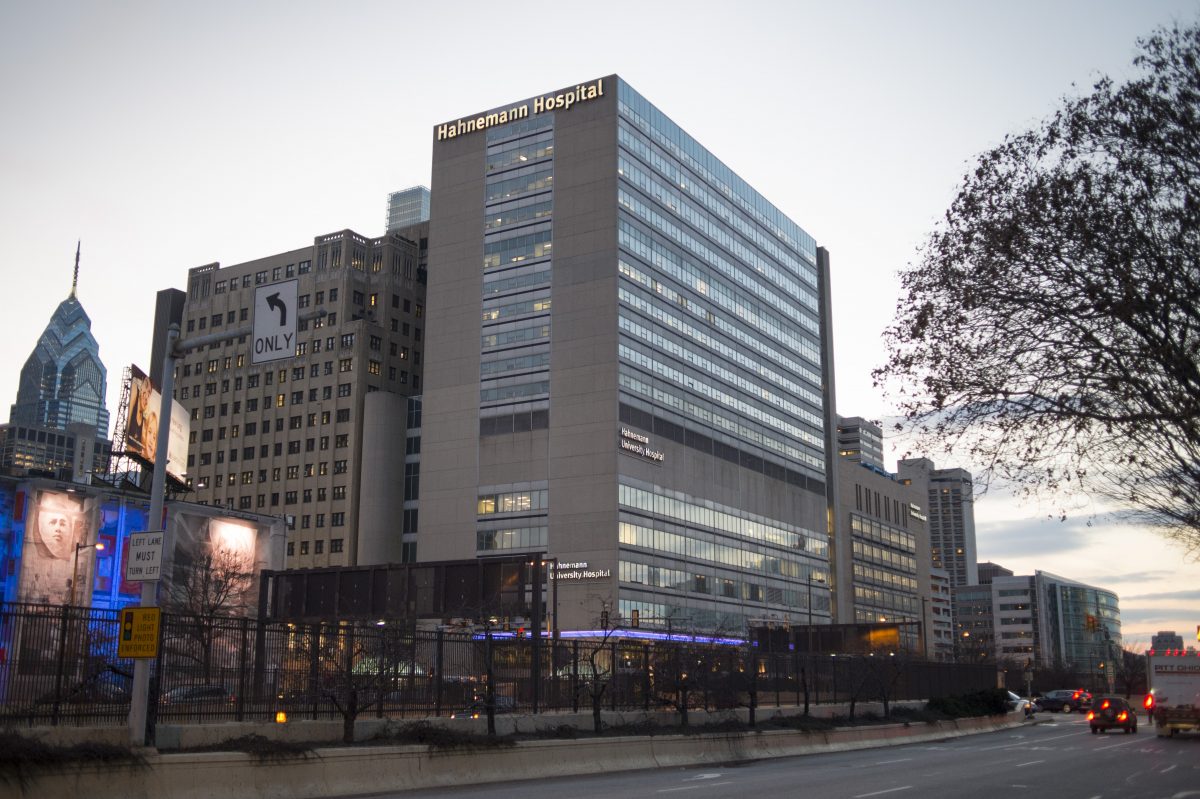
CEO of Hahnemann, St. Christopher’s hospitals ousted

https://www.beckershospitalreview.com/hospital-executive-moves/ceo-of-hahnemann-st-christopher-s-hospitals-ousted.html

Related image

Image result for american academic health system

Suzanne Richards, CEO of Hahnemann University Hospital in Center City, Pa., and St. Christopher’s Hospital for Children in Philadelphia, is no longer employed at the organizations, according to The Inquirer.

A spokesperson for Paladin Healthcare, the owner of the two hospitals, confirmed to The Inquirer March 7 that Ms. Richards was dismissed. The spokesperson did not comment on the reason for her dismissal.

Ms. Richards assumed the role two months ago, after several years of experience at hospitals in Southern California.

In 2018, Paladin created an affiliate, El Segundo, Calif.-based American Academic Health System, to buy the two hospitals as well as their related operations from Dallas-based Tenet Healthcare. American Academic Health System replaced several top executives at Hahnemann University Hospital after its purchase.