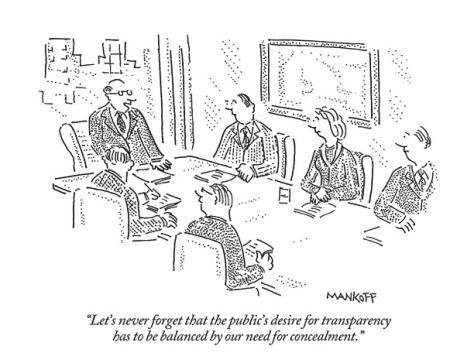
Transparency – All Cards Face-Up

Transparency – All Cards Face-Up

Related image


Creating and leading high-performing teams in any setting requires a high-trust environment.  A critical component in creating and keeping that trust is complete transparency across the team.  Having seen the empowering effect of this simple notion, I regularly reminded my direct-reports that the expectation was, “All cards are face-up on the table for the full team, in every decision and on every topic.”

I first learned the value of this kind of full transparency during my years working in the Mission Control Room while operating Space Shuttles and the International Space Station.  Everyone on the team reviewed every report, procedure, and mission-related communication of any kind between Mission Control and the astronauts.

That thorough transparency was never about micro-management.  It was in recognition that:

  • Every area of responsibility on the team affects the overall risk to the mission (e.g. if any single critical system fails, the entire spacecraft, and all the astronauts, are in jeopardy).
  • Any part of the team can and will make a mistake.
  • If not caught and corrected, combinations of seemingly small mistakes, or even some single mistakes, could lead to a failed mission or worse.
  • Conversely, there is so much talent in every part of the team, that as a team we can catch each other’s mistakes, offer suggestions from different perspectives, and come up with better overall solutions to problems.

Everyone on the team knew that it was team success that mattered, not simply individual performance.  “Showing our work” to our peers was not a threat to our individual authority.  It was an easy method to get more eyes on every problem and engage broader and deeper expertise to ensure nothing slipped past us.  Rather than slowing down decision-making, for decades these teams have routinely discussed and resolved exceptionally complex issues and have been able to take critical actions in minutes to protect a spacecraft hurtling through space.

The same risks often apply in management, where mistakes in one part of a company can have ripple effects that cause problems for other areas.  If poorly managed or left unsolved, those problems can cost the company money, erode product quality, bankrupt the company, and in some industries, injure employees and worse.

Just as we discovered in Mission Control, transparency is the simplest way to engage all members of the management team, and with them, the expertise and perspective of the organizations they led for the enterprise.  And just like in Mission Control, that greater engagement brings with it better informed, highly-reliable decision-making.

As an executive managing a $650 million/year enterprise, my direct-reports would often quote me before telling me and their peers some “ugly truth” or something they didn’t think I’d want to hear, “Just remember, you always say, all cards on the table…”

Every time they used that quote, it made me smile and think, “Now we’re talking!  Now we’re getting to it.”  More times than not, what followed was news about a project that was over budget or behind schedule, an unresolved engineering hurdle with an upcoming mission, or some mistake we had made in an earlier decision that was now putting us at risk.  Most importantly, it gave the full senior management team and the team’s they led an opportunity to help us find the best solution.  In the end, this is never about highlighting some part of the team’s mistakes, it is to ensure the team catches any weakness in our on-going performance.

Of course, transparency does not just protect the boss from the team’s mistakes.  It also allows the team to catch and correct the boss’s mistakes, as well as to offer innovations the boss may not see, which I was reminded of as the boss many times.

For example, during a tour in a development lab, I was shown a demonstration version for a new space station simulator based in a desktop personal computer.  Seeing a cost saving potential, I suggested several copies be made immediately available for testing by a number of our divisions.  Eyes widened around the room, including by several senior managers, but the team saluted and went to work.

After months of mixed reviews, the division responsible for managing and developing our training systems reported, “Look, Paul, this isn’t going to work.  We never thought it would, but you told our people to do it, so we did.  We can keep throwing money and manpower at it, but the answer won’t change for a long time.  However, we can accomplish what you’re after through some other work we’ve been doing, and we’re ready to show that to you and the management team any time.”

What followed became a project that moved our space station training software from $2 million sets of equipment that filled a room, to a single rack of servers costing $50,000 and contributed to total fixed cost reductions of more than 50 percent.

Lesson learned:  Share those great ideas with the full management team before giving direction.  Rely on the same transparency to spark discussions that can lead to better ideas and innovations that deliver.

This kind of transparency can become a habit and part of your culture.  It isn’t just for the bad news, but also for routine requests for better ideas, assurance that we’re not missing something, sharing resources to the areas that can make the next big gain… it makes us stronger and more successful as an enterprise.

Yes, the truth will set you free, and transparency is the way to find it and set the entire team free.

The Critical Skills for Leading Major Change in America’s Health System

https://hbr.org/2017/10/the-critical-skills-for-leading-major-change-in-americas-health-system
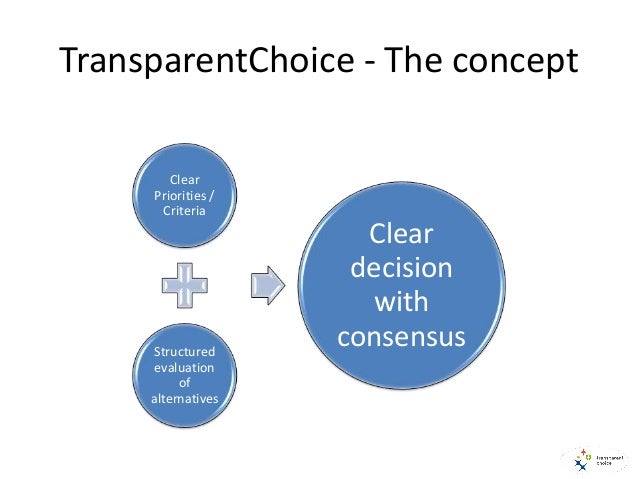
Image result for transparent decision making


At a time of profound volatility in the U.S. health system, change management is an essential skill for public and private leaders alike. For these leaders — and young people aspiring to careers as health care managers — one very practical question emerges: What are the critical skills for leading major change in our health system?

As someone who has led large change management projects in both the federal government and a large private health system, my view is that effective leadership of fundamental change requires the following: a commitment to transparency; involving stakeholders so they feel that their voices are heard; making listening a personal priority of the leader; going overboard in communicating; emphasizing that the sought-after change is achievable; and developing a motivating narrative.

Two personal stories illustrate these points.

The first concerns the challenge of creating the meaningful use program for the HITECH Act when I served as national coordinator of health information technology from 2009 to 2011, at the beginning of the Obama administration. The second involves the task of replacing the electronic health record system (EHR) at Harvard-affiliated Partners HealthCare, the largest health system in New England. The latter was a project I led after returning to Partners in 2011. This was a $1.2 billion capital investment, the biggest in the organization’s history.

Both challenges were fundamentally political with a small “p.” And the road to success was in many ways the same.

The HITECH Act, which was part of the federal stimulus program enacted in response to the financial crisis of 2008, tasked the Obama administration and its Department of Health and Human Services with creating a nationwide, interoperable, private, and secure electronic-health-information system. The president made this goal even more formidable by promising that every American would have an electronic health record by 2014.

The HITECH Act provided a wide array of authorities:

  • As much as $30 billion in new spending under Medicare and Medicaid. This was for incentive payments and supplemental reimbursement for services provided by health professionals and hospitals that became meaningful users of IT.
  • $3 billion in discretionary spending authority for the national coordinator to set up the national infrastructure needed to support and facilitate the adoption and meaningful use of EHRs.
  • Authority to write new regulations defining meaningful use of these systems, creating a certification process for EHRs, and specifying standards that would enable records to support meaningful use, as defined by regulation.

The HITECH Act also included constraints — many about timing. Regulations setting out standards had to be issued within about nine months from the time I arrived. Furthermore, payments to providers for conforming to meaningful use were to be available under the law in less than two years — by January 1, 2011. So any infrastructure supports to assist providers in becoming meaningful users had to be in place very fast — by early 2010 at the latest.

Still another constraint — one of those important details that are appreciated by students of management — was that the Office of the National Coordinator that I inherited was tiny (a total of 35 FTEs) and had never written a regulation or made a grant before. There was, for example, no grants-management office even though we were expected to rapidly expend $3 billion in infrastructure grants and contracts to prepare the nation for meaningful use.

Though the implementation of the HITECH Act seemed superficially like a technology project, I gradually came to realize that it was much more than that.  Nothing in the law required hospitals or doctors to adopt or meaningfully use electronic health records. They had incentives to do so, but they could easily refuse.

In fact, we were actually engaged not in a technology-implementation program but in a huge change-management initiative. We had to convince hundreds of thousands of health professionals and thousands of hospitals and hospital managers to take on the difficult, complex, costly, disruptive, and frustrating task of changing the way they managed what is arguably the most critical resource used in daily patient care: information. We were in a contest for the hearts and minds of professionals running our health care system. This larger battle for hearts and minds conditioned everything we did in applying our authorities and meeting our practical challenges.

First, to create the credibility and trust we needed to lead this movement, we insisted on transparency. We formulated the meaningful-use regulation in public through a series of hearings and public deliberations, which were streamed live. Whenever we faced the option of whether to make a decision in public or private, we chose the public approach. We held scores of open meetings involving our advisory committees during the two years I was national coordinator.

Second, to deepen public trust, we made listening a priority. Understanding that people affected by government policy want to be heard, I took every meeting I could with representatives of health care stakeholders, especially physicians and hospitals. After one meeting, I got feedback about what a great exchange we had. In fact, I had said nothing at all beyond introducing myself at the outset.

Third, we communicated extensively. When we released the proposed rule, we did so with a press event in the Great Hall of the Department of Health and Human Services with a packed crowd. I then went on a national tour — to Tampa, Minneapolis, Tucson, Salt Lake City, Omaha, Burlington, Buffalo, Houston, and beyond — to explain the proposed regulation.

Fourth, we emphasized the feasibility of complying with the meaningful-use rule. We needed to make clear that becoming a meaningful user was not a superhuman task. We wanted adoption to be so manageable that non-adopters would be embarrassed among their peers at golf outings or weekend cocktail parties.

Fifth, we sought narratives — metaphors for what we were trying to accomplish — and I used them repeatedly in my speeches. The one that stuck was an escalator image: We were getting on an escalator toward increasingly sophisticated and powerful uses of EHRs. We were starting on the first step, but the rest would follow in due time.

We also spoke of inevitability. It was inconceivable, we argued, that within 10 years, physicians and hospitals would still be walled off from the information age. They could make the conversion now — with government support — or they could wait and do it on their own. But either way, they were going to have to make the change. They were going to have to get on that escalator.

The meaningful-use program has had its problems, but it did succeed in one of its most fundamental purposes: the adoption of EHRs, which are now ubiquitous in medical practice.  In the end, the program got very close to fulfilling President Obama’s promise that every American would have an electronic health record by 2014.

Now let’s turn to the task of implementing a new EHR in a large operating health system that included two major teaching institutions (Massachusetts General Hospital and Brigham and Women’s Hospital); multiple community hospitals; a rehab hospital; a nationally-known, inpatient, psychiatric facility; a half-dozen community health centers; a home-health-care agency; thousands of community-based physicians; and the largest non-profit, private, biomedical-research program in the world.

The Partners HealthCare System was already sophisticated electronically.  The problem was that it had multiple, homegrown, electronic health records onto which local physician-developer teams had layered a wide variety of specialty specific applications. The result was an electronic tower of Babel that was becoming increasingly expensive to service and modernize. But the key problem was that the records were not internally interoperable, which had become a growing barrier to improving quality and efficiency in an increasingly demanding local-health-care environment.

Before I arrived in 2011, Partners leadership had made the decision to replace all this complexity with a single, commercial EHR. It was my job to lead the process of picking one and rolling it out.

Now, though Partners was legally a single health-care-delivery system, I knew from having worked there for much of my professional life that it was in fact a loose confederation of independent institutions populated by equally independent and skeptical professionals. Winning their support, and that of managers throughout the system, was critical to success. Once again, we were battling for hearts and minds, which meant that many of the approaches we relied on in government were relevant.

Building trust through a transparent decision process was the first strategy we pursued. The initial and critical decision we faced was which EHR to purchase.  There were two finalists. To choose, we collected evidence, evaluated the alternatives, and made decisions in highly public and inclusive ways. We invited thousands of professionals to test and rate the two products. We reported the results publicly on a project website. We conducted site visits to health care organizations around the country using the products we were considering. Site visit teams were diverse and representative of major Partners institutions and stakeholders. They rated the sites’ experiences with the EHRs, using a standardized protocol. We reported results on the website.

Then, we held a public debate between advocates of the two contending records — in which teams argued about relative merits before the audience voted. The vote was highly influential in our final choice. This transparent and inclusive decision-making process included an enormous amount of built-in listening and feedback from affected staff, another critical part of the change-management process.

To address the need for inclusive governance and representative decision making, we put in place a governing council for the EHR project. Members included representatives of critical Partners institutions and stakeholder groups. This council approved all major decisions with respect to the choice of the EHR and implementation policy. We then took those approved decisions to senior management of Partners, and ultimately to the Partners board, for final endorsement. Obviously, the fact that a representative body had approved our recommendations enormously increased their weight with management and board members.

As in the case of the meaningful-use program, communication was important. It didn’t require traveling the country, but it did require visiting all the major Partners institutions to speak with their staff and management, to answer questions, and to take in feedback.

Finally, we needed a rationale and a narrative that conveyed the necessity of undertaking this admittedly expensive and disruptive change in Partners affairs.  The rationale and narrative focused on the institution’s obligation to its patients. This was conveyed first in a motto: one patient, one record, one billing statement. To make this motto concrete, we made a video of a patient describing how she had had to carry a paper record from one Partners institution to another — all of which had siloed EHRs — as she got care for her breast cancer: surgery at Newton-Wellesley Hospital, chemotherapy at Dana-Farber Cancer Institute, and radiation at the Massachusetts General Hospital. I recall vividly the impact this video had during a presentation I made to the academic chairs of departments at Mass General. Patients’ stories had an almost unimpeachable legitimacy, even with the most senior Harvard academic leaders.

Before I left Partners to join the Commonwealth Fund in 2013, we had chosen the EHR and begun the rollout of the new IT infrastructure. While that rollout has not been perfect and, typical of such massive implementations, there have been plenty of complaints about the difficulty of using the new record, it has largely proceeded according to plan.

Change management is at the core of everything that public and private institutions are striving to achieve in reforming national policy and care-delivery approaches in order to improve the quality and cost of health care services provided daily to Americans. The effectiveness of leaders in both the public and private sectors in managing ambitious change efforts will determine their ultimate success. And my experience suggests that the skills required in these two sectors are remarkably similar — because change management, regardless of setting, involves convincing human beings to give up something they know for something new and uncertain.

Hospital Impact: Amid turbulent times, high reliability organizations must learn to be resilient

http://www.fiercehealthcare.com/hospitals/hospital-impact-amid-turbulent-times-high-reliability-organizations-must-be-resilient?utm_medium=nl&utm_source=internal&mrkid=959610&mkt_tok=eyJpIjoiWWpaa1lUTXlOREU0WldReSIsInQiOiI5Zzg4Q1p0YUpoZklLQTdYRWFjOFNsTFJBM3RXdHBDdlhjT3dpXC9BUUJWWjdcLzF1QWg0NXpHWFA4bk1Oc01taUhcL3Q0YjFqdWptYmY5V2VwUjkzK2poNElYdUNOelpIUHV1RzY3Z3dTV1lDckY1SUVQRFdwUnp6amV4RTIzalEwNyJ9

Related image

Over the past few years, healthcare organizations have joined the likes of nuclear power plants, air traffic control systems and naval aircraft carriers in the journey to become high reliability organizations (HROs).

An HRO is one that has been successful in avoiding disasters despite being in a high-risk field where accidents are expected. But how do we remain resilient and maintain the five principles of a HRO during this chaotic time in healthcare, when we are being asked to do more with less?

The five principles inherent to becoming a HRO are:

  1. Preoccupation with failure: Do not ignore any failure, no matter how small. Small deviations often times can lead to tragedy.
  2. Reluctance to simplify: Do not explain away problems. Reject simple diagnoses. Attack failures head on and conduct root cause analyses.
  3. Sensitivity to operations: The best picture of what is occurring comes from the front line. Front-line employees are closer to the work than executive leadership, and are better positioned to recognize failure and identify opportunities for improvement.
  4. Commitment to resilience: The ability to anticipate trouble and improvise when the unexpected occurs.
  5. Deference to expertise: Expertise, rather than authority, takes precedence. When conditions are high-risk and circumstances change frequently, on-the-ground subject matter experts are essential for assessment and response.

We know that system performance in healthcare hinges on the ability to match demand for care with the resources that are needed to provide it. Given the present uncertainty of the Affordable Care Act, the divestiture of hospitals across the country in order to remain solvent, along with decreased payer reimbursement, can providers continue to adopt the five principles of a HRO and maintain resilience in this high-pressure industry?

Remaining adaptable and foreseeing challenges that threaten your mission must become part of your everyday thinking in order to achieve resilient performance.

“HROs give their employees the tools they need to do their jobs, but more importantly, a voice to speak up when processes and systems go awry.”

The inception of accountable care organizations invoked many academic debates, as efforts to drive reform forward resulted in false starts that stopped momentum before it could build. The idea of transformational change has existed for years now, and revolutionary change across the healthcare system is now our reality.

Traditional healthcare reimbursement models are being replaced by new payment methodologies and incentives built around the concept of value and shared risk. Responding to this momentous change is imperative for the long-term viability of all hospitals and health systems.

We now know that evolving with the ever-changing healthcare environment is imperative for the long-term viability of all hospitals and health systems. Health systems must examine their current capabilities and capacity to exist within a value-based environment, and be willing to restructure care delivery when and where necessary, and do it efficiently without compromising the HRO mindset.

An organization’s past success or current position in the market will not shield it from the force of reform, and with that comes inherent risk. HROs give their employees the tools they need to do their jobs, but more importantly, a voice to speak up when processes and systems go awry.

So how do the best managers continue to lead in turbulent times? They remember their fundamental purpose. The more turbulent it gets, stop, assess and reassess the situation and lead with a calm and reassuring manner. Project the organization’s mission, purpose and top goals. Use the daily morning huddle to debrief, reset and refocus before jumping back into the chaos. Eventually you will move through it.

Find opportunities to remind your team of their purpose and mission when things get chaotic. Purpose, above all else, is the source for engagement and motivation in the workplace.

During turbulent times, communication inevitably breaks down. When people stop talking and listening, all the fears and difficulties associated with change come out in force. The role of a manager during periods of change must evolve from encouraging communication to brokering communication. Do not leave effective communication to chance.

When new variables are constantly being introduced at work, setting priorities gets harder. The more things change, the harder it is to prioritize decisions on a day-to-day basis. As a leader in a HRO, your role must evolve to meet this gap.

Above all else, do not forget to listen. When things are crazy at work, your ability to listen is crucial. Even if you do not have all the answers, sometimes just allowing your team to vent, talk things through with you, helps them to see the bigger picture. The sheer act of communication through listening and understanding, can make the difference between a team that stays positive and productive and a team that becomes toxic.

As we all know, the crazier things get; the more mistakes are likely to happen. When pressure and stress are running high, say so. Being transparent with your team gives them perspective and a new appreciation for the work being done. What you don’t want is for the team to be fearful of what’s coming next. Fear brings out the worst in people.

As we move through the next decade, you can expect increasing technological advances that will change the healthcare industry drastically. Digital tablets that aid in patient engagement, radio frequency identification for tracking patients, and electronic health records that reduce medical errors while increasing quality of care are just a few. These advances have propelled the healthcare industry into a new realm of progress.

As we look to the next 10 years, the development of even more advanced technological tools will continue to shift the day-to-day responsibilities of those working in the industry. We must stay preoccupied with safety. We must continue to embrace the principles of HROs.

With the healthcare system undergoing so much change, successful organizations will be those that proactively design strategies that are facile, while cultivating a questioning attitude. It is the core attributes of HROs that organizations must possess today and well into the future, in order to flourish in this new healthcare paradigm. Ask yourself what inspires your team, then do it.

Darlene A. Cunha, MMHC, BSN, RN, ACHE is an accomplished senior healthcare executive, whose focus is leading change for clinical, quality and operational excellence.

Investigations about safety issues result in few meaningful consequences for hospitals

http://www.fiercehealthcare.com/healthcare/investigations-about-safety-issues-result-few-meaningful-consequences-for-hospitals?mkt_tok=eyJpIjoiWWpaa1lUTXlOREU0WldReSIsInQiOiI5Zzg4Q1p0YUpoZklLQTdYRWFjOFNsTFJBM3RXdHBDdlhjT3dpXC9BUUJWWjdcLzF1QWg0NXpHWFA4bk1Oc01taUhcL3Q0YjFqdWptYmY5V2VwUjkzK2poNElYdUNOelpIUHV1RzY3Z3dTV1lDckY1SUVQRFdwUnp6amV4RTIzalEwNyJ9&mrkid=959610&utm_medium=nl&utm_source=internal

quality

Investigations into hospital safety issues rarely result in consequences that spark meaningful improvements, according to USA Today. That can leave patients in the dark and vulnerable to unnecessary infections.

An article in USA Today outlines a system stacked against public admissions of safety issues and potential risks of infection. A recent investigative report on sewage leaking down the walls and floor of an operating room in MedStar Washington Hospital Center represented the first public glimpse of a health department investigation into the matter.

In a statement, the president of MedStar Washington Hospital noted the hospital had corrected its plumbing issues, but Lisa McGiffert, director of the Safe Patient Project run by Consumer Reports, says the system as it stands does little to demonstrate public accountability. She suggests that hospitals must be forced to undertake internal and external audits following safety lapses.

Larry Muscarella, author of the Discussions in Infection Control blog, told the newspaper that penalties or fines issued in such cases rarely provide enough incentive for substantive change. In some cases, he says, hospitals face “little or no consequence” from citations by state agencies.

That leaves patients without information that could be crucial when it comes to deciding where they want to go to seek treatment. This compounds a related issue where, despite a general trend toward increased transparency intended to give patients information to make informed choices about their care, some hospitals have dragged their feet on releasing quality data.

Concentrating on short-term financial incentives that lead hospitals away from more substantive quality improvements actually could end up hurting the bottom line in the long run, according to trauma and emergency surgeon David Kashmer, M.D. He points out that hospitals that implement error-prevention programs see a median savings of $250,000.

“We have advanced quality tools available, but unfortunately we see some centers where, because of the culture or the situation, [they] don’t use them,” he says.

The Un-Democratic Process Behind Trumpcare

https://www.theatlantic.com/politics/archive/2017/07/the-disturbing-process-behind-trumpcare/533850/

http://www.realclearhealth.com/2017/07/18/the_un-democratic_process_behind_trumpcare_276901.html?utm_source=morning-scan&utm_medium=email&utm_campaign=mailchimp-newsletter&utm_source=RC+Health+Morning+Scan&utm_campaign=114c8c7a9a-MAILCHIMP_RSS_EMAIL_CAMPAIGN&utm_medium=email&utm_term=0_b4baf6b587-114c8c7a9a-84752421

Image result for The Un-Democratic Process Behind Trumpcare

Since I came to Washington in 1969, I have been immersed in Congress and its policy process. I have seen many instances of unpopular bills considered and at times enacted. I have seen many instances of bills put together behind closed doors. I have seen bills enacted and repealed after a public backlash. I have seen embarrassing mistakes in bills, and lots of intended consequences.

But I have never seen a process like the one Senate Majority Leader Mitch McConnell is using in the Senate with his so-called Better Care Reconciliation Act, BCRA, to presumably repeal and replace the Affordable Care Act; nor have I seen lawmakers responding to the bill, and their own constituents, this way.

Let’s take a brief look at a couple of Congress’s greatest hits: one unpopular bill and one crafted in private. Perhaps the most notorious in terms of unpopularity was the aptly named Medicare Catastrophic Act of 1988, which was substantially repealed just a year later after an intense backlash from a group of more affluent seniors upset that their costs would go up. The visual imprinted in many minds was hundreds of enraged elderly chasing Illinois Representative Dan Rostenkowski down a street in Chicago as he sought refuge in his car after a rancorous town meeting.

Sure sounds like a parallel to today. But consider: The 1988 act was an open and thoroughly  bipartisan effort to fulfil one of Ronald Reagan’s promises, to protect seniors against financial disaster; it actually provided a substantial set of benefits for poorer seniors, but because it was financed entirely within Medicare, it included additional taxes on wealthier seniors, many of whom already had some of the benefits in the bill through their supplemental insurance. There was a lot of debate over the elements in the bill during its deliberations, but no real controversy at its passage. But after its enactment, the more well-to-do seniors, inflamed by a distorted attack by a rival group to AARP, reacted to the costs without considering the benefits, leading Congress the next year to repeal most of it. The repeal of its prescription drug benefit triggered another controversial law, President George W. Bush’s Medicare Part D, in 2003.

What about bills crafted in private? Take a look at the two-year spending deal reached in 2013 by House Budget Chair Paul Ryan, a Republican, and Senate Budget Chair Patty Murray, a Democrat. Many of the details were in fact worked out in private sessions between the two and their staffs. The deal averted a draconian sequester for both defense and domestic spending that neither side wanted. And they worked out a series of tradeoffs, avoiding the worst kinds of pain, keeping the government open, and adding a bit more to deficit reduction along the way, while also finding a two-year deal to keep the same crisis from emerging the next year.

To be sure, this was not a deal that followed the regular order of open conference committee deliberations. But it was a process that House and Senate leaders of both political parties endorsed. And it was one where at every step along the way, Murray and Ryan reported back to their party leaders, and their caucus members, what was going on. It was, especially for the time, a commendable effort to find bipartisan consensus. Which it did.

Now let’s look at BCRA. It started, of course, with McConnell bypassing the committees that deal with health policy, both Finance and Health, Education, Pensions, and Labor (HELP) by handpicking 13 Republican senators—all middle-aged and elderly white men—to work in complete privacy to draft the bill. Besides women like Senators Susan Collins and Lisa Murkowski, McConnell also left off Senator Bill Cassidy of Louisiana, a physician with deeper knowledge of health policy than nearly all of the 13 chosen. The gang of 13 kept their vow of omerta, leaving even their Republican colleagues at sea during their sessions. And of course, McConnell brushed aside peremptorily any notion that Democrats would be brought into deliberations, or consulted.

Nor were the groups representing those on the front lines of health policy and delivery, including doctors, hospitals, insurers, nurses, those with debilitating diseases, and more, consulted or included. One of the more striking, and embarrassing, moments came when McConnell—who had overcome polio as a child—refused to meet with the March of Dimes, the non-profit founded in the New Deal era to combat the disease.

The bill that emerged was, of course, a catastrophe. It was not a carefully constructed health-policy bill, but basically a vehicle to give ginormous tax cuts to the wealthiest among us, financed by almost $800 billion in cuts from Medicaid, while also adding immensely to the health-care costs of poor and older Americans. The CBO score was devastating. And despite repeated vows to vote before the July 4 recess, McConnell had to take the bill back to the drawing board. Over the recess, we saw another remarkable phenomenon. Senators who went back home, ostensibly to meet and communicate with their constituents, instead mostly behaved as if they were in witness protection programs—doing everything they could to avoid town meetings or any gatherings with voters, or in some cases to hold meetings only with a pre-selected group to keep out those who would be hurt by the health bill.

The next iteration of the McConnell bill made a concession to Senator Ted Cruz to nail down votes from the radical members of the Senate GOP that health experts said would blow up insurance markets. It pared down some of the tax cuts, primarily to give McConnell a $200 billion-plus slush fund to lure recalcitrant Republican senators; he promptly threw in $42 billion more for opioid treatment to corral Senators Rob Portman of Ohio and Shelly Moore Capito of West Virginia, and tossed billions more to Alaska to nail down Senator Lisa Murkowski.

But despite adding $172 billion to stabilize insurance markets, the bill kept all the provisions to blow up Medicaid, dealing victims of the opioid disaster a much larger blow than the additional $42 billion, continued to defund Planned Parenthood, and drew sustained condemnation for every major health industry group, every major health policy analyst, a slew of governors including Republicans like John Kasich of Ohio and Brian Sandoval of Nevada. And the approval of the bill with the public stood at 38 percent in a Kaiser poll, lower than any piece of significant legislation I can ever recall.

Compounding all this, McConnell was intent on moving the bill before a new CBO score, even pushing to substitute a number from the Department of Health and Human Services. Along the way, to build support among wavering senators, administration officials led by HHS Secretary Price and Vice President Pence offered reassurances and statements that were simply false—so much so that Republican Ohio Governor John Kasich actually called out his own vice president.

By every past standard, and every logical standard of behavior in a representative democracy, this bill should be dead. It is not. Why not?

Republicans have no easy way out of a box canyon on health policy of their own making.

Eight years ago, when the Affordable Care Act was in its gestation period, then Republican Whip Eric Cantor said the GOP alternative to it was “weeks away.” It turned out to be 400 weeks. After ACA was enacted, we saw not a Republican alternative but 60-plus votes to repeal with a promise to replace. A week ago, when asked why Senate Republicans had to scramble to slap this plan together, Senator Pat Toomey of Pennsylvania said it was because none of them had expected Donald Trump to win. Think about that: Toomey was admitting that Republicans saw no need to come up with their own health plan in a  Clinton presidency; they could just continue to work to sabotage Obamacare and take more votes to repeal without any replacement to be judged by the same standards as other bills.

There was another element to the box canyon. The ACA was fundamentally built on the Republican alternative to Clintoncare in 1993-94, as crafted by Charles Grassley, Orrin Hatch, the late John Chafee and the former Senator David Durenberger. Their alternative had competition for private insurers on regulated exchanges, and an individual mandate to buy insurance to broaden the risk pool and get rid of the burden of pre-existing conditions. When Republicans in 2009 decided not to cooperate with Democrats in Congress, but to unite in full-throated opposition to any plan that emerged, and then to work actively to delegitimize whatever passed, they created a big dilemma. Call Obamacare the worst thing since slavery, as Ben Carson did, vote over and over to repeal it root and branch—and you can’t then turn around and adopt its framework. That left  no workable framework.

Of course there is a workable alternative: join with Democrats and fix the problems in Obamacare, stabilizing insurance markets, expanding Medicaid in the states that have failed to do so, finding ways to make the individual mandate work better to expand the risk pool more. But after a decade of success inflaming tribal warfare, that is not a path McConnell and Ryan are willing to take.

Republicans had no real interest in actually fixing the health-care system. This bill is far more a delivery system for tax cuts for the rich, paid for by cutting Medicaid.

Those tax cuts are the number one priority for conservatives in and out of Congress. But this could become a twofer. Conservatives have hated Medicaid ever since it was created in 1965. As Medicaid expanded to become the vehicle to pay for long-term care for the elderly along with care for the disabled and mentally ill, it became a huge government program. When Medicaid expansion became a core vehicle in Obamacare for giving health insurance to the poor, it became larger yet. So Republicans in Congress seized the moment to do something they have been unable to do in more than five decades—cut the program dramatically and shift the burden for the cuts largely to states. Doing so meant freeing up hundreds of billions of dollars that could then be used to pay for the first wave of deep tax cuts aimed especially at the richest among us. Indeed, the first BCRA iteration provided a boon for the 400 richest Americans that was large enough to pay for the Medicaid benefits of 725,000 Americans.

The tax-cut drive, however, was made much more complicated by budget rules. To get big tax cuts, Republicans have to avoid a Senate filibuster by Democrats; that means finding a vehicle that can bypass the 60-vote hurdle. Enter budget reconciliation. But reconciliation poses major hurdles to passing things that blow up deficits and debt. And reconciliation must be preceded by a budget resolution with instructions on what can be reconciled. ACA repeal was included in the budget last year—but not separate tax cuts. Those will require a new budget resolution and a second reconciliation bill. If Republicans can get a big part of their tax cuts done now, and paid for, it will make the second tax-cut bill much easier to craft within the rules.

Republicans don’t fear the backlash from a bill that will hurt lots of people, including their own voters.

Some think the simple fact of acting, and getting a policy victory, will help. Others may actually believe that the bill will work—hard as that is to believe. But the ideological view that cutting government magically brings freedom and prosperity and good health is strong among many Republicans in Congress. Nonetheless, the more rational or pragmatic ones know that this bill will hurt a lot of people, with a heavier concentration among the white working-class voters that are a mainstay of the current GOP. So why no fear? For one thing, the large tax cuts for the ultra-rich may guarantee that the web of billionaires contributing huge sums to 501(c)4s and other entities to help elect Republicans will double down. In the special election in Georgia’s sixth district, Democrat Jon Ossoff collected a mind-boggling sum for his campaign from small donors; if Karen Handel had not been able to match that with a flood of independent ads financed by big money, we might have seen a different outcome.

For another, with Justice Neil Gorsuch on the Supreme Court instead of Merrick Garland, states under GOP control and possibly even Congress will pass more and more draconian voter suppression laws (New Hampshire just joined the ranks) that will get a much more favorable treatment down the road. They will be aided by Trump’s outrageous new commission on voting, co-chaired by the king of voter suppression, Kris Kobach and including an all-star list of other voter suppressors, which is already intimidating voters. Money and voter suppression laws could well enable Republicans, even if this disaster of a bill passes, to keep control of both houses at least until 2020—and during that time, they can do even more to tilt the campaign finance system and narrow the electorate to their advantage.

Put it all together, and what emerges is a truly disturbing picture of a failed legislative process built on a deep distortion of representative democracy. A thoroughly partisan, ill-conceived and ill-considered bill, slapped together without the input of experts or stakeholders, done not to improve the health care system but to aid plutocrats, crafted in a fashion that will hurt millions and millions of Americans, by lawmakers doing whatever they can to avoid interacting with their own constituents. Dismaying, even despicable. And worse is that so many senators who should know better, and many who do know better, will actually vote for the monstrosity—and give this illegitimate process their imprimatur.