

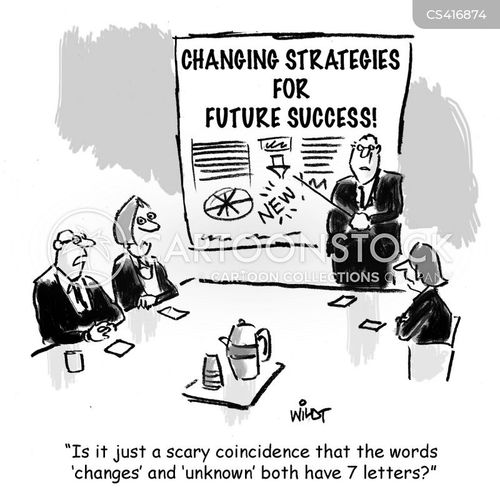
Cartoon – A Scary Coincidence

http://www.mcall.com/business/healthcare/mc-lvhn-pocono-merger-20161215-story.html

A year ago, Lehigh Valley Health Network and Pocono Health System announced that their boards had authorized a merger.
The two institutions had disclosed a letter of intent to merge six months earlier.
A year and a half later, however, LVHN and PHS remain independent, their long-planned marriage apparently held up by a slow-moving regulatory approval process.
In the meantime, LVHN has announced and completed a different merger — with Schuylkill Health System. And PHS has announced it is laying off 61 nurses of 530 nurses at Pocono Medical Center.

Fewer patients have died due to hospital-acquired conditions over the past five years and hospitals saved more than $28 billion in healthcare costs during the same time period, according to a new federal government report.
The U.S. Department of Health and Human Services credits the 21 percent decline in hospital-acquired conditions in part to the provisions of the Affordable Care Act.
“The Affordable Care Act gave us tools to build a better healthcare system that protects patients, improves quality, and makes the most of our healthcare dollars and those tools are generating results,” said HHS Secretary Sylvia M. Burwell in the announcement. “Today’s report shows us hundreds of thousands of Americans have been spared from deadly hospital-acquired conditions, resulting in thousands of lives saved and billions of dollars saved.”
Indeed, the report, “National Scorecard on Rates of Hospital-Acquired Conditions,” by the Agency for Healthcare Research and Quality, finds that roughly 125,000 fewer patients died during 2010 to 2015. In total, hospital patients experienced more than 3 million fewer hospital-acquired conditions, such as adverse drug events, catheter-associated urinary tract infections, central line associated bloodstream infections, pressure ulcers and surgical site infections, during that time period.

This is the first in of a series covering the Shaping of Healthcare’s Future in the Trump era. As the new administration prepares to take office, HealthLeaders Media will continue to talk with healthcare leaders about the challenges and opportunities for the industry that lie ahead.
The single voice representing healthcare on President-elect Donald Trump’s “strategic and policy” forum belongs to Delos “Toby” Cosgrove, MD, president and CEO of the Cleveland Clinic.
Although details about what the group will discuss in its monthly in-person meetings are not yet known, Cosgrove says he’s honored by the selection and humbled that he will be able to represent healthcare to the president.
Forum members are charged with offering insights on how government policy impacts economic growth, job creation and productivity. The 19-member group will bring together leaders from business, finance, and technology and is scheduled to start its meetings in February, after the inauguration.
Following is a lightly edited transcript of a conversation between Cosgrove and HealthLeaders Media on his thoughts about the group and its purpose.

Jeffrey Brenner, MD

Science has always issued medical promissory notes. In the 17th century, Francis Bacon promised that an understanding of the true mechanisms of disease would enable us to extend life almost indefinitely; René Descartes thought that 1,000 years sounded reasonable. But no science has been more optimistic, more based on promises, than medical genetics.
Recently, I read an article promising that medical genetics will soon deliver “a world in which doctors come to their patients and tell them what diseases they are about to have.” Treatments can begin “before the patient feels even the first symptoms!” So promises “precision medicine,” which aims to make medicine predictive and personalized through detailed knowledge of the patient’s genome.
The thing is, the article is from 1940. It’s a yellowed scrap of newsprint in the Alan Mason Chesney Archives at Johns Hopkins University in Baltimore. The article profiles Madge Thurlow Macklin, a Hopkins-trained physician working at the University of Western Ontario. Macklin’s mid-century genetics is not today’s genetics. In 1940, genes were made of protein, not DNA. Textbooks stated that we have 48 chromosomes (we have 46). Looking back, we knew almost exactly nothing about the genetic mechanisms of human disease.
These genetic promissories echo down the decades with an eerie resonance. In 1912, Harvey Ernest Jordan—who would become dean of the University of Virginia medical school—wrote: “Medicine is fast becoming a science of the prevention of weakness and morbidity; their permanent not temporary cure, their racial eradication rather than their personal palliation.” (By “racial” here Jordan simply meant any large, loosely related population.) “Fast” is relative; 99 years later, in 2011, Leroy Hood wrote: “Medicine will move from a reactive to a proactive discipline over the next decade.”

If you’re running a hospital, one irony in the transformation toward value in healthcare is that your future success will be determined by care decisions that take place largely outside your four walls. If you’re running a health system with a variety of care sites and business entities other than acute care, the hospital’s importance is critical, but its place at the top of the healthcare economic chain is in jeopardy.
Certainly, the hospital is the most expensive site of care, so hospital care is still critically important in a business sense, no matter the payment model. But if it’s true that demonstrating value in healthcare will ensure long-term success—a notion that is frustratingly still debatable—nonacute care is where the action is.
For the purposes of developing and executing strategy, one has to assume that healthcare eventually will conform to the laws of economics—that is, that higher costs will discourage consumption at some level. That means delivering value is a worthy goal in itself despite the short-term financial pain it will cause—never mind the moral imperative to efficiently spend limited healthcare dollars.
So no longer can hospitals exist in an ivory tower of fee-for-service. Unquestionably, outcomes are becoming a bigger part of the reimbursement calculus, which means hospitals and health systems need a strategy to ensure their long-term relevance. They can do that as the main cog in the value chain, shepherding the healthcare experience, a preferable position; but physicians, health plans, and others are also vying for that role. Even if hospitals or health systems can engineer such a leadership role, acute care is high cost and to be discouraged when possible.

 HENRY KOTULA