


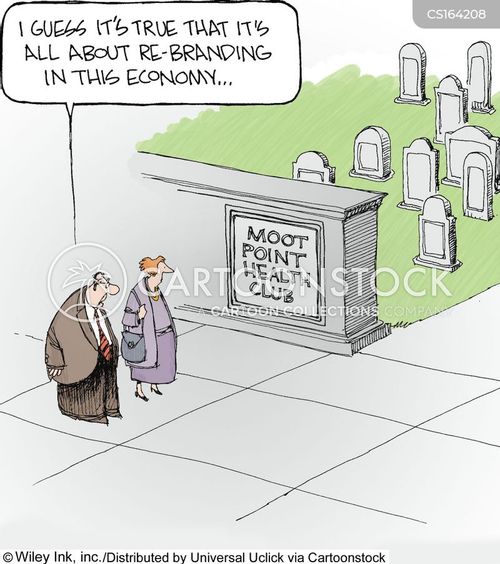
Cartoon – Now that we all agree on the agenda

Stryker announced Monday that it is acquiring a Canadian imaging firm for $701 million.
Novadaq, a public company based in Missisauga, Canada makes fluorescence imaging technology that allows surgeons to see in real time blood flow in vessels, and related tissue perfusion in a variety of surgical procedures including cardiac, cardiovascular, gastrointestinal, plastic, microsurgical, and reconstructive procedures.
“With NVDQ SYK receives what we view as a best-in-class technology that allows for an entry point into the small, but rapidly expanding open visualization segment, and fortifies the company’s overall imaging offering where SYK already has a market leading position in the larger minimally invasive (MIS) endoscopic visualization segment,” wrote Richard Newitter, an analyst with Leerink Research, in a research note Monday.
The $701 million purchase price is a whopping 95.8 percent premium over Novadaq’s current share price and 8.4 times its trailing twelve-month revenue. While steep, the transaction is a smart one by Stryker, analysts believe.
“We believe adding NVDQ’s IP to Stryker will allow [it] to better grow the fluorescence field and we feel SYK is the most equipped company to do so,” wrote Sean Lavin, an analyst with BTIG, in a research note Monday after the deal was announced.
Another analyst provided a different reason for why the deal makes sense.
“While the premium paid is high, we believe the deal price is defensible given NVDQ’s superior topline growth profile (20%+ topline growth) and the large opportunity for SYK to take costs out of NVDQ,” wrote Glenn Novarro, an analyst with RBC Capital Markets, in a research note on Monday.
The Canadian company has been growing its revenue — $80 million in 2016, up from $63.8 million the year before — but isn’t profitable. Other than its Spy and Pinpoint technologies, the company is also the exclusive worldwide distributor of LifeNet Health’s Dermacell products and has a licensing partnership with Intuitive Surgical (ISRG) for the FireFly fluorescence imaging system, according to Novarro.
Novadaq will fit into Stryker’s video imaging business once the deal closes, and that is expected to be at the end of the third quarter.
“This acquisition aligns with Stryker’s focus on enabling our customers to see and do more by enhancing cross-specialty surgical visualization,” stated Timothy J. Scannell, Stryker’s Group President, MedSurg and NeuroTechnology, in a news release. “NOVADAQ’S unique innovative technology complements Stryker’s advanced imaging portfolio and expands our product offerings into open and plastic reconstructive surgery.

Democrats will begin slow-walking Senate business on Monday as part of their opposition to Republican attempts to overturn the Affordable Care Act.
Senate Minority Leader Chuck Schumer of New York said Democrats will object to requests for “unanimous consent” to set aside rules and expedite proceedings. The procedural move is a tactic the minority party can use to draw out the legislative process for days, forcing Republicans to jump through procedural hurdles to get anything done.
The goal, he said, is to refer the GOP health care bill to a committee where it can be debated and amended publicly. Republicans are writing their bill “under the cover of darkness because they’re ashamed of it,” he said.
“This is a bill that would likely reorder one-sixth of the American economy and have life-and-death consequences for millions of Americans, and it’s being discussed in secret with no committee hearings, no debate, no amendments, no input from the minority,” he said. “This is the most glaring departure from normal legislative procedure that I have ever seen.”
The move coincides with a new #AmericaSpeaksOut campaign Senate Democrats launched Monday urging Americans to “speak out against Trumpcare and share their stories.” They also plan to hold the Senate floor tonight with speeches about health care.
The House passed its Obamacare repeal bill in May, but Senate Republicans have been drafting their own bill behind closed doors.
In a letter, Democrats provided some Senate Republican leaders with a list of all 31 potential Senate rooms “to assist” Republicans in scheduling a hearing.
They wrote that Democrats, by comparison, held about 100 hearings and meetings, accepted more than 150 amendments sponsored or cosponsored by GOP senators and spent 25 days in floor debate during the drafting of the Affordable Care Act.
The move by Democrats to slow Senate business will not impact consideration of President Trump’s nominee to lead the Federal Emergency Management Agency, Brock Long, who is expected to be confirmed Tuesday, according to a Senate Democratic aide. Schumer said Democrats would not object to requests for unanimous consent on honorary resolutions, either.
The greater impact likely will be the interruption of the legislative process and routine Senate business.
Speaking on the Senate floor, Schumer asked Senate Majority Leader Mitch McConnell of Kentucky to hold an all-senators meeting to discuss a bipartisan way forward on lowering the cost of health care, raising the quality of care and stabilizing the insurance marketplaces.
McConnell responded that senators would meet on the Senate floor with an unlimited amendment process. He said there would be “ample opportunity” to read and amend the bill when Schumer asked whether Democrats would have more than 10 hours to review it.
“I rest my case,” Schumer said.
Republicans blame Democrats for refusing to negotiate on a health care bill.
“Democrats for MONTHS have stated they have no interest in working with Republicans on fixing Obamacare,” Michael Reed, the Republican National Committee’s research director and deputy communications director, wrote in a statement. “Now, Democrat efforts to feign outrage over health care negotiations should be seen for what it is — a pure partisan game aimed at placating the far-left.”
McConnell, in a Senate floor speech, said Obamacare has increased costs and reduced choice, causing Americans to drop coverage. He said the entire Senate Republican conference has been “active and engaged” for months on legislation that would stabilize insurance markets, remove mandates to buy insurance, and preserve access to care for those with pre-existing conditions.
“We believe we can and must do better than Obamacare’s status quo,” he said.
The House-passed health care bill, called the American Health Care Act, would lead to 23 million fewer people having health insurance by 2026, according to the Congressional Budget Office. If the Senate is able to pass health care legislation, the two chambers will have to come to a compromise to get a final bill to Trump’s desk.
As Democrats prepared for battle over the Senate bill, conservative House Republicans planned to send a letter to McConnell warning against letting the legislation get too moderate if he wants to keep support from the House after it passed the Senate.
The letter from the Republican Study Committee, which has more than 150 members, states that its members have “serious concerns regarding recent reports suggesting that the Senate’s efforts to produce a reconciliation bill repealing the Affordable Care Act are headed in a direction that may jeopardize final passage in the House of Representatives,” according to a copy of the draft obtained by USA TODAY.

The 52 Republican senators have been meeting several times a week behind closed doors to develop a bill to repeal and replace the Affordable Care Act. At least 50 of them must be on board for the bill to pass, and they could try as soon as next week.

In recent years, a small but growing number of practices embraced a buffet approach to primary care, offering patients unlimited services for a modest flat fee instead of billing them a la carte for every office visit and test. But after a pioneering practice shut its doors earlier this month, some question whether “direct primary care,” as it’s called, can succeed.
Many doctors and patients say they like the arrangement. Direct primary care practices typically don’t accept insurance, which frees physicians from treatment preapprovals and claims paperwork. They say that allows them more time and energy for their patients. Patients can consult with their doctor or a nurse practitioner as often they need to, typically for around $100 a month. (Some employers buy the service for their workers.) Patients need to carry a regular insurance plan for hospitalization, specialists and other services. In the long run, the result should be better patient health and lower health care costs overall.
But some health care experts are concerned that the set-up encourages the “worried well” to get more care than they need. They describe unlimited primary care as a blunt instrument that doesn’t necessarily improve the odds that patients will get evidence-based services that improve their health. Others argue it’s important to find a way to provide cost-effective primary care within the health insurance context, not outside it.
Although only a sliver of practices do direct primary care, the number is on the rise, said Shawn Martin, a senior vice president at the American Academy of Family Physicians. He puts the figure at about 3 percent.
Seattle-based Qliance, founded in 2007, was an early leader in this type of care. With startup funding from high-profile investors Jeff Bezos and Michael Dell, by 2015 the company was serving 35,000 patients at several clinics in the Seattle area, including individuals, workers at companies like Expedia and Comcast and Medicaid patients through a contract with the state’s Medicaid insurer. The company said medical claims for Qliance patients were 20 percent lower than those of other patients because Qliance members went to the emergency room less often, were hospitalized less frequently and saw fewer specialists, among other things.
By early 2017, though, Qliance was faltering. The company had lost some large employer clients, and its patient base had shrunk to 13,000. On June 15, it closed five of its clinics. Dr. Erika Bliss, the company’s CEO, said that in general the market is reluctant to pay what it takes for primary care to flourish, and in some cases payers were resistant to rewarding the company, even when Qliance exceeded targets on quality and savings. She will continue to operate one site that provides occupational health for Seattle firefighters.
“The bottom line is it’s not for free,” she said. “You can’t do this for $25 [per person] per month. If we start doing it for $50 to $100 per month then we can start doing serious primary care.”
The closure took January Gens by surprise. A Qliance patient for a couple of years, Gens, 45, had worked with her primary care doctor there to manage crippling pain from endometriosis. The $79 monthly fee was worth every penny, she thought. She had been able to reduce the dosage of some of her medications and was awaiting a referral to start physical therapy when she learned that Qliance was shutting down. Now she’s not sure what she’ll do.
“I had felt very lucky to have found Qliance, to know I had a doctor and could always be seen when needed without causing more damage to the family budget,” Gens said. “Now it’s just gone.”
But for people who are generally healthy and without symptoms that need to be diagnosed, “unlimited primary care is no guarantee that the services that are provided will improve the health of those people,” he said.Patients who have chronic conditions that need ongoing management may benefit from direct primary care, said Dr. A. Mark Fendrick, an internist who directs the University of Michigan’s Center for Value-Based Insurance Design.
As an example, Fendrick noted that the annual checkup, one of the most popular primary care services, isn’t clinically helpful for most people, according to the Choosing Wisely initiative, a program of the ABIM Foundation that identifies overused and unnecessary medical services.
An examination of research related to direct primary care practices found that they charged patients an average $77.38 per month. “Concierge” medical practices are similar to direct primary care, but their monthly fees are typically higher — averaging $182.76 — and they generally bill insurers for their services, the study found. However, the study, published in the November-December 2015 issue of the Journal of the American Board of Family Medicine, concluded that there was a paucity of data related to the quality of care provided by these practices.
Some analysts say that while they’re sympathetic to doctors’ frustration with large numbers of patients, insurance companies’ intrusion into patient care and billing hassles, the answer isn’t to turn their backs on insurance.
“I think absolutely this type of care could be done inside insurance, but it means we have to learn how to pay within the system for the things that doctors should be doing and are doing in direct primary care,” said Robert Berenson, a fellow at the Urban Institute.
As things stand now, the direct-care model can create difficulties for some patients. Take the situation where someone goes to his direct primary care provider for an earache, but antibiotics don’t work and he needs to be referred to an ear, nose and throat specialist. That patient, who likely has a high-deductible plan to provide non-primary care services, will probably be on the hook financially for the entire cost of care provided by the specialist rather than insurance paying a share.
Qliance’s Bliss scoffs at the idea that patients may get stuck paying more out-of-pocket if they have direct primary care. Most people these days have high-deductible health plans, she said. “The reality is that unless you have Medicaid, you are on the hook no matter what.”
Offering unlimited primary care inside the insurance system is no guarantee of success in any case. One such experiment, a subsidiary of UnitedHealthcare called Harken Health with clinics in the Chicago and Atlanta areas, announced it will shut down at the end of the year.
The company confirmed that it would phase out membership at the end of the year but didn’t respond to a request for further comment.
Healthcare Triage: Employer-Based Insurance Can Trap You at Work

Here’s another possible consequence of repealing the Affordable Care Act: It would be harder for many people to retire early. That’s the topic of this week’s Healthcare Triage.



 HENRY KOTULA