

https://healthcareuncovered.substack.com/p/the-election-ends-tonight-their-campaign
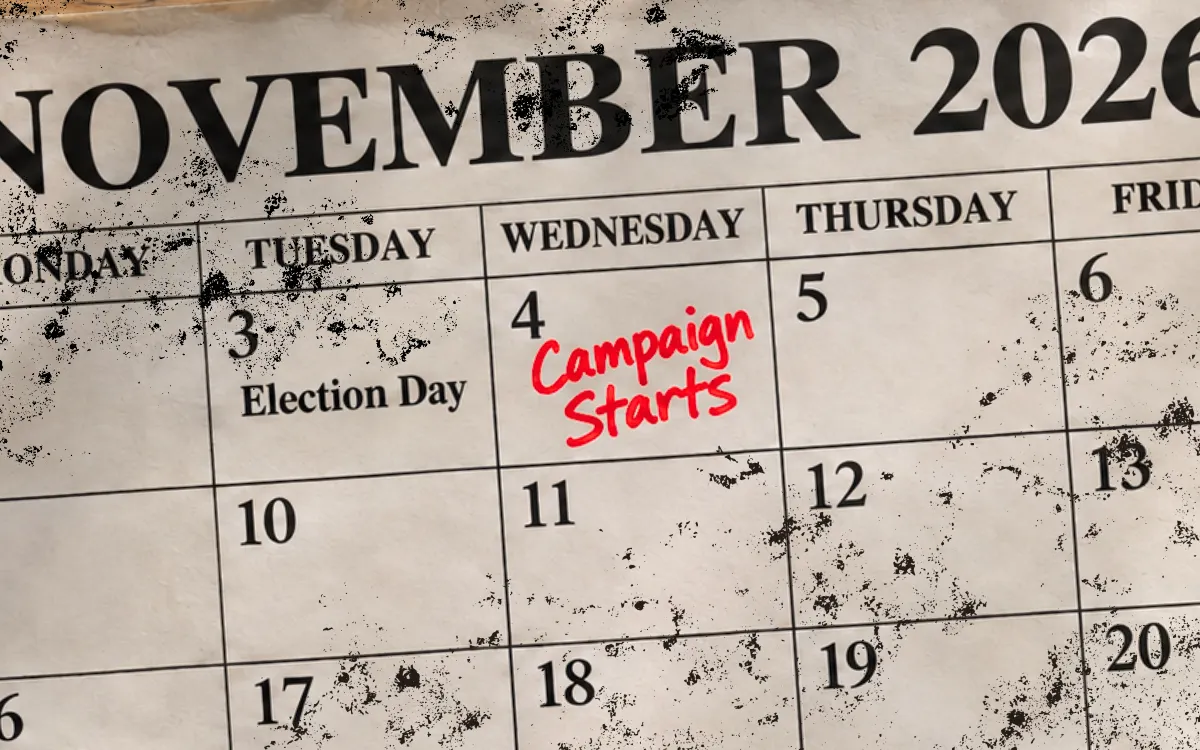
Health care costs dominated the midterms. The industry that profits from those costs has spent decades learning how to make voters’ demands disappear once the ballots are counted.
After the votes are counted, the candidates and their exhausted staffs will finally get some rest. The people I used to work with in the insurance business won’t. Inside that world, an election was never the end of a fight over health care. It was the start of a new phase, and it was usually the phase that mattered most.
If I were still in my old job, I likely would soon be sitting in a briefing with Bill McInturff and some of his colleagues at Public Opinion Strategies, the Republican polling firm he co-founded, which had insurers’ lobbying and PR group AHIP as a client when I was in the industry. They would walk us through their latest poll results, not just on the candidates but on what people were saying about the issues, especially health care. At that briefing or one soon after, they would tell us how various talking points and phrases were likely to resonate. We used that advice in our speeches, press releases and media statements and in the talking points we wrote for our lobbyists.
McInturff’s firm has been doing this kind of work for a long time. It did the message and ad testing for the Harry and Louise commercials, which were widely credited with helping defeat the Clinton health plan in the 1990s, and it calls its specialty “combat message development.” McInturff also conducts the NBC News poll with Democratic pollster Jeff Horwitt, and their final survey before today’s election gave Democrats a 52% to 45% lead among registered voters. “Democrats are in total control of the 2026 issue agenda,” McInturff told NBC, noting that only voters who see immigration as a top issue are breaking for Republicans right now. I don’t know whether his firm still works for AHIP, but I would be surprised if the industry weren’t getting this kind of briefing from someone this week.
None of my former colleagues have leaked this year’s strategy memos to me, but I know how the industry has responded to elections like this one, and it has plenty of reasons to be nervous right now.
What voters said
Candidates in both parties spent this year talking about affordability because voters left them little choice. Health care ranked second in political ad spending in competitive Senate and House races, according to the Cook Political Report, as STAT noted this morning. In KFF’s final tracking poll before the election, conducted in September, six in 10 voters said they were worried about affording health care. Health care tied with gas as their top money worry, and voters trusted Democrats over Republicans on health care costs by 42% to 22%.
Only 15% of adults said our health care system works well enough to need minor changes or none at all. Support for Medicare for All reached 66%, the highest KFF has recorded and up from 53% in 2020. What the industry will find especially alarming is that more than half (52%) said they would favor Medicare for All even if it eliminated private insurance companies. In 2020, only 37% said that.
I can assure you the industry has never seen numbers this bad before. And those numbers and history tell me what my former colleagues will do next.
We have seen this movie
The best guide to the coming months is what happened after the 2018 midterms, when health care also helped drive the results. At least 48 incoming freshmen had campaigned on Medicare for All or something similar. Insurers and its allies had already seen that coming and formed the Partnership for America’s Health Care Future over the summer.
Internal documents obtained by The Intercept and Documented showed that as soon as the results were in, the Partnership began telling reporters that candidates who embraced Medicare for All had lost too, pointing to races like Kara Eastman’s in Nebraska. It used research from Third Way, a business-friendly Democratic think tank, to argue that the winners hadn’t really won on that issue. (Third Way is already signalling it will try to do the same thing this cycle by trying to point the finger of blame at “the government.”) “’Medicare for All’ didn’t win,” an insurance brokers’ lobbyist whose group backed the Partnership told The Intercept. The group also hired consultants with deep Democratic ties and planned a speakers bureau of former Democratic officials who could argue that expanding Medicare was bad policy and bad politics.
Two years later, the Partnership announced new ads to run during the Democratic National Convention, aimed at the party’s public option pledge. Within 24 hours, The Lever reported, anonymous Democratic aides were telling The Hill that the party would likely start with more modest fixes to the Affordable Care Act if Biden won. No federal public option ever became law.
The pattern goes back much further. I was still at Cigna in 2007 when AHIP hired the PR firm APCO to blunt the impact of Michael Moore’s Sicko and make sure any government-run health plan or option looked politically impossible. And in 2009 and 2010, while the industry was publicly claiming a seat at the reform table and insisting it could be trusted to work in good faith with President Obama and Congress, AHIP quietly sent about $100 million to the U.S. Chamber of Commerce to help fund the fight against the Affordable Care Act. While the industry couldn’t kill the ACA, it was able to call on a friend, Senator Joe Lieberman of Connecticut, who caucused with the Democrats, to get the public option stripped out of the bill. Killing the public option was always Job One for the industry.
What to watch for
Here is what I would expect to see in the weeks and months ahead, regardless of which party comes out on top:
- A quick verdict on what the election meant: Watch for stories, op-eds and think tank memos (like those from Third Way) declaring that voters want modest, practical fixes and that candidates who promised more ran too far ahead of the public. Some of these will be sincere analysis pieces. Others will trace back to people paid to reach that conclusion, so it’s always worth asking who funded the study.
- Fear, aimed exactly where the polling says it works: The industry reads polls closer than anyone. KFF found that 76% would oppose Medicare for All if they heard it could mean delays in tests and treatment, 64% if it meant higher taxes and 61% if it threatened the current Medicare program. You will hear about waiting lines, taxes and seniors. You will also hear that the current system offers “choice,” a word my colleagues and I loved because it tested so well. That messaging obscures the reality that your employer or your insurer’s narrow network usually does the choosing, but the messaging works with many people.
- Messengers you might trust: People tend to discount what an insurance executive says, which is why the executives rarely say it themselves. When Congress was considering a Patients’ Bill of Rights in the late 1990s and early 2000s, I worked behind the scenes with industry peers and our PR firm, Porter Novelli. Our big coup came when we got the National Federation of Independent Business to carry our message. Readers saw small business owners worried about costs. They didn’t see us. Expect to see doctors, small business owners, former officials and friendly Democrats playing that role again.
- A deal that looks like a win: The industry prefers a voluntary pledge to a new law. Last year, AHIP announced with great fanfare that insurers would voluntarily ease prior authorization, and its message to Washington was that no one needed to pass a law to make them behave. The industry also doesn’t mind legislation that sends more public money to insurers. Some of those proposals may well help people. The question to ask about any of them is whether it changes how insurers make their money or just gives them more of ours. The research firm Capital Alpha is already telling clients to expect “deal-making by threat of regulation.” STAT also reports some bipartisan support for restoring at least part of the enhanced Affordable Care Act premium subsidies, though Republicans would demand reforms in return. Any such deal deserves the same question.
- Division and misdirection: Progressive Democrats will be set against moderates, and Republican voters will keep hearing that fraud is the real problem. Blame will land on hospitals, physician practices and drug makers, and some of it will be deserved. All of it helps if it keeps anyone from looking closely at what the seven biggest for-profit insurers have become.
The money behind it
All of this is expensive, but the industry has boatloads of the money we pay in premiums and taxes to fund its war chest. AHIP reported $5.32 million in federal lobbying in the first quarter of this year, which was its highest quarterly total on record at the time. It spent $17.23 million in 2025, up from $11.77 million in 2024. When I added up lobbying by the big insurers and four of their trade and advocacy groups last year, I found $476.5 million in just over five years. Those totals don’t include most of the advertising, and all of it ultimately comes out of our premiums and our taxes.
And you’ll see from the latest update to the Health Insurance Influence Tracker, a project of the Center for Health & Democracy that I lead, that the campaign money reaches both parties too. The tracker tallies that ten health insurer PACs gave about $4.2 million directly to candidates on this year’s congressional ballot. But the money wasn’t spread around evenly, about 97% went to incumbents, regardless of party, while challengers and candidates running for open seats shared just about $128,000. In only two of the 470 House and Senate races did both candidates receive money from those PACs. The industry wasn’t betting on who would win, but the folks who already hold power.
The first test
We won’t have to wait for the new Congress to see how this plays out. Government funding runs out on Dec. 11, and more than a dozen health care policies expire at the end of the year, making year-end spending legislation the likely vehicle for health care measures in the short term. Lobbyists do some of their best work on bills like that, which tend to come together quickly and with little public attention.
What you can do starting tomorrow
The industry’s strategy depends on the rest of us moving on, so here are a few questions to put to the winners, whichever party they belong to.
- Will you take insurer PAC money? You can look up your members of Congress and see what they have received so far.
- What are your plans to address the amount of money people actually pay? Ask about premiums, deductibles and copays together, because a lower premium can hide a higher deductible.
- Will you scrutinize how insurers make their money – and do something about it? That includes prior authorization, Medicare Advantage overpayments and the pharmacy benefit managers that insurers own.
- Will you hold public hearings on insurers’ business practices? Insurers should have to explain them on the record, and voters should get to watch.
- Who wrote your talking points? When a lawmaker tells you voters don’t really want big changes, ask where that idea came from.
When I was in the industry, we knew that public anger over health care came in waves. We also knew the anger usually receded when Congress turned to other things and the news moved on, and we planned our work around that. For a long time, we were right to count on it. Whether we are right this time depends on what voters do after today.

