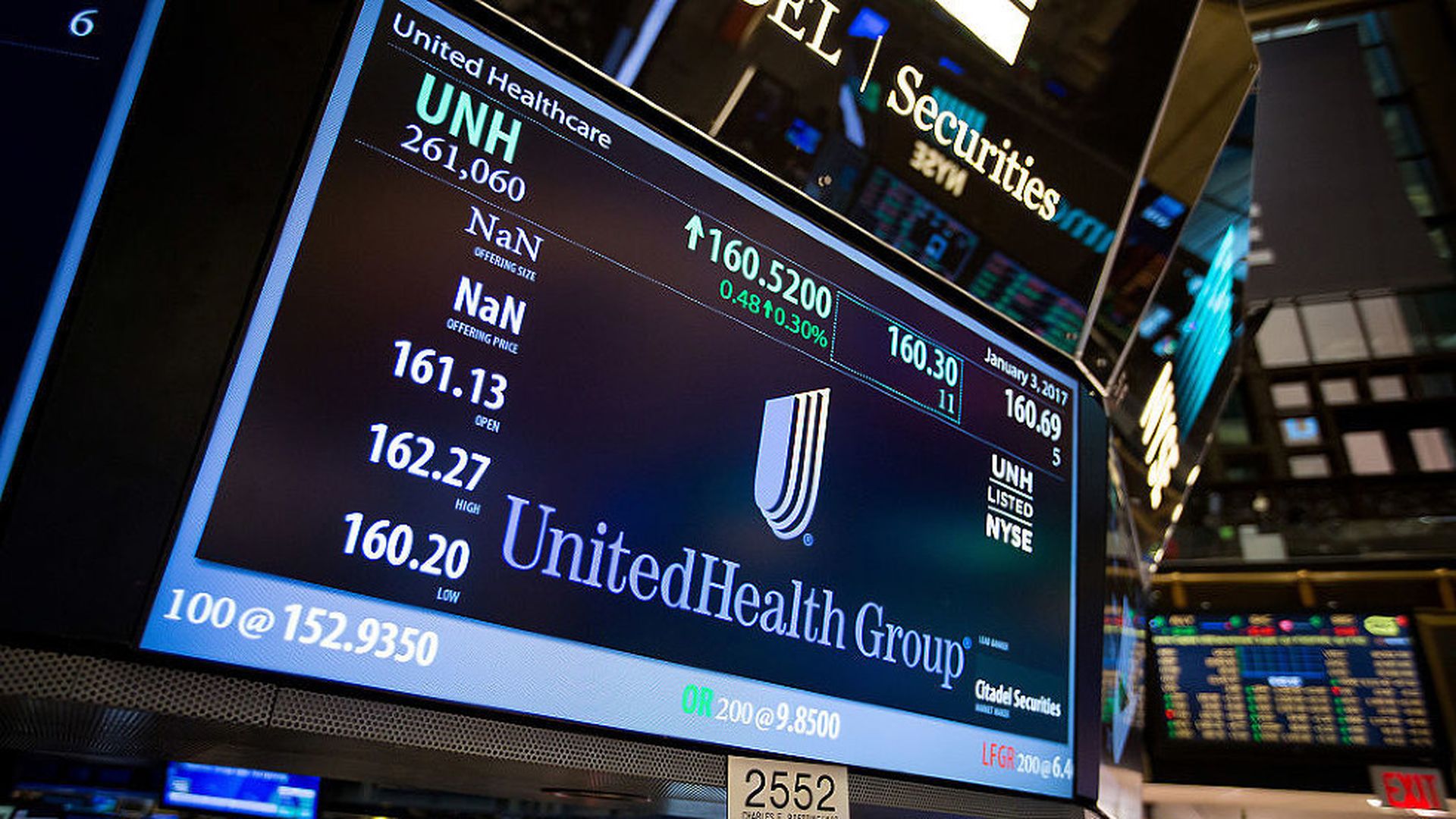
UnitedHealth’s Optum revenues surpass $100B for 1st time

https://www.beckershospitalreview.com/payer-issues/unitedhealth-s-optum-revenues-surpass-100b-for-1st-time.html?origin=cioe&utm_source=cioe

Image result for unitedhealth group

Growth in UnitedHealth Group’s health services business Optum helped the health insurance company beat Wall Street estimates for the fourth quarter ended Dec. 31, according to Reuters.

Five things to know:

1. Revenues for Optum, which is UnitedHealth’s fastest-growing unit and includes an in-house pharmacy benefits manager, topped $100 billion for the first time in the year ended Dec. 31. Optum grew revenues by 11.1 percent year over year to $101.3 billion, the company said Jan. 15.

2. While Optum may face heightened competition this year after Aetna and Cigna scored deals with large benefit managers, Piper Jaffray analyst Sarah James told Reuters: “We view [the Optum results] as a positive sign given the increasingly competitive nature of the pharmacy benefits management market. We believe 2019 could be a big year at OptumHealth … and see potential for specialty [drugs] to double earnings by 2021.”

3. For the fourth quarter, the country’s largest health insurer posted $27.56 billion in revenues from its Optum unit, up 13 percent year over year. 

4. Still, UnitedHealth’s medical care ratio — or the amount of premiums used to cover medical expenses compared to overhead costs — fell short of expectations at 82.2 percent, according to Reuters. Higher costs in UnitedHealth’s government-sponsored Medicaid business were partially to blame, analysts told the publication.

5. UnitedHealth’s insurance business, UnitedHealthcare, increased sales by 11.1 percent in the fourth quarter, for a total of $46.2 billion. Net earnings to shareholders fell 16 percent to $3 billion in the fourth quarter, compared to $3.6 billion a year prior.


Report: There were fewer, but larger, hospital mergers and acquisitions in 2018

https://www.fiercehealthcare.com/hospitals-health-systems/report-what-to-expect-healthcare-m-a-2019?mkt_tok=eyJpIjoiTkROak5UWXpOR1ZtT0RNeiIsInQiOiJBbmtrSGp0c0ZtU1hwNzRlOGNveVdHQ3JyenpWRE1FeXdVVjVYYzN0WFwvV1Vyb1ZkQWpVNHNMM29kOGw1bXRMVDA0bTNuUm1lQ1RVb0NzYVFGa0NWdGVRVk5pOGw3amFtbEI1YlpEdTdTTkYxbkFWSGlDT2lMMCtIZktpN0ZkYlcifQ%3D%3D&mrkid=959610&utm_medium=nl&utm_source=internal

Handshake business deal executives

The number of hospital mergers last year dipped about 22% in 2018 but grew in overall size as part of a broader trend toward megamergers, according to a new report.

In all, hospitals announced a total of 90 transactions in 2018, down from 115 in 2017, according to a report (PDF) from Kaufman Hall. The firm began monitoring hospital M&A in 2000. About 20% of the acquisition deals were considered distressed transactions.

The value of those deals is increasing, with the average size of a seller by revenue has grown at a CAGR of almost 14% per year since 2008 and reached a new high of $409 million in 2018.

“That so many of 2018’s mega-mergers involve the combination of systems from different—though often contiguous—geographies signals the desire of health system leaders to expand their organizations into new markets, or to bring in a partner from an outside market,” Kaufman Hall said in the report. “For health system leaders looking for an acquisition partner from outside of their organization’s home market, considerations may include the desire to improve operations within the home market, or a need for additional capital to better compete within the home market.”

Texas led the nation for M&A last year, clocking eight hospital deals with a total value of deals estimated to be about $6.8 billion. Most notably, the report points to Baylor, Scott & White’s planned merger with Memorial Hermann will bring together two Texas-based systems and combine Dallas/Fort Worth and central Texas markets with the Houston market.

Florida had seven announced deals worth about $3.6 billion, and Pennsylvania had six deals worth about $2.2 billion.

Kaufman Hall also cited the “slow but steady movement toward population health” as a factor in the desire to increase market presence and penetration.

“Effective risk management depends on a health system’s ability to improve cost efficiencies, care efficacy, and care management across the continuum, which may require both horizontal and vertical integration to achieve,” they said.

Kaufman Hall said as new combinations and competitors appear in the healthcare market, hospitals and health systems should double down on their consumer strategy and the fight to control healthcare’s “front door.”

They should also seek opportunities to deepen growth across the spectrum of healthcare services through combinations or partnerships with other healthcare organizations.


Penn State, UPMC Pinnacle rivalry intensifies

https://www.beckershospitalreview.com/facilities-management/penn-state-upmc-pinnacle-rivalry-intensifies.html?origin=cfoe&utm_source=cfoe

UPMC Pinnacle on Jan. 8, 2019 announced plans to expand its West Shore Hospital in Hampden Township in Cumberland County.

Harrisburg, Pa.-based UPMC Pinnacle revealed plans Jan. 8 to expand its hospital facility in Mechanicsburg, Pa. The announcement came several months after its rival, Penn State Health, submitted plans to build a 108-bed hospital roughly 1 mile away from UPMC’s hospital, according to Penn Live reports.

UPMC Pinnacle West Shore opened in 2014 with 102 beds. Officials said in their Jan. 8 announcement that an expansion was necessary, as the hospital “has consistently operated at 90 percent capacity.” Officials expect to complete the expansion, which will add 58 beds, by fall 2020.

Penn Live first reported Hershey, Pa.-based Penn State Health’s decision to build a 108-bed hospital in June 2018. Officials at the time said the decision to build a hospital was made because a large portion of their patients travel from the Mechanicsburg region, and that the new hospital will allow them better access to care. Officials said they aim to begin construction in the spring and open the hospital by June 2021, the report states.

To access the full report, click here.


A recession is coming: What it could mean for healthcare

https://www.beckershospitalreview.com/finance/a-recession-is-coming-what-it-could-mean-for-healthcare.html?origin=cfoe&utm_source=cfoe

Image result for recession

More than half of 147 CFOs surveyed by Deloitte believe the U.S. will be in a recession by the end of 2020.

Eighty-eight percent of CFOs rated the North American economy “good” in the fourth quarter of 2018, but just 28 percent expected conditions to improve in 2020. Larry Summers, former U.S. Treasury Secretary, has also warned of recession twice in the past three months, Fortune reports.

What would a recession mean for healthcare? We looked back to the effects of the 2008-09 recession:

1. A recession could temporarily alleviate or delay workforce shortages. A 2011 report from The Washington Post indicated the 2008-09 recession partially addressed nurse shortages at Washington, D.C., hospitals because some retired nurses rejoined the workforce, some delayed retirement and some part-time nurses sought full-time work.

2. Underemployment and unemployment can lead to significant declines in hospital admissions and elective surgeries for commercially insured patients. A 2013 report from PwC indicated the 2008 financial collapse drove many patients to delay elective procedures, negatively affecting hospital earnings for years after the fact. In fact, the decline in commercially insured patients due to underemployment and unemployment caused the average 300-bed hospital to lose $3.7 million from 2009-11 due to declining admissions, according to a 2012 infographic from Objective Health.

3. A slowdown in healthcare spending could continue to push the industry toward outpatient care. The 2013 PwC report indicated the slow growth rate of healthcare spending post-recession continued to push care to the outpatient setting, which is more consumer-friendly and less expensive.

4. Pediatric care could be recession-proof. A 2014 report from the Health Care Cost Institute found spending on children’s healthcare services under employer-based plans grew an average of 5.5 percent from 2009-12.

5. Healthcare fundraising could decline. In 2011, an Association for Healthcare Philanthropy report indicated fundraising was starting to improve after the recession, but 71 percent of healthcare fundraisers said the recession was still having negative effects.