Health systems risk being reduced to their core

https://mailchi.mp/9b1afd2b4afb/the-weekly-gist-december-1-2023?e=d1e747d2d8
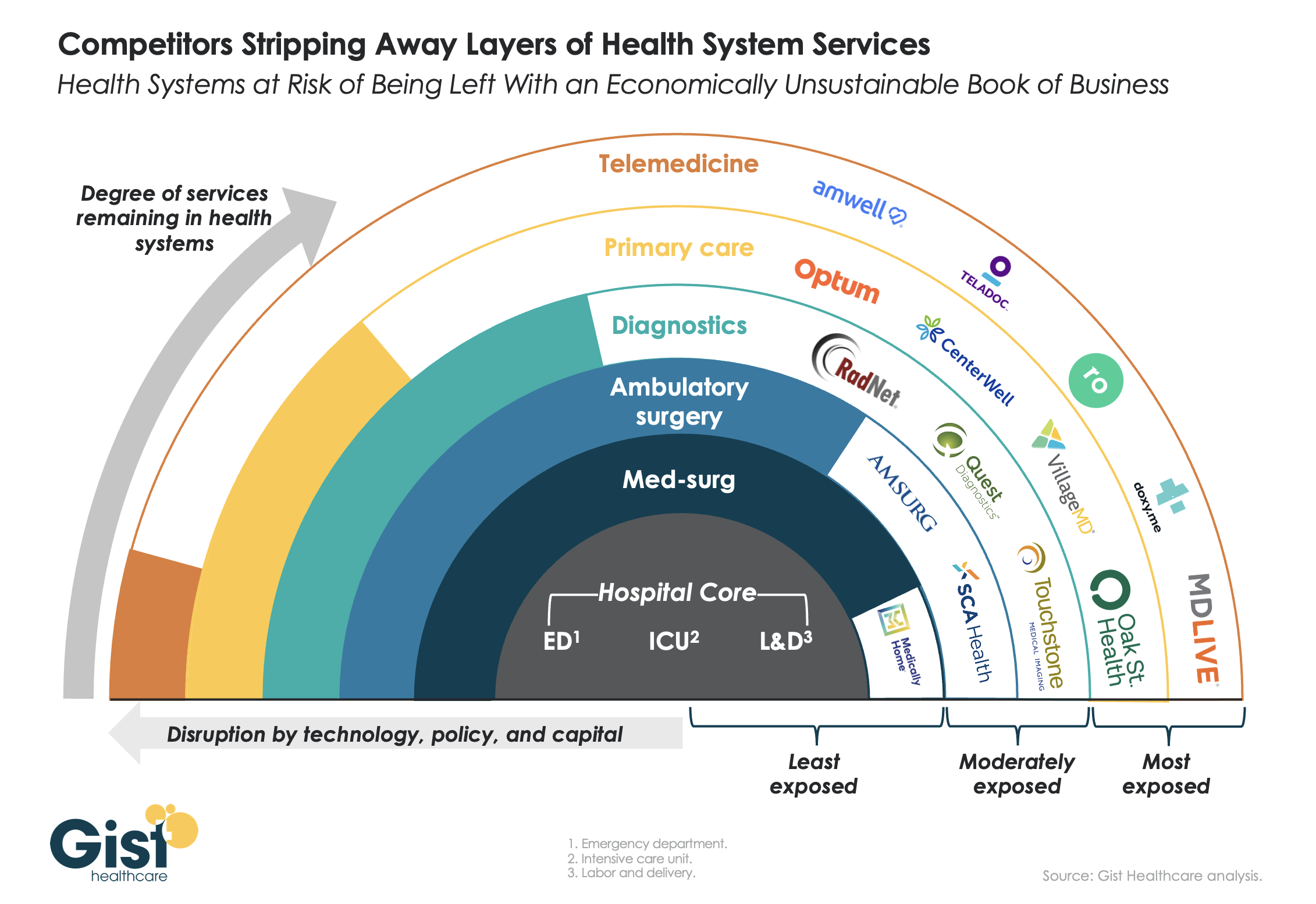
This week’s graphic features our assessment of the many emerging competitive challenges to traditional health systems.

Beyond inflation and high labor costs, health systems are struggling because competitors—ranging from vertically integrated payers to PE-backed physician groups—are effectively stripping away profitable services and moving them to lower-cost care sites. The tandem forces of technological advancement, policy changes, and capital investment have unlocked the ability of disruptors to enter market segments once considered safely within health system control. 

While health systems’ most-exposed services, like telemedicine and primary care, were never key revenue sources (although they are key referral drivers), there are now more competitors than ever providing diagnostics and ambulatory surgery, which health systems have relied on to maintain their margins. 

Moving forward, traditional systems run the risk of being “crammed down” into a smaller portfolio of (largely unprofitable) services: the emergency department, intensive care unit, and labor and delivery. 

Health systems cannot support their operations by solely providing these core services, yet this is the future many will face if they don’t emulate the strategies of disruptors by embracing the site-of-care shift, prioritizing high-margin procedures, rethinking care delivery within the hospital, and implementing lower-cost care models that enable them to compete on price.

A resurgent interest in outsourcing

https://mailchi.mp/12e6f7d010e1/the-weekly-gist-february-24-2023?e=d1e747d2d8

Unsurprisingly, given the mounting economic pressures many health systems are facing, we’re beginning to hear more discussions among executives about outsourcing non-core services as a way of containing costs. Whether it’s contracting with an outside company for things like laundry and dietary services, or more extensive outsourcing to vendors for revenue cycle and IT services (such as the much-ballyhooed partnerships with Optum that have grabbed headlines recently), we’ve seen a resurgence of interest in finding ways to offload key areas of non-clinical operations.

In some ways it makes sense: we’ll stick to our knitting, and let someone else handle areas that they’re probably better at. But a recent comment from one system CEO captured our concern about the outsourcing trend. “For us, outsourcing is like Lucy and the football…we’ve been here before.

What we’ve learned is the complexity of managing the vendor relationship often outweighs any potential cost savings. And in the end, we never seem to garner enough savings to make it worth the effort.” 

As to the broader “partnerships” around revenue cycle, IT, and population health, she added, “We’d never give up control of those aspects of the business—they’re too important. Plus, I’m not sure how you’d ever unwind it once you’d let your own staff become employed by a vendor. We’ll be keeping a close eye on these outsourcing deals as the year goes on, and we’d love to hear your experience with the strategy as well.