‘We have not lost our way’: Kaiser CEO’s memo to staff after Labor Day protests

https://www.beckershospitalreview.com/hospital-management-administration/we-have-not-lost-our-way-kaiser-ceo-s-memo-to-staff-after-labor-day-protests.html

Image result for 'We have not lost our way'

Bernard J. Tyson, chairman and CEO of Oakland, Calif.-based Kaiser Permanente, sent a memo to his staff Sept. 3 to address Labor Day protests employees held in five cities amid threats of a potential nationwide strike.  

In the memo, obtained by Becker’s Hospital Review, Mr. Tyson claims leaders of the Service Employees International Union-United Healthcare Workers used the protests to “deliver a false narrative” and “misconstrue what is really happening with [contract] negotiations.”

SEIU-UHW is one of the 16 international unions representing Kaiser employees, and one of three unions that form the Coalition of Kaiser Permanente Unions. The coalition’s bargaining team and Kaiser have been negotiating a new contract for workers, as the current contract is set to expire this month. The coalition alleges Kaiser is using unfair labor practices and prioritizing profits over patients. Last month, union members voted to authorize a nationwide strike that would affect more than 80,000 Kaiser employees nationwide.

“Kaiser Permanente has put multiple options on the table for Coalition/SEIU-UHW leadership to consider, and we remain open to these options within the established parameters consistent with all our 60 unions,” Mr. Tyson wrote in the memo. The 16 international unions that represent Kaiser employees are divided into 60 local unions, each of which has its own contract.

Mr. Tyson said Kaiser has always been committed to working collaboratively and forging positive relationships with the unions representing its 165,000 employees.

“Going forward, we will respond more definitively to allegations against our organization’s stellar brand and reputation. We have not lost our way,” Mr. Tyson wrote. “We have an incredible workforce and will always treat them with dignity and respect, along with offering market competitive wages and benefits fit for the times.”


US health care: An industry too big to fail

https://theconversation.com/us-health-care-an-industry-too-big-to-fail-118895

Image result for US health care: An industry too big to fail

As I spoke recently with colleagues at a conference in Florence, Italy about health care innovation, a fundamental truth resurfaced in my mind: the U.S. health care industry is just that. An industry, an economic force, Big Business, first and foremost. It is a vehicle for returns on investment first and the success of our society second.

This is critical to consider as presidential candidates unveil their health care plans. The candidates and the electorate seem to forget that health care in our country is a huge business.

Health care accounts for almost 20% of GDP and is a, if not the, job engine for the U.S. economy. The sector added 2.8 million jobs between 2006 and 2016, higher than all other sectors, and the Bureau of Labor Statistics projects another 18% growth in health sector jobs between now and 2026. Big Business indeed.

This basic truth separates us from every other nation whose life expectancy, maternal and infant mortality or incidence of diabetes we’d like to replicate or, better still, outperform.

As politicians and the public they serve grapple with issues such as prescription drug prices, “surprise” medical bills and other health-related issues, I believe it critical that we better understand some of the less visible drivers of these costs so that any proposed solutions have a fighting chance to deflect the health cost curve downward.

As both associate chief medical officer for clinical integration and director of the center for health policy at the University of Virginia, I find that the tension between a profit-driven health care system and high costs occupies me every day.

The power of the market

Housing prices are market-driven. Car prices are market-driven. Food prices are market-driven.

And so are health care services. That includes physician fees, prescription drug prices and non-prescription drug prices. So is the case for hospital administrator salaries and medical devices.

All of these goods or services are profit-seeking, and all are motivated to maximize profits and minimize the cost of doing business. All must adhere to sound business principles, or they will fail. None of them disclose their cost drivers, or those things that increase prices. In other words, there are costs that are hidden to consumers that manifest in the final unit prices.

To my knowledge, no one has suggested that Rolls-Royce Motor Cars should price its cars similarly to Ford Motor Company. The invisible hand of “the market” tells Rolls Royce and Ford what their vehicles are worth.

Prescription drugs pricing has different rules

Ford can (they won’t) tell you precisely how much each vehicle costs to produce, including all the component parts that they acquire from other firms. But this is not true of prescription drugs. How much a novel therapeutic costs to develop and bring to market is a proverbial black box. Companies don’t share those numbers. Researchers at the Tufts Center for the Study of Drug Development have estimated the costs to be as high as US$2.87 billion, but that number has been hotly debated.

What we can reliably say is that it’s very expensive, and a drug company must produce new drugs to stay in business. The millions of research and development(R&D) dollars invested by Big Pharma has two aims. The first is to bring the “next big thing” to market. The second is to secure the almighty patent for it.

U.S. drug patents typically last 20 years, but according to the legal services website Upcounsel.com: “Due to the rigorous amount of testing that goes into a drug patent, many larger pharmaceutical companies file several patents on the same drug, aiming to extend the 20-year period and block generic competitors from producing the same drug.” As a result, drug firms have 30, 40-plus years to protect their investment from any competition and market forces to lower prices are not in play.

Here’s the hidden cost punchline: concurrently, several other drugs in their R&D pipelines fail along the way, resulting in significant product-specific losses . How is a poor firm to stay afloat? Simple, really. Build those costs and losses into the price of the successes. Next thing you know, insulin is nearly US$1,500 for a 20-milliliter vial, when that same vial 15 years ago was about $157.

It’s actually a bit more complicated than that, but my point is that business principles drive drug prices because drug companies are businesses. Societal welfare is not the underlying use. This is most true in the U.S., where the public doesn’t purchase most of the pharmaceuticals – private individuals do, albeit through a third party, an insurer. The group purchasing power of 300 million Americans becomes the commercial power of markets. Prices go up.

The cost of doing business, er, treating

I hope that most people would agree that physicians provide a societal good. Whether it’s in the setting of a trusted health confidant, or the doctor whose hands are surgically stopping the bleeding from your spleen after that jerk cut you off on the highway, we physicians pride ourselves on being there for our patients, no matter what, insured or not.

Allow me to state two fundamental facts that often seem to elude patient and policymaker alike. They are inextricably linked, foundational to our national dialogue on health care costs and oft-ignored: physicians are among the highest earners in America, and we make our money from patients. Not from investment portfolios, or patents. Patients.

Like Ford or pharmaceutical giant Eli Lilly, physician practices also need to achieve a profit margin to remain in business. Similarly, there are hidden-to-consumer costs as well; in this case, education and training. Medical school is the most expensive professional degree money can buy in the U.S. The American Association of Medical Colleges reports that median indebtedness for U.S. medical schools was $200,000.00 in 2018, for the 75% of us who financed our educations rather than paying cash.
Our “R&D” – that is, four years each of college and medical school, three to 11 years of post doctoral training costs – gets incorporated into our fees. They have to. Just like Ford Motors. Business 101: the cost of doing business must be factored into the price of the good or service.

For policymakers to meaningfully impact the rising costs of U.S. health care, from drugs to bills to and everything in between, they must decide if this is to remain an industry or truly become a social good. If we continue to treat and regulate health care as an industry, we should continue to expect surprise bills and expensive drugs.

It’s not personal, it’s just…business. The question before the U.S. is: business-as-usual, or shall we get busy charting a new way of achieving a healthy society? Personally and professionally, I prefer the latter.


Kaiser workers block traffic in Labor Day protest

https://www.beckershospitalreview.com/human-capital-and-risk/kaiser-workers-block-traffic-in-labor-day-protest.html

Image result for Kaiser workers block traffic in Labor Day protestImage result for Kaiser workers block traffic in Labor Day protest

About 50 employees blocked traffic in front of Kaiser Permanente’s downtown Sacramento, Calif., office on Sept. 2 as part of a planned Labor Day protest in five cities, reports The Sacramento Bee.

The workers held strikes in Los Angeles, Sacramento, Denver, Portland, Ore., and Oakland, Calif. Police said 54 people were cited and released after the protest in Sacramento, according to CBS Sacramento.

“We support the rights of workers to publicly demonstrate and celebrate Labor Day,” Sandy Sharon, RN, senior vice president and area manager of Kaiser’s Sacramento office, told The Sacramento Bee. “Unfortunately, there were acts of civil disobedience that taxed our city and police resources.”

The Kaiser employees are protesting the system’s “unfair labor practices and shift from prioritizing patients and the community to profits and enriching top executives,” the Coalition of Kaiser Permanente Unions said in a press release cited by The Sacramento Bee.

The coalition’s bargaining team and Kaiser have been negotiating a new contract for workers, as the current contract is set to expire this month.

The protests come as workers continue voting on whether to call a nationwide strike in early October. If a nationwide strike is called, it would be the country’s largest since 1997, according to the coalition. The strike would affect more than 80,000 workers in California, Oregon, Washington, Colorado, Maryland, Virginia and the District of Columbia.

John Nelson, vice president of communications at Kaiser, previously accused the unions of using the strike threat as a bargaining tactic, “designed to divide employees and mischaracterize Kaiser Permanente’s position, even though most of the [union] contracts don’t expire until October.”


U of Chicago nurses vote to authorize strike

https://www.beckershospitalreview.com/human-capital-and-risk/u-of-chicago-nurses-vote-to-authorize-strike.html

Image result for nurses strike university of chicago

University of Chicago Medicine nurses have voted to authorize their union to strike, according to The Chicago Tribune.

The vote, conducted Aug. 29, allows the National Nurses Organizing Committee/National Nurses United to call a strike at any time without further approval from nurses. They must give the hospital 10 days’ notice before calling a strike. If the strike goes forward, about 2,300 nurses will walk off the job and the hospital will hire agency nurses to temporarily replace them.

The contract between the hospital and the union expired in April. The union hopes the vote authorizing a strike will help them make progress on contract negotiations, said Talisa Hardin, RN, a nurse at the hospital and a chief nurse representative for the union.

The nurses are asking for lower nurse-to-patient ratios and more security officers, among other things. They picketed in July to call attention to these concerns and filed complaints with state and federal agencies in June. An investigation from the state health department found some deficiencies at the hospital but concluded it was still in compliance with Medicare standards.

“The University of Chicago Medical Center does not want a strike, and UCMC continues to focus on bargaining in good faith toward a contract,” the hospital said in an emailed statement to Becker’s. “We have a full strike plan in place to ensure our patient care will continue should the union call for a walkout in the future.”


Cleveland Clinic more than quadruples operating income

https://www.beckershospitalreview.com/finance/cleveland-clinic-more-than-quadruples-operating-income.html

Cleveland Clinic’s revenues and operating income increased year over year in the second quarter of 2019, according to unaudited financial documents.

Cleveland Clinic’s revenues climbed to $2.7 billion in the second quarter of this year, up 20 percent from $2.2 billion in the same period of 2018. The boost was largely attributable to higher net patient service revenue, which increased 20.5 percent year over year.

The system’s operating expenses were up 16 percent year over year in the second quarter of 2019. Expenses grew across all categories, including supplies, administrative services, and salaries, benefits and wages.

Cleveland Clinic ended the second quarter of 2019 with operating income of $116.2 million, up from $25.1 million in the second quarter of last year. The system’s operating margin was 4.4 percent in the second quarter of this year, compared to an operating margin of 1.1 percent in the same period of 2018.

During the second quarter of this year, Cleveland Clinic’s nonoperating gains totaled $110.3 million. That’s compared to the second quarter of 2018, when the system reported nonoperating gains of $55.6 million. The system said the increase was primarily attributable favorable changes in the financial markets.

Cleveland Clinic ended the second quarter of 2019 with net income of $226.5 million, up from $80.7 million in the same period a year earlier.


California legislature passes bill requiring Kaiser Permanente to follow financial disclosure laws

https://www.healthcarefinancenews.com/node/139106?mkt_tok=eyJpIjoiT1RkbU5UVXpNMlkyTm1NeiIsInQiOiJ3YVpITnV3WlVcL0dzcGgxQVkxMHFBZjFOSFZLXC9SZ0pHd3ZuUE5aWGt6MHMxbXpoMG9GeDJxSUc1cVVjXC9cL2loR2tnd1lXb050QzFXXC9SU2hHQnZZQVdWQ1lZNlMwRTFWbXV2TUIwXC9MMlNYcFwvdkluODBUWXRwaEdHZTNndUZYN3QifQ%3D%3D

The bill would require Kaiser Permanente to provide more data about the revenue and profits of individual hospitals.

Legislation requiring healthcare giant Kaiser Permanente to follow more of the same financial disclosure laws as other healthcare providers in California passed the Senate Monday and now heads to Gov. Gavin Newsom, who has 10 days to decide whether to sign it into law.

The bill, SB 343, would require Kaiser Permanente to provide more data about the revenue and profits of individual hospitals, whereas now it lumps those figures for all facilities into two broad categories: “Northern California” and “Southern California.” Of the roughly 400 hospitals operating in California, all but the 35 owned by Kaiser Permanente must comply with financial reporting requirements on a per-facility basis.

WHAT’S THE IMPACT

The new requirements for Kaiser Permanente would include breaking out expenses and revenue at each facility; breaking out revenue by type of payor at each facility (Medicare, Medi-Cal or private insurance); and breaking out rate increases by type of service (hospital, physician services, pharmacy, radiology and laboratory).

For Kaiser Permanente to comply with the legislation, it is estimated it would need to hire two workers to compile and distribute related data on a quarterly basis. The corporation has 250,000 employees and operating revenue of nearly $80 billion.

Kaiser Permanente, despite being a nonprofit healthcare system, has reported $11 billion in profits since Jan. 1, 2017 — including $5.2 billion just in the first half of 2019. It has made more in profits in the first six months of 2019 than it has ever recorded in an entire year and sits on reserves of more than $37 billion. Meanwhile, premiums for Kaiser patients have gone up year after year as part of a rate-setting process.

With Kaiser controlling more than 65% of insured Californians with large group healthcare coverage, SB 343 would allow employers and others to negotiate fair rates when purchasing health insurance for their workers.

The measure passed the California Assembly 58-13 on Aug. 22, and it is supported by a coalition of healthcare, consumer, business and worker advocates.

Kaiser Permanente did not immediately respond to a request for comment.

THE LARGER TREND

In June, Kaiser Permanente announced plans to construct a new headquarters — The Kaiser Permanente Thrive Center — in Oakland, bringing together staff currently spread out across multiple locations. The health system said the impetus behind the $900 million project is reducing annual operating costs and delivering more affordable care and coverage.

Officials say the new downtown Oakland building will reduce operational costs by more than $60 million annually, addressing facilities maintenance, inefficient utility expenses, and rising commercial real estate leases. Reinvesting these savings will help the health system advance its mission of providing quality, affordable care.

ON THE RECORD

“For too long, Kaiser Permanente has operated under a different set of rules when it comes to financial transparency, and this bill will finally bring the corporation more in line with other hospitals and insurance companies,” said Sen. Richard Pan, D-Sacramento, the author of SB 343. “Employers and individual Kaiser customers deserve to know if they are getting value when Kaiser increases their premiums and copays.”


DOJ investigates Providence St. Joseph Health’s Swedish Health Services

https://www.modernhealthcare.com/providers/doj-investigates-providence-st-joseph-healths-swedish-health-services?utm_source=modern-healthcare-daily-finance-thursday&utm_medium=email&utm_campaign=20190829&utm_content=article1-readmore

The U.S. Department of Justice is probing Providence St. Joseph Health’s Swedish Health Services in a civil investigation, the not-for-profit integrated health system revealed in its recent quarterly earnings report.

The DOJ requested documents from Seattle-based Swedish related to certain arrangements, joint ventures and physician organizations, according to the report. Providence St. Joseph said that the investigation will not have a “material adverse effect” on its financials.

“Like all large institutions, Swedish is subject periodically to investigations and lawsuits,” Swedish said in a statement. “Per our policy, we are not able to discuss the specifics of any investigation. However, Swedish fully cooperates with all investigations.”

Renton, Wash.-based Providence St. Joseph also disclosed in the earnings report malpractice allegations against certain affiliates, although the “probable recoveries in these proceedings and the estimated costs and expenses of defense will be within applicable insurance limits or will not materially adversely affect the business or properties of the system,” the organization said.

The DOJ said in a statement that it does not confirm, deny or comment on investigations.

In 2014, HHS’ Office of Inspector General audited Swedish Health’s Swedish Medical Center–First Hill, an acute-care hospital in Seattle. It found that about two-thirds of 257 inpatient and outpatient claims from 2010 to 2012 did not fully comply with Medicare billing requirements, resulting in net overpayments of nearly $937,500.

Also, Swedish Health was accused in 2017 of asking neurosurgeons to increase patient volume and perform unnecessary surgeries.

The recent investigation involving Swedish may relate to a delicate balance providers must strike with their affiliates.

Health systems have been carefully navigating around the Stark law, which aims to curb Medicare and Medicaid spending by prohibiting physicians and hospitals from making referrals based on their financial self-interest. But the 1989 statutes conflict with outcome-oriented care, providers argue as the law dissuades them from incentive-based arrangements.

The Stark law offers little, if any, room for error and carries significant financial penalties, experts said. Maintaining compliance and abiding audits can drain resources.

Through six months of Providence St. Joseph Health’s 2019 fiscal year, it reported an operating income of $250 million on operating revenue of $12.6 billion, up from $30 million of operating income on $12 billion of operating revenue over the same period prior. The health system reported $41 million in restructuring costs, as it aims to streamline operations and boost productivity.

For 2018, the organization drew just $3 million in operating income last year on $24.4 billion in total operating revenue. Excluding asset impairment, severance and consulting costs related to restructuring, the system said its 2018 operating income would have been $165 million. The restructuring costs are being spread across 2018 and 2019.

As it restructures, Providence St. Joseph has been expanding its non-acute portfolio, forming a for-profit population health management company, launching its second, $150 million venture fund and buying a revenue-cycle management company based on blockchain technology.


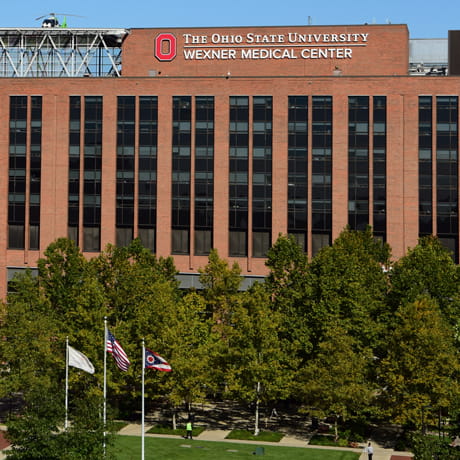
Ohio State Wexner Medical Center clears $4B revenue mark

https://www.beckershospitalreview.com/finance/ohio-state-wexner-medical-center-clears-4b-revenue-mark.html?origin=cfoe&utm_source=cfoe

Image result for Ohio State Wexner Medical Center

The Ohio State University Wexner Medical Center in Columbus reported strong revenue in the fiscal year ended June 30, according to Columbus Business First.

The nonprofit medical center recorded revenue of more than $4 billion in fiscal year 2019, up 9.4 percent from the year prior, the newspaper reported, citing its analysis of financial results. The growth was partially attributable to a 4 percent year-over-year increase in inpatient admissions.

After factoring in expenses, Ohio State Wexner’s operating income reached $402 million in the fiscal year ended June 30. That’s the highest total since fiscal year 2015, when the medical center posted operating income of $358 million.

The financial results come as Ohio State Wexner plans inpatient and outpatient expansion projects, according to Columbus Business First. An 840-bed hospital tower and a parking garage are on the drawing board.


The provider lobby takes on Congress

https://www.axios.com/the-provider-lobby-takes-on-congress-57d2acc6-b26b-4b57-aa64-a75606e612b8.html

Illustration of a giant health plus on top of a pile of cash, the ground underneath is cracking.

Ending surprise medical bills inspires bipartisan kumbaya in a way nearly unheard of these days, and yet a brutal lobbying and public relations blitz by doctor and hospital groups is threatening to kill the entire effort.

Driving the news: Provider-backed groups are spending millions of dollars to sway lawmakers and the public opinion against Congress’s efforts to ban surprise billing, according to a handful of recent reports.

Details:

  • A dark money group called Doctor Patient Unity has spent more than $13 million on advertising in states where senators are up for re-election, Bloomberg Government reported on Monday — the most expensive campaign on any congressional health care topic this year.
  • Modern Healthcare’s Susannah Luthi reported yesterday that some congressional staffers worry that the provider onslaught will cause the entire surprise billing effort to collapse. The staffers say that may be what the groups want; providers insist this isn’t the case.
  • My colleague Bob Herman reported last week that physician outsourcing companies — which are often the source of surprise medical bills — and private equity firms have flooded Congress with lobbyists.

The other side: Other congressional aides are less worried about the surprise billing effort being killed.

  • “If anything, [providers’] tactics are backfiring. Compassion is winning. Members are more concerned for patients than a profit fight between industries,” a GOP aide familiar with the effort told me.
  • Instead, “members are beginning to question private equity’s interest in this. What is it they’re willing to invest $13 million to save and why are they hiding behind dark money?”


Advocate Aurora Health’s net income more than doubles in Q2

https://www.beckershospitalreview.com/finance/advocate-aurora-health-s-net-income-more-than-doubles-in-q2.html

Image result for advocate aurora health headquarters

Outpatient volume growth helped push Advocate Aurora Health’s revenue higher in the second quarter of 2019, according to unaudited financial documents released Aug. 22.

Advocate Aurora Health, which was formed in April 2018 and has dual headquarters in Downers Grove, Ill., and Milwaukee, reported revenue of $3.2 billion in the second quarter of 2019, up from $3 billion in the same period a year earlier. Patient service revenue climbed 8.8 percent year over year partially due to increased outpatient volume. The health system said capitation revenue dropped 9.9 percent year over year due to the conversion of a full-risk arrangement to fee-for-service.

After factoring in a 4.7 percent year-over-year increase in expenses, Advocate Aurora posted operating income of $132.3 million in the second quarter of 2019. That’s up from $107.2 million in the same period a year earlier.

The 28-hospital system reported nonoperating income of $286 million in the second quarter of this year, which includes investment income of $194.4 million. Advocate Aurora ended the second quarter of 2019 with net income of $418.4 million, up from $158.7 million a year earlier.