I recently had dinner with my good friend and colleague, Dave Blom. For many years, Dave was the President and CEO of Ohio Health. During his tenure, Ohio Health was one of America’s most successful health systems by any measure. Dave Blom was known nationally as a calm, steady, and thoughtful hospital leader.
Dave and I were talking about the difficulties of leading and managing complex healthcare organizations in the post-Covid era. The hospital problems of finance, staffing, access, and inflation have been well itemized and documented. While the day-to-day operating problems are undeniably significant and persistent, Dave and I agreed that the hospital leadership issues that really matter right now center around the ability of hospital executives to possess and demonstrate an authentic emotional IQ to lead a diverse workforce in such difficult circumstances.
Such a realization is supported by the recognition that no matter how technically excellent they are, hospitals are just not like other organizations in other industries. Taking care of patients—in fact, taking care of communities—is not only managerially complicated but emotionally testing. Leadership gets much more complicated in the current environment.
Having moved the conversation to this point Dave and I then took on the definition of a workable and effective leadership emotional IQ. That emotional IQ is characterized by the following:
Empathy. During Covid, when leadership was challenged at every level and at every American organization, the value of personal empathy moved to the forefront. Empathy is defined as “the ability to understand and share the feelings of another.” More directly, a hospital CEO needs to understand and share the feelings of his or her entire organization. Great hospital leaders understand the difference between sympathy and empathy. Sympathy is a passive emotion, an emotion that notes and cares about a problem but doesn’t necessarily act on that problem. Empathy is an active emotion. A leader with empathy not only notes the problem but immediately moves to be of help either at the personal or organizational level, whichever is required.
Vulnerability. Vulnerability is defined as “the willingness to show emotion or to allow one’s weakness to be seen or known.” Historically, executive leadership—especially in corporate situations—has been trained and encouraged not to show emotion or weakness. But organizations are changing, and the composition of the hospital workforce is different. The patient care process is emotional in and of itself and the daily operational interaction demands a different kind of leadership—a leadership that is comfortable with both emotion and weakness.
Humility. Executives who show humility “are willing to ask for help and don’t insist on everything done their way; they are quick to forgive and are known for their patience.” Humility also reflects changing organizational ecosystems. Humility is not generally indicative or compatible with the “military command” model of leadership. It is more supportive of a collaborative and cooperative leadership model, which has at its core a heavy dose of decentralization and delegation.
As our dinner was coming to a close, we took note of two other leadership observations.
First, when you create a leadership team that fully embraces the principles of empathy, vulnerability, and humility, then that emotional IQ combination creates the highest order goal of organizational trust. All of this is exceptionally meaningful since organizational trust is more important than ever, given that it is in such short supply at all levels of American society. Dave Blom then advanced the discussion to one further point. When you gain the full value of empathy, vulnerability, and humility and you add to that the organizational trust you have established, all the principled prerequisites for establishing corporate and managerial integrity are in place. Empathy plus vulnerability plus humility equals organizational trust. And then empathy plus vulnerability plus humility plus trust equals organizational integrity.
The emotional IQ of leadership is not created by accident. It requires a hyper-aware organization at both the management and Board level. It requires governance and executive leaders who understand that hospital success cannot be achieved by technical and clinical excellence alone. That success must be built on a platform of an emotional IQ that is supported, valued, and shared by the entire hospital community.
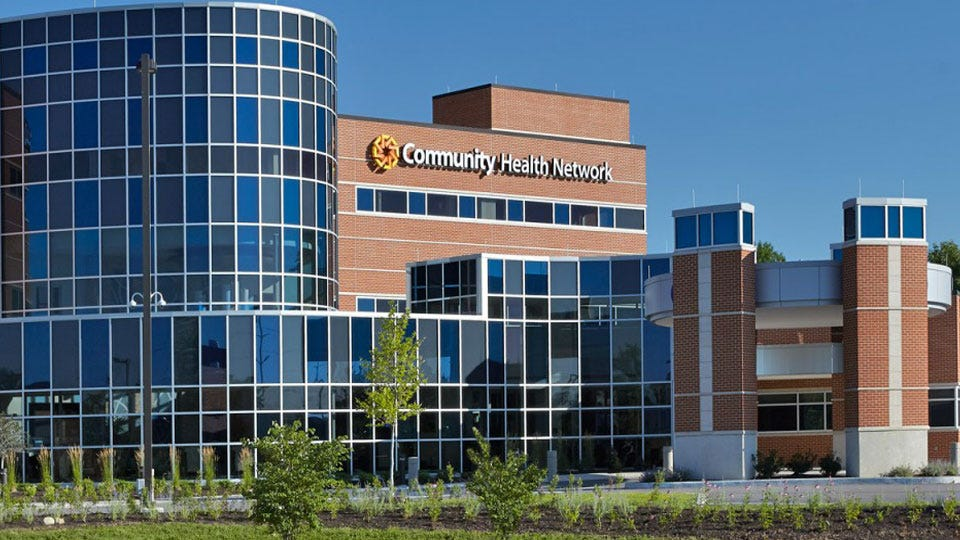
Indianapolis-based Community Health Network has agreed to a $345 million settlement to resolve allegations that, dating back to 2008, it violated the False Claims Act and Stark law.
The settlement, announced Dec. 19, stems from a whistleblower complaint filed in 2014 by the nonprofit health system’s former CFO and COO under the qui tam provisions of the False Claims Act.
The United States filed suit against CHN in 2020, alleging that the system violated the False Claims Act by knowingly submitting claims to Medicare for services that were referred in violation of the Stark law, which requires that the compensation of employed physicians be fair market value and cannot account for the volume of referrals.
The U.S. complaint alleged that, starting in 2008, CHN’s senior management engaged in a scheme to recruit physicians for employment with outsized pay in an effort to secure profitable referrals. The salaries offered to cardiologists, cardiothoracic surgeons, vascular surgeons, neurosurgeons and breast surgeons for CHN employment were sometimes up to double what physicians earned in private practices, the complaint alleged.
The government alleged that CHN provided false compensation information to a valuation firm, ignored the consultants’ warnings about legal risks of overcompensation and awarded bonuses to physicians based on their referrals to providers within the CHN network.
CHN said the $345 million settlement will be paid from its reserves, which reported operating revenue of $3.1 billion in 2022. The nonprofit system has more than 200 sites of care and affiliates throughout Central Indiana, including 10 hospitals.
“This is completely unrelated to the quality and appropriateness of the care Community provided to patients,” CHN Spokesperson Kris Kirschner said in a statement shared with Becker’s. “This settlement, like those involving other health systems and hospitals, relates to the complex, highly regulated area of physician compensation. Community has consistently prioritized the highest regulatory and ethical standards in all our business processes.”
The system said it “has always sought to compensate employed physicians based on evolving industry best practices with the advice of independent third parties” and “has always sought to provide complete and accurate information to our third-party consultants.”
“When doctors refer patients for CT scans, mammograms or any other medical service, those patients should know the doctor is putting their medical interests first and not their profit margins,” Zachary Myers, U.S. attorney for the Southern District of Indiana, said in the Justice Department news release.
“Community Health Network overpaid its doctors. It also paid doctors bonuses based on the amount of extra money the hospital was able to bill Medicare through doctor referrals,” Mr. Myers said. “Such compensation arrangements erode patient trust and incentivize unnecessary medical services that waste taxpayer dollars.”
Under the settlement, CHN will enter into a five-year corporate integrity agreement with HHS in addition to its $345 million payment to the U.S.
Great systems are usually governed by great boards, who are made up of people who match the following 10 descriptions.
Great board members do more than comply with corporate governance structure and rules. Too often, board members have loose ties to one another, are passive to the wants and views of the CEO or are not as informed about the specifics of healthcare as they ought to be. We view all of these traits, and more, as signs that a board has lost its charge and is no longer effectively governing.
We consider the following 10 items as descriptors of a board member who has a strong pulse and adds value to a governing body.
1. The board member is active, engaged and passionate about being a board member. No board can afford to have disengaged members. Bylaws and attendance requirements are important, but simply complying with them does not necessarily equate to being an active, contributing and passionate trustee. Engaged board members show up to meetings, and they show up prepared. While members typically refrain from meddling in day-to-day operations, boards with high levels of trust and candor make a point to communicate with the CEO outside of scheduled board meetings. Quality of board engagement is an important contributing factor to board performance, and there is a correlation between board engagement and the ability to attract board members. Everything that follows is dependent on board engagement.
2. The board member has a point of view on what the organization must be great at, and the board member is vehement about it. Health systems cannot be all things to all people, although the opportunities to attempt this are ample. The best organizations are not static, but disciplined. Well-governed systems know the specialties they are great in, and they continue to double down on their strengths. Their boards are cognizant of where revenues come from and ensure resources are allocated accordingly.
3. The board member realizes that her top job is to ensure the system has great leadership in place. Leaders can fall short in all sorts of ways, some more visible and easily detectable than others. The active, engaged and vehement board does not easily accept disappointment. Boards have many steps at their disposal to manage a problem before firing a CEO or senior leader, but they should never function in a way where termination is unthinkable. Boards cause great damage when they tolerate mediocre performance or compromised values among people at the top of the organization.
4. The board member understands accountability for patient safety and quality of care rests firmly in the boardroom. It rests on board members to insist that they receive sufficient, timely information about patient safety and care quality from the CEO. It rests on board leadership to ensure members have access to expertise and resources to properly obtain, process and interpret this information. It is not a bad idea for quality expertise to be included in board members’ competency profiles and for boards to undergo training and continued education in quality and safety. This is especially relevant for board members who come from industries outside of healthcare. It rests on the board when care quality declines or when lapses in patient safety are unaddressed: It is unacceptable for a board to say it missed the memo on care outcomes or that it did not understand the information in front of it.
5. The board member is a watchdog on societal, governance and audit issues. Informed citizens make for strong board members. It is important to not only be plugged in and aware of the issues and challenges confronting the organization today, but to be aware of broader societal issues that could affect system strategy and performance tomorrow. This is not hypothetical thinking. The past year was a master class in how broader issues affected healthcare in acute and direct ways: systemic racism, a global supply chain and a churning labor market are just three. Good boards are made up of members who stay informed and are biased toward anticipatory thinking, in which they are eager to explore the ways in which issues larger than or outside of their industry may come to affect the organization they help govern.
6. The board member supports the leadership team, but also questions it and holds it accountable. Board members cannot be pushovers for leadership. Directors are nominated by existing board directors on the nominating committee, which often includes the CEO. As a result, trustees can empathize with the CEO of the organization on whose board they sit. Empathy does not equate to blind acceptance, but this is nonetheless a dynamic trustees should be aware of and work to keep in check. It is not unusual for board members to struggle when giving candid feedback to the CEO, for example. As a result, chief executives carry on and live in a bigger and bigger bubble.
It’s worth noting that the reverse can occur within boardrooms as well, in which board members disagree about strategy and seek a CEO they can easily influence. At the end of the day, being a pushover is not associated with strong leadership and should be avoided by both trustees and senior executives. Instead, trustees need to embrace constructive tension in the boardroom. Questions, challenges and disagreements that reach resolution can drive valuable dialogue and stronger outcomes.
7. The board member allows others to voice their thoughts. In many boardrooms, a small number of the participants do most of the talking while the majority stays relatively quiet. A powerful or well-connected member may dominate discussions. Ideally, boards embrace the middle in interpersonal communication, with trustees contributing not too much nor too little. Either goes against the board’s very reason for being.
8. The board member helps ensure the board as a whole reflects the racial, ethnic, gender, religious and socioeconomic diversity of the community served by the organization. This is important for a number of reasons, with health equity being principal. Trustees are stewards for the communities they serve. For hospitals and health systems to increase opportunities for everyone to be healthier — including those who face the greatest obstacles — they need visions, strategies and goals that begin at the top from individuals who have viewpoints from the community. Without these insights, the board simply can’t govern effectively. Additionally, research has consistently found that teams of people who have diversity in knowledge and perspectives — as well as in age, gender and race — can be more creative and better avoid groupthink.
9. The board member is accessible. Just as no board wants its CEO in a bubble, governing bodies must actively resist this risk. For a stretch of time, boards were less visible groups of people who would meet four to six times a year in a mahogany-paneled room to decide the future of an organization that employs tens of thousands and serves even more. This dynamic cannot hold in healthcare. Community members and employees should know — or be able to easily learn — who serves on their health system’s board. If stakeholders bring issues or concerns to a board member, the trustee should be prepared to respond and follow up. In 2021’s healthcare, board members cannot breathe rarified air.
10. The board member emulates the values of the health system. So often when people talk about the tone being set at the top, they have the CEO in mind. The board is just as responsible, if not more responsible, for this charge. What a board permits, it promotes. Board members that emulate system values are better positioned to collaborate with mutual respect, candor and trust. Board members whose values are mismatched or personal agendas are at cross-purposes with the good of the organization should be replaced.
“I know that I have less to live than I have lived.
I feel like a child who was given a box of chocolates. He enjoys eating it, and when he sees that there is not much left, he starts to eat them with a special taste.
I have no time for endless lectures on public laws – nothing will change. And there is no desire to argue with fools who do not act according to their age. And there’s no time to battle the gray. I don’t attend meetings where egos are inflated and I can’t stand manipulators.
I am disturbed by envious people who try to vilify the most capable to grab their positions, talents and achievements.
I have too little time to discuss headlines – my soul is in a hurry.
Too few candies left in the box.
I’m interested in human people. People who laugh at their mistakes are those who are successful, who understand their calling and don’t hide from responsibility. Who defends human dignity and wants to be on the side of truth, justice, righteousness. This is what living is for.
I want to surround myself with people who know how to touch the hearts of others. Who, through the blows of fate, was able to rise and maintain the softness of the soul.
Yes, I hustle, I hustle to live with the intensity that only maturity can give. I’ll eat all the candy I have left – they’ll taste better than the ones I already ate.
My goal is to reach the end in harmony with myself, my loved ones and my conscience.
I thought I had two lives, but it turned out to be only one, and it needs to be lived with dignity.”
Brilliant Anthony Hopkins
and free interpretation of Mario de Andrade’s poem
HBO’s critically acclaimed series Succession recently concluded its fourth and final season with a crescendo of family dramatics and falls from grace. If you haven’t seen the finale, bookmark this article for later. It contains spoilers.
Succession, for those unfamiliar, centers on the uber-wealthy Roy family, majority owners of the global media and entertainment subsidiary Waystar Royco. The plot revolves around the bullishly Machiavellian patriarch Logan Roy and his four adult children, each of them seeking (a) control of the family business and (b) their dad’s approval.
During its run, the show’s endless infighting and fascinating archetypes captivated viewers. But the 39-episode series also provided enduring lessons in dysfunctional leadership, which apply directly and saliently to U.S. healthcare.
As with Waystar Royko, the institutions of medicine (hospitals, medical groups, insurers, pharma and med-tech companies) need excellent leadership just to survive. With millions of dollars and hundreds or thousands of jobs resting on the decisions of top administrators, any major flaw can prove fatal—erasing decades of organizational success.
In any industry, poor leadership can undermine performance and threaten livelihoods. In healthcare, poor leadership puts lives at risk. Here are five dangerous types of leadership personalities, each inspired by a character from Succession:
1. Connor Roy: the delusional leader
In the show’s second season, Connor, the eldest and oft-forgotten son of Logan Roy, launches his U.S. presidential campaign on a “no-tax” platform. When the eve of election arrives, he’s polling at less than 1%, yet he refuses to step aside, still convinced he is capable of doing the job.
Like Connor, healthcare’s delusional leaders overestimate their abilities. Their ideas are unrealistic and their vision for the future: pure fiction. But no matter how outlandish their outlook, delusional leaders will always find apostles among the disenfranchised who, themselves, feel undervalued and overlooked.
When confronted with the harshness of reality, deluded leaders and their followers double down, insisting that everyone else is myopic. “Just follow and you’ll see,” they demand.
Unless senior executives or board members step in to relieve this leader of power, the organization will be as doomed as Connor Roy’s bid for presidency.
2. Kendall Roy: the narcissistic leader
On the surface, Kendall is by far the most capable and experienced candidate to succeed his father. He’s a smart and articulate heir apparent who appears up to the task of CEO.
But underneath the gold plating, his every action is reflexively self-centered. As such, when the time comes to sacrifice something of himself for the good of the company, he freezes and falters, his decisions corrupted by the compulsion to put himself first.
Like Kendall, healthcare’s narcissistic leaders bask in praise and blind loyalty. They reject and punish those who provide honest feedback and fair criticism. Their obsession with status and self-importance blinds them to long-term threats and opportunities, alike.
Unlike delusional leaders, who fail because their vision cuts against the grain of reality, the narcissistic leader’s passion for winning may advance an organization—in the short run. Long-term, however, their flaws will be exposed and weaknesses manipulated by seasoned competitors.
Across four seasons, Kendall can’t fathom that anyone else might be a better choice to run the company. As a result, he underestimates a rival CEO who’s seeking to acquire Waystar, and he overestimates the loyalty of his siblings. In the end, he’s left hopeless and broken.
3. Roman Roy: the immature leader
Roman, the youngest Roy, is brash and witty, but also unpredictable and unrestrained. His penchant for foul language and cutting insults make for good television, but they’re the telltale signs of insecurity and immaturity.
Like all immature leaders, Roman is addicted to novelty and excitement, often acting without regard for the consequences. He’s fast-talking and loud, which makes him likable enough for many to overlook his incompetence. But he’s incapable of filling his father’s shoes.
Immature leaders get promoted before they’re primed and polished. They often lack boundaries and excel at the sport of making others uncomfortable. At times, they seem more interested in causing a scene than creating results. They chase big ideas—if only for the adrenaline rush—but can’t accurately calculate whether the risk of failure is 20% or 80%. This makes them very dangerous as leaders.
4. Shiv Roy: the political leader
In a world of deluded and despotic men, Shiv comes across as the voice of reason. Smart and strategic, relaxed and composed, Shiv carefully cultivates new allies but never establishes an identity of her own. This makes her an excellent political consultant (the job she has) but a poor candidate for CEO (the job she wants).
Political leaders are better at advancing within an organization than advancing the organization itself. Like chameleons, these leaders change with the scenery, shifting alliances and values as organizational power waxes and wanes. While they’re busy focusing on rumors and relationships, they fail to muster real-life business acumen and experience.
Colleagues rarely respect those who play organizational politics. Once political leaders have accrued enough power and advanced their careers to the max, their shallow alliance and inability to drive performance leaves them stranded at the top—with nowhere to go but down.
5. Tom Wambsgans: the compromised leader
Not technically a Roy, Tom is Shiv’s husband and an eager aspirant for CEO.
Once appointed head of Waystar’s struggling cruises division, Tom conceals damaging information to protect his father-in-law. He is a willing henchman, ready to sacrifice his ethics for a shot at the corner office.To advance his interest, Tom repeatedly compromises his integrity, first with Logan, then Kendall, and eventually Lukas Matsson, the incoming global CEO who completes the hostile takeover of Waystar.
In what proves to be Tom’s final interview for U.S. CEO, Matsson asks him whether he will be willing to play the role of “pain sponge,” absorbing any negative fallout the company may experience. After he responds positively, Matsson tests him further by mentioning that he’d like to have sex with Shiv. While viewers squirm in their seats, Tom doesn’t object. For him, every compromise is simply a means to an end.
Compromised leaders are skilled at making promises. They seek support by vowing to fulfill wants and palliate pains. Depending on who these leaders aim to please, they’re willing to slash budgets or raise salaries, regardless of the financial impact. Ultimately, they’ll do anything to keep people happy, even if they have to sink the business in the process.
The three attributes of excellent healthcare leaders
In the final season of Succession, Logan tells his offspring, “I love you, but you are not serious people.” He is both accurate and accountable. Logan was not a serious father and, as a result, his kids were poorly equipped for life and leadership.
The healthcare industry is replete with stories of once-successful institutions falling on hard times under poor leadership. Although there’s no one way to run an organization, all great healthcare leaders share three characteristics:
1. A clear mission and purpose
Leaders have three jobs. They must create a vision, align people around it and motivate them to succeed. To accomplish these tasks, executives may use carrots and sticks, incentives and disincentives, or positive and negative reinforcement. But these tactics will fail unless they reflect a clear mission and purpose.
Years ago, former CMS administrator Don Berwick started a program with an audacious goal of maximizing patient safety and preventing unnecessary deaths. He called it the 100,000 Lives Campaign. And when he spoke of the program, he leaned hard on its righteous mission. Instead of presenting metrics and statistics, he talked about the weddings and graduation ceremonies that parents and grandparents would attend, thanks to the program and the people behind it. Even hard-weathered clinicians in the audience had tears in their eyes.
Financial incentives drive change in healthcare, but rarely achieve the outcomes intended. Everyone engaged in the 100,000 Lives Campaign knew exactly what they needed to accomplish and were motivated to do so.
2. Experience and expertise
Bold ideas and glittering promises always capture attention. Words are powerful and relationships can take aspiring leaders far. But when it comes time to turn big plans into action, there is no substitute for a leader who has been there and done it well.
Exceptional performance, not promises, separate great leaders from the rest—and success from failure. In every industry, past performance is the best predictor of future success. Of course, poor leaders can get lucky and even great ones in bad circumstances may fail. But the odds always favor those who have achieved recurring success throughout their careers.
3. Personal integrity
Emerging leaders can work on their weaknesses. Coaching, training and even therapy can help them quell maladaptive behaviors.
But everything changes when an emerging leader becomes the head of an organization and faces a crisis. As risks and pressures intensify, people tend to fall back on approaches and habits they learned in the past, particularly problematic ones. Whenever tested, the Roy children did exactly that.
After Logan’s death early in the final season, the fatal flaws of each Roy child came into clear view. As a result, the Waystar board made the safest choice for successor: none of the above.
Like a true Shakespearean tragedy, the flaws of the characters in Succession exceeded their abilities.
In healthcare, that’s a guaranteed prescription for failure.








 HENRY KOTULA