Seattle Children’s sues Texas attorney general

Seattle Children’s Hospital has filed a lawsuit against the Texas Office of the Attorney General after the agency requested documents related to gender transition policies and such care provided to Texas children, NBC affiliate KXAN reported Dec. 20.  

In a lawsuit filed Dec. 7, Seattle Children’s argues that the Texas attorney general does not have the jurisdiction to demand patient records from the hospital. It also states that Washington’s Shield Law, signed by Gov. Jay Inslee on April 27, protects it from requests made by states that “restrict or criminalize reproductive and gender-affirming care,” according to the report. 

The Shield Law creates a cause of action for interference with protected healthcare services, which protects against lawsuits filed in other states related to reproductive or gender-affirming care that is lawful in Washington. Those harmed by such out-of-state lawsuits can also file a countersuit in Washington for damages and recover their costs and attorneys’ fees.

The Texas attorney general said it is investigating misrepresentations involving gender transitioning and reassignment treatments and procedures that allegedly violated the Texas Deceptive Trade Practices-Consumer Protection Act. It has demanded that Seattle Children’s provide the following documents:

  • All medications prescribed by the hospital to Texas children
  • The number of Texas children treated by the hospital
  • Diagnosis for every medication provided by the hospital to Texas children
  • Texas labs that performed tests for the hospital before prescribing medications
  • Protocol/guidance for treating Texas children diagnosed with gender identity disorder, gender dysphoria or endocrine disorders
  • Protocol/guidance on how to “wean” a Texas child off gender transitioning care

Seattle Children’s maintains that it does not have property, accounts, nor employees who provide gender-affirming care or administrative services for that care in Texas, according to affidavits obtained by KXAN. Hospital leaders also said that Seattle Children’s has not marketed or advertised this type of care in Texas either. 

Attorneys for the hospitals argue that the demands are an “improper attempt” to enforce Texas’ SB 14 bill — signed June 2 by Gov. Greg Abbott — and investigate healthcare services that did not occur in Texas.

“Seattle Children’s took legal action to protect private patient information related to gender-affirming care services at our organization sought by the Texas attorney general,” a spokesperson for the hospital told Becker’s. “Seattle Children’s complies with the law for all healthcare services provided. Due to active litigation, we cannot comment further at this time.”

The Texas attorney general’s office did not respond to Becker’s request for comment.  
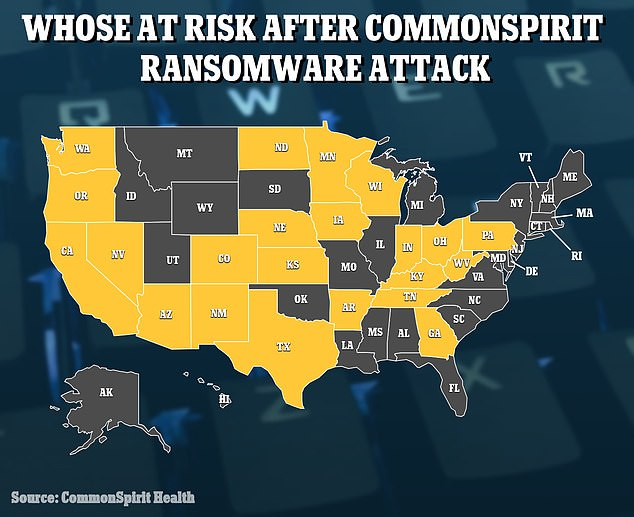
CommonSpirit confirms large-scale ransomware attack

https://mailchi.mp/4587dc321337/the-weekly-gist-october-14-2022?e=d1e747d2d8

The fourth-largest US hospital system, Chicago-based CommonSpirit Health, is struggling with the impact of a major cyberattack, more than a week after it began disrupting electronic health record access and delaying care in multiple regions across the country. Beyond confirming the attack, the system has not provided many details, other than that it took immediate steps to protect its systems and has begun an investigation.

The Gist: Healthcare hacking is on the rise—our industry experienced the largest increase in cyberattacks of any in 2021. Sitting on troves of valuable patient data, health systems must ready themselves for the reality that hacking attempts are no longer a question of “if,” but “when.” Now is the time not only to ensure proper safeguards are in place to prevent such attacks, but also to prepare response plans for once a hack is confirmed, to be able to continue patient care amid disruption when time is of the essence and patient lives are at stake. 

Amazon launches new medical transcription service

https://mailchi.mp/1d8c22341262/the-weekly-gist-the-spotify-anxiety-edition?e=d1e747d2d8

Image result for Amazon launches new medical transcription service

In addition to capturing your personal conversations at home through its ubiquitous Echos, Amazon is now in the business of recording physician-patient conversations. This week the company announced Amazon Transcribe Medical, a machine learning service for quickly creating accurate speech-to-text transcriptions for providers in clinical settings. Cerner, a co-developer, has already signed on as a customer “to develop a digital voice scribe that can ‘listen’ in the background during a patient’s visit”, transcribe the conversation into text, and automatically document the note in its electronic health record (EHR) system.

Amazon’s move into this space is a natural extension of both its “Transcribe Service”, which automatically converts speech to text with natural formatting and punctuation, and its “Comprehend Medical” technology, which can read and mine unstructured medical text for specific information.

While cloud rivals Microsoft and Google are also making a play for speech-to-text tools that work with EHRs, Amazon is looking to differentiate on the basis of providing highly accurate automatic speech recognition specifically designed to go directly into medical records. The company claims the service can understand the nuances of medical language, including the myriad abbreviations used by clinicians.

Amazon is focusing on an area ripe for improvement in cost, time, and patient experience. At a cost of less than a quarter of a cent per minute (!), Transcribe Medical looks like a very cost competitive alternative to what most providers are paying for medical transcription today—especially those who rely heavily on scribes.

It remains to be seen if providers and patients will be comfortable having their often very personal conversations added to Amazon’s cloud, word for word. Providers who adopt this new service should be as transparent as possible with their patients about their partnership with Amazon, as well as how personal data is being stored and used.