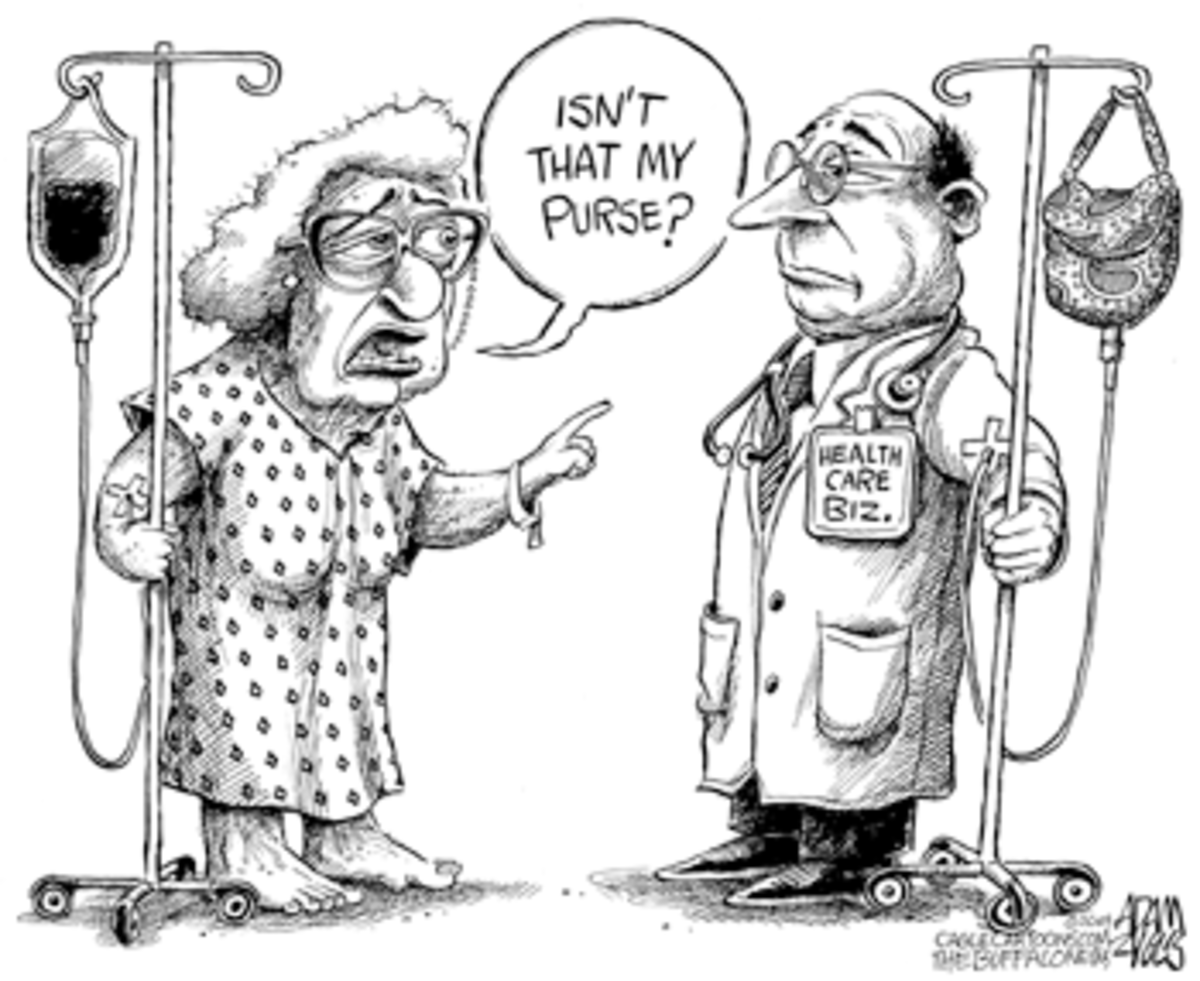
Cartoon – Problems with Some Boards

Medicaid’s scale and complexity are unprecedented. State Medicaid leaders will need to innovate if they are to develop the capabilities that will enable them to steer their agencies into the future.
Since its inception in 1965, Medicaid has grown to have an expanded role in state governance—it is usually the first- or second-largest state program. Nationwide, Medicaid agencies manage about $574 billion in annual spending.1In an average-sized state, Medicaid directors are the single largest purchaser in the health sector, overseeing about $10 billion each year in payments to providers (roughly 17% of the state’s economy).2The agencies typically serve nearly one-quarter of their state’s population3and, in our experience, procure the largest IT infrastructure projects in state government.
Recently, demands on state Medicaid agencies have grown. Increasingly, Medicaid agencies are playing a multi-part role, fulfilling their traditional responsibilities (i.e., payer-purchaser, operator) and taking on new ones (i.e., market shaper and innovator). And while they are doing this, the agencies must address an array of competing priorities, as well as uncertainty about future funding levels. To perform well in these new roles, the agencies must develop new, next-generation capabilities so they can address the needs of their state’s citizens—even those not enrolled in Medicaid.
We believe the roles played by state Medicaid agencies will continue to evolve, but the agencies—in conjunction with the state government leaders they work with—can choose their strategic path forward (primarily, the extent to which they want to be market shapers). Those that pursue this path aggressively will be the first of their peers to evolve into a Medicaid Agency of the Future.
As we discuss below, all state Medicaid agencies will need to strengthen their capabilities if they are to meet the demands of the future—an issue that has important implications not only for the agencies themselves but also for state government leaders, managed care organizations (MCOs), local providers, and others. However, agencies focused on becoming market shapers will need to double down on capability building if they want to succeed on their chosen path.4
A number of trends are shaping what Medicaid agencies need to do to prioritize the direction of their efforts.
Spending growth is putting pressure on state budgets. Medicaid is putting continued cost pressure on state budgets. Program spending (including federal and state funding) increased from 20.5% of state budgets in 2008 to 29.0% in 2016.5The continued increase in Medicaid spending could have funding implications for other state programs, such as elementary and higher education, public assistance, and transportation. The cost pressures resulting from Medicaid spending are expected to continue regardless of what, if any, changes are made at the federal level.
Medicaid programs can lead to payment innovation. As program costs have risen, Medicaid directors have increasingly tried to slow the medical cost trend. One lever available to them is transitioning from fee-for-service reimbursement to payment innovations that include meaningful levels of provider risk-sharing. New payment models that reward providers for delivering high-quality care at lower cost have been shown to improve care quality and reduce costs by 5% to 10% when rolled out across the full spending base.6In several states, Medicaid programs have led multi-payer efforts to achieve payment innovation across the state.7
Medicaid plays an important role as both a payer and a convener. In the aggregate, Medicaid is the country’s largest payer in terms of covered lives and, in many states, is the largest purchaser of healthcare services.8Thus, Medicaid agencies are uniquely positioned to facilitate change. In addition, the agencies can often bring together multiple stakeholders to help align on improvements that would affect not only Medicaid but also the entire healthcare market.
Recognition of Medicaid members as consumers is increasing. Some Medicaid agencies are beginning to approach Medicaid members as consumers. For example, they are offering members technological tools, such as apps and patient portals, that empower greater decision making (e.g., about choice of provider, care setting, or treatment). If well utilized, these tools can improve member experience and encourage higher-value care.
Awareness of social determinants is rising. Increasingly, states are turning their attention to non-health factors, such as housing, education, and transportation, that influence Medicaid members’ ability to maintain their health and adhere to treatment. Some programs are beginning to address these determinants head on (e.g., by providing housing or transportation vouchers). Experimentation in special needs care is underway. Integrated models typically deliver better quality and cost outcomes. For example, integrated behavioral and physical healthcare approaches for high-needs patients have been shown to reduce emergency department and inpatient visit spending by 10% to 25%.9The successes to date are paving the way for further innovation in other special needs areas.
Analytics is playing an increasing role. Advanced analytics and big data can help Medicaid and other public health officials better understand state needs, design programs, and target interventions to maximize the impact of limited funds. The emergence of new national data-sets, such as the Transformed Medicaid Statistical Information System (T-MSIS, which includes states’ comprehensive claims and enrollment data) and CMS’ online database of state waivers and state plan amendments, may enable states to draw on experiences elsewhere when designing new programs.10
In short, state Medicaid agencies are facing an increasingly complex and difficult set of challenges at a time when the expectations of multiple stakeholders—members, families, and advocates; providers and MCOs; the federal government, state leaders, and other state agencies—are rising. If Medicaid agencies are to address these challenges successfully, the role they play must evolve.
In the future, some state Medicaid agencies may opt to follow the path set by previous state leaders. In other cases, they may want to respond to the trends just discussed by taking the lead in transforming healthcare delivery in their programs and their states. These Agencies of the Future will have to be able to chart a strong strategic direction and execute the activities that follow both efficiently and effectively. To accomplish those goals, they will need to use a data-driven approach to program management, build new capabilities, and improve their organizational health (Exhibit 1).
Agencies that opt to follow a more traditional path would also benefit from strengthening their operational performance and organizational health, but the level of improvement needed is lower for them than for the Agencies of the Future. Both sets of agencies, however, will want to prioritize their strategic investments once they have chosen their path forward.

Healthcare is a dynamic industry with significant opportunity, but cost concerns, uncertainty, and complexity can also make it an unnerving one. Substantial upside exists for players that can deliver value-creating solutions and thrive under uncertainty.
The intrinsic demand for healthcare services continues to rise in the United States, given population aging, the increasing prevalence of chronic disease, and the search for a higher quality of life. In addition to increasing demand, three other major factors make healthcare a dynamic industry with significant opportunity:
Industry growth, major changes, and strong value-creation potential make healthcare an exciting industry. At the same time, cost concerns, uncertainty, and complexity make it an unnerving one. Substantial upside exists for players that can deliver value-creating solutions and thrive under uncertainty. Indeed, our recent research into industry profit pools indicates that, on average, the industry is delivering value-creating solutions and consequently showing attractive profit growth. Between 2012 and 2016, total over-all healthcare industry profit pools (earnings before interest, taxes, depreciation, and amortization, or EBITDA) grew at a faster rate than the combined EBITDA of the top 1,000 US companies.

Medicare and Medicaid have always been a “work in progress,” as they’ve evolved from entitlement programs for the elderly and the poor in the 1960s to the largest health insurers—public or private—in the nation.
Medicaid is the more controversial program of the two, as its original intent was to provide temporary, safety-net health coverage for the poor and not as a permanent entitlement. This issue has been politicized by both parties as of late with little attention paid to the impact that nonclinical determinants—such as genetics, socioeconomics, environment and lifestyle choices—have on healthcare outcomes and life expectancy.
Democrats support expanding Medicaid under the Affordable Care Act to every state for everyone within 138% of the federal poverty level. Republicans favor increasing beneficiary responsibilities to take greater control and responsibility over their own healthcare and are encouraging states to pursue waivers to experiment with different Medicaid models designed to optimize quality, drive down costs and enable beneficiaries to move toward greater economic self-sufficiency.
President Donald Trump’s proposed budget last May recommended $800 billion in Medicaid cuts as well as cuts in nutritional assistance ($192 billion) and welfare programs ($272 billion). With the passage of the Tax Cuts and Jobs Act adding $1 trillion to the federal deficit, Republicans are making cuts to Medicaid a priority for 2018.
Last month, the Trump administration announced that it would grant states the right to impose work requirements for able-bodied Medicaid recipients. Pregnant women, full-time students, primary caretakers of children under 19, disabled adult dependents and frail elderly individuals would be exempt from these requirements.
There are many complex issues that arise from this proposal, including:
Democrats responded that this proposal violates the Medicaid statute as well as the original intent of the state waiver program. They also pointed out that the majority of Medicaid beneficiaries who can work do work, and often carry more than one low-paying service job that does not permit them to afford commercial health insurance coverage.
Many Republican governors support the proposal, as they would like to see a greater number of Medicaid beneficiaries receive health insurance through an employer rather than through the state. Earlier this month, Kentucky became the first state to receive approval to impose job requirements as a part of its Medicaid program, followed in short order by Indiana.
Another approach to reducing Medicaid costs is cost-sharing, which is already permitted under federal law. Like the job-requirement proposal, children, pregnant women and others are partially waived from this requirement with lower premiums and cost-sharing limits.
In addition, states may impose higher premiums and cost-sharing limits for the option to purchase brand as opposed to generic prescription drugs and the nonemergency use of emergency departments as determined by a medical screening exam under the Emergency Medical Treatment and Labor Act.
There is no question that the United States cannot sustain the current unfunded liabilities that include Medicaid, Medicare and Social Security. In addition, cuts to the Medicaid program are supported by a significant number of Americans. However, doing this successfully will be complicated by the fact that those receiving this coverage deeply appreciate its benefits and that many studies support the positive economic value of Medicaid expansion.
Imposing work requirements and cost-sharing on Medicaid beneficiaries will only work if the jobs available to them are not minimum-wage service jobs and provide employer-based insurance. Thus, the main question is: Can states invest in the infrastructure necessary to help get their most vulnerable populations on their feet in an economically meaningful way? Or is the intent to merely withhold healthcare services to compensate for federal and state budgets that have spiraled out of control?

A new bill aims to give health plans more flexibility to help enrollees treat and prevent chronic diseases.
The bill, called the Chronic Disease Management Act of 2018, would amend the IRS tax code so that high-deductible health plans paired with health savings accounts could cover chronic disease prevention and treatment on a pre-deductible basis.
Diane Black, R-Tenn., and Earl Blumenauer, D-Ore., introduced the bill in the House on Thursday, and John Thune, R-S.D., and Tom Carper, D-Del., did the same in the Senate, according to a release from the University of Michigan Center for Value-Based Insurance Design.
The existing IRS regulations, the center says in an accompanying fact sheet, permit a “safe harbor” that allows for the coverage of preventive services prior to satisfaction of the plan deductible. But that exception doesn’t include clinical services meant to treat an existing illness or condition, which narrows plan options and can stifle consumers’ ability to benefit from the financial advantages of a tax-free health savings account.
The new bill, on the other hand, would allow insurers to develop and implement “clinically nuanced” high-deductible health plans, the center says. The adoption of those type of policies, it adds, could make patients more likely to adhere to treatment plans, allow for lower premiums, enhance patient-centered outcomes and “substantially” reduce healthcare expenditures.
“This enhanced HDHP would provide millions of Americans a plan option that better meets their clinical and financial needs,” A. Mark Fendrick, M.D., the center’s director, said in a statement.
The idea of value-based insurance design (V-BID) has been gaining traction in recent years due to its potential to lower costs by allowing payers more leeway in how they design health plan benefits. Indeed, a 2016 study found that a VBID model tested in Connecticut was able to boost the use of preventive healthcare services among participants.
It’s also being tested in privatized Medicare. In fact, the Trump administration announced in November that it would expand the existing Medicare Advantage value-based insurance design model to an additional 15 states and broaden the options available for participants.

Congressional leaders passed the spending bill last night, after a 5-hour government shutdown. Senate passed the spending bill around 1:45 a.m. with a 71-28 vote, while the House pushed through the legislation at about 5:30 this morning with a 240-186 vote.
The shutdown was caused by a one-man protest by Sen. Rand Paul, R-Kentucky, who opposed adding another $320 billion to the federal budget deficit. Indeed the massive spending bill adds hundreds of billions of dollars for the military, disaster relief and domestic programs.
While budget appropriators will have until Mar. 23 to determine how to specifically dole out the funding, there are a lot of wins for healthcare, according to Samantha Burch, senior director of congressional affairs for HIMSS.
The bipartisan agreement will raise the budget cap to allow the total budget allocation for defense, non-defense and non-discretionary items, which is “a big win for HIMSS priorities,” Burch said. Those caps will not only help federal agencies with military needs, but it will support health needs and threats for the country.
One of the biggest gains from the budget was the inclusion of the CHRONIC Care Act, which unanimously passed the Senate in September. HIMSS provided technical feedback on for developing the bill, which Burch said is aimed at modernizing Medicare to streamline care coordination and improve outcomes.
Not only will the bill expand telehealth to Medicare beneficiaries, it will also generate patient data on those beneficiaries.
“We’ve been huge supporters of the CHRONIC care act,” said Burch. “Getting that bill over the finish line is an important first step. There’s all of this momentum around health IT on Capitol Hill, but it’s been incredibly hard to get bills across the finish line and signed into law.”
“This is really the first time that we’re seeing a complete package that would expand telehealth access to Medicare beneficiaries,” she continued. “It’s an incredible step forward.”
The spending bill also included provisions for Community Health Centers, National Health Service Corps and Medicare programs that help rural area providers, said Burch. CHIP was also extended for a longer period than anticipated, which provides some stability and certainty to the industry as a whole.
The budget also provides at least $2 billion for the National Institutes of Health for two years and $6 billion for the opioid epidemic.
What’s incredibly valuable is that the two-year budget gives appropriators a “longer runway for the FY19 budget.”
“But there’s much more work to be done,” said Burch. “It’s never a silver bullet… like with the CHRONIC Care bill, we’re trying to bridge this major gap where technology and innovation is, and where regulation and policy is.”
“The bill takes us a little way there, but there’s certainly more to do,” she added.
HIMSS will be continuing to work on progressing these needs moving forward, while concentrating on cybersecurity, interoperability and infrastructure.
Although the industry has come a long way, cybersecurity continues to be a major issue for healthcare, said Burch. HIMSS played a major part of Sec. 405 of the Cybersecurity Act of 2015, which it developed with the Senate HELP committee.
“[That work] got the attention of the Department of Health and Human Servicesand got the ball rolling, which created a more active relationship between HHS and the private sector,” said Burch.
But one of the biggest needs — and perhaps the biggest push — will continue to be around infrastructure needs. Burch explained that while Congress continues to have these conversations around infrastructure and public and rural health, there’s a lot of work to be done.
“We’re still trying to impress upon lawmakers that yes, our roads and bridges may be crumbling, but we still have those with no access to broadband,” said Burch. And that has some of the best use cases for health IT and telehealth.