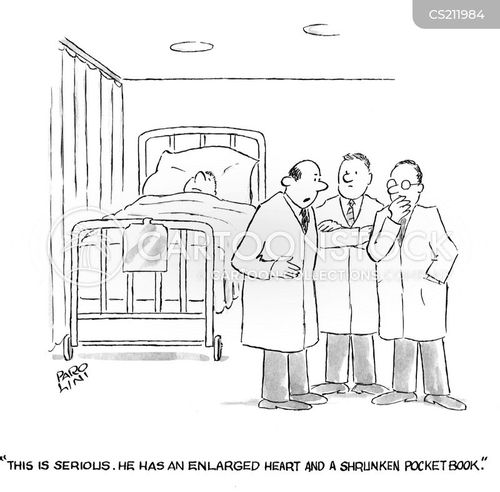
Cartoon – This is Serious


The head of New York City’s public hospital system says he will leave more jobs unfilled at the 11 hospitals he oversees to cope with a cash-flow crisis that emerged after the state withheld millions in aid. City and state officials have sparred over the funding in recent days as healthcare dollars from Washington become scarce. Stanley Brezenoff, interim president of NYC Health + Hospitals, said in a letter to staff on Thursday that he would fill just 25% of the 250 to 300 positions that become available each month at the hospitals the system oversees.

Health policy experts sometimes battle for consensus over payment issues, but when it comes to the new way of paying most doctors under Medicare, one group reached near-unanimous agreement: Scrap it.
The Merit-based Incentive Payment System (MIPS) should be spiked, virtually all members of the Medicare Payment Advisory Commission (MedPAC) said during a meeting on Thursday morning.
MedPAC, whose members include physicians, healthcare executives, and other policy experts charged with advising the Department of Health and Human Services on Medicare policy issues, has been set on defeating MIPS for a long time; but whether the program should be simply “repealed” or “repealed and replaced” wasn’t clear at Thursday’s meeting.
At the start of the meeting, MedPAC’s analysts addressed the challenges with the MIPS program and proposed a potential alternative.
The Problem with MIPS
The MIPS program is one of two payment vehicles created as a result of the the Medicare Access and CHIP Reauthorization Act (MACRA) — which replaced the almost universally despised Sustainable Growth Rate (SGR) formula. The other payment pathway consists of an array of advanced Alternative Payment Models (APMs), which weren’t discussed in any detail at the meeting.
The main problem with the MIPS program, as MedPAC’s analysts see it, is that MIPS won’t achieve the policy goals that it’s designed to achieve.
The flexibility of the program — the various options for how physicians can report measures and the broad exemptions for certain types of clinicians — has made it overly complex. There are also statistical challenges that stem from trying to develop individual-level performance scores, due to the relatively small case sizes for some providers.
“Everyone will seem to have high performance when in fact many of the measures are topped out or appear to be topped out … and that will limit Medicare’s ability to detect meaningful differences in clinician performance,” said David Glass, a principal policy analyst for MedPAC.
In the end, Medicare gives clinicians a score based on their performance and either raises or reduces their Medicare payment based on that score, but for all the reasons Glass mentioned, he believes it is “extremely unlikely that physicians will understand their score or what they need to do to improve it.”
“Our most basic concern is that the measures in MIPS have not been proven to be associated with high-value care,” he said.
Alternative Proposed
Glass and MedPAC senior analyst Kate Bloniarz suggested an alternative policy approach that leverages population-based measures.
The Voluntary Value Program, as they’ve dubbed the alternative, would get rid of the MIPS program and all three types of reporting requirements — Advancing Care Information (ACI), Clinical Practice Improvement Activities (CPIA), and quality measures — and scrap CMS support for Electronic Health Records reporting.
In the new model, all clinicians would see a portion of their fee schedule dollars withheld, which would be lumped into a pool — for example 2%, though analysts stressed the percent amount had not been decided.
Clinicians would then have three options:
In the first option, the “sufficiently large entity” could be those physicians affiliated with a single hospital or one geographic area, she said.
“An entity’s performance would then be collectively measured using a set of population-based measures,” Bloniarz added.
A limitation of the model is that entities must be “sufficiently large” in order to have “statistically detectable performance on the population based measures.”
In the Voluntary Value Program, measures could potentially fall under three categories: clinical quality, patient experience, and value. For example, a clinical quality measure might include mortality or avoidable admissions.
Unlike the MIPS program, all of the measures could be pulled from Medicare claims data or “centrally conducted surveys” avoiding the clinician reporting burden, Bloniarz explained.
Repeal and Replace?
Most members of the commission expressed support for the new model or at least felt it was a good start.
One new commissioner, David Grabowski, PhD, of Harvard Medical School in Boston, said he favored having a replacement, but he worried that some physicians, particularly those in rural areas, or those treating dual eligible patients (enrollees in both Medicare and Medicaid) might be left out. He stressed that incorporating proper risk adjustment mechanisms into the measurement process would be critical.
Paul Ginsburg, PhD, of the Brookings Institution, also supported a repeal-and-replace strategy.
“My sense is that the politicians don’t want to do nothing. They want to do something,” he said.
However, several commissioners were more hesitant, asking whether replacing the MIPS program was necessary.
“Are we creating something that is so close to the advanced APM structure that it’s almost not worth it?” asked Dana Gelb Safran, ScD, of Blue Cross Blue Shield of Massachusetts.
Gelb Safran suggested that if the commission does choose to recommend an alternative, distinctions between it and the APMs would need to be clear. She also wondered aloud whether with these new entities would revive some of the challenges of the old SGR formula.
The challenge with the SGR was that individuals weren’t truly accountable to each other even though they were lumped together, she explained.
“That really undercuts the desire to behave in the way that the incentives should make them behave because somebody else could kill their incentive, so why bother.”
Craig Samitt, MD, MBA of Anthem in Indianapolis, said he would favor a repeal-only approach, based on the replacement model he’d seen that day.
“If a replacement is a voluntary model that would allow us to keep practicing healthcare the way we’ve been practicing, then that replacement is not a good replacement,” Samitt said.
MedPAC member Kathy Buto, MPA, of Arlington, Virginia, suggested another idea: repeal the MIPS program, but continue to withhold the funds from the clinicians who aren’t participating in the advanced APMs. Then use those dollars to reward APM performance.
“I would actually increase the penalty and make it less attractive to stay in MIPS regardless,” she said.
Commission Chairman Francis J. Crosson, MD, joked that he would be happy to escort Buto from the meeting after it adjourned — implying her idea might be dangerously unpopular with physicians.
In the end, Crosson determined that MedPAC’s technical team would return to the group with draft recommendations for repealing the MIPS program and offer two options: a voluntary replacement program similar to the one discussed at Thursday’s meeting with some revisions, and suggestions on how to make the advanced Alternative Payment Models more accessible for physicians.
The commission could then decide whether to recommend one or both options to HHS.

For months, officials in Republican-controlled Iowa had sought federal permission to revitalize their ailing health-insurance marketplace. Then President Trump read about the request in a newspaper story and called the federal director weighing the application.
Trump’s message in late August was clear, according to individuals who spoke on the condition of anonymity to discuss private conversations: Tell Iowa no.
Supporters of the Affordable Care Act see the president’s opposition even to changes sought by conservative states as part of a broader campaign by his administration to undermine the 2010 health-care law. In addition to trying to cut funding for the ACA, the Trump administration also is hampering state efforts to control premiums. In the case of Iowa, that involved a highly unusual intervention by the president himself.
And with the fifth enrollment season set to begin Nov. 1, advocates say the Health and Human Services Department has done more to suppress the number of people signing up than to boost it. HHS has slashed grants to groups that help consumers get insurance coverage, for example. It also has cut the enrollment period in half, reduced the advertising budget by 90 percent and announced an outage schedule that would make the HealthCare.gov website less available than last year.
The White House also has yet to commit to funding the cost-sharing reductions that help about 7 million lower-income Americans afford out-of-pocket expenses on their ACA health plans. Trump has regularly threatened to block them and, according to an administration official who was not authorized to speak publicly, officials are considering action to end the payments in November.
The uncertainty has driven premium prices much higher for 2018. A possible move by the Treasury Department to ease the requirement that most Americans obtain coverage could further erode a core element of the law.
On Friday, Sen. Margaret Wood Hassan (D-N.H.) called on the administration to abandon its “attempts to sabotage health care markets and raise health care costs for millions.” Such efforts, warn health advocates as well as state and local officials, will translate into more uninsured Americans.
“In Ohio, the Trump administration has already inflicted the damage,” said Lisa Hamler-Fugitt, executive director of the Ohio Association of Foodbanks. After its nearly $1.7 million enrollment-assistance grant was cut 72 percent last month, the group decided it no longer could effectively participate. “We are past the point of no return on this,” Hamler-Fugitt said.
HHS has told its regional administrators not to even meet with on-the-ground organizations about enrollment. The late decision, which department spokesman Matt Lloyd said was made because such groups organize and implement events “with their own agenda,” left leaders of grass-roots organizations feeling stranded.
“I don’t think it’s too much to ask the agency tasked with outreach and enrollment to be involved with that,” said Roy Mitchell, executive director for the Mississippi Health Advocacy Program, which receives no federal funding for its ACA efforts. “There’s money for HHS to fly around on private jets, but there’s not money and resources to do outreach in Mississippi.”
Administration officials make no apologies for actions scaling back federal support for the ACA, also known as Obamacare. Trump, Vice President Pence and those carrying out the law at different agencies take most every opportunity to claim that it is failing. HHS Secretary Tom Price’s abrupt resignation Friday, prompted by the furor over his use of expensive chartered planes for work trips, is not expected to shift this overall approach.
“Obamacare has never lived up to enrollment expectations despite the previous administration’s best efforts,” Lloyd said in an email last week. “The American people know a bad deal when they see one, and many won’t be convinced to sign up for ‘Washington-knows-best’ health coverage that they can’t afford.”
Trump and his aides also are looking for ways to loosen the existing law’s requirements, now that the latest congressional attempt to repeal it outright has failed. The Treasury Department may broaden the ACA’s “hardship exemption” so that taxpayers don’t face costly penalties for failing to obtain coverage, a Republican briefed on the plan said. That is sure to depress enrollment among the younger, healthier consumers whom insurers count on to help buffer the health-care costs of sicker customers.
“We should fully expect the Trump administration to take a more activist route to deal with Obamacare, given the inability of Congress to move through with a repeal-and-replace bill,” said Lanhee Chen, a research fellow at Stanford University’s Hoover Institution.
While the law’s open enrollment period has attracted the most public attention, a more obscure battle within the administration over several states’ proposed changes for their marketplaces speaks volumes about the president’s approach to the law.
It was a Wall Street Journal article about Iowa’s request that provoked Trump’s ire, according to an individual briefed on the exchange. The story detailed how officials had just submitted the application for a Section 1332 waiver — a provision that allows states to adjust how they are implementing the ACA as long as they can prove it would not translate into lost or less-affordable coverage.
Iowa’s aim was to foster more competition and better prices. The story said other states hoping to stabilize their situations were watching closely.
Trump first tried to reach Price, the individual recounted, but the secretary was traveling in Asia and unavailable. The president then called Seema Verma, administrator of the Centers for Medicare and Medicaid Services, the agency charged with authorizing or rejecting Section 1332 applications. CMS had been working closely with Iowa as it fine-tuned its submission.
State Insurance Commissioner Doug Ommen has repeatedly described the “Iowa Stopgap Measure” as critical to expanding marketplace options there. The plan would abolish the ACA exchange there and convert consumer subsidies into a type of GOP-styled tax credit. New financial buffers would help insurers handle customers with particularly high medical expenses.
Without the measure, “over 20,000 middle class farmers, early retirees and self-employed Iowans will likely either go uninsured or leave Iowa,” Ommen warned in a Sept. 19 statement. Those who sign up for 2018 exchange coverage face premium rate increases of 57 percent on average from the single insurer participating.
Some administration officials are still pressing for the waiver to be granted, according to interviews with several Republicans. The HHS spokesman confirmed last week that Iowa’s application “has been deemed complete and is currently under review” but did not address the president’s directive on the matter.
Eliot Fishman oversaw such waivers at CMS during the previous administration and said in an interview that President Barack Obama weighed in on those decisions only in “unusual” cases” toward the end of the process.
“Things that are tough calls typically go to the president, but they go with a [staff] recommendation that often carries a great deal of weight,” said Fishman, now senior director of health policy for the liberal health-care advocacy group Families USA.
Iowa is not the only red state to chafe at the administration’s unwillingness to allow more flexibility.
On Friday, Oklahoma sent a letter to Price and Treasury Secretary Steven Mnuchin saying it was withdrawing its federal waiver request because administration officials had not provided an answer “after months of development, negotiation, and near daily communication over the past six weeks.”
“While we appreciate the work of your staff, the lack of timely waiver approval will prevent thousands of Oklahomans from realizing the benefits of significantly lower insurance premiums in 2018,” wrote Terry Cline, the state’s health secretary.
In at least one case, CMS has approved a waiver in a way that upended a state’s plan to maximize health coverage for its residents. Minnesota applied to CMS for permission to establish a reinsurance program, which can lower premiums by giving insurers a guarantee that they will have limited financial exposure for customers with particularly high medical expenses. The agency informed Gov. Mark Dayton (D) on Sept. 22 that it would provide $323 million for the program since the lower premiums would mean savings to the federal government on subsidies to Minnesotans with ACA health plans.
But, Verma added, the federal government also would cut $369 million in funding for a separate program aimed at residents who earn between 138 percent and 200 percent of the federal poverty level and don’t qualify for the same subsidies.
Minnesota’s entire congressional delegation, Democrats and Republicans alike, issued a joint statement saying they were “disappointed that our state is facing a last-minute penalty” and “exploring possible paths forward.”
Sen. Patty Murray (Wash.), the top Democrat on the Health, Education, Labor and Pensions Committee, said Trump should devote time to forging a bipartisan agreement to stabilize the ACA marketplaces.
“If he is only interested in sabotaging the market, that is a dangerous road for him to ride, because he will own it,” she said.
http://www.sandiegouniontribune.com/business/biotech/sd-me-drug-price-20171005-story.html

Stem cell and gene therapies for cancer and other diseases used to be considered exotic. But stunning successes are fast moving them into the medical mainstream.
While only a few of these therapies have yet been approved, many more are being tested experimentally. In addition to treating otherwise fatal cancers, they may relieve sickle cell disease, restore failing hearts and even cure HIV infection.
And with mainstream success comes a mainstream worry: How will patients pay for these expensive treatments? Or to look at it another way, how much is it worth to save a life?
Drug company representatives discussed these issues Wednesday at Cell & Gene Meeting on the Mesa, an annual event in La Jolla devoted to stem cell and gene therapy.
At the end of August, drug giant Novartis marked a milestone by receiving U.S. approval for a blood cancer treatment made from the patient’s own genetically modified immune cells. The treatment, Kymriah, has rescued children and young adults who were gravely ill with acute lymphoblastic leukemia and placed them into remission.
Kymriah costs $475,000. But Novartis made an unusual guarantee: If patients don’t respond in a month, the company won’t charge for it.
However, these arrangements, like the therapies themselves, are so new that federal regulators are hesitant, said Pascal Touchon, a senior vice president with Novartis Oncology.
“The system is not organized for that,” Touchon said at a morning panel. “So when you ask for the first time whether we can do that, the answer is no. That’s the starting point.”
Novartis eventually reached agreement with the Centers for Medicare and Medicaid Services, or CMS.
The challenge now is to make general rules for such therapies, instead of making rules case-by-case, said Bob Azelby, chief commercial officer of Juno Therapeutics. Juno is developing a cancer immune therapy similar to Novartis’.
“They’re getting value for the dollars they’re spending,” Azelby said of CMS.
Cell & Gene Meeting in La Jolla began more than a decade ago as a purely scientific conference on stem cells. But it has grown as stem cell technology has been augmented with gene therapy, the delivery of disease-fighting genes.
Genetically modifying stem cells provides a virtually unlimited source of cells with useful properties. These could fight cancer, or perhaps correct a disease caused by a faulty gene.
Many of these therapies, such as Kymriah, are made from a patient’s own cells, collected, modified, grown and re-infused into the body. Such custom-made treatments are extremely expensive. They belong to a class of treatments called CAR T cell therapy.
Bluebird Bio, also represented on the panel, is developing its own version of CAR T cell therapy, in its case for another blood cancer called multiple myeloma.
In addition, Bluebird is developing gene therapies for a rare disease called cerebral adrenoleukodystrophy, and the blood disorders sickle cell disease and beta-thalassemia.
“For Bluebird … it’s ultimately putting together a value story, that allows for a dialogue” about pay-for-performance, said Jeffrey Walsh, chief financial and strategy officer.
Vericel, which grows replacement skin from a burn patient’s own skin cells, also makes such a value pitch, said Nick Colangelo, president and CEO.
“When we treat a catastrophic burn patient, an order of our skin grafts can cost a couple hundred thousand dollars,” Colangelo said. “But it’s a one-time treatment.”
Moreover, treated patients have nearly a 90 percent survival rate, he said.
“That clearly is a product that has a lot of value,” Colangelo said.
Besides helping patients and the companies that make successful therapies, treatments like Kymriah also benefit companies that supply their research tools. One of them is Thermo Fisher Scientific, which had an early collaboration with Carl June, the physician who pioneered the therapy at the University of Pennsylvania.
Thermo Fisher supplied its Dynabeads, microscopic magnetic beads that attach to specified cells using an antibody linker, said Mark Stevenson, the company’s chief operating officer.
“They help extract and amplify the cells prior to the therapy … to actually enrich the cells that you want to pull out, also that you’re able to develop and expand the correct CAR T cells,” Stevenson said. “And for Novartis we scaled up that therapy to make a successful launch.”
“It’s a very exciting time for cell therapy,” Stevenson said. “We’ve been involved in it for 10 years and we’re finally seeing the benefits coming to patients.”
Eyes Fixed On California As Governor Ponders Inking Drug Price Transparency Bill

Insurers, hospitals and health advocates are waiting for Gov. Jerry Brown to deal the drug lobby a rare defeat, by signing legislation that would force pharmaceutical companies to justify big price hikes on drugs in California.
“If it gets signed by this governor, it’s going to send shock waves throughout the country,” said state Sen. Ed Hernandez, a Democrat from West Covina, the bill’s author and an optometrist. “A lot of other states have the same concerns we have, and you’re going to see other states try to emulate what we did.”
The bill would require drug companies to give California 60 days’ notice to state agencies and health insurers anytime they plan to raise the price of a drug by 16 percent or more over two years. They would also have to explain why the increases are necessary. In addition, health insurers would have to report what percentage of premium increases are caused by drug spending.
Drugmakers spent $16.8 million on lobbying from January 2015 through the first half of this year to kill an array of drug legislation in California, according to data from the secretary of state’s office. For the pricing bill alone, the industry has hired 45 lobbyists or firms to fight it. Against the backdrop of this opposition campaign, Brown must decide by Oct. 15 whether to sign or veto the bill.
“When they have to justify in California, de facto, they have to justify it to the other 49 states,” said Gerard Anderson, a health policy professor at Johns Hopkins Bloomberg School of Public Health in Baltimore. “Other states essentially get to piggyback on the good efforts of California, and hopefully, because they might have difficulty justifying the price increases, everybody’s prices around the country will be lower.”
Other states, including Maryland, Vermont, Nevada and New York, have passed similar laws aimed at bringing more transparency to prices and curbing price gouging. But the pharmaceutical industry has fought the hardest in California. If drug companies don’t like the disclosure laws in smaller states, they could decide not to sell their drugs there, Anderson said, but the market in California is just too big to ignore.
“States like Maryland are just not as powerful,” he said. “It just doesn’t have the clout that a state like California has.”
This is the second go-round for such a drug price bill. Last summer, similar legislation crashed and burned. Its intended regulations were gutted so extensively that Hernandez decided to pull it. But, he said, two key things happened after that, setting the stage for a successful second attempt.
First, in August 2016, less than a week after Hernandez pulled the bill, controversy erupted nationally over the price of EpiPens, which spiked nearly 500 percent. The increase sparked outrage from parents who carry the auto-injectors to save their children from life-threatening allergic reactions.
Momentum grew among federal lawmakers last September. They called for hearings. Several bills were proposed across the country aimed to rein in drug prices.
Then came the election of November 2016. After Donald Trump became president and Republicans took control of Congress, the No. 1 health policy priority became repealing and replacing the Affordable Care Act, President Barack Obama’s signature legislation.
As federal lawmakers focused on dismantling the ACA, Hernandez said he saw another opportunity for state lawmakers to act on drug prices. He reintroduced his bill in early 2017, and this time political support grew quickly — beyond the usual suspects.
“It wasn’t just labor,” he recalls. “It was consumer groups, it was health plans. It was the Chambers of Commerce, it was the hospital association.”
The Pharmaceutical Research and Manufacturers of America, or PhRMA, a drug industry’s trade group, argued that the bill known as SB 17 was full of “false promises” that wouldn’t help consumers pay for their medicines and would instead stifle innovation with cumbersome regulatory compliance.
“That takes up a lot of resources and will take up a lot of time,” said Priscilla VanderVeer, deputy vice president of public affairs for PhRMA. “And that could mean pulling resources from research and development and having to put it into the reporting structure.”
Some experts say that price transparency alone is not sufficient to bring down costs and that other changes are needed.
Hernandez is optimistic the governor will sign SB 17 into law. But he knows nothing’s certain. That’s because of what happened on Sept. 11, the day the bill came up for a key vote in the state Assembly — the same place it went down the year before. Hernandez thought he’d secured all the votes he needed, but at the last minute the votes started slipping away.
The bill needed 41 votes to pass the Assembly. During the roll call, the tally stalled around 35. Hernandez said he had plenty of colleagues willing to cast the 42nd vote, but with drug lobbyists swarming the Capitol, no legislators wanted to be the one to cast the deciding vote.
“If the bill fails and you’re stuck out there, then you’re the person that’s attacking the industry,” Hernandez said.
Still, the bill crossed the 41-vote threshold and the remaining lawmakers joined in. In the end, the bill passed with 66 votes. All the Democrats and half of the Republicans in the state Assembly voted for it.
This was much to the dismay of drug companies, which lobbied hard and issued a blitz of advertising in the last weeks before the vote.
Experts said the drug industry doesn’t want a large influential state like California forcing them to share their data.
Drugmakers are likely already devising ways to work around the California bill, warned Anderson, the Johns Hopkins professor. They’ve filed lawsuits to try to slow or stop laws from being implemented in other states, or to weaken the rules if and when they go into effect. Policy experts are watching to see what kinds of legal challenges the California law might be vulnerable to, and if it can withstand them.
“We learn from the mistakes of other states,” Anderson said. “Legislation is an iterative process. We have 50 states and hopefully, by some time, we’ll get it right. We’re looking for California to take the lead on this.”
https://www.axios.com/trump-administration-rolls-back-aca-contraception-mandate-2493726693.html

Key points: These are broad exemptions.
The background: The ACA requires employers to include certain preventive services — including contraception — in their employees’ health care plans, without copays or other forms of cost-sharing. Churches have always been exempt. The Supreme Court also allowed an exemption for closely held corporations whose owners have a religious objection to contraception.
The Obama administration had tried to work out a middle ground for other “religious-affiliated” employers, but they said that process was still an encroachment on their religious liberty.