


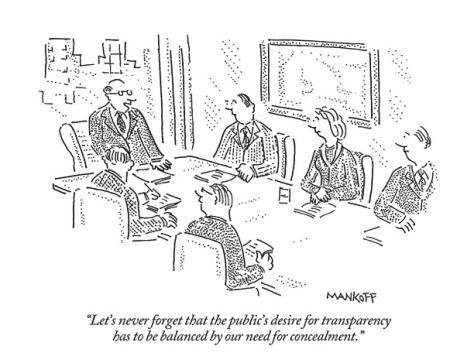
Cartoon – Going for Broke

https://hbr.org/2017/10/the-critical-skills-for-leading-major-change-in-americas-health-system
At a time of profound volatility in the U.S. health system, change management is an essential skill for public and private leaders alike. For these leaders — and young people aspiring to careers as health care managers — one very practical question emerges: What are the critical skills for leading major change in our health system?
As someone who has led large change management projects in both the federal government and a large private health system, my view is that effective leadership of fundamental change requires the following: a commitment to transparency; involving stakeholders so they feel that their voices are heard; making listening a personal priority of the leader; going overboard in communicating; emphasizing that the sought-after change is achievable; and developing a motivating narrative.
Two personal stories illustrate these points.
The first concerns the challenge of creating the meaningful use program for the HITECH Act when I served as national coordinator of health information technology from 2009 to 2011, at the beginning of the Obama administration. The second involves the task of replacing the electronic health record system (EHR) at Harvard-affiliated Partners HealthCare, the largest health system in New England. The latter was a project I led after returning to Partners in 2011. This was a $1.2 billion capital investment, the biggest in the organization’s history.
Both challenges were fundamentally political with a small “p.” And the road to success was in many ways the same.
The HITECH Act, which was part of the federal stimulus program enacted in response to the financial crisis of 2008, tasked the Obama administration and its Department of Health and Human Services with creating a nationwide, interoperable, private, and secure electronic-health-information system. The president made this goal even more formidable by promising that every American would have an electronic health record by 2014.
The HITECH Act provided a wide array of authorities:
The HITECH Act also included constraints — many about timing. Regulations setting out standards had to be issued within about nine months from the time I arrived. Furthermore, payments to providers for conforming to meaningful use were to be available under the law in less than two years — by January 1, 2011. So any infrastructure supports to assist providers in becoming meaningful users had to be in place very fast — by early 2010 at the latest.
Still another constraint — one of those important details that are appreciated by students of management — was that the Office of the National Coordinator that I inherited was tiny (a total of 35 FTEs) and had never written a regulation or made a grant before. There was, for example, no grants-management office even though we were expected to rapidly expend $3 billion in infrastructure grants and contracts to prepare the nation for meaningful use.
Though the implementation of the HITECH Act seemed superficially like a technology project, I gradually came to realize that it was much more than that. Nothing in the law required hospitals or doctors to adopt or meaningfully use electronic health records. They had incentives to do so, but they could easily refuse.
In fact, we were actually engaged not in a technology-implementation program but in a huge change-management initiative. We had to convince hundreds of thousands of health professionals and thousands of hospitals and hospital managers to take on the difficult, complex, costly, disruptive, and frustrating task of changing the way they managed what is arguably the most critical resource used in daily patient care: information. We were in a contest for the hearts and minds of professionals running our health care system. This larger battle for hearts and minds conditioned everything we did in applying our authorities and meeting our practical challenges.
First, to create the credibility and trust we needed to lead this movement, we insisted on transparency. We formulated the meaningful-use regulation in public through a series of hearings and public deliberations, which were streamed live. Whenever we faced the option of whether to make a decision in public or private, we chose the public approach. We held scores of open meetings involving our advisory committees during the two years I was national coordinator.
Second, to deepen public trust, we made listening a priority. Understanding that people affected by government policy want to be heard, I took every meeting I could with representatives of health care stakeholders, especially physicians and hospitals. After one meeting, I got feedback about what a great exchange we had. In fact, I had said nothing at all beyond introducing myself at the outset.
Third, we communicated extensively. When we released the proposed rule, we did so with a press event in the Great Hall of the Department of Health and Human Services with a packed crowd. I then went on a national tour — to Tampa, Minneapolis, Tucson, Salt Lake City, Omaha, Burlington, Buffalo, Houston, and beyond — to explain the proposed regulation.
Fourth, we emphasized the feasibility of complying with the meaningful-use rule. We needed to make clear that becoming a meaningful user was not a superhuman task. We wanted adoption to be so manageable that non-adopters would be embarrassed among their peers at golf outings or weekend cocktail parties.
Fifth, we sought narratives — metaphors for what we were trying to accomplish — and I used them repeatedly in my speeches. The one that stuck was an escalator image: We were getting on an escalator toward increasingly sophisticated and powerful uses of EHRs. We were starting on the first step, but the rest would follow in due time.
We also spoke of inevitability. It was inconceivable, we argued, that within 10 years, physicians and hospitals would still be walled off from the information age. They could make the conversion now — with government support — or they could wait and do it on their own. But either way, they were going to have to make the change. They were going to have to get on that escalator.
The meaningful-use program has had its problems, but it did succeed in one of its most fundamental purposes: the adoption of EHRs, which are now ubiquitous in medical practice. In the end, the program got very close to fulfilling President Obama’s promise that every American would have an electronic health record by 2014.
Now let’s turn to the task of implementing a new EHR in a large operating health system that included two major teaching institutions (Massachusetts General Hospital and Brigham and Women’s Hospital); multiple community hospitals; a rehab hospital; a nationally-known, inpatient, psychiatric facility; a half-dozen community health centers; a home-health-care agency; thousands of community-based physicians; and the largest non-profit, private, biomedical-research program in the world.
The Partners HealthCare System was already sophisticated electronically. The problem was that it had multiple, homegrown, electronic health records onto which local physician-developer teams had layered a wide variety of specialty specific applications. The result was an electronic tower of Babel that was becoming increasingly expensive to service and modernize. But the key problem was that the records were not internally interoperable, which had become a growing barrier to improving quality and efficiency in an increasingly demanding local-health-care environment.
Before I arrived in 2011, Partners leadership had made the decision to replace all this complexity with a single, commercial EHR. It was my job to lead the process of picking one and rolling it out.
Now, though Partners was legally a single health-care-delivery system, I knew from having worked there for much of my professional life that it was in fact a loose confederation of independent institutions populated by equally independent and skeptical professionals. Winning their support, and that of managers throughout the system, was critical to success. Once again, we were battling for hearts and minds, which meant that many of the approaches we relied on in government were relevant.
Building trust through a transparent decision process was the first strategy we pursued. The initial and critical decision we faced was which EHR to purchase. There were two finalists. To choose, we collected evidence, evaluated the alternatives, and made decisions in highly public and inclusive ways. We invited thousands of professionals to test and rate the two products. We reported the results publicly on a project website. We conducted site visits to health care organizations around the country using the products we were considering. Site visit teams were diverse and representative of major Partners institutions and stakeholders. They rated the sites’ experiences with the EHRs, using a standardized protocol. We reported results on the website.
Then, we held a public debate between advocates of the two contending records — in which teams argued about relative merits before the audience voted. The vote was highly influential in our final choice. This transparent and inclusive decision-making process included an enormous amount of built-in listening and feedback from affected staff, another critical part of the change-management process.
To address the need for inclusive governance and representative decision making, we put in place a governing council for the EHR project. Members included representatives of critical Partners institutions and stakeholder groups. This council approved all major decisions with respect to the choice of the EHR and implementation policy. We then took those approved decisions to senior management of Partners, and ultimately to the Partners board, for final endorsement. Obviously, the fact that a representative body had approved our recommendations enormously increased their weight with management and board members.
As in the case of the meaningful-use program, communication was important. It didn’t require traveling the country, but it did require visiting all the major Partners institutions to speak with their staff and management, to answer questions, and to take in feedback.
Finally, we needed a rationale and a narrative that conveyed the necessity of undertaking this admittedly expensive and disruptive change in Partners affairs. The rationale and narrative focused on the institution’s obligation to its patients. This was conveyed first in a motto: one patient, one record, one billing statement. To make this motto concrete, we made a video of a patient describing how she had had to carry a paper record from one Partners institution to another — all of which had siloed EHRs — as she got care for her breast cancer: surgery at Newton-Wellesley Hospital, chemotherapy at Dana-Farber Cancer Institute, and radiation at the Massachusetts General Hospital. I recall vividly the impact this video had during a presentation I made to the academic chairs of departments at Mass General. Patients’ stories had an almost unimpeachable legitimacy, even with the most senior Harvard academic leaders.
Before I left Partners to join the Commonwealth Fund in 2013, we had chosen the EHR and begun the rollout of the new IT infrastructure. While that rollout has not been perfect and, typical of such massive implementations, there have been plenty of complaints about the difficulty of using the new record, it has largely proceeded according to plan.
Change management is at the core of everything that public and private institutions are striving to achieve in reforming national policy and care-delivery approaches in order to improve the quality and cost of health care services provided daily to Americans. The effectiveness of leaders in both the public and private sectors in managing ambitious change efforts will determine their ultimate success. And my experience suggests that the skills required in these two sectors are remarkably similar — because change management, regardless of setting, involves convincing human beings to give up something they know for something new and uncertain.

Consumers today have unprecedented power. And, until recently, the healthcare industry had little incentive to react to this newfound power. However, pressures from consumers to meet ever-rising expectations, primarily driven through experiences in other categories (think Amazon, Uber, Sephora, Nordstrom) and cost pressures from employers and governments, means that redefining how healthcare organizations interact with people is no longer a luxury. To this point, Prophet recently conducted in-depth interviews with more than 50 executives at health systems, payers, pharmaceutical companies and digital health companies around the globe to better understand how the healthcare industry can best evolve to better engage consumers.
Based on these conversations, Prophet identified several changes healthcare organizations have begun to make and published the report, “Making the Shift: Healthcare’s Transformation to Consumer-Centricity.”Everything from becoming more digital to learning how to be more empathetic to taking cues from companies in other industries to create world-class experiences. However, the overriding theme from the interviews, from CEOs to CMOs, was how critical culture is for organizations trying to make a consumer-oriented shift.
This is not new news to most industries, but to an industry where medicine, physicians, evidence-based decisions and protocol rule, worrying about developing a first-class, consumer-centered culture was not seen as a requirement to providing topnotch healthcare. That has changed. Forever.
Mayo Clinic has taken this ambition to heart. It has built and strengthened its organizational culture around a common mission of patient-centered care. Mayo Clinic President and Chief Executive Officer Dr. John Noseworthy said, “At Mayo Clinic, we put patients first – that is the foundation of our culture, it is in our DNA.”
In examining Mayo Clinic, it is clear how setting the powerful common purpose can create a self-propelling culture, where everyone is bought in and all decisions are informed by that purpose. As Dr. Noseworthy told us, “Every step we take, every tactical or strategic decision we make is based on what is in the best interest of the patient – and that is the only interest to be considered.”
When we talked to leaders at organizations like Geisinger, Intermountain Health, Eli Lilly and Company and Aetna, the drumbeat was the same. As Novant Health’s Chief Executive Officer Carl Armato put it, what enabled his organization’s shift toward consumer-centricity “was our ability to mobilize our employees around a common and clear vision. At Novant Health, we don’t look at the patient experience separately from the physician/team member experience; they are blended together. We need to create a remarkable experience for our patients and our team members.”
In both the Mayo Clinic and Novant Health examples, several ideas aimed at kick starting a consumer-centered culture surfaced that may help others launch their own efforts. These include:
Co-create a consumer-centered vision with employees that the entire company can stand behind. When employees are engaged in developing the vision, they are more invested in both the vision and bringing it to life. “It is critical that team members are a part of the development of the promise and vision; if you want them to live it and love it, then you have to create it with them,” said Mike Yost, VP of Marketing at IU Health.
Be bold, declarative and explicit about your consumer-centricity and cultural ambitions.When Dr. David Feinberg, MD, became Chief Executive Officer of Geisinger Health System, a regional health system in Pennsylvania, he set out to shift the organization from provider-centric to patient-centric. To take the first step, Geisinger launched ProvenExperience, a refund program under which consumers who are dissatisfied with the care they received can request a refund for their co-pay. Geisinger Health System’s Chief Informatics Officer Alistair Erskine told us, “Everyone talks about putting the patient first and that’s great, but to make it actually happen we needed to take a big step that would force us to change.”
Tie compensation to consumer-centric metrics.Anthem has tied 10% of all employees’ incentive plans to Net Promotor Scores. Doug Cottings, Staff Vice President at Market Strategy & Insight at Anthem, found that “once consumer satisfaction and promotion affected everyone’s bonus…everyone wanted to understand what actions each department can take to improve customer satisfaction.” Lasting cultural change requires that employees have a clear understanding of specific performance objectives, behaviors and metrics.
Look outside the category for inspiration. “Our aspiration is to be the first digitally-enabled, consumer-centric integrated delivery system in the U.S.,” said Dr. Marc Harrison, President and Chief Executive Officer at Intermountain Healthcare. “We’re taking cues from Amazon, fintechs, Starbucks, and the like. We are going to inject that holistically into a real digital transformation of an integrated health system to truly understand and serve people the way they want to be served.” Intermountain is widely regarded as having one of the most consumer-centric cultures in the category.
Healthcare will continue to change. Consumers will continue to get smarter and employees will continue to expect more from their employers, who will in turn expect more of the health care system. Those that remake their culture to enable them to keep up with this pace of change and recognize the benefits to better consumer engagement are ultimately the ones that will win, and become examples for others trying to figure out their own consumer-centric journey.

As the cost of care continues to rise, many hospitals are looking for long-term solutions to minimize inpatient services. Learn how technology and health care delivery will merge to influence the future of hospital design and the patient experience across the globe.
The future of health care delivery may look quite different than the hospital of today. Rapidly evolving technologies, along with demographic and economic changes, are expected to alter hospitals worldwide. A growing number of inpatient health care services are already being pushed to home and outpatient ambulatory facilities. However, many complex andv very ill patients will continue to need acute inpatient services.
With aging infrastructure in some countries and increased demand for more beds in others, hospital executives and governments should consider rethinking how to optimize inpatient and outpatient settings and integrate digital technologies into traditional hospital services to truly create a health system without walls.
To learn what this future of health care delivery may look like, the Deloitte Center for Health Solutions conducted a crowdsourcing simulation with 33 experts from across the globe. Participants included health care CXOs, physician and nurse leaders, public policy leaders, technologists, and futurists. Their charge was to come up with specific use cases for the design of digital hospitals globally in 10 years (a period that can offer hospital leaders and boards time to prepare).
The crowdsourcing simulation developed use cases in five categories:
Many of these use-case concepts are already in play. And hospital executives should be planning how to integrate technology into newly-built facilities and retrofit it into older ones.
Technology will likely underlie most aspects of future hospital care. But care delivery—especially for complex patients and procedures—may still require hands-on human expertise.
The hospital of the futureDownload the report
Building a digital hospital of the future can require investments in people, technology, processes, and premises. Most of these investments will likely be upfront. In the short term, hospital leadership may not see immediate returns on these investments. In the longer term, however—as digital technologies improve care delivery, create operational efficiencies, and enhance patient and staff experience—the return result can be in higher quality care, improved operational efficiencies, and increased patient satisfaction.
These six core elements of an enterprise digital strategy can help you get started as you begin to push your hospital into the future:
http://www.healthcaredive.com/news/decentralization-health-care-health-2-0-keynote/506377/

Health 2.0 co-chairs Indu Subaiya and Matthew Holt said these factors pose big questions to healthcare companies, including “What is your job in the new healthcare ecosystem?”
The decentralization of healthcare may be a great talking point and the ultimate end with patients at the fulcrum of care delivery business practices, but first, many hurdles need to be overcome.
Health 2.0 co-chairs Indu Subaiya and Matthew Holt outlined the five factors driving the decentralization of healthcare during their keynote address at the conference this week. They posed two big questions to healthcare companies, including, “What is your job in the new healthcare ecosystem?”
Holt and Subaiya shared their vision of where they see the industry going, mapping out the five drivers for the decentralization of healthcare:
The drivers that the presenters outlined point to a changing demographic where the patient is at the heart of care delivery services and wellness management while using new technology, a theme for which the conference is known for.
It’s a lot to take in, but Holt and Subaiya stated these new drivers require companies to ask of themselves “Who am I?”
For one, companies need to ask “What does value mean?” and, as Holt stated, not in the traditional venture capital way where a value proposition is another way to define why someone should give you money. Rather, what is the purpose and value a company is looking to add to the healthcare ecosystem, leading a company needing to answer “What is your new job in the new ecosystem?” Questions of who is the customer and what is the company’s job will be critical to navigate the healthcare business landscape going forward, especially since the environment is ripe for winners and losers in many facets of the industry.
While these thoughts are provocative about where the industry is heading, the business community of Silicon Valley and the policy makers in Washington, D.C., still need to recognize that those on the front lines of healthcare have a different perspective than a pie-in-the-sky take.
An article published in the new issue of Health Affairs found “hospitals’ use for patient care of data from outside providers was low, with only 18.7% of hospitals reporting that they ‘often’ used these data.”
“Our results reveal that hospitals’ progress toward interoperability is slow and that progress is focused on moving information between hospitals, not on ensuring usability of information in clinical decisions,” wrote the authors.
Thus, there may be a disconnect of current interoperability practices and where industry wants to go. The study plays on the tensions between end-users and health IT product makers, with both trying to navigate the end results to something usable and reliable.
Legacy EHR companies are looking to change. Epic is trying to incorporate more patient-sharing with Share Everywhere, for example. At Health 2.0, Allscripts CEO Paul Black stated the company is attempting to disrupt itself, or else others will come into the market and disrupt it for them. He added that Allscripts will soon be announcing different tools/offerings that seek to reimagine how a clinician interacts with a keyboard and how a patient interacts with an EHR.
Elsewhere at the conference, National Coordinator for Health IT Dr. Donald Rucker stated that new standards like FHIR and blockchain are still in an early stage of development. Technology changes in the healthcare space will largely be driven by consumers armed with apps that blend clinical data and lifestyle data. “That’s what the big drivers are and providers are sorting them out,” Rucker said.
The great technology dance between end-users, developers and policymakers continues on, but all seem to point to the need to keep the consumer at the forefront. Their businesses depend on it.

During this week’s National Association of Corporate Directors summit in Washington, DC, there will be lots of time spent on shareholder activism, executive compensation, and several other key in-the-moment issues. But Jane Stevenson, Korn Ferry’s vice chairman of the firm’s Board & CEO Services practice, says that those issues overshadow three, considerably more existential issues modern board directors have to address. Before her own panel presentation, Stevenson laid out what she thinks board directors should have on their minds.
In today’s global and active economy, the lines between competitive markets have never been blurrier.
is Amazon a consumer company, for example, since it sells everything from groceries to garage door openers? Or is it a technology company, since it owns and operates the legions of computer servers that make e-commerce—its own and others—possible? With all the crossover, it’s very difficult for board members to assess whether all the disruptions are accelerators to the organization’s growth, or roadblocks.
This is a huge topic because of the rapid pace of change and needs of leadership with the onset of artificial intelligence and the changing nature of commerce, as our society potentially moves from an exchange of goods to a thought exchange. Typically, there is a good amount of lead time for any transformational innovation, but once it takes hold it tends to be exponential. Boards really need to be able to see around hairpin turns and to fly at a high enough elevation to anticipate appropriately.
Boards needs to step up in a different way and think with a different level of expansiveness, involvement and opportunity building. The day of boards just evaluating based on what’s happening today is not enough, it takes years to build those outcomes. It’s not just about identifying problems, but also about awareness. Boards need to ask the right questions (not just regulatory) that help to improve leadership. Boards need to look at the world and create a lens that the CEO would not have complete access to without the directors.
One way to think about it is: Do you have the right board to pick the next CEO? Do you have the right CEO in place to have the right leaders? Are the right leaders the ones to really define the right workforce of the future? How much of that workforce is human and how much of it is evolving into artificial intelligence and robots?
Access to information used to be a huge cost for businesses. That has gone down enormously. Today, the real questions are: What does the information say? What does it mean? And how do we use it? Whole businesses are changing. The boards have to adapt. What boards have to do is to step up to a different kind of leadership, anticipating what will create value, how that impacts the organization, and evaluating if the right leadership is in place to make those pivotal operating decisions on a day-to-day basis. Boards of the future must look forward in a different way and think with a different level of expansiveness, involvement and opportunity building.
In the end, it all comes back to talent and succession, which are tightly aligned. Talent starts with the board and goes down to the lowest level of employees. It will take different kinds of thinking in the boardroom to effectively anticipate all of these issues. The need for diversity in the boardroom to do that effectively and anticipate things effectively has never been higher, not because it’s a do-good cause but because it will require nimbleness in thinking and diversity of perspectives to make that happen.
http://knowledge.wharton.upenn.edu/article/the-perils-of-contract-workers/

“Investors hate ‘employment’ because it seems like a fixed cost, even though most companies have no reluctance to get rid of employees, and many keep contractors around as long as their average employee,” says Cappelli, director of Wharton’s Center for Human Resources. “Even though it is typically more expensive per hour to hire contractors, it shows up on different budgets. But it also reflects a general short-term view of strategy: Rather than getting really good at something, which requires investing in competencies, we are going instead to just find new opportunities quickly.”
There are, however, costs to contracting out, and those costs are becoming increasingly hard to ignore. Lack of institutional memory and slowed organizational momentum are obvious deficits to relationships with contract workers. More important, by not investing in the individual, companies are also simply shifting costs.
“I think more than short-termism, this is a classic example of a so-called negative externality,” says Wharton professor of management Claudine D. Gartenberg. “By that I mean, here’s a series of decisions taken by companies — and not just for-profits, but universities, hospitals and across the non-profit sector, as well — that often benefits the organizations financially, but may have serious social consequences that are not borne by the organizations but by workers and society as a whole.”
Moreover, there is reason to believe that just as contract work is not a panacea for workers, it is also not a panacea for companies. “Contract workers have a fundamentally different relationship with the companies they work for than employees do,” says Gartenberg. “Just as companies under-invest in contractors, there are ample studies that suggest that contractors likewise under-invest in the companies. This could definitely hit the bottom line in areas like innovation and customer service.”
If we are in fact in the process of solidifying two distinct classes of workers — one employee in which firms invest, and another that is in a sense more disposable — what are we as a society losing?
“A lot,” says Gartenberg. “This is what the American Dream is built on — upward mobility. Contract work and outsourcing, among other factors, appear to be disrupting that engine, and it is not clear what the best policy response, if any, should be.”
“Investors hate ‘employment’ because it seems like a fixed cost, even though most companies have no reluctance to get rid of employees, and many keep contractors around as long as their average employee.”–Peter Cappelli
A Cost Masquerading as a Savings
While contract workers look good for the bottom line, that’s not the end of it. “It’s great having these people who aren’t part of the headcount, but then you discover all of these hidden costs,” noted Wharton management professor Matthew Bidwell during a recent appearance on the Knowledge@Wharton show on SiriusXM channel 111. (Listen to the full podcast using the player at the top of the page.) “Turnover is higher; often you have to pay them more because they need some premium in order to come to work. And it’s quite disruptive. When contractors move out, you have to move somebody else in and train them up again.”
The introduction of second-class status for some employees also changes the workplace dynamic. “It’s a big deal,” says Bidwell. “Whenever you start designating different groups it creates friction. We worry that contractors can feel threatening to regular employees — there is a sense of, ‘Is my job going to be next to be contracted out?’”
Contracting also appears to have a deleterious effect on one’s career arc. “One big issue is training,” notes Bidwell. “As an employee, your employer may pay to train you and keep you up to date on new technologies. They will also give you a chance to try new kinds of work and learn that way. As a contractor, nobody is paying for you to learn. They only want to hire you to do things that you have already demonstrated you can do elsewhere. That means you have to pay for your own training. You also suffer a Catch-22 when it comes to doing new kinds of work. People won’t hire you to work on different stuff until somebody else has already hired you to do it.”
Bidwell and Wharton doctoral student Tracy Anderson are working on a study that looks at MBA alums who work as contractors, and, in analyzing career trajectories, they find that people who spent time as a contractor seemed to suffer a career penalty later on. “The contractors also said that future employers didn’t take their contracting experience seriously. I think these challenges are particularly severe for contractors in managerial work,” Bidwell said.
Still, contracting out appears to be growing. Exact numbers are elusive because job categories are often only loosely defined. But the percentage of workers engaged in alternative work arrangements of various types — temp agency workers, on-call workers, contract workers, and freelancers — rose from 10% to nearly 16% between February 2005 and late 2015, according to Lawrence F. Katz of Harvard and Alan B. Krueger of Princeton. The percentage of workers hired out through contract companies showed the sharpest increase — from 0.6% in 2005 to 3.1% in 2015.
“A striking implication of these estimates is that all of the net employment growth in the U.S. economy from 2005 to 2015 appears to have occurred in alternative work arrangements,” write Katz and Krueger in “The Rise and Nature of Alternative Work Arrangements in the United States, 1995-2015.”
“Here’s a series of decisions taken by companies … that often benefit the organizations financially, but may have serious social consequences….”–Claudine D. Gartenberg
The consequences are rippling out. Large U.S. firms have played a big role in reducing wage dispersion, therefore helping to mitigate inequality, according to Wharton management professor Adam Cobb and University of Texas at Austin sociology assistant professor Ken-Hou Lin. But that is less the case now, they argue in “Growing Apart: The Changing Firm-Size Wage Premium and Its Inequality Consequences,” published in Organization Science in May, 2017.
Using data from the Current Population Survey and the Survey of Income and Program Participation, Cobb and Lin find that in 1989, although all private-sector workers benefited from a firm-size wage premium, the premium was significantly higher for individuals at the lower end and middle of the wage distribution compared to those at the higher end. But between 1989 and 2014, the average firm-size wage premium declined markedly. Significantly, the decline was exclusive to those at the lower end and middle of the wage distribution — while there was no change for those at the higher end. They conclude that the uneven declines in the premium across the wage spectrum could account for about 20% of rising wage inequality during this period.
“While large firms still compress the wage distribution, they do so to a much lesser degree than in the past. This suggests that although large U.S. firms in our observation period lowered wage inequality, their role as an inequality-mitigating institution has diminished considerably over time,” they write.
Can the Pendulum Ever Swing Back?
In fact, the spread of alternative work arrangements has resulted in “downward pressure on earnings and the shifting of basic risks onto workers and their households,” wrote David Weil, author of The Fissured Workplace, in the Huffington Post recently. Weil, who led the Wage and Hour Division of the U.S. Department of Labor during the Obama administration and is now dean and professor at the Heller School of Social Policy and Management at Brandeis University, is arguing for a number of interventions: Creating greater transparency on wages and working conditions, drastically reducing the use of non-compete and mandatory arbitration clauses by employers, creating greater access to skill enhancement, and fostering more varied methods of third-party worker representation (including, but not limited to, unions).
A few trends and forces could slow the use of contract workers, says Gartenberg. “The first is the rise in data analytics within firms. Firms have long suspected the costs of employee disengagement. Gallup estimates $500 billion in lost productivity per year from low employee engagement, and another study shows the bottom-line benefits of having employees feel a strong sense of purpose, which contractors likely do not share,” she notes. “But until a clearer case can be made firm-by-firm, it is hard to justify a change. A range of new technologies for measuring employee productivity, innovativeness, and linking those outcomes to happiness may well help companies make the case to in-source and re-invest in employees.”
“This is what the American Dream is built on — upward mobility. Contract work and outsourcing, among other factors, appear to be disrupting that engine.”–Claudine D. Gartenberg
Another possible impetus for change could come via the decline in publicly traded firms and the increase in institutional common ownership of those that remain. “There are half the number of public firms today as there were in the late 1990s, and investment capital is increasingly concentrated within a few institutional investors,” she says. “Large institutional shareholders are feeling increasing pressure to invest in socially responsible firms. These two trends in corporate ownership may converge to swing the pendulum back towards investing in workers, if enough external pressure is applied and if a sufficient business case can be made.”
Surprisingly, automation may play a role in reversing the trend. If more of the rote work becomes automated, we may be left with work where hard-to-contract softer skills matter more and correspondingly mean higher pay, “at least for a subset of workers,” says Gartenberg. “As an example, I was recently talking with the head of operations of a health care logistics start-up. She said their entire logistics operations were essentially automated, and a real source of advantage was that their call-center representatives were freed up to provide the human face to the company. They had no intentions to outsource or automate that function, as they recognized the value of engaged employees interacting with customers, rather than the mind-numbing IVRs [interactive voice response systems] that we have learned to hate over the past 20 years.”
Bidwell points out that the question of whether the use of contractors continues to grow depends at least partly on legal enforcement. “[For] the previous [presidential] administration, one of their priorities was around companies that were incorrectly classifying independent contractors as employees. Obviously once you are classified as a contractor you are outside of some of the protections — you are under a different tax code, not subject to the minimum wage, all of those sorts of things,” he says. “And contracting shouldn’t be a means for companies to stage an end-run around a bunch of laws that are there because we believe that fundamentally most employers have much more power in the bargaining relationship than employees and we want to even that up a certain amount.” Ideally, we would update the law, Bidwell adds, but “getting anything through Congress these days is not necessarily easy, and so, with a different administration, how fierce they are on who is a contractor versus an employee is going to have at least some impact on this market.”
“It’s great having these people who aren’t part of the headcount, but then you discover all of these hidden costs.”–Matthew Bidwell
As it is, the “legal situation in the U.S. is a light touch,” says Janice Bellace, Wharton professor of legal studies and business ethics. When it comes to companies contracting for workers with another company — a temp agency, for instance — the law has little to say. When a firm engages an individual as independent contractor, there are rules to be followed, and the firm that flouts them risks the government stepping in and determining that they are employees rather than contractors.
But those risks were greater under Barack Obama, when there was a more worker-friendly National Labor Relations Board. In addition, Donald Trump has drastically reduced the enforcement capacity of the Department of Labor by cutting the budget. “Consider that Trump’s first nominee for head of the labor department was a man who headed a fast food chain that had been repeatedly cited for wage/hour violations,” Bellace says.
But what should the policy response be to the increased use of contracting? Gartenberg says that it is important to take note of two factors. First, there is a difference between involuntary temp-workers or workers for contracting agencies, and freelancers/independent contractors. For the latter group, many prefer contract status to full-time employment, and “grouping these people into the overall pool of contract workers overstates the problem,” she says.
Second, alternative work arrangements enable firms to be more competitive overall by lowering costs and providing a better way to respond to market fluctuations. “If, in an alternate world with 100% full-time workers, these firms would be uncompetitive, then these arrangements may end up helping on net, even if some are worse off,” says Gartenberg. “Or, firms may be stuck in a downward spiral where workers end up net worse off, but no single firm can undo this because they cannot bear the costs and remain competitive. These two factors highlight why this isn’t necessarily a cut-and-dry problem with easy answers.”


