Obamacare 101: 4 things you need to know about ‘essential health’ benefits

http://www.latimes.com/politics/la-na-pol-obamacare-101-essential-benefits-20170323-story.html

clinic

Among the most important — and little understood — new insurance rules put in place by the Affordable Care Act was a requirement that health plans cover a basic set of benefits.

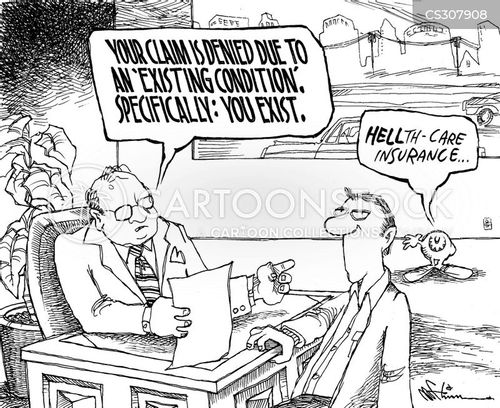
The requirement was part of a package of new consumer protections in the healthcare law, including a prohibition on insurers denying coverage to people with preexisting medical conditions and bans on annual- or lifetime-limits on coverage, which were once common.

Conservative House Republicans have been demanding the so-called essential benefit requirements be scrapped.

Here’s a rundown of what this debate is about.

What are the essential health benefits?

The 10 benefits include:

— Ambulatory patient services, which include outpatient care such as doctor visits and surgeries that don’t require hospitalizations;

— Emergency services, including ambulance transportation;

— Hospital care;

— Maternity and newborn care;

— Mental health and substance abuse treatment;

— Prescription drugs;

— Rehabilitative services, including physical therapy and other care such as speech and occupational therapies;

— Lab services;

— Preventive care, some of which must currently be covered without any co-pay or other cost sharing;

— Pediatric care, including dental and vision care for children.

Why were essential health benefits included in the Affordable Care Act?

Before Obamacare was enacted, health plans routinely had holes in coverage that consumers often learned about only after they sought care.

For example, in 2011, one-third of health plans available to consumers who bought insurance on their own rather than through an employer, did not cover substance abuse treatment, according to data gathered by the U.S. Department of Health and Human Services.

Nearly one in five did not cover mental health. And nearly one in 10 plans did not include coverage for prescription drugs.

Why do conservative Republicans say they want them out?

Many Republicans say the essential benefits push up the cost of health insurance and force people to buy health plans with more coverage than they need.

They often point to maternity coverage, which they say men and older women do not need and therefore should not be forced to pay for.

The House Republican bill to roll back Obamacare already would remove these requirements benefits from Medicaid plans.

What impact would removing the requirements have?

Allowing for skimpier plans would likely be a boon for healthy people who don’t need much medical care. They would be able to get cheaper plans.

But many experts warn that the consequences of scrapping the benefit requirements could be serious.

For one, consumers could once again find themselves in health plans that do not cover things they did not anticipate they might one day need. .

For example, a health plan without prescription drug coverage might sound good when someone is healthy, but would be catastrophic if that same consumer were diagnosed with an unexpected cancer.

Secondly, making consumers pay only for the benefits they need might lower the cost of skimpier plans, but it would make plans that cover extra benefits like mental health or maternity care much more expensive. That would effectively penalize people who are sick or need medical care.

Some insurers might decide they simply don’t want to offer plans with the extra benefits because insurers would not want customers who incurred higher medical costs they might have to cover.

Finally, the elimination of essential health benefits threatens other popular consumer protections.

The bans on annual and lifetime caps on health coverage, for example, are linked to the mandated benefits. If there are no more mandated benefits, the caps become meaningless.


Obamacare 101 — What’s the big debate over health insurance cost-sharing subsidies?

http://www.latimes.com/politics/la-na-pol-obamacare-101-cost-sharing-reductions-20170425-story.html

USC patient

As President Trump and congressional leaders scrambled to put together a spending bill to keep the government from shutting down at the end of this week, negotiations almost collapsed over an arcane, but critical part of the Affordable Care Act: cost-sharing reduction payments, or CSRs.

If you’ve never heard of this piece of the Obamacare puzzle, here’s a rundown of what they are, why they were pulled into Trump’s first budget fight and what their fate may be in the future.

What are the cost-sharing reduction payments?

One of the pillars of Obamacare are the insurance marketplaces that allow Americans who don’t get coverage through an employer to shop among health plans that must all cover a basic set of benefit.

Low- and moderate-income shoppers with annual incomes between 100% and 400% of the federal poverty level — between about $12,000 and $48,000 — qualify for subsidies that offset the cost of their monthly insurance premiums.

Less well-known are the so-called cost-sharing reductions. Consumers who make between 100% and 250% of the poverty line can get this additional assistance to cover co-pays and deductibles if they select certain health plans on the Obamacare marketplaces.

These cost-sharing reductions mean that someone who might otherwise face an annual deductible of $2,000 or more would potentially have no deductible at all. This additional assistance can be especially important as many low-priced health plans force consumers to pay high deductibles before their medical care is covered.

This year, the CSR payments will cost the federal government about $7 billion, according to the nonpartisan Congressional Budget Office.

Why are they an issue now?

Most spending in Obamacare is mandatory, which means that it does not require Congress to appropriate it every year in a spending bill. But there has been some debate about whether the CSR payments fall into this category.

The Obama administration initially sought congressional approval for CSR payments but later maintained this was not necessary. And since 2014, Obama administration has made CSR payments to lower deductibles for millions of low-income consumers.

Republicans have argued this usurped Congress’ authority over spending. Last year, a federal judge agreed with them, though she suspended her order while the case was being appealed.

What would happen if the CSR payments are stopped?

Health insurers and other experts have been warning for months that eliminating the payments could destabilize the Obamacare marketplaces and cause some insurers to stop offering health plans.

That is because the payments currently go to insurers, who use them to offset the losses they incur from covering medical expenses that consumers would normally have to pay until they reach their deductibles.

If the payments are stopped, insurers would still be barred from charging low-income consumers for deductibles. But insurers would no longer be able to get financial aid for the costs they are bearing.

Some insurance companies would likely decide that it was no longer worth selling health plans on the marketplaces. Others might conclude that they have to raise premiums to cover the additional losses.

That could cost some consumers more, particularly those who don’t qualify for government assistance.

It could also cost the federal government more as higher premiums would mean higher subsidies for those who qualify (because the value of subsidies is tied to the cost of insurance premiums).

The additional cost of the subsidies might even outstrip the savings that would be generated by stopping the CSR payments, according to a new analysis from the nonprofit Kaiser Family Foundation, which estimates that stopping the CSR payments would save $10 billion in 2018 but lead to $12 billion in additional subsidy payments, assuming insurers did not abandon the Obamacare markets next year.

How did the CSR payments get dragged into the current budget debate?

To prevent an insurance market meltdown, insurers industry officials and many Democrats urged congressional leaders to include funding for the CSR payments in the spending bill that Congress must pass this week to keep the government open.

That would make the fate of the payments less dependent on the ongoing lawsuit and prevent Trump from using them as a bargaining chip down the road, risking the collapse of insurance markets. At one point, Trump and GOP leaders had floated the idea of using the payments as a way to pressure Democrats to support funding for a border wall with Mexico or to increase military spending.

The White House and GOP leaders ultimately decided against including the payments in the spending bill. But the administration said Wednesday that it would agree to keep funding the CSRs administratively, at least for now.

What could happen further down the road?

Assuming the CSR payments are not included in a future spending bill, the Trump administration could threaten to cut them off again in the future.

That means that insurance markets will likely remain unsettled for some time, even if a collapse is not imminent.

Under fire from hospitals, legislator drops measure requiring reports of superbug deaths

http://www.latimes.com/business/la-fi-superbug-death-certificate-bill-20170427-story.html

Patients are tested for the presence of the deadly, antibiotic-resistant bacteria known as CRE by pl

After complaints from California hospitals and physicians, a state legislator has stripped his bill of a measure that would have required doctors to record deadly infections on death certificates.

The California Hospital Assn. and the California Medical Assn. wrote letters saying they opposed the plan by state Sen. Jerry Hill (D-San Mateo). The measure would have required physicians to include drug-resistant bacterial infections on the death certificate if in their opinion it helped cause a person’s death.

Underreporting of hospital-acquired infections is a problem across the country. California health officials do not track deaths from these infections, which experts say are preventable if hospitals use effective sanitary controls including ensuring that staff members wash their hands.

Hospitals have long fought efforts for more disclosure of the number of infections. The hospitals can face lawsuits and government financial penalties if they are found to have lax sanitary controls.

In a March 22 letter, the California Hospital Assn. wrote that it had “great concern” about the measure, in part because patients suffering from infections often have other diseases and problems that may contribute to their deaths.

“We fear that data obtained through death certificates alone do not represent a reliable way to determine causation and ultimately, we suspect that these data will not be interpretable, nor actionable,” the group wrote. The letter was also signed by the Infectious Disease Assn. of California.

In another letter, the California Medical Assn. said its physician members believed that the language in the bill “will increase confusion and is unlikely to result in reliable data.”

Hill said in an interview that he believed his amended bill would still improve reporting of drug-resistant infections so that health officials can look for dangerous trends and take measures to stop them.

The bill, SB 43, would require hospitals and labs to annually report the number of patients testing positive for superbugs that federal officials have identified as “urgent, serious, or concerning.” The name of the hospitals would not be revealed.

The state would also be required to develop a method for estimating the number of deaths from each superbug.

The Times reported in October about the death of Sharley McMullen at Torrance Memorial Medical Center. Doctors detailed in McMullen’s medical records how she died of a superbug that sickened her after a surgery and other procedures at the hospital. McMullen’s doctor did not list the bacteria on her death certificate.

A 2014 study by University of Michigan researchers showed how often death certificates are wrong. The group concluded that infections would replace heart disease and cancer as the leading causes of death in hospitals if the count was performed by looking at patients’ medical billing records rather than death certificates. Billing records show what patients were being treated for.

Doctors & Hospitals sending seniors to nursing homes for profit. Is your mom next?

https://www.linkedin.com/pulse/doctors-hospitals-sending-seniors-nursing-homes-your-mom-luke-ph-d-?trk=v-feed&lipi=urn%3Ali%3Apage%3Ad_flagship3_feed%3B4WP7qWHisUr%2FcAPkGiWADw%3D%3D

Raise your hand if you can’t wait to be admitted to a convalescent home someday? For five years I have been asking this question from the stage. And no one has come forward yet.

The fact is that hospitals & doctors are sending patients to nursing homes unnecessarily, and have been for years. Its become the norm. I know, as I am a former hospital CEO.

Were you even advised that your parent or grandparent had a right to go home when they were in the hospital? Or were you just told they were being “transferred” to a nursing home without being given an option? Has it happened to your loved one? Should this be a criminal act? When the patient is your mom the answers become clear.

My mom, bless her heart, has stage seven Alzheimer’s Disease. In my case, being a former hospital CEO, the answers are very clear. How about you? Lets find out.

Hypothetical (or maybe not in some of your cases): Your grandmother or mom is admitted to a hospital and after a few days the doctor or hospital case manager “advises” you that your mom is being “transferred” (not discharged; one word suggest finality and another suggests ‘she is not better yet’) to a ‘rehab facility’ to recover.

Who are you to question the doctor or case manager’s authority? After all, they are the experts.

Who are you to question their authority? After all, they are the experts.

A few days later you are visiting your mom in the “rehab facility” and can’t help but notice the facility is filled with much older, apparently sicker patients, many of whom don’t appear capable of doing any ‘rehab’ and in fact may be completely bed-ridden. Several residents are confused and clearly have Alzheimer’s Disease or dementia as well.

So you ask the therapist who is assisting your mom up and down the set of three stairs, “Some of these folks seem incapable of much physical activity, what type of rehab are they doing?” The therapist responds: “Most of these patients are long term care patients, or custodial as we call them in the industry, and don’t do any daily therapy. They just live here until they die because they are too sick unsafe to go home and live alone.”

“Sounds more like a convalescent home to me than a rehab,” you respond.

“Didn’t the doctor or case manager tell you that your mom was coming to a nursing home?” the therapist asks and continues: “I am surprised that they did not discuss this with you because from what I can see I would have thought your mom would have just gone straight home from the hospital as she was clearly strong enough. She really did not need to come here, but I figured the family insisted she come here.”

Allow me to paraphrase: Your mom was sent to a convalescent home unnecessarily, and potentially against her will (and against your will as well). This is not just a violation of one law, but of two laws. Unfortunately it has become the norm in recent years.