

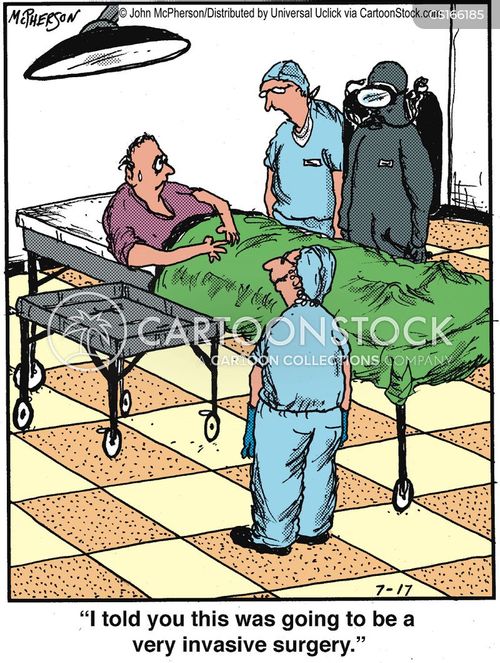
Cartoon – Invasive Surgery


Former House Speaker John Boehner threw cold water Thursday on the prospect of congressional Republicans following through on their pledge to repeal and replace the Affordable Care Act.

As of the November 2016 open enrollment period, Medicaid and the Children’s Health Insurance Program have added a total of 16.4 million beneficiaries nationally since the Affordable Care Act’s (ACA) coverage expansions went into effect. Moreover, billions of dollars in federal funding for health care have flowed into states.
Both a repeal of the ACA’s Medicaid expansion and alternative approaches to funding, such as block grants, are now under discussion. These changes may result in less federal funds for states to spend on Medicaid, and lead to reduced access to care, reduced payments to health care providers, and job losses.
Click on a state in the map below to view a state Medicaid fact sheet, or browse by state alphabetically below the map.

The Trump Administration has promised to deliver to the American people a healthcare plan that is, in President Trump’s own words, “much less expensive and far better” than Obamacare. But While Obamacare is expected to spend over $900 billion from 2018 to 2027, focusing solely on the Obama administration’s signature achievement ignores bigger fiscal challenges; Namely, the Medicare program.
Our insurance program for the elderly and disabled – Medicare – is expected to cost $900 billion in 2024 alone. From 2018 to 2027, this comes to a whopping $8.5 trillion—an order of magnitude larger than the cost of the ACA. Beyond the topline price tag are a number of endangered programs.
Medicare’s hospital insurance trust fund, commonly known as Part A, is expected to run out of money in the next 10 years. This would mean an immediate reduction in benefits when the money runs out—2028, according to the program’s actuaries. Meanwhile, the funds that Medicare uses to pay for physician services (Part B) and prescription drug benefits (Part D) are consistently growing as a share of revenue.
http://www.pewresearch.org/fact-tank/2017/02/23/support-for-2010-health-care-law-reaches-new-high/

With congressional Republicans discussing proposals to replace the Affordable Care Act, public support for the 2010 health care law has reached its highest level on record.
 Currently, 54% approve of the health care law passed seven years ago by Barack Obama and Congress, while 43% disapprove, according to a national Pew Research Center survey conducted Feb. 7-12 among 1,503 adults.
Throughout the law’s history, opinions about the Affordable Care Act have tended to be more negative than positive — or, less frequently, divided. As recently as December, about as many approved (48%) as disapproved (47%) of the law.
The new survey finds that when those who disapprove of the law are asked about what should happen to it now, more want GOP congressional leaders to focus their efforts on modifying the law than on getting rid of it. One-in-four adults want Republican leaders to modify the law, while 17% want them to get rid of it entirely.
As in the past, there are deep partisan divisions over the health care law. Democrats overwhelmingly support the law, with 85% expressing approval. Among independents, about half (53%) approve of the health care law, while 45% disapprove. By contrast, Republicans broadly disapprove of the law (89%); just 10% express approval.
Republicans who disapprove of the health care law are divided on whether GOP congressional leaders should modify the health care law or get rid of it entirely. Nearly equal shares say Republican leaders in Congress should focus their efforts on modifying the law (42%) and focus on getting rid of it entirely (44%).
Among independents, nearly twice as many say Republican leaders should focus on modifying the law rather than scrapping it (29% vs. 15%).

Governors are descending on Washington this weekend as Republicans wrestle with the future of ObamaCare’s expansion of Medicaid.
GOP lawmakers say they are looking to governors for advice on what to do about the program, which is one of the toughest issues Republicans face as they look to repeal and replace the healthcare law.
Many of the lawmakers representing states that accepted the Medicaid expansion are looking to keep it. But they are at odds with conservatives and Republicans from states that rejected the expansion; they are pushing full repeal.
It will be hard for any repeal and replace bill to pass Congress unless Republicans can bridge that divide, and they are looking to the governors, who help run Medicaid as a joint federal-state program, for help.
“We’re in extensive discussions with them and we’ll talk with them more when they get here and then move ahead on both Medicaid and the individual market,” Sen. Lamar Alexander (R-Tenn.) told reporters earlier this month, speaking of the governors meeting.
Republican governors are almost evenly divided on the Medicaid issue, with 17 hailing from states that rejected the expansion, and 16 hailing from states that accepted it.
States that took the expansion broadened eligibility for Medicaid — the government healthcare program for the poor and disabled — up to 138 percent of the federal poverty line. About 11 million people have gained coverage because of the Medicaid expansion.
The healthcare plan that House Republicans outlined last week calls for eventually eliminating the extra federal funding for the Medicaid expansion. If states wanted to continue covering the additional people, they would have to spend more of their own money.
Some Republican governors from states that accepted the expansion have been vocal about wanting to protect it — and none more so than Ohio Gov. John Kasich.
Over the weekend Kasich called the House GOP plan “a very, very bad idea, because we cannot turn our back on the most vulnerable.”

Tom Shicowich “really, really, really liked Coca-Cola” before he began a new nutrition program targeting his Type 2 diabetes and weight. Being on a “very tight budget,” he couldn’t afford the fruit and vegetables he cut up for a living at his part-time grocery store job. Dinner was often a pizza or fast food meal he picked up on the way home.
Six months after getting free healthy groceries every week through the Geisinger hospital near his rural Pennsylvania home, Shicowich has cut his blood sugar level from nearly 11 to close to a normal level of 7. The 6′ 5″ former high school track team competitor has lost 35 pounds but is still nearly 200 pounds from his target weight of 250 pounds.
The Geisinger Health System is on its way to making its own numbers. On March 1, Geisinger plans to expand its five-patient pilot project to 50 more of its sickest and highest-cost diabetes patients. So far, all of those participating in Geisinger’s Fresh Food Pharmacy have lost weight, lowered their body mass indices, decreased their use of medication, lowered their cholesterol and improved their hemoglobin A1C levels, says Andrea Feinberg, an internal medicine doctor who is “clinical program champion.”
Geisinger is what’s known as an accountable care organization, which makes it fully responsible for the insurance and all health costs for their patients. They employ the doctors and own the hospitals and insurance company. The better-known Kaiser Permanente is another example. That means unlike other hospitals, their profits aren’t based upon patients’ visits and treatments.
“It is no coincidence that the health systems and hospitals that are doing it the best have aligned their incentives more closely to the health of their patients,” says Joshua Sharfstein, a pediatrician who is a former secretary of health for Maryland and top Food and Drug Administration official. “It’s very hard to ask a hospital that’s getting paid for every preventable admission to invest in ways that would eliminate those admissions.”
Read more:

