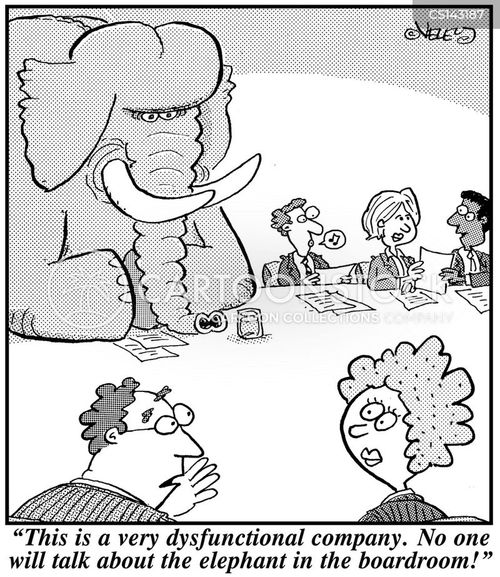
Why Republicans are suddenly talking about repairing not replacing Obamacare

https://www.brookings.edu/blog/fixgov/2017/02/09/the-politics-of-repairing-vs-repealing-obamacare/?utm_campaign=Brookings+Brief&utm_source=hs_email&utm_medium=email&utm_content=42427416

Image result for repairing not replacing Obamacare

In the past six years, Republican congresses voted more than 60 times to repeal Obamacare.  And repeal of Obamacare was the leading issue on the Republican side in both the 2014 and the 2016 congressional elections.  The cliché of the month is that the Republican Party is like the dog who caught the bus and doesn’t know what to do with it.  As one observer remarked, it may be even worse than this: the dog is now driving the bus.

Republicans have had six years to prepare an alternative to Obamacare, and they still don’t know what to do about health care.  Asked about this issue, Sen. Bob Corker (R-Tenn) said that he has “no idea” when Republicans would start drafting an alternative to Obamacare and reported that “There’s not any real discussion taking place right now.”

The Republicans have a lot of tough policy issues to address.  And as a recent Gallup survey shows, they also have a political problem that will make these challenges even harder.

As part of the promised replacement for Obamacare, Republicans led by Speaker Paul Ryan are determined to transform Medicaid into a block grant, strip it of most federal regulations, and send it to the states.  Over a decade, this would result in a huge cut in overall Medicaid spending, forcing the states to reduce benefits and coverage.

But here’s the political problem: the states that Donald Trump carried in 2016 disproportionately benefitted from the expansion of Medicaid that was one of the building-blocks of Obamacare, and they will suffer disproportionately from Medicaid cuts.


Why is it so hard for Republicans to replace Obamacare?

https://www.brookings.edu/opinions/why-is-it-so-hard-for-republicans-to-replace-obamacare/?utm_campaign=Brookings+Brief&utm_source=hs_email&utm_medium=email&utm_content=42427416

Image result for Why is it so hard for Republicans to replace Obamacare?

Republicans in Congress have been attacking Obamacare and vowing to repeal it for nearly seven years, and President Trump made “repeal and replace Obamacare” a central promise of his winning campaign. Now the President and his party are in charge, but they are scrambling to craft a replacement. Why are they having such trouble?

The main problem is that Republicans are a diverse bunch who opposed Obamacare for a variety of reasons. Those most focused on shrinking the size and reach of the federal government thought Washington was already too involved in health care and should pull back, not expand its role or raise taxes to pay for new health spending. Those preoccupied with personal freedom balked at being required to buy health insurance. Others thought the widespread use of insurance to fund health care was already driving health spending too high and objected to further expanding health insurance. Still, others thought broadening health coverage was a desirable goal, but that the subsidies and regulations that Obamacare used to accomplish this goal were poorly designed and transferred too much power from the states to Washington. All of these Republicans could agree on trashing Obamacare, but they did not have a common intellectual basis for designing a replacement and they still don’t.

The 2016 Republican Platform says: “Our goal is to ensure that all Americans have improved access to affordable, high-quality healthcare…” It avoids saying that the federal government has a responsibility to provide that access, which many conservative Republicans do not accept.

If you changed the goal to “all Americans should have affordable health insurance,” you would lose even more conservative Republicans—the ones who see health insurance as an undesirable way to pay for most health expenditures. They believe generous health insurance keeps people from being cost-conscious consumers looking for the most cost-effective provider of knee replacement surgery or cardiac care. If these procedures are covered by insurance, providers don’t have to compete to offer attractive prices (or even make clear to the patient what their prices are). If most of their health care costs are paid by insurance, people tend to use more care, and health care spending goes up. Hence, many Republican health care proposals feature tax subsidies that help people fund health savings accounts (HSAs), so they can shop for health care with their own money. They typically encourage health insurance coverage only for relatively rare “catastrophic” events, although they allow people to use their HSAs to buy more generous health insurance if they want it.

Successful Supervisor Part 13 – Emotional Intelligence

Successful Supervisor Part 13 – Emotional Intelligence

Image result for emotional intelligence

I believe the skill of Emotional Intelligence is the single most significant discriminator between highly successful supervisors and those who struggle.

While Emotional Intelligence (called EI for short) is of critical importance at all levels of management, it is essential for supervisors who have to juggle the needs of first line employees simultaneously with those of upper level managers.

First we will explore what EI is and why it is critical, and then I will describe the process of how any supervisor can gain higher EI.

While the first recording of the phrase Emotional Intelligence was by Michael Beldoch in 1964, the concept was popularized by Daniel Goleman in his book Emotional Intelligence published in 1995.

Goleman hypothesized four quadrants of Emotional Intelligence as follows:

1. Self Awareness – Ability to recognize your own emotions

2. Self Management – Ability to manage your emotions into helpful behavior

3. Social Awareness – Ability to understand emotions in others

4. Relationship Management – Ability to manage interactions successfully

The Number 1 Way You Erode Trust Without Even Knowing It

The Number 1 Way You Erode Trust Without Even Knowing It

Trust Dissolving

Betrayal. Cheating. Embezzlement. Dishonesty. These kinds of extreme behaviors are what most people think about when it comes to breaking trust. There’s no doubt those will do the trick, but for the vast majority of people, these types of incidents will be few and far between, if they even happen at all.

No, the ways you lose trust with other people is more like the way soil erodes a hillside. Little by little, slow and steady over a long period of time, the soil breaks down and falls away. Then seemingly out of nowhere, we’re surprised with a major landslide when the ground finally gives way.

That’s the way it works with trust. We erode it over a period of time through careless and thoughtless behaviors. Those behaviors seem innocuous to us, but others may perceive them as being trust busters. Chief among those irresponsible behaviors is being late. Arguably, it’s the number one way we erode trust without even knowing it.

Why does being habitually late erode trust?

What Made Obamacare Succeed In Some States? Hint: It’s Not Politics

http://khn.org/news/what-made-obamacare-succeed-in-some-states-hint-its-not-politics/

People standing in line at the Panorama Mall to sign-up for Covered California at an enrollment event in 2014. (Irfan Khan/Los Angeles Times via Getty Images)

Ask anyone about their health care and you are likely to hear about ailments, doctors, maybe costs and insurance hassles. Most people don’t go straight from “my health” to a political debate, and yet that is what our country has been embroiled in for almost a decade.

A study out Thursday tries to set aside the politics to examine how the insurance markets function and what makes or breaks them in five specific states.

Researchers from The Brookings Institution were exploring a basic idea: If the goal is to replace or repair the Affordable Care Act, then it would be good to know what worked and what failed.

“The political process at the moment is not generating a conversation about how do we create a better replacement for the Affordable Care Act,” said Alice Rivlin, senior fellow at The Brookings Institution, who spearheaded the project. “It’s a really hard problem and people with different points of view about it have got to sit down together and say, ‘How do we make it work?’”

The researchers focused on California, Florida, Michigan, North Carolina and Texas, interviewing state regulators, health providers, insurers, consumer organizations, brokers and others to understand why insurance companies chose to enter or leave markets, how state regulations affected decision making and how insurers built provider networks.

“Both parties miss what makes insurance exchanges successful,” said Micah Weinberg, president of Bay Area Council Economic Institute who led the California research team. “And it doesn’t have anything to do with red and blue states and it doesn’t have anything to do with total government control or free markets.”

Despite the political diversity of the five states, some common lessons emerged. Among them: