Promises Made To Protect Preexisting Conditions Prove Hollow

http://www.healthleadersmedia.com/leadership/promises-made-protect-preexisting-conditions-prove-hollow?spMailingID=11326677&spUserID=MTY3ODg4NTg1MzQ4S0&spJobID=1182001298&spReportId=MTE4MjAwMTI5OAS2

Image result for pre existing conditions

Built into the Senate ACA replacement bill are loopholes for states to bypass those protections and erode coverage for preexisting conditions. That could lead to perverse situations in which insurers are required to cover chronically ill people but not the diseases they suffer from.

Senate Republicans praised the Affordable Care Act replacement bill they presented Thursday as preserving coverage for people with cancer, mental illness and other chronic illness. But the legislation may do no such thing, according to health law experts who have read it closely.

Built into the bill are loopholes for states to bypass those protections and erode coverage for preexisting conditions. That could lead to perverse situations in which insurers are required to cover chronically ill people but not the diseases they suffer from.

Depending on what states do, plans sold to individuals might exclude coverage for prescription drugs, mental health, addiction and other expensive benefits, lawyers said. Maternity coverage might also be dropped.

Somebody with cancer might be able to buy insurance but find it doesn’t cover expensive chemotherapy. A plan might pay for opioids to control pain but not recovery if a patient became addicted. People planning families might find it hard to get childbirth coverage.

“The protection your insurance provides could depend a lot on where you live,” said Sabrina Corlette, a research professor at Georgetown University’s Health Policy Institute. In some states, “over time, [patients with chronic illness] might find it increasingly difficult to find insurance companies that will offer plans that cover their needs.”

The Senate provisions aren’t expected to affect job-based health plans or Medicare for seniors. It would mainly affect the kind of insurance sold to individuals through the Affordable Care Act’s online exchanges, which cover about 10 million people.

Indiana, Pence’s Home State, Seeks Federal OK To Keep Medicaid Expansion

http://khn.org/news/indiana-pences-home-state-seeks-federal-ok-to-keep-medicaid-expansion/

Statehouse of Indiana in Indianapolis (iStock/Getty Images Plus)

As Congress weighs repeal of the Affordable Care Act, the home state of Vice President Mike Pence Tuesday sought to keep its conservative-style Medicaid expansion under the federal health law.

Indiana applied to the Trump administration to extend a regulatory waiver and funding until Jan. 31, 2021, for its innovative package of incentives and penalties that are intended to encourage low-income Hoosiers on Medicaid to adopt healthy behaviors. Beneficiaries pay premiums, get health savings accounts and can lose their benefits if they miss payments.

Though Pence now supports the health law’s repeal, the Healthy Indiana Plan that he established in 2015 as the state’s governor has brought Medicaid coverage to more than 350,000 people. The architect of the plan was health care consultant Seema Verma, who has been nominated to head the Centers for Medicare & Medicaid Services.

Without Trump administration approval, federal money for Indiana’s expansion will run out Jan. 31, 2018. Indiana officials said the Medicaid expansion would continue even if Washington follows through on a Republican proposal to distribute federal Medicaid funds through a block grant program that would give states more flexibility in setting benefits and eligibility levels.

State officials refused to say whether the expansion would continue if Congress repealed Obamacare and eliminated funds for Medicaid expansions. If that happened, it’s unlikely states would have the money to make up for the lost federal aid.

Indiana’s effort to continue its Medicaid expansion demonstrates how states that expanded Medicaid under the Affordable Care Act — even Republican-controlled ones — are counting on additional federal dollars to pay for those expansions. It also reflects deadline pressure: They can’t wait for Congress to finish its debate over the future of the health law because they need to set budgets and programs now for next year.

According to Indiana’s request, continuing the Medicaid expansion will cost Indiana $1.5 billion but bring $8.6 billion in federal funding from 2018 to 2020.

“Indiana has built a program that is delivering real results in a responsible, efficient, and effective way,” Gov. Eric Holcomb, a Republican, said in a statement. “I look forward to maintaining the flexibility to grow this remarkably successful tool and to preserve our ability to respond to the unique needs of Hoosiers.”

Several other states including Kentucky and Ohio are considering adopting features of Indiana’s Medicaid plan.


Why Drug Costs Will Keep Rising in 2017

http://fortune.com/2016/12/19/healthcare-drug-costs-2017-predictions/

Exchange Family Pharmacy

At the start of 2016, we made 10 healthcare predictions for the year ahead. Overall, we were 50% right, which is either a failing grade in high school or a great average in baseball.

In the win column, we predicted that the Federal Trade Commission (FTC) would block a major hospital merger, and they did just that with Advocate and NorthShore health systems in Chicago. We predicted that the technology-enabled insurance startup craze would be a bust, and Oscar promptly lost a ton of money. Finally, we were correct that employers would become more engaged in healthcare cost management with many adding “frozen carrots,” or financial incentives to drive usage of services that lower healthcare costs.

Our biggest bust was on the PCSK9’s—we predicted these new cholesterol drugs would be blockbusters. Thus far, they have been a total flop. We were also wrong when we predicted wearables would become medically useful treatments. And, to our surprise, there were more setbacks than breakthroughs in continuous biosensors, devices such as glucose monitors for diabetics.

We’re hoping to bat above .500 this coming year. Here are our 10 healthcare industry predictions for 2017:

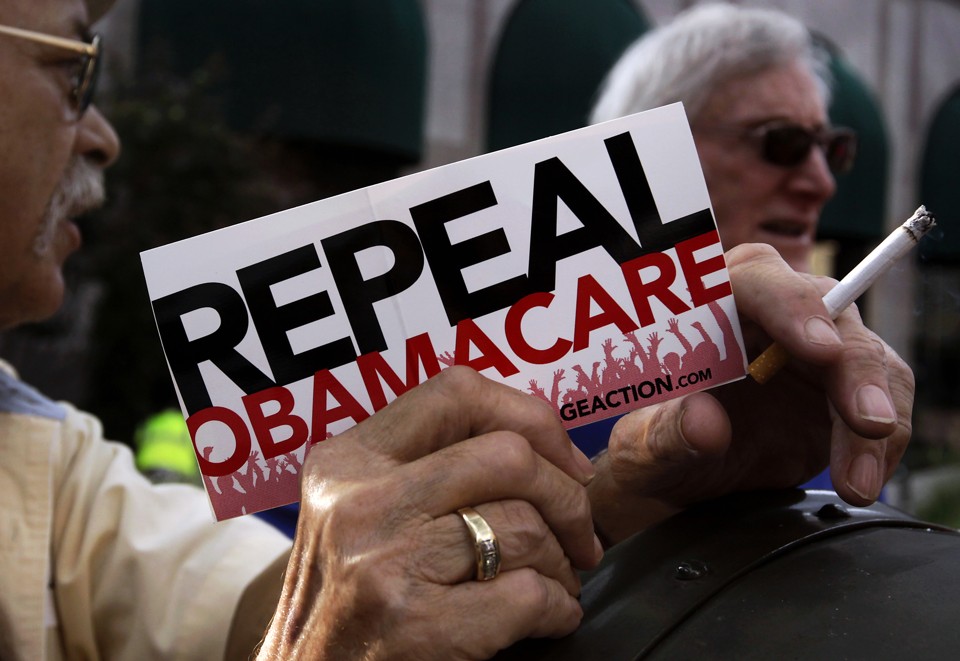
Will Obamacare be repealed? If so, what then?

Will Obamacare be repealed? If so, what then?

Image result for aca repeal

The election of Donald J. Trump gives the Republicans in Congress a chance to act ontheir often-stated desire to get rid of Obamacare, a wish that Mr. Trump mostly says he shares. Aaron E. Carroll and Austin Frakt, our health policy columnists, discuss: Then what?

Cleveland Clinic CEO: Affordable Care Act is here to stay

http://www.fiercehealthcare.com/finance/cleveland-clinic-ceo-aca-appears-mostly-safe?utm_medium=nl&utm_source=internal&mrkid=959610&mkt_tok=eyJpIjoiTm1VMU5HUmlOakEzTWpVMyIsInQiOiI5XC9mUGloUlREa3Rtam9UaXdnaG0zeXZlWitYYVRuR3R3eFAzMDc1WWFURHlZMVBcL005SG42T2IwY2FhOFY0MFJDYzFHSGpDTmRQVkVqWXE3TTRORFEyNlpBdDFUR2k2N3RaNXNBdkh0NXJnPSJ9

capitol building above treescapitol building above trees

The Republican National Convention pulled up stakes after it concluded yesterday, but a visitor to the convention floor says that the Affordable Care Act is here to stay.

In an interview with CBS This Morning, Cleveland Clinic Chief Executive Officer Toby Cosgrove, M.D., said that it was unlikely that the ACA would be uprooted, even if Republican Donald J. Drumpf is elected President and there are GOP majorities in both houses of Congress.

“I don’t think you will see something now six years into the process totally dismantled,” Cosgrove said, adding that the healthcare reform law has led to insurance coverage for 20 million more Americans. Cosgrove suggested that it was more likely that the ACA would undergo continuing improvements such as “more wellness activities.”