Approximated Employment Effects of the American Health Care Act

https://www.americanprogress.org/issues/economy/news/2017/03/20/428761/approximated-employment-effects-american-health-care-act/

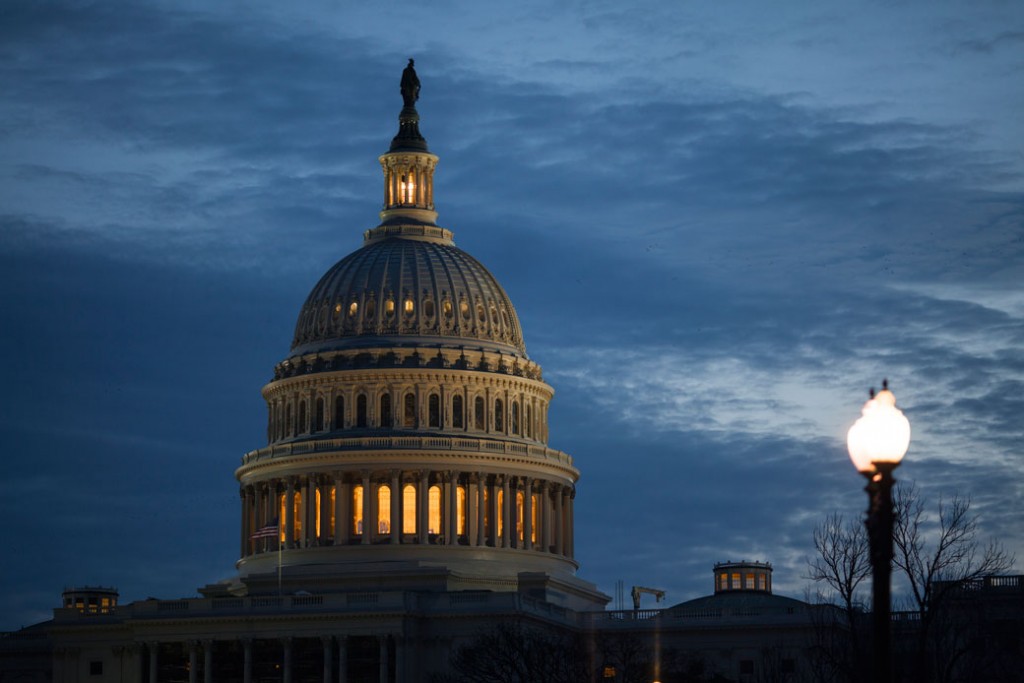
The lamp remains illuminated in the top of the Capitol Dome, February 2017.

Undoing the Affordable Care Act, or ACA, will likely mean less government spending on Medicaid and subsidies for private insurance and thus less spending on health care in general. At the same time, the new proposed law, the American Health Care Act, or AHCA, would also cut taxes for higher-income Americans. All three of these factors will likely impact the economy and, thus, employment. Less spending on health care due to cuts to Medicaid and health insurance subsidies will lower employment in the future, while tax cuts could result in some positive effects on jobs. As a result, there will be 1.8 million fewer jobs in 2022 than otherwise would have been, in our estimates.

GOP health overhaul puts pressure on state governments

http://abcnews.go.com/Health/wireStory/gop-health-overhaul-puts-pressure-state-governments-46136392

Image result for aca repeal and replace

The Republican health care plan means less money for states and gives them a tough choice: Find a pot of cash to make up the difference or let coverage lapse for millions of lower-income Americans.

Governors and state lawmakers analyzing the Republican plan to replace former President Barack Obama’s Affordable Care Act fear a return to the past, when those without health coverage used emergency rooms for their medical needs. That uncompensated care was written off by hospitals or billed to the state.

The ax would fall especially hard on Medicaid, the state-federal program that provides health care to the poor and lower-income workers.

In Washington, for example, state officials say they would have to come up with $1.5 billion a year starting in 2020 to keep coverage in place for about 600,000 residents who gained coverage through the Medicaid expansion that was a key part of Obama’s health care law.

“It would actually leave our nation worse off than before the ACA was implemented,” Gov. Jay Inslee, a Democrat, said in a written statement.

Most states don’t yet have firm cost estimates on the consequences of the proposal by Republicans in the U.S. House. A Congressional Budget Office analysis released Monday said the GOP plan would lead to 24 million Americans losing health care coverage over the next decade but did not provide a state-by-state breakdown.

In addition to Medicaid, states are concerned about the Republican plan to replace federal premium subsidies for people who buy private insurance with tax credits that would be adjusted based on age, with older people paying more. If the cost of health insurance is too great under the GOP plan, people might drop coverage and rely instead on emergency rooms.

Connecticut estimates that 34,000 people who buy policies in the insurance marketplace would drop their coverage under the GOP plan. Overall, it would add about $1 billion in annual costs for the state, equivalent to 5 percent of its budget.

It is the GOP’s proposed changes to Medicaid, which has become the largest source of federal revenue for states, that have drawn the most reaction since the CBO report was released.

Under the Affordable Care Act, 31 states and the District of Columbia expanded their Medicaid programs, providing coverage to about 11 million Americans. That included a number of Republican-led states, including Indiana under Vice President Mike Pence when he was governor there.

Among those benefiting from Indiana’s expansion is Michael Boone, a 55-year-old cook from Gary.

Boone said it was the first time he has had health coverage as an adult, and it allowed him to get treatment for medical problems he didn’t know he had. They included high cholesterol, high blood pressure and a hernia.

His coverage could be a casualty if the Medicaid cuts take effect and Indiana cannot find a way to pay for a larger share.

“I really don’t have a full grasp of the situation yet,” Boone said. “But right now, I’m scared to death.”


The Lessons of Obamacare

http://www.vox.com/policy-and-politics/2017/3/15/14908524/obamacare-lessons-ahca-gop

Image result for lessons to learn

On January 6, President Barack Obama sat down with us for one of his final interviewsbefore leaving the White House. The subject was the Affordable Care Act — the legislation that has come to carry his name and define his legacy.

It was strange circumstances Obama found himself in. He was leaving office an unusually popular president, with approval numbers nearing 60 percent. But his most important domestic achievement was imperiled. Republicans had spent years slamming Obamacare for high premiums, high deductibles, high copays, and daunting complexity. Donald Trump had won the White House in part by promising to repeal the ACA and replace it with “something terrific.” Both houses of Congress would be controlled by Republicans who appeared set to carry out his plan.

But over the course of the next 70 minutes, it became clear that Obama didn’t think they would get the job done. If he sounded unexpectedly confident, it’s because he believed the wicked problems of health reform — problems that bedeviled him and his administration for eight years — would turn on the GOP with equal force.

“Now is the time when Republicans have to go ahead and show their cards,” he said. “If in fact they have a program that would genuinely work better, and they want to call it whatever they want — they can call it Trumpcare or McConnellcare or Ryancare — if it actually works, I will be the first one to say, ‘Great; you should have told me that in 2009. I asked.’”

Two months later, the release of House Republicans’ replacement plan — the American Health Care Act — has made Obama look prescient. The bill quickly placed Republicans under siege from both the left, which has found more to like in Obamacare as its survival has become threatened, and the right, which attacked the replacement as unrealistic and ill-considered, and, most damning of all, as “Obamacare 2.0.”

The biggest problem Republicans face, though, isn’t from activists in either party. It’s from the tens of millions of Americans who now depend on Obamacare, and their friends, families, co-workers, and neighbors. They have been promised a replacement that costs less and covers more, and the GOP’s plan does neither.

According to the Congressional Budget Office, the AHCA would throw 24 million people off health insurance over the next 10 years and leave the remnant in plans with higher deductibles, higher copays, and less coverage. The law would let insurers charge older Americans 500 percent more than younger Americans, and the sparer subsidies wouldn’t adjust to the local cost of insurance coverage, and thus would be insufficient in many areas. This is not the “something terrific” Trump promised, nor the kind of health care that polling shows Americans want.

We are reporters who have covered health care, and the legislative ideas that became the Affordable Care Act, since before Obama’s election. In the course of that reporting, including recent conversations with Obama and dozens of elected officials and staffers responsible for the Affordable Care Act’s design, passage, and implementation, we have unearthed several lessons from the law, which current and future health reformers should heed.

At the moment, Republicans are ignoring most of them.


The Wrong Way to Lower Health-Insurance Premiums

https://www.bloomberg.com/view/articles/2017-03-17/the-wrong-way-to-lower-health-insurance-premiums

Image result for high deductible health plan

For proponents of the American Health Care Act, perhaps the most encouraging nugget in the Congressional Budget Office’s otherwise critical analysis is that insurance premiums could fall by 10 percent on average by 2026. Even this prediction is more mirage than reality, however, in part because of an obscure concept known as “actuarial value.”

As many opponents of the Republicans’ Obamacare replacement legislation have already noted, for many people, the decline in premiums would be smaller than the cutback in their subsidies, so they would still end up paying more. And in any case, the predicted fall in premiums partly reflects a troubling rise in the share of older Americans without insurance, a change that would shift the enrollment pool to younger, less expensive beneficiaries.

Another factor, however, has received less attention, though it is hidden in plain sight in the CBO analysis: The premium reduction would occur in no small part because the insurance products wouldn’t be as good. In other words, their actuarial value would fall.

An insurance policy’s actuarial value is the share of total health-care costs paid by the plan rather than the policy holder, through deductibles and copayments. A plan with an actuarial value of 80 percent will pick up, on average, 80 percent of the cost of care. Plans with higher actuarial values have higher premiums, not surprisingly, because they provide deeper insurance. And if a plan’s actuarial value is very low, it may not really qualify as insurance at all.

The Affordable Care Act sets minimum actuarial values for each of the four tiers of plans that can be sold on the exchanges; the lowest, for bronze plans, is about 60 percent. The new legislation would repeal these minimums.

 In its analysis of the Republican proposal, the CBO found that insurers would offer lower-value policies “because they could offer a plan priced closer to the amount of the premium tax credit so that a younger person would have low out-of-pocket costs for premiums and would be more likely to enroll.” Similarly, insurers would hesitate “to offer plans with high actuarial values out of a fear of attracting a greater proportion of less healthy enrollees to those plans.” Since plans would still be required to cover 10 categories of essential health benefits, and since out-of-pocket limits would remain in place, plans would not dip too far below 60 percent, in the CBO’s estimation. But more plans would drop toward that level.

To see how big a deal this is, it is instructive to study the table toward the end of the CBO’s analysis, which calculates premiums under current law and under the AHCA. A 40-year-old single person could see his or her premium fall 7 percent — to $6,050, from $6,500. That’s only slightly less than the average 10 percent premium decline. Yet the actuarial value of the person’s plan would decline to 65 percent, from 70 percent or 87 percent, depending on his or her income.

To get some sense of what these lower actuarial values mean in terms of higher deductibles, we can look to the most recent Centers for Medicare and Medicaid Services calculator. It suggests that a plan with a $1,500 deductible, an 80 percent coinsurance rate (the plan pays 80 percent of costs above the deductible and below the maximum out-of-pocket threshold), and a $7,200 maximum out-of-pocket limit would have an actuarial value of 73 percent. The same plan with a $5,000 deductible would have an actuarial value of 61 percent. In other words, a decline in actuarial value of about 12 percentage points (not far from the average decline in the CBO examples) would raise the policy’s deductible by $3,500.

It’s no wonder that the premium for such a plan would be lower — in the same way that it’s no wonder a 12-ounce can of soda costs less than a 35-ounce bottle. It’s no great accomplishment to lower premiums by increasing other consumer costs.

As the CBO concluded, under the Republicans’ system, “individuals’ cost-sharing payments, including deductibles, in the nongroup market would tend to be higher than those anticipated under current law.” Indeed, according to an analysis from the Center for American Progress, average total costs to consumers would be significantly higher.

If you think that competition can fix this, note another problem that the CBO points out: Under Obamacare, the actuarial value requirements allow for easy comparison shopping; plan A can be directly compared with plan B. Under the Republican system, it would be harder to shop for a policy based on price.

Health-care reform is indeed complicated. Esoteric concepts like actuarial value have big effects on every family’s bottom line.


The G.O.P. Health Care Plan’s Fatal Flaw

Senator Robert Byrd helped save the Affordable Care Act once already. In December 2009, the wizened West Virginia Democrat overcame fragile health to cast a crucial vote for the act’s passage. It was one of the last votes in the career of the Senate’s longest-serving member: Just weeks after President Obama signed the Affordable Care Act into law, Byrd died at age 92.

Now, nearly seven years after his death, Senator Byrd may ensure that the Affordable Care Act, also known as Obamacare, lives another day. One of Byrd’s many legislative accomplishments over a half-century in the Senate was the eponymous “Byrd rule,” which governs the process of budget reconciliation. Republicans on Capitol Hill are trying to use the reconciliation process to repeal and replace the Affordable Care Act. The Byrd rule stands in their way.

Reconciliation is a fast-track process that allows budget-related legislation to pass the Senate without the prospect of a filibuster. The Byrd rule prevents reconciliation from being used to pass any measure for which the budgetary effects — “changes in outlays or revenues” — are “merely incidental to the non-budgetary components.” Republicans know they lack the 60 votes to break a filibuster in the Senate, so they designed their repeal-and-replace bill to satisfy the Byrd rule’s requirements. Yet there is a surprising flaw in their design — one that has so far drawn little notice, but that Senate Democrats will surely seize on.

The flaw is found in a provision of the bill with the innocuous title “Encouraging Continuous Health Insurance Coverage.” Under that provision, individuals who go without coverage for more than two months must pay a penalty the next time they buy health insurance. The penalty is equal to 30 percent of their new plan’s premium. Significantly, individuals must pay this 30 percent penalty to their new insurer, not to the federal government.

And therein lies the problem. If the penalty were paid to the federal government, as with the individual mandate penalty under the Affordable Care Act, the provision would comply with the Byrd rule because it would have an obvious positive budgetary effect: Penalty payments would increase federal revenues. But the drafters of the repeal-and-replace bill chose not to adopt that approach, lest the penalty look too much like the Obamacare mandate. Instead, they are hoping that the threat of a future penalty averts an insurance market “death spiral,” in which healthy individuals run for the exits and the sick are left behind.


GOP’s 3-Bucket Strategy To Repeal And Replace Health Law Is Springing Leaks

GOP’s 3-Bucket Strategy To Repeal And Replace Health Law Is Springing Leaks

Republicans in Washington working to overhaul the Affordable Care Act say their strategy consists of “three buckets.” But it appears that all three may be leaking.

The plan to dismantle and replace Obamacare emerged after the Republican congressional retreat in late January. The first bucket is a fast-track budget bill that needs only a simple majority to pass the Senate. Because of congressional rules, however, it can only address parts of the health law that have immediate impact on federal spending.

The second consists of changes to regulations and other policies put in place by the Obama administration that could theoretically be undone by new Health and Human Services Secretary Tom Price. And the third is separate legislation that would do things Republicans have been advocating for many years, such as imposing caps on medical malpractice damages and selling health insurance across state lines.

All three are proving problematic at this point — among Republicans.


The Hill’s Whip List: Where Republicans stand on ObamaCare repeal plan

http://thehill.com/homenews/house/322903-the-hills-whip-list-where-republicans-stand-on-obamacare-repeal-plan

Image result for The Hill's Whip List: Where Republicans stand on ObamaCare repeal plan

Republican leaders are aiming to move quickly on legislation to repeal and replace ObamaCare, with a vote by the full House slated for Thursday.

But the plan faces a difficult path. Conservatives were quick to criticize the legislation, saying it falls short of full repeal and would create new entitlements. Centrist Republicans and many from districts won by Hillary Clinton in 2016 have also balked at measures rolling back the Medicaid expansion or defunding Planned Parenthood.

A number of conservative lawmakers in the Republican Study Committee, though, backed the bill after a Friday meeting with President Trump. Trump and GOP leaders are working on changes to the legislation that would change how it handles tax credits and create a work requirement for Medicaid.

Members of the conservative House Freedom Caucus, however, say those changes may not be enough.

With a vote in days, the margin for error is slim. Assuming all Democrats vote against the legislation, GOP leaders cannot afford more than 21 defections in the House and two in the Senate.

Here’s a list of how Republican lawmakers stand on the ObamaCare repeal and replace legislation.


Do You Speak Repeal And Replace? Click Thought Bubbles For Translations

http://khn.org/news/do-you-speak-repeal-and-replace/

Image result for aca repeal and replace

President Donald Trump and many congressional Republicans campaigned on repealing the Affordable Care Act and replacing it with their own plan to overhaul the nation’s health care system. As the GOP develops its offering, its representatives are tossing around wonky health policy terms to describe their core strategies.

Below you’ll find some brief definitions. Click on the word bubbles in the photo above for KHN’s fuller translation of what each phrase means — for U.S. health care and for ongoing efforts to replace the ACA.

MEDICAID BLOCK GRANTS AND PER-CAPITA CAPS: The federal government gives states a set amount of money to pay for coverage for Medicaid recipients. This would be a shift from the current Medicaid program, where the federal government matches state Medicaid spending on a percentage basis. Learn more.

HEALTH SAVINGS ACCOUNTS: Also known as HSAs, these allow consumers to put money away on a tax-free basis as long as they use it for medical expenses. Learn more.

BUDGET RECONCILIATION: Legislative process that allows measures to pass with a simple majority in Congress. Budget reconciliation bills can’t be filibustered but must focus on provisions that have a budgetary impact. Learn more.

ESSENTIAL HEALTH BENEFITS: ACA-mandated categories of benefits that health plans must cover. They include emergency services, hospitalization and maternity care. Learn more.

INDIVIDUAL MARKET: Where people who do not have health coverage through the government or their employer purchase a plan directly from an insurer. It is sometimes called the non-group market. Learn more.

TAX CREDITS/SUBSIDIES: Financial assistance to help consumers purchase health insurance. Learn more.

HIGH-RISK POOLS: Insurance groups that cover individuals with high health insurance costs, such as people who have a past serious illness or a chronic condition. Learn more.

Visit Repeal & Replace Watch for more KHN coverage of the health law debate.


In This Next Phase Of Health Reform, We Cannot Overlook Long Term Care

http://healthaffairs.org/blog/2017/03/16/in-this-next-phase-of-health-reform-we-cannot-overlook-long-term-care/

It is becoming apparent that President Trump and the 115th Congress cannot start over with health care reform. Whether you love, begrudgingly support, or fervently hate the Affordable Care Act (ACA), a clean slate is not possible. First, ACA implementation is well underway and has benefited many patients and providers alike. Second, it is unlikely that Republicans in Congress can fully repeal the ACA without a 60 vote, filibuster proof super majority in the Senate. Starting over entirely with health reform is just not feasible.

Trying to address every problem facing the health care system at once is a tall—if not impossible—order. History has taught us that U.S. health reform is an incremental process. With the focus of Congress once again turning to health reform, we have an opportunity to fix the problems with the ACA, and find solutions to health care challenges that the ACA failed to address.

A Growing Need

Long-term care for America’s growing elderly population is a critically important issue for Congress to address in health reform proposals currently taking shape. While the ACA’s insurance expansion focused on providing coverage for the uninsured, the law’s progress on long-term care has been minimal. The ACA tried to address long-term care (LTC) by creating a voluntary system of LTC insurance, but the ill-fated CLASS Act was ultimately determined to be financially unviable and abandoned.

Although policy solutions have been elusive, the need for long-term care is constantly growing. According to current estimates, over two-thirds of elderly Americans will need LTC assistance at some point in their lives. Between 2014 and 2040, the portion of Americans over age 65 is expected to increase from 14.5 to 21.7 percent. At upwards of $60,000 annually, long-term care costs can quickly exhaust personal savings.

As policymakers throughout our history have debated health reform, these efforts have almost entirely centered on questions of medical coverage. They ask which benefits to cover, how much the coverage should cost, and how we can ensure people are not locked out of coverage because of their health status. We must take the same approach to LTC, examining the availability and affordability of services. LTC services include nursing home care and in-home care, as well as what is often referred to as “long-term services and supports” (LTSS). LTSS include assistance with daily activities, such as eating, bathing, dressing, doing laundry, paying bills, and taking medications.

Current Republican health reform proposals appear to do little to push the ball forward on long-term care. As Congress considers proposals to reduce federal spending on Medicaid, they should carefully consider the role of Medicaid in financing LTC.


How will the House GOP health care bill affect individual market premiums?

https://www.brookings.edu/blog/up-front/2017/03/16/how-will-the-house-gop-health-care-bill-affect-individual-market-premiums/?utm_campaign=Economic%20Studies&utm_source=hs_email&utm_medium=email&utm_content=46659383

ES_20170316_FiedlerFigure1

Earlier this week, the Congressional Budget Office (CBO) published a comprehensive analysis of the American Health Care Act, which is currently being considered by the House of Representatives. While many reactions to the CBO analysis focused on how the AHCA would affect insurance coverage, the bill’s effects on individual market insurance premiums have also received considerable attention.

In its report, CBO estimated that average individual market premiums under the AHCA would be 10 percent lower in 2026 than they would be under current law (before considering subsidies). However, as some observers have noted, this estimated change incorporates changes in the generosity of the plans being offered on the individual market, as well as a shift in the composition of individual market enrollment toward younger individuals, who pay lower premiums. The CBO estimate does not, therefore, answer the question of greatest interest, which is how CBO expects the AHCA to affect average premiums for a given generosity of coverage and a fixed population of individual market enrollees.

However, other information provided in CBO’s analysis can be used to answer this question. Using that information, we estimate that premiums would be around 13 percent higher under the AHCA than they are under current law, holding plan generosity and the individual market age distribution fixed at their current law levels. As illustrated in Figure 1, around three-fifths of the difference between this estimate and the CBO estimate of a 10 percent premium decline reflects the adjustment to hold the individual market age distribution constant. The remainder reflects the adjustment to hold plan generosity constant.

It is important to note that all of the premium changes reported in this analysis reflect premiums before accounting for subsidies available to people purchasing individual market coverage. They therefore do not reflect the effects of the AHCA’s changes to those subsidies. The AHCA would cut spending on such subsidies by around half on average, with lower-income people, older people, and people in high-cost areas seeing particularly large reductions. Thus, the increase in average premiums under the AHCA would be much larger if subsidies were incorporated into the analysis.

The remainder of this analysis presents these results in greater detail and briefly discusses the reasons that the AHCA increases individual market premiums when measured on an apples-to-apples basis.