

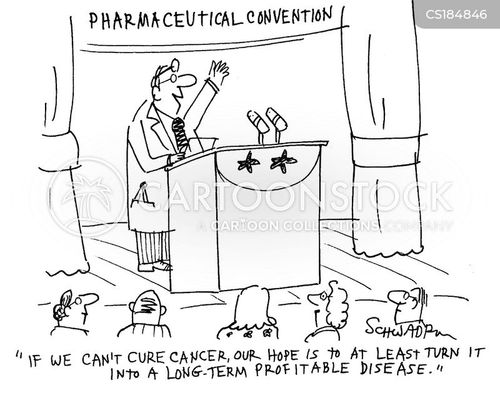
Cartoon – If We Can’t Cure Cancer…
https://soundcloud.com/healthcaretriage/hctpod_renbarger

This month on the HCT Podcast, we’re talking to Dr. Jamie Renbarger, a pediatric oncologist and researcher. Dr. Renbarger tells us about what cancer is, the huge variety of cancer types, and some of the astonishing advances in treatment.
This episode of the Healthcare Triage podcast is presented in association with the Indiana University School of Medicine, whose mission is to advance health in the state of Indiana and beyond by promoting innovation and excellence in education, research, and patient care.
As always, you can find the podcast in all the usual places, like iTunes and Soundcloud.


http://www.healthcaredive.com/news/life-expectancy-in-the-us-has-decreased-thats-troubling/431984/

Recent data show that a human’s lifespan is “fixed and subject to natural constraints” and that the limit of the “world’s oldest person” has not increased since the 1990s, when French woman Jeanne Calment died at age 122.
Still, the CDC’s findings paint a poor picture of the health of the U.S. population, as it shows an increase in “virtually every cause of death,” David Weir from the Institute for Social Research at the University of Michigan was quoted in The Washington Post. In fact, the rate of deaths related to eight of the 10 leading causes of death increased from 2014 to 2015. Only one decreased. The rate for heart disease increased 0.9% while the rate for cancer decreased by 1.7% from 2014 to 2015.
For American males, life expectancy changed from 76.5 years in 2014 to 76.3 years in 2015 and American females saw a decrease from 81.3 years in 2014 to 81.2 years in 2015. Earlier this year, CDC released data that showed more Americans died in 2014 from heart disease than any other cause with 74% of American deaths attributed to the same 10 common causes of death.
Worldwide, a recent study found in 2010, nearly a third of adults had hypertension.
“We’re seeing the ramifications of the increase in obesity,” said Tom Frieden, director of the Centers for Disease Control and Prevention, was quoted in The Washington Post.


Leading American and British cancer researchers are urging that all men with advanced prostate cancer strongly consider being tested for inherited gene mutations — both to help steer their treatment and to alert family members who themselves might be at increased risk for a range of cancers.
This new recommendation, which represents a major change in approach, was prompted by a study published Wednesday in the New England Journal of Medicine. The researchers found that almost 12 percent of men with advanced cancer had defects in genes that are designed to fix damage to DNA, compared to 4.6 percent of patients with disease that hadn’t spread.


 HENRY KOTULA