Five Worrisome Trends in Healthcare

https://www.medpagetoday.com/publichealthpolicy/healthpolicy/72001?xid=fb_o_

healthcare; insurance; drugs; drug companies; Government-run Insurance Program Sure to Backfire | iHaveNet.com

A reckoning is coming, outgoing BlueCross executive says.

A reckoning is coming to American healthcare, said Chester Burrell, outgoing CEO of the CareFirst BlueCross BlueShield health plan, here at the annual meeting of the National Hispanic Medical Association.

Burrell, speaking on Friday, told the audience there are five things physicians should worry about, “because they worry me”:

1. The effects of the recently passed tax bill. “If the full effect of this tax cut is experienced, then the federal debt will go above 100% of GDP [gross domestic product] and will become the highest it’s been since World War II,” said Burrell. That may be OK while the economy is strong, “but we’ve got a huge problem if it ever turns and goes back into recession mode,” he said. “This will stimulate higher interest rates, and higher interest rates will crowd out funding in the federal government for initiatives that are needed,” including those in healthcare.

Burrell noted that 74 million people are currently covered by Medicaid, 60 million by Medicare, and 10 million by the Children’s Health Insurance Program (CHIP), while another 10 million people are getting federally subsidized health insurance through the Affordable Care Act’s (ACA’s) insurance exchanges. “What happens when interest’s demand on federal revenue starts to crowd out future investment in these government programs that provide healthcare for tens of millions of Americans?”

2. The increasing obesity problem. “Thirty percent of the U.S. population is obese; 70% of the total population are either obese or overweight,” said Burrell. “There is an epidemic of diabetes, heart disease, and coronary artery disease coming from those demographics, and Baby Boomers will see these things in full flower in the next 10 years as they move fully into Medicare.”

3. The “congealing” of the U.S. healthcare system. This is occurring in two ways, Burrell said. First, “you’ll see large integrated delivery systems [being] built around academic medical centers — very good quality care [but] 50%-100% more expensive than the community average.”

To see how this affects patients, take a family of four — a 40-year-old dad, 33-year-old mom, and two teenage kids — who are buying a health insurance policy from CareFirst via the ACA exchange, with no subsidy. “The cost for their premium and deductibles, copays, and coinsurance [would be] $33,000,” he said. But if all of the care were provided by academic medical centers? “$60,000,” he said. “What these big systems are doing is consolidating community hospitals and independent physician groups, and creating oligopolies.”

Another way the system is “congealing” is the emergence of specialty practices that are backed by private equity companies, said Burrell. “The largest urology group in our area was bought by a private equity firm. How do they make money? They increase fees. There is not an issue on quality but there is a profound issue on costs.”

4. The undermining of the private healthcare market. “Just recently, we have gotten rid of the individual mandate, and the [cost-sharing reduction] subsidies that were [expected to be] in the omnibus bill … were taken out of the bill,” he said. And state governments are now developing alternatives to the ACA such as short-term duration insurance policies — originally designed to last only 3 months but now being pushed up to a year, with the possibility of renewal — that don’t have to adhere to ACA coverage requirements, said Burrell.

5. The lackluster performance of new payment models. “Despite the innovation fostering under [Center for Medicare & Medicaid Innovation] programs — the whole idea was to create a series of initiatives that might show the wave of the future — ACOs [accountable care organizations] and the like don’t show the promise intended for them, and there is no new model one could say is demonstrably more successful,” he said.

“So beware — there’s a reckoning coming,” Burrell said. “Maybe change occurs only when there is a rip-roaring crisis; we’re coming to it.” Part of the issue is cost: “As carbon dioxide is to global warming, cost is to healthcare. We deal with it every day … We face a future where cutbacks in funding could dramatically affect accessibility of care.”

“Does that mean we move to move single-payer, some major repositioning?” he said. “I don’t know, but in 35 years in this field, I’ve never experienced a time quite like this … Be vigilant, be involved, be committed to serving these populations.”

Trump signs spending bill into law: Here are health IT’s biggest wins

http://www.healthcarefinancenews.com/news/trump-signs-spending-bill-law-here-are-health-its-biggest-wins?mkt_tok=eyJpIjoiWVRobE9EazRORGhoWkRNeSIsInQiOiJSSUt5Qmo5ejNKZEZwTjBOVnU0OW01WDN4TlFUNGdqckR0c2dQUEwvVlRSOXMyWHRVS3BET3F6MVVLc0JZUWNYUTRTK29rdXQzNGZielRnWkZQN0R4R0lhS3M1R3hFcnlmOHRBclozL1Z6OXE1aTN2azBNOWYxL3l2K0RJWEszWCJ9

Image result


HIMSS Senior Director of Congressional Affairs broke down how the massive spending bill will boost telehealth, Medicaid and other crucial health IT.

Congressional leaders passed the spending bill last night, after a 5-hour government shutdown. Senate passed the spending bill around 1:45 a.m. with a 71-28 vote, while the House pushed through the legislation at about 5:30 this morning with a 240-186 vote.

The shutdown was caused by a one-man protest by Sen. Rand Paul, R-Kentucky, who opposed adding another $320 billion to the federal budget deficit. Indeed the massive spending bill adds hundreds of billions of dollars for the military, disaster relief and domestic programs.

While budget appropriators will have until Mar. 23 to determine how to specifically dole out the funding, there are a lot of wins for healthcare, according to Samantha Burch, senior director of congressional affairs for HIMSS.

The bipartisan agreement will raise the budget cap to allow the total budget allocation for defense, non-defense and non-discretionary items, which is “a big win for HIMSS priorities,” Burch said. Those caps will not only help federal agencies with military needs, but it will support health needs and threats for the country.

One of the biggest gains from the budget was the inclusion of the CHRONIC Care Act, which unanimously passed the Senate in September. HIMSS provided technical feedback on for developing the bill, which Burch said is aimed at modernizing Medicare to streamline care coordination and improve outcomes.

Not only will the bill expand telehealth to Medicare beneficiaries, it will also generate patient data on those beneficiaries.

“We’ve been huge supporters of the CHRONIC care act,” said Burch. “Getting that bill over the finish line is an important first step. There’s all of this momentum around health IT on Capitol Hill, but it’s been incredibly hard to get bills across the finish line and signed into law.”

“This is really the first time that we’re seeing a complete package that would expand telehealth access to Medicare beneficiaries,” she continued. “It’s an incredible step forward.”

The spending bill also included provisions for Community Health Centers, National Health Service Corps and Medicare programs that help rural area providers, said Burch. CHIP was also extended for a longer period than anticipated, which provides some stability and certainty to the industry as a whole.

The budget also provides at least $2 billion for the National Institutes of Health for two years and $6 billion for the opioid epidemic.

What’s incredibly valuable is that the two-year budget gives appropriators a “longer runway for the FY19 budget.”

“But there’s much more work to be done,” said Burch. “It’s never a silver bullet… like with the CHRONIC Care bill, we’re trying to bridge this major gap where technology and innovation is, and where regulation and policy is.”

“The bill takes us a little way there, but there’s certainly more to do,” she added.

HIMSS will be continuing to work on progressing these needs moving forward, while concentrating on cybersecurity, interoperability and infrastructure.

Although the industry has come a long way, cybersecurity continues to be a major issue for healthcare, said Burch. HIMSS played a major part of Sec. 405 of the Cybersecurity Act of 2015, which it developed with the Senate HELP committee.

“[That work] got the attention of the Department of Health and Human Servicesand got the ball rolling, which created a more active relationship between HHS and the private sector,” said Burch.

But one of the biggest needs — and perhaps the biggest push — will continue to be around infrastructure needs. Burch explained that while Congress continues to have these conversations around infrastructure and public and rural health, there’s a lot of work to be done.

“We’re still trying to impress upon lawmakers that yes, our roads and bridges may be crumbling, but we still have those with no access to broadband,” said Burch. And that has some of the best use cases for health IT and telehealth.

Bipartisan Senate Budget Deal Boosts Health Programs

https://khn.org/news/bipartisan-senate-budget-deal-boosts-health-programs/

Image result for bipartisanship

In a rare show of bipartisanship for the mostly polarized 115th Congress, Republican and Democratic Senate leaders announced a two-year budget deal that would increase federal spending for defense as well as key domestic priorities, including many health programs.

Not in the deal, for which the path to the president’s desk remains unclear, is any bipartisan legislation aimed at shoring up the Affordable Care Act’s individual health insurance marketplaces. Senate Majority Leader Mitch McConnell (R-Ky.) promised Sen. Susan Collins (R-Maine) a vote on health legislation in exchange for her vote for the GOP tax bill in December. So far, that vote has not materialized.

The deal does appear to include almost every other health priority Democrats have been pushing the past several months, including two years of renewed funding for community health centers and a series of other health programs Congress failed to provide for before they technically expired last year.

“I believe we have reached a budget deal that neither side loves but both sides can be proud of,” said Senate Minority Leader Chuck Schumer (D-N.Y.) on the Senate floor. “That’s compromise. That’s governing.”

Said McConnell, “This bill represents a significant bipartisan step forward.”

Senate leaders are still negotiating last details of the accord, including the size of a cut to the ACA’s Prevention and Public Health Fund, which would help offset the costs of this legislation.

According to documents circulating on Capitol Hill, the deal includes $6 billion in funding for treatment of mental health issues and opioid addiction, $2 billion in extra funding for the National Institutes of Health, and an additional four-year extension of the Children’s Health Insurance Program (CHIP), which builds on the six years approved by Congress last month.

In the Medicare program, the deal would accelerate the closing of the “doughnut hole” in Medicare drug coverage that requires seniors to pay thousands of dollars out-of-pocket before catastrophic coverage kicks in. It would also repeal the controversial Medicare Independent Payment Advisory Board (IPAB), which is charged with holding down Medicare spending for the federal government if it exceeds a certain level. Members have never been appointed to the board, however, and its use has not so far been triggered by Medicare spending. Both the closure of the doughnut hole and creation of the IPAB were part of the ACA.

The agreement would also fund a host of more limited health programs — some of which are known as “extenders” because they often ride along with other, larger health or spending bills.

Those programs include more than $7 billion in funding for the nation’s federally funded community health centers. The clinics serve 27 million low-income people and saw their funding lapse last fall — a delay advocates said had already complicated budgeting and staffing decisions for many clinics.

And in a victory for the physical therapy industry and patient advocates, the accord would permanently repeal a limit on Medicare’s coverage of physical therapy, speech-language pathology and outpatient treatment. Previously, the program capped coverage after $2,010 worth of occupational therapy and another $2,010 for speech-language therapy and physical therapy combined. But Congress had long taken action to delay those caps or provide exemptions — meaning they had never actually taken effect.

According to an analysis by the nonpartisan Congressional Budget Office, permanently repealing the caps would cost about $6.47 billion over the next decade.

Lawmakers would also forestall cuts mandated by the ACA to reduce the payments made to so-called Disproportionate Share Hospitals, which serve high rates of low-income patients. Those cuts have been delayed continuously since the law’s 2010 passage.

Limited programs are also affected. The deal would fund for five years the Maternal, Infant and Early Childhood Home Visiting Program, a program that helps guide low-income, at-risk mothers in parenting. It served about 160,000 families in fiscal year 2016.

“We are relieved that there is a deal for a 5-year reauthorization of MIECHV,” said Lori Freeman, CEO of advocacy group the Association of Maternal & Child Health Programs, in an emailed statement. “States, home visitors and families have been in limbo for the past several months, and this news will bring the stability they need to continue this successful program.”

And the budget deal funds programs that encourage doctors to practice in medically underserved areas, providing just under $500 million over the next two years for the National Health Service Corps and another $363 million over two years to the Teaching Health Center Graduate Medical Education program, which places medical residents in Community Health Centers.


Senate strikes 2-year budget deal: 5 takeaways for healthcare leaders

https://www.beckershospitalreview.com/hospital-management-administration/senate-strikes-2-year-budget-deal-5-takeaways-for-healthcare-leaders.html

Image result for let's make a deal

Republican and Democrat Senate leaders unveiled a two-year budget deal Wednesday that would boost federal spending for several health programs.

Here are five things to know about the budget agreement.

1. The budget deal includes an additional four-year extension of the Children’s Health Insurance Program. That extension is on top of the six years of CHIP funding Congress approved in late January.

2. The plan includes more than $7 billion in funding over two years for the nation’s community health centers. Federal funding for community health centers, which serve more than 27 million people, expired Sept. 30.

3. The spending deal would delay payment cuts to Disproportionate Share Hospitals mandated by the ACA, which have been pushed back since 2010, according to Kaiser Health News.

4. The budget deal includes $2 billion in additional funding for the National Institutes of Health and $495 million for the National Health Service Corps.

5. The budget deal would repeal the ACA’s Independent Payment Advisory Board, which was intended to hold down Medicare payments if the program’s spending exceeded a certain threshold. Members have never been appointed to the IPAB, according to Kaiser Health News.


5 Key Healthcare Points From Trump’s State of the Union

http://www.healthleadersmedia.com/leadership/5-key-healthcare-points-trump%E2%80%99s-state-union?utm_source=edit&utm_medium=ENL&utm_campaign=HLM-Daily-SilverPop_02022018&spMailingID=12862476&spUserID=MTY3ODg4NTg1MzQ4S0&spJobID=1340163930&spReportId=MTM0MDE2MzkzMAS2#

Image result for state of the union

The president outlined healthcare accomplishments from his first year in office, addressing a closely watched issue for many Americans.

President Donald Trump delivered his first State of the Union address Tuesday night, highlighting policy goals while welcoming a “new American moment.”

Over the course of 90 minutes, Trump discussed several healthcare-related legislative achievements, including adjustments to the Affordable Care Act as well as new care accountability measures for the Department of Veterans Affairs (VA).

Below are five key takeaways from the president’s speech to Congress:

1. ‘The individual mandate is now gone.’

Trump touted the repeal of the individual mandate penalty, calling the eliminated provision “an especially cruel tax.”

The measure, which required Americans without health insurance to pay a fine, was removed as part of the tax reform bill passed late last year.

The penalty is $695 or 2.5% of an individual’s income, whichever amount is greater, and remains in effect for 2018. The elimination will take place next year.

Though Trump did not call for a renewed effort to repeal the ACA in its entirety, he said the Republican-controlled Congress successfully repealed “the core of disastrous Obamacare.”

2. No mention of upcoming funding deadline or community health centers.

Trump did not acknowledge the recent six-year extension granted to the Children’s Health Insurance Program (CHIP), which was part of the continuing resolution that reopened the government last week after a three-day shutdown.

There was also no mention of the February 8 deadline to pass another continuing resolution or pass an omnibus budget package. Such action would likely have to address the fate of over 10,000 community health center (CHC) sites across the country. Federal funding for CHCs lapsed on October 1, so they have been funded by temporary spending packages since then.

Despite the next deadline coming in little more than a week, Trump did not speak on the issue last night.

3. Will call for unity result in bipartisan solutions?

The president’s speech centered on a call for unity among Americans and members of Congress alike. Such bipartisanship will be important in order to avoid a second government shutdown in as many months and to address lingering healthcare policy concerns.

There are two bills in the Senate with bipartisan cosponsors seeking to stabilize the federal insurance exchange markets: Alexander-Murray and Collins-Nelson. Trump’s call for bipartisanship in the final crafting and debate over these measures will play a role in determining their road to passage.

Newly confirmed Health and Human Services Secretary Alex Azar applauded the speech in a statement released late Tuesday night.

“I commend President Trump for delivering a speech that celebrated the economic boom we have seen under his leadership, which has brought new opportunity and prosperity to the American people,” Azar said. “A healthier economy means a healthier America, and we look forward to more such success in the coming year, including through reforms to make healthcare more affordable and accessible for all Americans.”

4. Reduce price of prescription drugs, endorse “right to try.”

Continuing with a campaign promise to lower prescription drug costs, Trump said the FDA is following his administration’s lead to approve more generic drugs and medical devices.

“One of my greatest priorities is to reduce the price of prescription drugs,” Trump said. “In many other countries, these drugs cost far less than what we pay in the United States. That is why I have directed my Administration to make fixing the injustice of high drug prices one of our top priorities. Prices will come down.”

Trump also urged Congress to take up the issue of the “right to try,” a policy allowing terminally ill patients to access experimental treatments without having to leave the U.S.

“President Trump says reducing price of prescription drugs is one of his highest priorities,” tweeted Bob Doherty, senior vice president for government affairs and public policy at the American College of Physicians. “Doctors and patients certainly hope so and will be glad to do their part.”

5. Signed VA healthcare accountability bill into law.

Trump promised to ensure veterans have a choice in their healthcare decisions, after reports of substandard care at VA medical facilities surfaced in recent years.

In June, Trump signed the VA Accountability Act, which eased restrictions on removing employees who were accused of wrongdoing while also protecting whistleblowers.

The president said the VA has already fired more than 1,500 employees who “failed to give our veterans the care they deserve.”

VoteVets, a progressive veterans advocacy group, criticized Trump’s remarks Tuesday night. The organization highlighted the push by Republican lawmakers to cut $1.7 trillion from federal healthcare programs, which 1.75 million veterans rely on for coverage.


After Months In Limbo For Children’s Health Insurance, Huge Relief Over Deal

https://www.npr.org/sections/health-shots/2018/01/23/580062690/after-months-in-limbo-for-childrens-health-insurance-huge-relief-over-deal?utm_campaign=KHN:%20First%20Edition&utm_source=hs_email&utm_medium=email&utm_content=60184347&_hsenc=p2ANqtz–pQlDPcJILKr6yp-eSvZFNnb5kBt7mE8ZMX0o6x19FCrM34maHyPdMJLgF5dUWUMK9ub4UDcZis67bQkFv3w-i_lnhbQ&_hsmi=60184347

When parts of the federal government ground to halt this past weekend, Linda Nablo, who oversees the Children’s Health Insurance Program in Virginia, had two letters drafted and ready to go out to the families of 68,000 children insured through the program, depending on what happened.

One said the federal government had failed to extend CHIP after funding expired in September and the stopgap funding had run out. The program would be shutting down and families would lose their insurance.

The other letter said they didn’t need to worry anymore because federal funding had finally come through and the program’s future was assured.

Since Monday’s deal to end the shutdown included a six-year reauthorization of CHIP, enrolled families in Virginia will get that second letter. The program will go on and no children will lose their health insurance.

Taking Stock Of Costs

After months of uncertainty, Nablo said she’s relieved. “Hugely relieved. It’s over and the program is safe, and we can all go back to our normal jobs,” she laughed.

Preparations to shut down the program in Virginia down began over the summer, even before funding expired. Staff spent untold hours getting ready to end the program, retooling enrollment systems, changing contracts and more.

“Those aren’t huge dollar amounts,” Nablo said. “I think the cost more is in the worry from parents.”

CHIP covers children in low-income families — most can’t afford private insurance and their children might have had to go uninsured. Nationally, about 9 million children get health coverage through CHIP.

An Unprecedented Situation

In its 20-year history, CHIP had always been uncontroversial, even popular in both parties. Its funding needs to be periodically renewed, and it always had been taken care of well in advance of the money running out.

CHIP is a match program — states and the federal government split the cost. When states made their budgets for this year, they assumed federal funding for CHIP would be there, so they were blindsided by the funding gap.

Every state’s calculus for how long they could run on leftover money was different. In Texas, Hurricane Harvey threw off that state’s projections. Because of the disaster, it waived fees for CHIP and enrollment spiked, so it had less money coming in and more going out.

A handful of states — including Virginia — sent out letters warning families their coverage was in jeopardy because of the uncertainty in Congress.

“One state — Connecticut — did freeze enrollment between the week of Christmas and New Year’s,” said Joan Alker of the Georgetown University Center For Children and Families, which monitored CHIP funding closelyduring the last few months.

Virginia’s Nablo said there might be other, more subtle, costs from all the uncertainty.

“I can’t quantify it, but I am sure there are states that held off on things like mounting an outreach program to encourage people to enroll because they didn’t know if the program was going to be there for them,” she said. “There may have been states that were thinking of implementing some efficiencies or innovations, but didn’t because — again — is the program going to be there?”

Six Years Of Certainty

Alker is happy with the CHIP deal Congress passed. She does point out it’s the same one they agreed on in September, so she’s not sure why it took a shutdown to finally get it through.

The deal keeps the federal investment in the program at its current level for two fiscal years. After that, the amount that states have to pay for the program will increase.

“At least states now have time to plan for that,” Alker said. “Overall, it really was a fair and reasonable compromise.”

She is puzzled, though, as to why it was only a six-year extension when the Congressional Budget Office estimated extending CHIP for 10 years would save the federal government $6 billion.

“The six-year [extension] is a small saver — it saves just under a billion dollars,” Alker said. “Now there’s nothing preventing Congress from coming back as they move ahead with the bigger budget deal — they could come back and extend CHIP for four more years and grab those savings.”

Impact On Children’s Uninsured Rate

Alker does worry that the months of uncertainty around CHIP may have already caused children to drop out of the program, increasing the uninsured rate among children. That should become clear in the fall, when the Georgetown Center For Children and Families does its annual assessment of the children’s uninsured rate.

If that trend develops nationally, it hasn’t been the case in Virginia, where CHIP enrollment went up this past fall.

“We actually saw a boost in enrollment,” Nablo said. “I can’t really quite explain it.”

Maybe, she said, it was all the attention the unprecedented funding crisis brought to CHIP. A silver lining, perhaps, to many months of anxiety.


Senate votes to reopen government, averts major setback to health agencies

http://www.healthcarefinancenews.com/news/government-reopens-averts-major-setback-health-agencies?mkt_tok=eyJpIjoiTldRek16STVORGd5WXpnMiIsInQiOiJ4XC9LYmRhVVpueHBOS2o1OWhxMWsyd0xPbVREQ0F6R2ZoK05rVGl3VWZIbWNlOFNORVwvU1dkbkFvakJRUU15UUJMYnBtdzQ0MDFvcHBiZ0FneTF1UFdSSGRLdVRZMTNFcUl2SmhcL0paaEVidlVrTmdjemp3R3BycDJtamp2VjlaWSJ9

Debate on the Senate floor on Jan. 22. Credit: C-span

Here’s a look at HHS, ONC and CDC plans during a government shutdown.

The Senate voted on Monday to approve a temporary funding measure that keeps the government running through Feb. 8.

The vote came after the government had been shut down for two days with the U.S. Department of Health and Human Services contingency plans already kicking in as of Monday morning when about 50 percent of its staff stayed home on furlough.

The Office of the National Coordinator for Health Information Technology is not operating. However, the NIH is continuing care for current NIH Clinical Center patients.

A contingency staffing plan is keeping other operations going, including Medicare and Medicaid payments, though an extended shutdown could result in delays in claims processing, audits, and other administrative functions.

In the short term, the Medicare program will continue largely without disruption during a lapse in appropriations, according to HHS.

States will have sufficient funding for Medicaid through the second quarter.

The Centers for Medicare and Medicaid Services will maintain the staff necessary to make payments to eligible states from remaining Children’s Health Insurance Program (CHIP) carryover balances.

CMS is continuing key federal exchange activities, such as open enrollment verification.

Other ongoing HHS activities include substance abuse and mental health services for treatment referral and the suicide prevention lifeline.

The Administration for Children and Families and Temporary Assistance for Needy Families (TANF), along with child support and foster care services continues.

The Centers for Disease Control and Prevention is maintaining its 24/7 emergency operations center.

The CDC will continue to track the data on the flu, which has been virulent this season.

Push for return to ACA repeal

https://www.fiercehealthcare.com/aca/repeal-coalition-mcconnell-scalise-hatch-congress?mkt_tok=eyJpIjoiTnpreE9HSTFPVFJqWldZMSIsInQiOiJNM0NTa1ZBZW1kU001bkx4SEcwNmtSeEFVNG9oZnpUbEF2UVpMY1lDUWNZYm8zZTFuejJNUGpPOTJuYVlXTlZwWHdXU1hrRm50Z1NFbHJGRjdUMld6U1JoYWo0enNaUlEzNldab2tcL3hxV3NPaTBlK2xKbmVSQmgwMTE2NFZpYzgifQ%3D%3D&mrkid=959610

Affordable Care Act highlighted

While lawmakers’ most pressing priority right now is to prevent a government shutdown, it’s not too early to start asking: Is the push to repeal the Affordable Care Act over?

The answer to that question, however, depends upon which Republican you ask.

Senate Majority Leader Mitch McConnell has said that while he wants to unwind more of the healthcare law, he’s doubtful that Republicans will have enough votes to do so now that their majority has gotten even slimmer.

But others on the right are pushing to keep the repeal effort alive. Majority Whip Steve Scalise, R-La., said Tuesday that one of the GOP’s major goals this year is to tackle welfare reform, but “then we’re going to have to work on healthcare again.”

“Look, I’m for repealing and replacing Obamacare,” he said during an interview with Fox & Friends, later adding, “So let’s get back to work on some of those things—like what we passed in the House, that almost passed in the Senate—so that we can get our healthcare system working again [and] rebuild the private marketplace.”

The GOP is also facing external pressure. A collection of conservative groups known as the “Repeal Coalition” sent a letter Tuesday to President Donald Trump, saying that now that he’s reformed the tax code, he now must “deliver on the rest of the promises made to the American people to free them from the shackles of Obamacare.”

Thus, the letter said, healthcare reform must be the focus of lawmakers’ budget reconciliation instructions for 2019. The Trump administration must also help the Senate and the House “design a bill that can muster the votes needed for passage of true health reform,” it added.

Whichever path that Republicans choose to take regarding the ACA this year, however, they will do so without a veteran senator who has played a major role in healthcare policymaking. Sen. Orrin Hatch, R-Utah, announced Tuesday that he will not run for an eighth term.

Hatch, who chairs the Senate Finance Committee, has opposed the ACA and criticized a bill drafted by Republican Sen. Lamar Alexander and Democratic Sen. Patty Murray that was designed to stabilize the law. In fact, he floated an alternative to the Alexander-Murray bill that would both temporarily fund cost-sharing reduction payments and ax the individual and employer mandates. Ultimately, he helped repeal the individual mandate via the GOP’s tax reform package.

Hatch also has a history of bipartisanship, however. He was often forced to work with Democratic Sen. Ted Kennedy when they led what is now known as the Health, Education, Labor and Pensions Committee, according to The Salt Lake Tribune. One of their biggest achievements was creating the Children’s Health Insurance Program—though that program is now on shaky ground since Congress let federal funding for it lapse last fall and has since failed to reauthorize it.


Children’s Health Insurance Program Still in Limbo After Yet Another Patch

https://www.bloomberg.com/news/articles/2017-12-21/children-s-health-insurance-gets-yet-another-patch-in-house-bill

Image result for Children’s Health Insurance Program Still in Limbo After Yet Another Patch

  • States running out of money after failure to reauthorize CHIP
  • Bill provides $2.85 billion meant to last through March

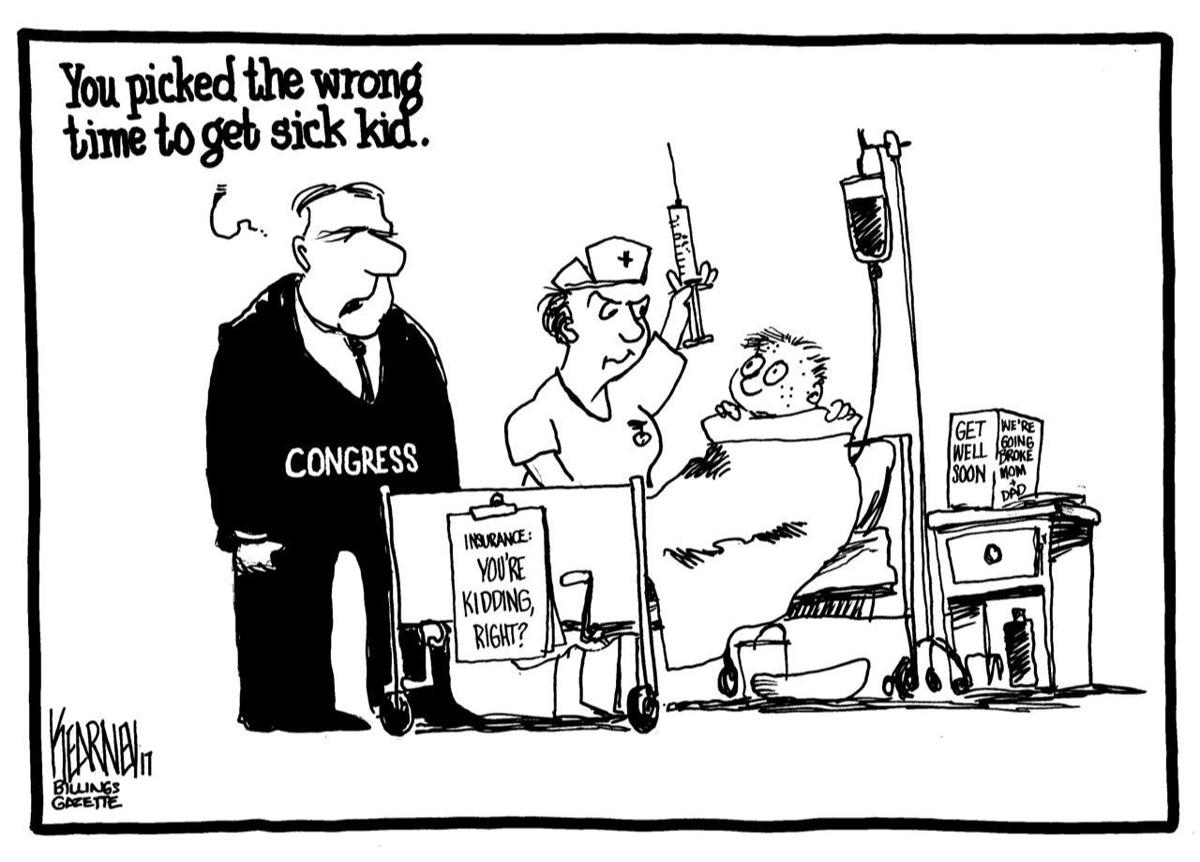
A critical government program that provides health-care coverage to 9 million low-income kids received yet another patch to help stretch it out a few more months — with still no long-term fix in sight.

Congress passed short-term legislation Thursday night that includes $2.85 billion to help fund the program, known as CHIP, through the end of March. The measure will help cover the estimated 1.9 million children across 24 states and Washington, D.C., that stood to lose coverage for care such as doctors visits and hospitalizations in January as states have dipped into reserve funds. But the temporary relief still leaves CHIP and families that rely on it in a state of uncertainty.

“You can’t run an insurance program this way,” said Sara Rosenbaum, a professor at the Milken Institute School of Public Health at George Washington University. Lawmakers are forcing health officials who run the program “to go month-to-month.”

Funding for the Children’s Health Insurance Program lapsed at the end of September when lawmakers couldn’t reach agreement on a five-year reauthorization of the program. They’ve since failed to come up with a solution and instead passed short-term fixes — even though CHIP is one of the few programs that enjoys bipartisan support. Both Republicans and Democrats have disagreed on how to pay for a full reauthorization.

“We share a commitment to extend full funding for CHIP as soon as possible,” Senate Finance Committee Chairman Orrin Hatch, a Republican, and Senator Ron Wyden, the top Democrat on the committee, said in a joint statement.

The spending legislation passed Thursday is part of a last-ditch proposal that keeps the government open through Jan. 19 while a longer-term budget solution is worked out. Both the House and Senate approved the spending measure before government-wide funding expired Friday.

Hard on Families

CHIP, created in 1997, is a shared federal-state program for children of parents who can’t afford private insurance but make too much to qualify for the Medicaid government program for the poor. States have broad discretion in setting eligibility, and have the option to cover pregnant women as well.

Funding for CHIP — which also covers dental care and prescriptions, among other services — amounts to almost $16 billion, with more than 90 percent coming from the federal government.

Even with passage of another patch, the limbo is hard on families.

“It’s a pretty bad Christmas or holiday present for a lot of families,” said Diane Rowland, executive vice president of the Kaiser Family Foundation, a bipartisan nonprofit focused on national health issues. “You can predict that there will be relief that the funding has been extended, but it will be combined with a lot of anxiety.”

As for states that can’t plan ahead, “this is creating an administrative nightmare,” Rowland said.

States have to start preparing for a possible shutdown of the program well before the day comes when they run out of money.

‘Stress and Turmoil’

“This whole situation is causing chaos,” said Cathy Caldwell, director of the bureau of Children’s Health Insurance with the Alabama department of public health. “We are causing confusion to families, stress and turmoil.”

Alabama health officials were forced to warn on Dec. 15 they would stop taking new enrollees on New Year’s Day and that the 84,000 children currently in the program could lose coverage Feb. 1.

Democrats have opposed a House GOP proposal to reauthorize CHIP for five years because it would be paid for by taking money from a fund set up under Obamacare to invest in prevention efforts. Bipartisan talks with the Senate and the White House on other funding offsets are “well down the road,” said House Minority Leader Nancy Pelosi, a California Democrat.