Shalala: What I Learned About How Hard It Is to Reform Health Care

http://www.chcf.org/articles/2017/04/shalala-what-i-learned
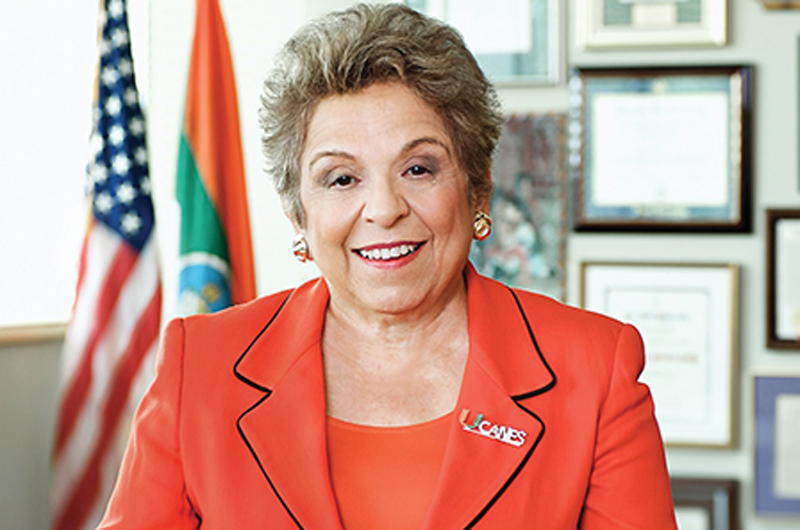
Image result for donna shalala

J. Duncan Moore Jr.

Independent journalist J. Duncan Moore, Jr., has been writing about health policy for more than 20 years. Recently he attended a health policy conference at the University of Miami where former Health and Human Services Secretary Donna Shalala reflected on lessons learned from her career in health policy and politics. Here is his report.

President Trump and Republican members of Congress continue to struggle with their many different plans to repeal and replace the Affordable Care Act (ACA). This is a high-risk venture on two levels. If they get their way, it could reduce the number of Americans with health insurance by more than 24 million, do away with essential health benefit rules, allow insurance companies to exclude customers with pre-existing conditions, and more.

Beyond those serious human impacts on Americans’ health and household finances, the political effects could be significant for the Republicans who control the legislative and executive branches. Polling shows dismal support for the GOP’s health care goals, and Republicans have been greeted by angry crowds at many town halls during the current congressional recess. This is all turning out to be much harder than they apparently believed during Barack Obama’s eight-year administration, when they tried more than 60 times to repeal the ACA but always knew their actions would be vetoed.

The political strife surrounding the proposed ACA repeal is not surprising to those who chased health care reform plans that went down to dust. Donna Shalala, who was secretary of Health and Human Services during the Clinton administration’s ill-fated health care initiative in 1993, recently recounted how difficult it can be to push a major domestic legislative overhaul. The graveyard of doomed health care initiatives is crowded, she pointed out, with tombstones memorializing efforts by Franklin D. Roosevelt, Harry Truman, John F. Kennedy and Sen. Edward Kennedy, Jimmy Carter, and Bill Clinton. Even Richard Nixon made a proposal that withered in Congress. “Sen. Kennedy said, toward the end of his life, ‘I wish I had signed on to the Nixon bill,’ ” Shalala recalled. Now it’s Trump’s turn to tempt fate.

“Taking giant steps in health policy takes a certain number of characteristics,” Shalala told an audience of 800 health care executives and policy experts in March at the University of Miami, where she formerly served as president. “Over the years we have learned what the elements have to be to do that. We have learned through the failures.”

Here are the lessons Shalala learned about major health policy legislation:

  • The president must have passion for pushing the bill through to completion. Presidents need to be prepared to use up a lot of political capital along the way. President Obama overruled the naysayers in his own White House because of the searing memory of his mother arguing with her health insurance company as she lay dying of cancer.
  • Move fast. Time is not on your side. “Presidents lose power every day. The height of their power is the beginning of the administration. In the Clinton Administration, we delayed. Clinton was distracted by other things.”
  • You must have a plan. President Obama had the advantage of being cornered during the 2008 primary season by Hillary Clinton, who released her own health reform plan. He was forced to think about his plan during the campaign.
    • Presidents must stay out of the weeds. Just keep trumpeting the big themes. “Carter loved the details. Clinton loved to get into the weeds.” It didn’t help them any.
    • You won’t get anywhere without congressional buy-in. “Just sending them up a bill was unsuccessful for any president.”
    • You must win the support of the stakeholders. “Every unsuccessful effort has been stopped by stakeholders: the American Medical Association, the hospitals, or the pharmaceutical industry.” In political science, she said, “we talk about negative coalitions. Every stakeholder decides there is something they don’t like. You have to put a positive coalition together. Lyndon Johnson tricked the AMA into supporting Medicare. Everybody knows the Obama story: with pharma, the nurses, the insurance companies, he learned from the previous experiences and lined up the stakeholders.”
    • Don’t mix the coverage issue with the cost issue. The successful reformers have not made holding the line on medical costs a major goal. “The politics of coverage is very different from bending the cost curve. The stakeholders line up in different ways. I have always thought the politics of coverage is much easier than the politics of cost control. If what they are talking about is pulling money out of the system, that is very different from putting a trillion dollars into the system and expanding the coverage.”
    • Finally: “You have to explain and explain and explain. You cannot let those in opposition capture the moment and capture the opposition. In the Clinton administration, the “Harry and Louise” ads killed us, even though they were only shown in Washington, DC. . . . Hillary made the mistake of talking about them; then they were all over network TV. We lost control of the story.”

      Shalala made these remarks in the context of a public one-on-one dialogue with Kathleen Sebelius, who was Obama’s HHS secretary during and after passage of the only successful major health reform since the 1960s. Toward the end, she said to Sebelius: “No one ever gets their legislation perfect. What would you have done differently?” Sebelius ticked off a list of regrets: They should have reduced administrative paperwork, Congress should have funded the insurance risk corridors, HHS needed more outreach and education money, Medicaid should have been expanded to every state.

      For Democrats, the political costs of passing this comprehensive legislation have been steep. Largely because of united Republican opposition to their reform law, they first lost control of the House of Representatives, then the Senate. They lost control of many houses in state legislatures, 10 governor’s offices, and finally, the White House.

      Speaking of regrets, I asked them in the question period, “Was what you gained worth the enormously consequential price you paid?”

      Shalala cut me off: “We got 20 million people covered with health insurance,” she said. A huge wave of applause rewarded her statement.

      For Shalala, that’s the bottom line. Everything else is secondary.


High-Risk Pools for People with Preexisting Conditions: A Refresher Course

http://www.commonwealthfund.org/publications/blog/2017/mar/high-risk-pools-preexisting-conditions?omnicid=1196155&mid=henrykotula@yahoo.com

During the recent effort to repeal and replace the Affordable Care Act (ACA), some members of Congress and the Trump administration seemed to be experiencing a certain nostalgia for high-risk pools, which operated in 35 states before the ACA was enacted. At a CNN Town Hall Meeting in January, Speaker of the House Paul Ryan responded to a question about coverage for people with preexisting conditions by saying:

We believe that state high-risk pools are a smart way of guaranteeing coverage for people with preexisting conditions. We had a really good one in Wisconsin. Utah had a great one . . . . What I mean when I say this is, about 8 percent of all the people under 65 have that kind of preexisting condition . . . . So, by financing state high-risk pools to guarantee people get affordable coverage when they have a preexisting condition, what you’re doing is, you’re dramatically lowering the price of insurance for everybody else. So, if we say let’s just, as taxpayers—and I agree with this—finance the coverage for those 8 percent of Americans under 65 in a condition like yours, they don’t have to be covered or paid for by their small business or their insurer who is buying the rates for the rest of the people in their insured pool, and you’d dramatically lower the price for the other 92 percent of Americans.

As high-risk pools and other changes to the ACA continue to be debated, it is critical to deconstruct statements such as these and remind ourselves of how high-risk pools really worked and how unaffordable they were. It is important to remember that high rates of uninsurance and lack of affordability for all buyers in the individual market existed before the ACA, even in states with high-risk pools. In addition, policymakers seem to substantially underestimate the number of Americans with preexisting conditions who might be forced to purchase coverage through a high-risk pool if insurers are allowed to deny coverage in the marketplace.

Reality Check

The reality is that high-risk pool coverage was prohibitively expensive and there is little evidence to suggest that the existence of such pools made coverage less costly for others in the individual insurance market. Without substantially more federal funding than currently proposed, these facts are not likely to change. People with preexisting conditions may have “access” to coverage, but most will not be able to afford it and those who can will face limited benefits and extremely high deductibles and out-of-pocket payments.

Trump Threatens Health Subsidies to Force Democrats to Bargain

In the weeks since President Trump’s attempts to replace the Affordable Care Act collapsed, the administration has debated what to do: Try again? Shore up the insurance marketplaces? Or let the whole system collapse?

Mr. Trump has failed to get enough support from his own party, but he hopes to get the Democrats’ help by forcing them to the negotiating table with hints about the chaos he could cause.

His bargaining chip is the government subsidies paid to insurance companies so they can reduce deductibles and other out-of-pocket costs for low-income consumers — seven million people this year.

In an interview with The Wall Street Journal this week, Mr. Trump threatened to withhold the subsidy payments as a way to induce the Democrats to bargain with him.

For now, Democrats are resisting and using his maneuver against him to energize their own party. And they warn that Mr. Trump will be blamed if the insurance markets collapse and people lose coverage next year.

“Republicans are in control of government,” Senator Claire McCaskill, Democrat of Missouri, said Thursday after a town-hall-style meeting in her home state. “If they blow up what access to health care there is right now, they’re going to own it.”

The president’s tone differs from that of Republicans in Congress, who have repeatedly promised a smooth transition away from the law they call Obamacare. “We don’t want to pull the rug out from under people,” the House speaker, Paul D. Ryan, has said.

If the subsidies are interrupted, insurers say, some health plans will increase premiums and others will withdraw from the individual insurance market. That will, in turn, affect millions of other people who do not receive the subsidies.

The issue could come to a head within weeks. When the House reconvenes on April 25, the first order of business will be a spending bill to replace the current stopgap law, which expires three days later. Democrats are determined to put money for the health insurance subsidies into that bill, and some Republicans on the House and Senate Appropriations Committees are open to the idea. But ultimately, the decision will be made by Republican leaders in the two chambers.

If the spending is allowed to continue, the Congressional Budget Office estimates that the federal government will pay $135 billion in cost-sharing subsidies to insurers from 2018 to 2027.

The cloud of uncertainty swirling around the subsidies stems from a court ruling in a lawsuit that House Republicans filed against the Obama administration in 2014. Judge Rosemary M. Collyer of the Federal District Court in Washington ruled last year that spending on the subsidies “violates the Constitution” because Congress never appropriated money for them. She ordered a halt to the payments, but suspended her order to allow the government to appeal.

The Trump administration has not made clear whether it will press the appeal filed by the Obama administration. In a letter to Mr. Trump this week, the U.S. Chamber of Commerce joined the American Medical Association, the American Hospital Association and insurers in seeking “quick action” to guarantee continuation of the subsidies. Without the subsidies, they said, more people will be uninsured and unable to pay medical bills.

Democrats say they will not negotiate with Mr. Trump until he stops his drive to repeal the Affordable Care Act. “President Trump is threatening to hold hostage health care for millions of Americans, many of whom voted for him, to achieve a political goal of repeal that would take health care away from millions more,” said the Senate Democratic leader, Chuck Schumer of New York.


ACA Cost-Sharing Subsidies: How One Decision Could Disrupt Obamacare Marketplaces

Web Briefing for Journalists – ACA Cost-Sharing Subsidies: How One Decision Could Disrupt Obamacare Marketplaces

Image result for Web Briefing for Journalists – ACA Cost-Sharing Subsidies: How One Decision Could Disrupt Obamacare Marketplaces

Premiums, insurer choice, and overall stability of 2018 Affordable Care Act (ACA) marketplaces could be affected by decisions from Congress and the Trump Administration on the health law’s cost-sharing reduction provision. With a legal appeal pending on a lawsuit from the U.S. House, the federal government and Congress are in a position to choose whether to continue reimbursing insurers for the subsidies, which were established as part of the ACA to reduce out-of-pocket costs for lower-income people buying plans through the marketplaces. Failure to continue the payments would not only disrupt the marketplaces, but it also might signal a more obstructionist approach to the ACA, following House Republicans’ failed attempt at repeal. Continuing the payments could help to avoid further exits and premium increases by insurers.

On Thursday, April 6, the Kaiser Family Foundation hosted a web briefing for the media to explain how the cost-sharing reduction program works, where it stands now, and how consumers could be affected by either choice from the federal government. Panelists presented new analysis on the magnitude of the cost-sharing payments and how much premiums would have to rise in different states to compensate for insurers’ loss of federal funding.

Panelists included Gary Claxton and Larry Levitt, co-executive directors of the Foundation’s Study of Health Reform and Private Insurance. Rakesh Singh, the Foundation’s vice president of communications, moderated the discussion.


Block grant funding of public health insurance: the Canadian example

Block grant funding of public health insurance: the Canadian example

Image result for medicaid block grants

Speaker Paul Ryan wants to reform Medicaid by “block granting” the program, that is,

by capping federal funding and turning control of the program over to states. The aim of such reforms is to reduce federal funding over the long term, while preserving a safety net for needy, low-income Americans. An additional valuable aim of this effort has been to advance federalism by reducing the federal government’s role and giving states and governors more freedom and flexibility in managing their Medicaid programs and helping people in their states.

What are the likely consequences of block granting? Benjamin Sommers and David Naylor write in JAMA about how Canada’s joint federal/provincial funding of health care provides lessons about the likely consequences of block granting.

Canada is a single payer health care system. However, there isn’t a Canadian single payer. Rather, there is a single payer for each province: I am covered by the Ontario Health Insurance Plan (OHIP). These plans are primarily funded by provincial taxes. However, provinces also receive a health transfer from the Canadian federal government, i. e., a block grant. The provincial health insurance plans are run by provincial health ministers, not the federal minister in Ottawa.

So, does provincial autonomy facilitate experimentation and tailoring by the provinces? Sommers and Naylor think not.

there is little evidence that the alleged advantages of block grants have materialized in Canada. Advocates argue that with greater flexibility and proper incentives, states can reduce costs by improving the efficiency of care. In Canada, however, the provinces’ primary means of coping with budget pressures under block grants has been to reduce funding to hospitals and bargain harder with provincial medical associations. Ironically, then, if this scenario plays out in the United States, it would exacerbate one of the chief Republican criticisms of Medicaid — that it pays clinicians such low rates that they have reduced incentives to care for low-income patients.

Indeed, physician refusal to take Medicaid patients is one of Speaker Ryan’s central criticisms of Medicaid.

What about the effects of a block grant system on federal funding of health care?

Once block funding was initiated in 1977, health care funding became a line item in the federal budget that could be arbitrarily cut or capped for fiscal or political reasons, as opposed to a level of spending pegged to the needs and health care use of the population. Importantly, these cuts occurred under both conservative and liberal federal governments.

When the Canadian health transfer began, the federal government paid 50% of provincial costs. However, the transfer has steadily declined, until it is now about 20%. Sommers and Naylor predict that US federal block grants would also decline, and this is clearly one of Speaker Ryan’s goals.

However, Canadian health care spending per capita has not declined.

As the cost of providing care has risen, but the federal health transfer has stayed fixed or declined, the provinces have taxed more and the federal government has taxed less. The provincial governments hate this, because they would rather have the federal government make the unpopular choice to raise taxes. But it’s not clear whether block granting has made a big difference in the health care received by Canadians.

American states could similarly increase taxes in response to a declining federal Medicaid block grant, but would they? The key difference between Canadian public health insurance and Medicaid is that the former is universal, while the latter is means-tested. Ontarians prefer lower taxes, but if Ontario decreases funding for OHIP, every Ontarian will experience longer waits for care. But American states can cut Medicaid — and reduce taxes — without affecting the health care of better off and able-bodied citizens.

The affluent and able-bodied are also the citizens most likely to vote. American states determine their own voting procedures. Block granting gives states an incentive to manage voting so as to reduce the participation of the marginalized communities who are most in need of public health insurance. Block granting is likely to undermine the health care for the poor and disabled, and it could reinforce the post-Shelby County v. Holder efforts to restrict voting.


Why an Open Market Won’t Repair American Health Care

AN AMERICAN SICKNESS
How Healthcare Became Big Business and How You Can Take It Back
By Elisabeth Rosenthal
406 pp. Penguin Press. $28.

A few years back, the future of American health policy appeared to hinge on how similar medical care was to broccoli. It was March 2012, and the Affordable Care Act (a.k.a. Obamacare) was before the Supreme Court. Justice Antonin Scalia zeroed in on its controversial requirement that all Americans purchase health insurance. Yes, everybody needs health care, Scalia conceded, but everybody needs food too. If the government could make people buy insurance, why couldn’t it “make people buy broccoli”?

The Affordable Care Act survived, of course — though not before a fractured court made the expansion of Medicaid optional, leaving millions of poorer Americans without its promised benefits. But the question Justice Scalia asked remains at the heart of a debate that has only intensified since: Why is health care different? Why does it create so much more anxiety and expense, heartache and hardship, than does buying broccoli — or cars or computers or the countless other things Americans routinely purchase each day?

For those leading the charge to roll back the 2010 law, the question has a one-word answer: government. President Trump’s point man on health policy, the former congressman (and ultrawealthy orthopedic surgeon) Tom Price, has said that “nothing has had a greater negative effect on the delivery of health care than the federal government’s intrusion into medicine through Medicare.” Senator Rand Paul (another surgeon) and House Speaker Paul Ryan have claimed that the affordability of Lasik eye surgery — generally not covered by health insurance — shows that a much freer health care market would be much less expensive. Their idea of “reform” is to cut back public and private insurance so consumers have “more skin in the game” and thus shop more wisely.

The physician-turned-journalist Elisabeth Rosenthal offers a very different answer in her eye-opening “An American Sickness.” Rosenthal — formerly a reporter for The New York Times, now the editor in chief of the nonprofit Kaiser Health News — is best known for a prizewinning series of articles, “Paying Till It Hurts.” In them, Rosenthal chronicled the seemingly endless pathologies of America’s medical-industrial complex, from prescription drugs that grew more costly as they became more dated to hip-replacement surgery so expensive it was cheaper for a patient to fly to a hospital in Belgium.

Rosenthal thinks the health care market is different, and she sums up these differences as the “economic rules of the dysfunctional medical market.” There are 10 — some obvious (No. 9: “There’s money to be made in billing for anything and everything”); some humorous (No. 2: “A lifetime of treatment is preferable to a cure”) — but No. 10 is the big one: “Prices will rise to whatever the market will bear.” To Rosenthal, that’s the answer to Scalia’s question. The health care market doesn’t work like other markets because “what the market will bear” is vastly greater than what a well-functioning market should bear. As Rosenthal describes American health care, it’s not really a market; it’s more like a protection racket — tolerated only because so many different institutions are chipping in to cover the extortionary bill and because, ultimately, it’s our lives that are on the line.

Consider the epicenter of America’s cost crisis: the once humble hospital. Thanks in part to hit TV shows, we think of hospitals as public-spirited pillars of local communities. Yet while most are legally classified as nonprofits, they are also very big businesses, maximizing surpluses that can be plowed into rising salaries and relentless expansion even when they are not earning profits or remunerating shareholders. And they have grown much bigger and more businesslike over time.

Rosenthal tells the story of Providence Portland Medical Center, a Northwest hospital system founded by nuns. Four decades ago, its operational hub in Portland, Ore., consisted of two modest hospitals: Providence and St. Vincent. As it happens, my mother was a nurse at St. Vincent for more than half those years, and thus had a front-row seat as Providence transformed from a Catholic charity into one of the nation’s largest nonprofit hospital systems, with annual revenues of $14 billion in 2015.

Along the way, Providence jettisoned most of its original mission, replacing nuns with number crunchers. Once run mainly by doctors, it filled its growing bureaucracy with professional coders capable of gaming insurance-reimbursement rules to extract maximum revenue. Meanwhile, Providence stopped paying doctors as staff and reclassified them as independent contractors (though not so independent they could skip a “charm school” designed by its marketers). Yet even as its C.E.O. earned more than $4 million, Providence touted itself as a “not-for-profit Catholic health care ministry” upholding the “tradition of caring” started by the nuns (now listed as “sponsors” in promotional materials). Rosenthal sums up the result as “a weird mix of Mother Teresa and Goldman Sachs.”


Trump’s New Plan to Penalize the Sick

https://www.americanprogress.org/issues/healthcare/news/2017/04/06/430156/trumps-new-plan-penalize-sick/

Image result for penalizing the sick

Republicans need to stop making a terrible health care bill even worse. A little over a week ago, President Donald Trump declared that the White House would be moving on from its efforts to repeal the Affordable Care Act, or ACA. However, in an abrupt about-face, the administration is now reportedly considering a new proposal in an attempt to reinvigorate talks: allowing insurers to drastically raise prices on people with pre-existing conditions, even to the point of preventing them from obtaining insurance at all.

First Republicans had a proposal that would lead to skyrocketing uninsurance and out-of-pocket costs while increasing premiums. Then they argued for driving up coverage prices for services like maternity care and substance abuse treatment while simultaneously weakening protections for employer-provided insurance. Now they’re threatening to eliminate protections for the up to 133 million individuals who have pre-existing conditions.

How Republicans Can Escape Their Health Care Dilemma, Part 3: Responsible Federalism

https://www.forbes.com/sites/theapothecary/2017/03/31/how-republicans-can-escape-their-health-care-dilemma-part-3-responsible-federalism/#46636dd45063

Image result for How Republicans Can Escape Their Health Care Dilemma, Part 1: Universal Catastrophic Coverage

This is the last in a series of three posts. I’ve proposed three approaches that Republicans might use to get out of  the dilemma they are in over health care:

  • Universal catastrophic coverage (Part 1)
  • Universal safety net (Part 2)
  • Responsible federalism (Part 3)

The Case for a Responsible Federalism

We have had federalism in health care for many decades. The grandaddy of them all is the open-ended Medicaid program which obligates Uncle Sam to pony up federal matching dollars in lock-stop with state willingness to put up their dollars. As AEI health policy expert Joe Antos recently pointed out, Medicaid has needed fixing for 50 years. But even before that we have had federal grant-in-aid programs dating back to the 1930’s that channeled federal dollars into health care. In my view, responsible federalism in health care would entail reforming the perverse fiscal incentives embedded in Medicaid while also offering states much greater flexibility to solve their health problems without the heavy hand of Uncle Sam.


How Republicans Can Escape Their Health Care Dilemma, Part 2: Universal Safety Net

https://www.forbes.com/sites/theapothecary/2017/03/31/dilemma-part-2-universal-safety-net/#215199391108

Image result for How Republicans Can Escape Their Health Care Dilemma, Part 1: Universal Catastrophic Coverage

This is the second in a series of three posts. In my last post I posed a dilemma: President Trump has argued repeatedly for “coverage for all.”  The CBO score showing that the AHCA would result in a loss of coverage for 24 million Americans was devastating for its political prospects. Yet Obamacare, despite leaving tens of millions of Americans uninsured, is universally viewed by Republicans as fiscally unsustainable over the long term. I’ve proposed three approaches to getting out of  this box:

  • Universal catastrophic coverage (Part 1)
  • Universal safety net (Part 2)
  • Responsible federalism (Part 3)

The Case for a Universal Safety Net

A universal safety net offers the possibility of a bipartisan reform that is politically feasible at an affordable cost. Again, there is more than one way to achieve this, but I will provide two examples.


How Republicans Can Escape Their Health Care Dilemma, Part 1: Universal Catastrophic Coverage

https://www.forbes.com/sites/theapothecary/2017/03/31/how-republicans-can-escape-their-health-care-dilemma-part-i-universal-catastrophic-coverage/#64adb55c193e

Image result for How Republicans Can Escape Their Health Care Dilemma, Part 1: Universal Catastrophic Coverage

The demise of the American Health Care Act (AHCA) on March 24 was a humiliating defeat for both President Trump and Speaker Paul Ryan, both of whom had pledged the repeal and replacement of Obamacare would be the first order of business under a Trump administration. Now they both plan to move on to tax reform and it remains to be seen when or how a repeal and replacement effort will be resurrected.

I sit in an ivory tower, so perhaps my views will be dismissed as hopelessly unrealistic. But having studied health reform for more than four decades, the prospects for success are not as dim as most might think. This three part series by no means exhausts the possibilities, but should give readers a rough sense of three possible paths out of this mess. These include:

  • Universal catastrophic coverage (Part 1)
  • Universal safety net (Part 2)
  • Responsible federalism (Part 3)

President Trump has argued repeatedly for “coverage for all.”  The CBO score showing that the AHCA would result in a loss of coverage for 24 million Americans was devastating for its political prospects [1]. Yet Obamacare, despite leaving tens of millions of Americans uninsured, is universally viewed by Republicans as fiscally unsustainable over the long term. Therein lies the Republican’s political dilemma.