Health care spending is more than just the parts you see

https://www.axios.com/understanding-health-care-spending-46e21c47-79ee-474b-80ff-778a705cdcae.html

Illustration of a red cross spinning to reveal money

People focus on the health costs that are most tangible and sometimes outrageous to them: their deductibles, and drug costs, and surprise medical bills, and the annual increase in the share of the premium they pay. But there’s more that gets less attention because it’s not as visible to them.

Why it matters: To really understand how Medicare for All or any other big change in health care financing would affect them, people need to understand how they would impact their overall family health budgets. Few people think about the other health costs they pay: their taxes to support health care, or what their employers are paying towards premiums (which is depressing their wages).

Between the lines: Consider this hypothetical example of a total family health “budget”:

  • The Browns, a family of four with at least one member in poor health and a $50,000 income, have standard employer coverage much like 156 million other Americans. They spend $9,250 per year (19% of their income) on health.
  • This includes $3,950 (8% of their income) in out-of-pocket health spending, $3,900 (8% of their income) in health insurance premiums, and, although they are almost certainly not aware of it, approximately $1,400 (3% of their income) in state and federal taxes that fund health programs.
  • The Browns are not taxed on the contributions their employer makes toward health insurance premiums, which economists generally say offset wages. Their employer is contributing an additional $13,050 to their health insurance premiums, as well as $750 in Medicare payroll taxes.
  • When combined, the Brown’s spending on health care and the money spent by their employer on their behalf totals a considerable $23,050. And remember, they make $50,000.

A few ideas that could help people learn more about their health total care spending and how reform proposals might affect their health spending:

  • The IRS and states could include a simple pie chart on everyone’s tax forms, showing taxpayers where their tax dollars go today.
  • Along with estimating the impact of health reform legislation on the federal budget, or the number of uninsured, the CBO could estimate its impact on typical family budgets, taking into account all of the forms of health spending families have today. Organizations like ours could do this as well.

What to watch: This could be particularly important when analyzing Medicare for All proposals, since they would so significantly alter the financing of health care by shifting it from premiums and out-of-pocket costs to taxes.

  • A Medicare for All plan would likely reduce what the nation spends on health care by lowering payment rates to providers and creating administrative efficiencies. The average family would likely pay less, but how much is hard to say without more details.
  • However, by changing the financing so significantly, there would likely be both winners and losers. Low-income people and sick people might pay less, and higher-income people and those who are healthy could pay more.

The bottom line: We can only get a clear picture of how family finances would be affected by Medicare for All, or any other significant overhaul of the health care system, by looking at the totality of what they pay now.


Health Insurance Markets Perform Better in States That Run Their Own Marketplaces

http://www.commonwealthfund.org/publications/blog/2018/mar/health-insurance-markets-states?omnicid=EALERT1366336&mid=henrykotula@yahoo.com

Image result for Health Insurance Markets Perform Better in States That Run Their Own Marketplaces

In spite of actions by Congress and President Trump that undermine parts of the Affordable Care Act (ACA), reports of the law’s death are greatly exaggerated, as Mark Twain might have said. Enrollment in the ACA’s subsidized marketplace exchanges remains strong, and coverage remains available throughout the country. Not all insurance markets have remained as resilient as others, however. It appears that attempts to undermine the ACA have had greater effects in some locations than in others. In particular, analysts have noted that insurance markets remain healthier in the 17 states that run their own insurance marketplaces than in those that rely on the federal marketplace. We use newly released federal data to explore this difference between states.

Lower ACA Individual Market Premiums, Claims, and Costs in States with State-Run Marketplaces

In the individual market, insurers projected premiums for ACA-compliant coverage in 2018 that averaged 21 percent higher ($633 per month vs. $526 per month) in states using the federal marketplace than in those running their own marketplaces. Comparing these numbers to those from last year, insurers’ premium projections increased 68 percent more on average in federal marketplace states than in states with their own marketplaces ($135 per month vs. $82 per month).

These greater projected premiums in federal marketplace states continue a trend that has existed since near the beginning of the marketplaces. During the second year of the ACA marketplaces (2015), rate increases between the two sets of states were similar, but thereafter they began to diverge. In 2016, 2017, and 2018, insurers had greater premium increases in states using the federal marketplace than in states operating their own, with differences averaging 6 percentage points a year . Notably, the differences in rate increases were substantially greater for 2018 (11 percentage points) than for the prior two years (3 percentage points), as the stability of health care markets was thrown into question in the wake of the Trump administration’s pronouncements and policies.

For 2018, the difference in premiums between the two sets of states is based in part on greater projected medical claims in federal marketplace states. Insurers in federal marketplace states projected claims for 2018 that were 14 percent greater ($478 per month vs. $419 per month) than in states with their own marketplaces. Insurers in the federal marketplace states also projected higher administrative costs and operating profits per member, resulting in a substantially higher proportion of premiums (24.7% vs. 20.2%) going to overhead rather than to medical claims.

States That Run Their Own Marketplaces Are Better Positioned for Negative Impacts of ACA Changes

As insurers were adjusting to recent changes in administrative policy as well as market conditions, insurance markets in states with their own marketplaces appear to be more resilient than those in states using the federal marketplace. Under state-based marketplaces, insurers were able to project lower claims costs and keep administrative and overhead costs lower than in other states.

This greater resilience to policy efforts to weaken or undermine the ACA could result from a combination of factors that these data do not illuminate, but which other analysts (noted above, and here) have suggested. Principally, states with their own marketplaces have a more proactive engagement with the ACA, which is likely to translate into a more balanced risk pool and a greater willingness of insurers to enter or remain in the market. For example, when the Trump administration shortened the open-enrollment period and reduced advertising for the federal marketplace, states with their own marketplaces extended their open-enrollment periods and supplemented federal funds for outreach and assistance.

Other factors may well be at play in this observed difference between states.1 But the consistently and increasingly lower premiums in state-based marketplace states suggest that, as additional changes are made to the ACA, these states may be better situated and more motivated to buffer the potential negative impacts. States that wish to avoid the worst effects of market destabilization flowing from the most recent set of federal health policy reversals might want to follow the lead set by states that operate their own marketplaces.2

66% of Americans are stressed about health insurance costs: 3 things to know

https://www.beckershospitalreview.com/payer-issues/66-of-americans-are-stressed-about-health-insurance-costs-3-things-to-know.html

Image result for stress over health insurance

Across all income levels, two-thirds of U.S. adults cite health insurance costs as a stressor, according to a report from the American Psychological Association.

APA’s report, “Stress in America: Uncertainty About Health Care,” examines responses from 3,440 adults who completed an online survey by The Harris Poll from Aug. 2 to Aug. 31, 2017.

Here are three things to know from the report.

1. Sixty-three percent of adults said uncertainty about their future health and the health of others is a stressor.

2. Personal health concerns or health problems affecting family members reflect a “very” or “somewhat” significant source of stress for 60 percent of respondents.

3. On a 10-point scale, where 1 is “little or no stress” and 10 is “a great deal of stress,” uninsured respondents reported average stress levels of 5.6. This is compared to insured adults, who reported average stress levels of 4.7.

Death spiral? Obamacare insurers may be having ‘best year’ yet under ACA

http://www.charlotteobserver.com/news/politics-government/article160601814.html

Image result for death spiral

New data on the improving finances of the nation’s individual insurers are calling into question repeated Republican claims that Obamacare marketplaces are collapsing under the Affordable Care Act.

For months, Republican leaders from President Donald Trump and Health and Human Services Secretary Tom Price to House Speaker Paul Ryan have said Obamacare was crumbling under its own weight and could not be saved. And this week, when HHS announced a 38 percent decline in the number of insurers that want to offer coverage next year in states that use the federal marketplace, Price said, “The situation has never been more dire.”

But new research released Monday by the Kaiser Family Foundation shows that profitability and other financial measures for individual insurers have dramatically improved over the last year.

“Now it looks like they’re on track to be profitable and that they’re actually having the best year that they’ve had since the ACA began,” said Cynthia Cox, associate director of health reform at Kaiser.

The share of premiums paid out as medical claims by individual insurers fell to 75 percent in the first quarter of 2017, down from 86 percent in the first three months of 2016 and 88 percent in the first quarter of 2015.

In addition, average monthly premium income exceeded monthly per-enrollee medical claims by roughly $100 in the first quarter of 2017, Kaiser reported. That’s up from about $48 in the first quarter of 2016 and just over $36 in the first quarter of 2015.

Throughout their push to repeal the Affordable Care Act, Republicans have said the market troubles in some areas were proof that Obamacare was unraveling and legislative change was needed. In a pair of tweets on May 4, Trump declared that ObamaCare was “dead” and the individual market was in a “Death spiral!,” in which insurance offerings disappear as premium hikes force all but the sickest to drop coverage.

Cox disputed that assessment: “There’s not really signs of a death spiral here,” she said.

The report, based on insurers’ first-quarter financial reports filed with the National Association of Insurance Commissioners and compiled by Mark Farrah Associates, comes as Senate Majority Leader Mitch McConnell struggles to find 50 votes to pass his Obamacare repeal legislation. Facing opposition from some conservatives, he has expressed a willingness to negotiate with Democrats on a legislative fix of the ACA as Republicans try to re-draft their legislation and move forward next week.

But Monday’s report could make across-the-aisle appeals more difficult, as the data indicates insurers could be on the verge of righting their financial ship.

In a letter to McConnell on Monday, four Democratic senators — Charles Schumer of New York, Debbie Stabenow of Michigan, Richard Durbin of Illinois and Patty Murray of Washington — urged McConnell make “common sense reforms” such as guaranteeing the cost-sharing payments, creating a permanent reinsurance program and finding solutions for areas without insurers.

Certainly, some marketplaces remain under enormous pressure. Far fewer people than originally expected enrolled into marketplace coverage and those who did were sicker, older and more costly than insurers expected. As losses mounted, insurers sharply increased premiums in 2017, making coverage unaffordable for many as enrollment slipped. Some insurers exited unprofitable markets altogether, leaving 38 rural counties in Ohio, Indiana and Nevada with the possibility of no coverage options next year, according to Kaiser. Five states — Alabama, Alaska, Oklahoma, South Carolina and Wyoming — have only one insurer offering marketplace coverage this year.

The Trump administration added to insurers’ problems by relaxing enforcement of Obamacare’s individual mandate and refusing to reimburse insurers for billions of dollars of financial assistance, known as cost-saving reductions, that go to low-income plan members.

An analysis by the Oliver Wyman consulting firm estimated that up to two-thirds of insurer rate increases for 2018 “will be due to the uncertainty surrounding these two market influences” and the Congressional Budget Office estimates premiums will increase 20 percent next year if the individual mandate is not enforced.

Blue Cross Blue Shield of North Carolina, which has more than 500,000 individual policy holders, wants to increase rates on their Obamacare plans by an average of 23 percent next year.

Speaking in Washington, DC at a recent Bipartisan Policy Center panel discussion, J. Brad Wilson, President and CEO of BCBS North Carolina said, “Over 50 percent of that increase is attributable to the uncertainty of CSRs.”

The industry trade group America’s Health Insurance Plans would not comment on the report.


10 key points from the CBO report on Obamacare repeal

http://www.politico.com/story/2017/05/24/cbo-obamacare-repeal-health-care-238795

Image result for CBO Bill scoring

Here are some key facts and figures from the new CBO report on the American Health Care Act, the House-passed bill to repeal and replace Obamacare. CBO stressed the uncertainty of its estimates, given that it’s hard to know which states would take up the chance to opt out of certain key parts of Obamacare. All figures are for the decade spanning 2017-2026 unless otherwise specified.


The CHCF Blog Californians in Individual Market Spent $2,500 Less on Care in 2015 Than Before the ACA

http://www.chcf.org/articles/2017/04/californians-individual-market-spent-less

Average Annual Spending on Health Care by Consumers in Individual Market

Two years into the Affordable Care Act (ACA), Californians who bought health insurance on the individual market spent $2,500 less on health care compared to 2013, the year before the ACA was fully implemented, according to data from the US Census Bureau’s Current Population Survey (CPS) available on ACA 411. This decline was likely driven primarily by the premium tax credits and cost-sharing reductions provided through the ACA’s health insurance marketplaces. This progress toward making health care more affordable is at risk as federal lawmakers debate repealing or radically changing the ACA.

Californians’ Spending Decline Beats National Trends

In 2013, Californians with individual coverage spent, on average, $7,300 out of pocket on health care (defined as spending on health insurance premiums, copays, deductibles, coinsurance for services and prescription drugs). That amount fell to $4,900 in 2014, the first year the ACA health insurance marketplaces (called Covered California in California) were open for business. In 2015 average spending for those covered through the individual market continued declining to $4,800 for a total drop of $2,500 over the two-year period.

Nationally, the amount spent on health care by consumers with individual coverage dropped from $6,800 in 2013 to $5,500 in 2015, a $1,300 decline.

Average Annual Spending on Health Care by Consumers in Individual Market

Similarly, the percentage of consumers with individual coverage reporting “high-burden spending” (defined as spending more than 10% of total income on health care) fell nationally, with California seeing a steeper decline, from 42.9% in 2013 to 33.8% in 2015. Nationally, it dropped from 44.7% to 38.8% during the same period.

Percentage of Consumers in Individual Market Spending More Than 10% of Income on Health Care

For more information on national trends in high-burden spending, read this new analysis of the CPS data by the State Health Access Data Assistance Center (SHADAC). There was a small but statistically significant decline in the overall US rate of high-burden spending, with improvements also among those on Medicare and those earning less than 400% of the federal poverty level (about $47,000 a year for a single person). The brief also highlights which states saw statistically significant changes in high-burden spending among various coverage types and income levels.


Repeal of Health Law Faces a New Hurdle: Older Americans

Image result for Older Americans

Republican plans to repeal the Affordable Care Act have encountered a new obstacle: adamant opposition from many older Americans whose health insurance premiums would increase.

AARP and its allies are bombarding congressional offices with objections as two House committees plan to vote on the Republicans’ bill this week.

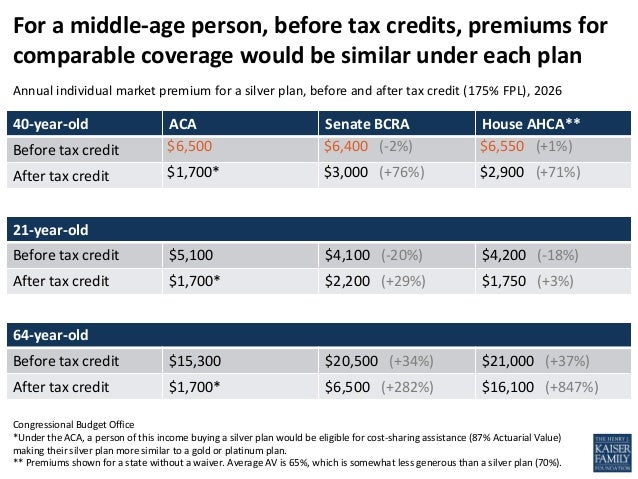
If the law is repealed, the groups say, people in their 50s and 60s could see premiums rise by $2,000 to $3,000 a year or more: increases of 20 percent to 25 percent or higher.

Under current rules, insurers cannot charge older adults more than three times what they charge young adults for the same coverage. House Republican leaders would allow a ratio of five to one — or more, if states choose.

Insurers support the change, saying it would help them attract larger numbers of young customers.

The current rating restrictions, they say, have increased premiums for young adults, discouraging them from enrolling.

But the Republican proposal would “increase the financial burden of older Americans, making coverage significantly less affordable,” says a letter to Congress from the Leadership Council of Aging Organizations, a coalition of nonprofit groups that represent the interests of older Americans.

The letter was addressed to Representative Greg Walden, Republican of Oregon and the chairman of the Energy and Commerce Committee, one of two House panels planning to vote this week on a bill that would roll back major provisions of President Barack Obama’s signature domestic accomplishment.

David M. Certner, the legislative policy director of AARP, said the proposal would have “a severe impact on Americans age 50 to 64 who have not yet become eligible for Medicare.”

At the same time, Mr. Certner said, the Republican proposal could reduce the financial assistance available to help people pay insurance premiums.

Republicans say their proposal would reduce insurance prices by stimulating competition and by allowing insurers to sell a leaner, less expensive package of benefits.