The noble aim of being a great subcontractor

https://gisthealthcare.com/weekly-gist/

Image result for subcontractor

Earlier this month I was at a health system board meeting in which we were discussing the transition from volume to value, and the shift to a population health model. One board member had the courage to ask a tough question: “What if we never get there?” Covering just a small slice of a large metropolitan area, this system has consistently ranked third in market share behind two larger competitors—and now they feel they are lagging those systems in moving toward risk. The most recent challenge: a large—and until recently, loyal—independent primary care group had just been acquired by one of their competitors. Yet the system prides itself, justifiably, on delivering low-cost hospital care and outstanding quality.

I raised a heretical notion: suppose the system pursued a strategy focused solely on being the highest-performing inpatient and specialty care provider in the market, and abandoned the goal of bearing population risk? Could the system shift their focus to simply being the best “subcontractor” to other risk-bearing networks in the market?

The ensuing conversation was uncomfortable, to say the least. The notion challenged the system’s assumptions of the role they wanted to play in the market, and whether they could be a leader in population health. I encouraged them to think of being a “subcontractor” to other risk-bearing organizations not as a defeat, but as fulfillment of a vital role—healthcare in their community would be better if more hospital care were delivered at their level of cost and quality.

Our view: for many smaller systems who are driven by a desire to remain independent, becoming a high-performing care subcontractor may be the best path forward, and the most realistic. (It will be interesting to watch the successful investor-owned chains on this front—organizations whose strategic advantage lies in running highly-efficient, low-cost hospitals.) It’s not as sexy as “population health”, but as any builder will tell you, there’s no substitute for a great subcontractor.

Walmart drops price of virtual visits from $40 to $4

https://www.beckershospitalreview.com/telehealth/walmart-drops-price-of-virtual-visits-from-40-to-4.html

Image result for telemedicine

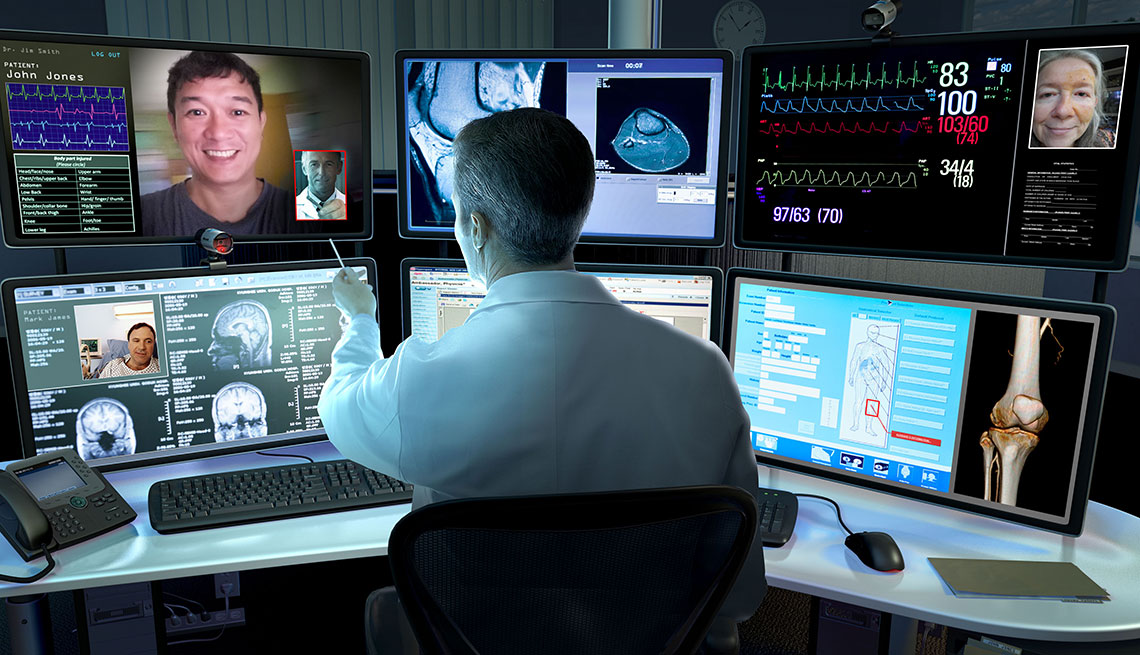
Walmart is offering employees a 90 percent discount on telemedicine, dropping the price of a virtual visit from $40 to $4, The Denver Post reports.

The retailer reduced the cost of telemedicine services Jan. 1 to increase options for employees seeking care, a spokesperson confirmed to Becker’s Hospital Review. Walmart’s health benefits currently cover more than 1 million people enrolled it its Associates’ Medical Plan. Through this plan, virtual visits through the Doctor On Demand app are covered like a normal physician’s office visit.

Walmart is one of many employers to offer telemedicine benefits to workers. Eighty percent of large and midsize companies offered the benefit in 2018, according to the report. However, factors like emotion, forgetfulness and preference have kept utilization down. Just 8 percent of employees at large and midsize companies used telemedicine benefits in 2017, according to the report.

Read more here.  

CYBERSECURITY IS TOP ISSUE FOR HOSPITAL IT PROFESSIONALS, CREATING NEW WORKFORCE DYNAMICS

https://www.healthleadersmedia.com/innovation/cybersecurity-top-issue-hospital-it-professionals-creating-new-workforce-dynamics?utm_source=silverpop&utm_medium=email&utm_campaign=ENL_190220_LDR_BRIEFING_resend%20(1)&spMailingID=15165362&spUserID=MTY3ODg4NjY1MzYzS0&spJobID=1581568052&spReportId=MTU4MTU2ODA1MgS2

Cybersecurity is top issue for hospital IT professionals

HIMSS survey suggests focus on other IT priorities may lag; influence of security leaders may cause tension.

Cybersecurity, privacy, and security are creating such pressing issues for hospitals, other technology projects may be waylaid and discord among IT leadership could occur if the emerging influence of security professionals is not handled properly, according to the 2019 HIMSS U.S. Leadership and Workforce Survey.

The annual study included feedback from 269 U.S. health information and technology leaders between November 2018‒January 2019. The 30th edition of the survey examines trends and provides insights into the rapidly changing market for healthcare and IT professionals.

Among the key takeaways for hospitals:

  • The emergence of information security leaders as the third influential member of hospital IT leadership teams—following CIOs and senior clinical IT leaders—may create tensions for some organizations.
  • The top issue for hospital IT leaders is cybersecurity, privacy, and security.
  • The focus on security is so predominant, authors of the study suggest that other technological priorities may be put on the back burner.

Information about trends and issues for vendors and non-acute care facilities are also addressed in the full report.

ROLE OF SECURITY LEADERS EXPANDS

The study examines employment trends for specific job titles and, in some cases, compares rates to the prior year. Information security leaders continue to expand their presence in hospitals.

While employment of CIOs and senior clinical IT leaders remains fairly steady; employment of senior information security leaders at hospitals rose by 14% between 2018 and 2019. The study also documents how many hospitals employ professionals for other emerging technology leadership roles, such as chief technology, innovation, and transformation officers, but does not provide comparisons to previous years.

Hospital employment of IT leaders in the following positions for 2019 includes:

  • Chief Information Officer 84% (-3% compared to 2018)
  • A senior clinical IT leader (CMIO, CNIO, CHIO) 68% (+1% compared to 2018) 
  • A senior information security leader (CISO) 56% (+14% compared to 2018)
  • Chief Technology Officer 36%*
  • Chief Innovation Officer 19%*
  • Chief Transformation Officer  7%*
  • None of the above  9%*

“The emergence of a third leader overseeing a hospital’s information and technology efforts is bound to result in internal tensions as competing interests and overlapping jurisdictions present themselves,” says Lorren Pettit, MS, MBA, vice president at HIMSS in a news release. “These challenges have the potential to stymy a hospital’s progression if hospital leaders are not careful to manage these hurdles effectively.”

The report further elaborates that unless roles and responsibilities are clearly delineated, the influence of security professionals could impede a hospital’s progression on information and technology priorities as leaders “work through internal territorial challenges.”

INFORMATION TECHNOLOGY PRIORITIES

The survey gauges interest from IT professionals about 24 topics. While cybersecurity outranked all other responses, “improving quality outcomes” and “clinical informatics and clinician engagement” also was highly rated for hospital respondents. Telehealth ranked ninth; innovation took the twenty-first spot.

Survey participants ranked these topics on a scale of one (not a priority) to seven (essential priority). Following are the ranking and mean scores for hospital respondents:

  1. Cybersecurity, Privacy, and Security 5.81
  2. Improving Quality Outcomes Through Health Information and Technology 5.28
  3. Clinical Informatics and Clinician Engagement  5.24
  4. Process Improvement, Workflow, Change Management 5.03
  5. Culture of Care and Care Coordination 4.92
  6. Data Science/Analytics/Clinical and Business Intelligence 4.91
  7. Leadership, Governance, Strategic Planning 4.90
  8. User Experience, Usability and User-Centered Design  4.86
  9. Telehealth 4.82
  10. Consumer/Patient Engagement & Digital/Connected Health 4.80
  11. Population Health Management and Public Health 4.77
  12. Safe Info and Tech Practices for Patient Care 4.62
  13. HIE, Interoperability, Data Integration and Standards 4.62
  14. Public Policy, Reporting, and Risk Management 4.31
  15. Healthcare App and Tech Enabling Care Delivery  4.20
  16. Social, Psychosocial & Behavioral Determinants of Health 4.06
  17. Consumerization of Health 3.75
  18. Clinically Integrated Supply Chain 3.66
  19. Healthy Aging and Technology  3.60
  20. Health Informatics Education, Career Development & Diversity  3.53
  21. Innovation, Entrepreneurship and Venture Investment 3.47
  22. Precision Medicine/Genomics  3.47
  23. Disruptive Care Models 3.39
  24. Grand Societal Challenges 2.88

SECURITY NEEDS MAY SLOW DOWN FOCUS ON OTHER IT PRIORITIES

Study authors characterized the prioritization of cybersecurity, privacy, and security by providers as “remarkably higher” than the next highest priority. The focus is so predominant, the authors suggest that other technological priories may be put on the back burner.

“Of the array of priorities presented respondents, ‘cybersecurity, privacy, and security’ was one of the only ‘defensive’ business tactics respondents were asked to consider,” states the report. “That providers (especially hospital respondents) responded so passionately to this priority suggests a growing number of provider organizations realize the need to protect existing business practices before aggressively pursuing other information and technology issues. If true, then there are potential downstream implications for the market as other information and technology priorities considered in this study may be put on hold or ‘slow walked’ until the security concerns of organizations are settled.”

In addition to this survey, HIMSS also released a related report last week, the 2019 HIMSS Cybersecurity Survey, which sheds additional light on some of these issues. Among the highlights:

  • A pattern of cybersecurity threats and experiences is discernable across U.S. healthcare organizations. Significant security incidents are a near universal experience with many of the initiated by bad actors, leveraging e-mail as a means to compromise the integrity of their targets.
  • Many positive advances are occurring in healthcare cybersecurity practices and healthcare organizations appear to be allocating more of their IT budgets to cybersecurity.
  • Complacency with cybersecurity practices can put cybersecurity programs at risk.
  • Notable cybersecurity gaps exist in key areas of the healthcare ecosystem. The lack of phishing tests in certain organizations and the pervasiveness provides insight into what healthcare organizations are doing to protect their information and assets, in light of increasing cyber-attacks and compromises impacting the healthcare and public health sector.


ANA CRITICIZES ‘CRIMINALIZATION OF MEDICAL ERRORS’ AS VANDERBILT NURSE ARRAIGNED

https://www.healthleadersmedia.com/nursing/ana-criticizes-criminalization-medical-errors-vanderbilt-nurse-arraigned?utm_source=silverpop&utm_medium=email&utm_campaign=ENL_190220_LDR_BRIEFING_resend%20(1)&spMailingID=15165362&spUserID=MTY3ODg4NjY1MzYzS0&spJobID=1581568052&spReportId=MTU4MTU2ODA1MgS2

The statement expresses support for handling medical errors with ‘a full and confidential peer review process.’


KEY TAKEAWAYS

The fatal error was made in December 2017, but it didn’t become public until November 2018, with a CMS report.

Vanderbilt was threatened with a loss of its Medicare status over the incident.

The nurse was indicted this month and scheduled for an arraignment Wednesday.

As a former nurse for Vanderbilt University Medical Center in Nashville, Tennessee, was scheduled to appear in court Wednesday morning for an arraignment on felony charges of reckless homicide and impaired adult abuse, the American Nurses Association raised concerns about the precedent the case could set.

Radonda Vaught administered a fatal dose of the wrong medication to a 75-year-old woman in late 2017, after overriding system safeguards, as The Tennessean’s Brett Kelman reported, citing an investigation report by the Centers for Medicare & Medicaid Services. That incident, which VUMC reportedly failed to convey to the medical examiner, prompted CMS to threaten VUMC’s Medicare status last November.

Vaught was indicted earlier this month, prompting the ANA to voice some concerns.

“Health care is highly complex and ever-changing resulting in a high risk and error-prone system,” the ANA said in a statement Tuesday. “However, the criminalization of medical errors could have a chilling effect on reporting and process improvement.”

Related: How DeKalb Medical Fixed Drug Safety Problems After Fatal Error

The statement, which specifically mentions Vaught’s case, expresses support for handling medical errors with “a full and confidential peer review process.”

The ANA also offered its condolences to the those who have suffered as a result of this error.

“This tragic incident should serve as reminder to all nurses, other health care professionals, and administrators that we must be constantly vigilant at the patient and system level,” the ANA added.


New nurses work overtime, long shifts, and sometimes a second job, research shows

https://www.healthcarefinancenews.com/news/new-nurses-work-overtime-long-shifts-and-sometimes-second-job-research-shows?mkt_tok=eyJpIjoiWXpVNE9HSXhOR1ZqWTJFMSIsInQiOiJiUlppWmxudHQ1eDU2OGZDaHRManZzU2ROVFZRSTYxZ2NteVwvREp0UjVVM2FTVmsrZ3d5UXhNRjhXNDFrWW9jeXpUT25TRzNuNVlCcWFOUG11NCthc3RtOUk5MUZvZUkyT0Z5XC9GWE1TRjJNRUFnaFVPeDBpWmk5Qk1FS21ZWkNyIn0%3D

Overtime in particular has been negatively associated with patient care, and a good proportion of nurses are required to work extra hours.

New nurses are predominantly working 12-hour shifts and nearly half work overtime, trends that have remained relatively stable over the past decade, finds a new study by researchers at NYU Rory Meyers College of Nursing. And 13 percent hold a second job.

Changes in health policy in recent years — from the passage of the Affordable Care Act and increased access to healthcare, to the recession — which delayed some nurses’ retirements — have had implications for nurses and the hours they work, while overtime has been linked to patient safety and nurse well-being.

IMPACT

The research team analyzed surveys from more than 4,500 newly licensed nurses in 13 states and Washington D.C., collecting information on nurse demographics, education, work attributes and attitudes. Specifically, nurses were asked about their work schedule, daily shift length, weekly work hours, overtime, and whether they worked a second job.

In addition to the 12-hour shifts and second jobs, it was found that new nurses prefer working the day shift and 12 hours is the preferred shift length.

Twelve percent of nurses report working mandatory overtime (an average of less than an hour in a typical week), and nearly half, 45.6 percent, work voluntary overtime (an average of three hours in a typical week).

There were nuanced changes in overtime hours during the decade studied: There was a decline in both mandatory and voluntary overtime during the economic recession by about an hour per week, but overtime hours rose in the most recent cohort.

There’s good news and bad news in the results. The good news is that new nurses seem to be working a similar proportion of 12-hour shifts as more experienced nurses, and most are working the shift and schedule they prefer. There also weren’t statistically significant increases in weekly work hours or overtime hours.

But the findings on overtime were troubling given that previous research has established associations between working overtime and patient outcomes (such as medication errors), occupational injury among nurses, and factors like burnout and job dissatisfaction.

While voluntarily working overtime can be a welcome source of income for some nurses, mandatory overtime — which is restricted by law in 18 states — was found to be a practice norm, occurring for 12 percent of new nurses.

THE TREND

Nurses operate within a highly competitive job market, and as is the case in other high-stress fields, there’s a fatigue starting to set in. Burnout is a very real danger, and much like physicians, nurses are prone to leaving when they’ve finally had enough — and that turnover can have detrimental effects on everything from a hospital’s financial strength to the quality of patient care.

Analysis Shows One-in-Five U.S. Rural Hospitals at High Risk of Closing Unless Financial Situation Improves

https://www.navigant.com/news/corporate-news/2019/rural-hospitals-analysis

https://www.beckershospitalreview.com/finance/1-in-5-rural-hospitals-at-high-risk-of-closing-analysis-finds.html?origin=cioe&utm_source=cioe

Related image

Twenty-one percent of U.S. rural hospitals are at high risk of closing unless their finances improve, according to an analysis from management consultancy firm Navigant.

The study also found 64 percent, or 277, of high financial risk rural hospitals are considered essential to their communities.

The analysis — which examined the financial viability (operating margin, days cash on hand and debt-to-capitalization ratio) and community essentiality of more than 2,000 of the nation’s rural hospitals — suggests 21 percent or 430 rural hospitals in 43 states are at high risk of closing. These hospitals represent 21,547 staffed beds, 707,000 annual discharges, 150,000 employees and $21.2 billion total patient revenue, according to Navigant.

Of the 43 states, 34 have five or more rural hospitals at risk. 

Navigant cited payer mix degradation; declining inpatient care driving excess capacity; and inability to leverage innovation as factors putting the hospitals at risk. Medicare payment reductions, the age of many rural facilities and a lack of capital to invest in updated, innovative technology were specifically cited.

“While the potential for a rural hospital crisis has been known for years, this predictive data sheds light on just how dire the situation could become,” the study authors concluded. “Now, by being able to accurately assess the economic health of all rural hospitals in America, there is no choice but to pay attention. Local, state and federal political leaders, as well as hospital administrators, must act to protect the well-being of rural hospitals nationwide and the communities they serve.”

Read more about the analysis here


Anticipating the future promise of AI in medicine

He went hunting for gold-standard research on artificial intelligence in medicine — and didn’t find much

Image result for artificial intelligence in healthcare

A group of American and Chinese researchers published data this week showing that artificial intelligence (AI) is as accurate as physicians in diagnosing common clinical conditions in children. Scientists built an AI model using neural networks to process patient history, physical exam and lab data, clinical symptoms and other information to automatically generate a diagnosis. Using that model to evaluate the records of over 600,000 Chinese pediatric patients, the diagnostic accuracy of the AI-driven model was largely equivalent to that of physicians. Looser privacy standards in China make it easier to aggregate the data for AI-driven diagnosis, presenting a potential roadblock for replicating the results in the US. However, researchers cite the potential for AI to complement physician diagnosis, as algorithms recognize patterns that are often missed by doctors.

The scale of this study is impressive, but it’s hardly the first to illustrate the promise of AI in improving diagnosis and even substituting for high-cost clinical labor. However, few AI technologies have been able to make the leap from promising algorithm to real clinical application. Writing in Nature Medicine, digital-medicine guru Dr. Eric Topol recently reviewed the science and application of AI across clinical care, and found that while he “couldn’t find one discipline in medicine that doesn’t have significant AI potential impact”, there is an “AI chasm” between the developing science and real clinical impact. Most AI research is retrospective, and Topol identifies the need for true gold-standard, prospective studies. But he says that real impact, likely in visual diagnosis, could be imminent, with studies demonstrating AI analysis of radiographic images, retinal scans and skin lesions that is equal to or better than a doctor’s read. Topol doesn’t cite one key barrier of AI implementation: professional guilds, who have vested interest in keeping the diagnostic business in the hands of their members. Regardless, AI represents a promising path to reducing reliance on expensive human labor, one that is sure to be adopted as cost pressures mount. While we’d predict the first impact will come from automating “back-office” functions, doctors who resist AI are fighting a losing battle. 

Successful physicians will ascertain how to use AI to augment their practice—and the ones who blindly resist its use may be most in danger of being rendered obsolete.


‘Told’ is the word most linked to negative hospital reviews on Yelp

https://www.beckershospitalreview.com/patient-engagement/told-is-the-word-most-linked-to-negative-hospital-reviews-on-yelp.html

Image result for yelp hospital reviews

When looking at hospital reviews on Yelp, researchers found the word most associated with negative reviews, including those with one-star ratings, was “told,” a study published in the Journal of General Internal Medicine found.

The researchers, from Philadelphia-based Penn Medicine, analyzed 51,376 reviews for 1,566 U.S. hospitals and found the word “told” appeared in 20 percent of the posts (9,578 in total). Reviews that included the word “told” averaged 1.78 stars out of five stars.

The one-star reviews the researchers saw that contained “told” highlighted frustrations about information that was ostensibly shared (“They never told me the cost of any of the procedures”), anger at a lack of listening (“I told her I did not want to discuss it any more but she persisted to badger me”) and feelings of futility (“Some examined me and told me there was nothing they could do for me”).

“Oftentimes, words such as ‘told’ hint at a breakdown in communication,” Anish Agarwal, MD, a National Clinician Scholars fellow and emergency medicine physician at Penn Medicine, said in a news release. “I suspect that patients are not feeling listened to or heard and this could be driving poor experiences and low reviews.”

For the positive hospital reviews, the word “friendly” was found in about 11 percent of them (5,594 in all). Along with the word “great,” “friendly” correlated the most with five-star reviews. In these reviews, patients often focused on hospital staff’s demeanor and attentiveness (“The entire staff was very friendly and made sure we were taken care of”).

“Patients value communication highly in their overall experience when they’re in the hospital,” Dr. Agarwal said. “As healthcare transitions to being more patient-centered, I think hospitals and providers need to continue to work on how we improve communication, how we listen and how we approach all patient interactions.”


Adventist Health to lay off 1,300+, keep wildfire-damaged hospital closed

Adventist Health finalizes layoffs at Feather River Hospital

Roseville, Calif.-based Adventist Health will not reopen its hospital in Paradise, Calif., and finalized more than 1,300 layoffs, according to the Paradise Post.

Adventist Health submitted a required Worker Adjustment and Retraining Notification letter to the state Jan. 8 explaining that more than 1,300 full- and part-time employees would be affected by the closure of Adventist Health Feather River.

The health system conducted a town hall meeting for employees in December 2018 and sent an email to employees about the hospital’s closure.

Adventist Health previously told the San Francisco Chronicle the hospital was severely damaged by the Camp Fire, the largest wildfire in U.S. history that burned at least 153,336 acres and destroyed at least 19,000 buildings, according to USA Today.

Officials told the Chronicle the hospital would not be restored until maybe 2020, but that all employees would receive their full salaries through Feb. 5 and full health benefits until May, according to the Paradise Post.

Officials said employees are encouraged to take advantage of services offered by the health system to assist in the employment search.

To access the full report, click here.


Hospital Mergers Improve Health? Evidence Shows the Opposite

Hospital Mergers Improve Health? Evidence Shows the Opposite

Image result for hospital market power

Many things affect your health. Genetics. Lifestyle. Modern medicine. The environment in which you live and work.

But although we rarely consider it, the degree of competition among health care organizations does so as well.

Markets for both hospitals and physicians have become more concentrated in recent years. Although higher prices are the consequences most often discussed, such consolidation can also result in worse health care. Studies show that rates of mortality and of major health setbacks grow when competition falls.

This runs counter to claims some in the health care industry have made in favor of mergers. By harnessing economies of scale and scope, they’ve argued, larger organizations can offer better care at lower costs.

In one recent example, two Texas health systems — Baylor Scott & White, and Memorial Hermann Health System — sought to merge, forming a 68-hospital system. The systems have since abandoned the plan, but not before Jim Hinton, Baylor Scott & White’s chief executive, told The Wall Street Journal that “the end, the more important end, is to improve care.”

Yet Martin Gaynor, a Carnegie Mellon University economist who been an author of several reviews exploring the consequences of hospital consolidation, said that “evidence from three decades of hospital mergers does not support the claim that consolidation improves quality.” This is especially true when government constrains prices, as is the case for Medicare in the United States and Britain’s National Health Service.

“When prices are set by the government, hospitals don’t compete on price; they compete on quality,” Mr. Gaynor said. But this doesn’t happen in markets that are highly consolidated.

In 2006, the National Health Service introduced a policy that increased competition among hospitals. When recommending hospital care, it required general practitioners to provide patients with five options, as well as quality data for each. Because hospital payments are fixed by the government — whichever hospital a patient chooses gets the payment for care provided to that patient — hospitals ended up competing on quality.

Mr. Gaynor was an author of a study showing that consequences of this policy included shorter hospital stays and lower mortality. According to the study, for every decrease of 10 percentage points in hospital market concentration, 30-day mortality for heart attacks fell nearly 3 percent.

Another study found that hospital competition in the N.H.S. decreased heart attack mortality, and several studies of Medicare also found that hospital competition results in lower rates of mortality from heart attacks and pneumonia.

Another piece of evidence in the competition-quality connection comes from other types of health care providers, including doctors. Recently, investigators from the Federal Trade Commission examined what happens when cardiologists team up into larger groups. The study, published in Health Services Research, focused on the health care outcomes of about two million Medicare beneficiaries who had been treated for hypertension, for a cardiac ailment or for a heart attack from 2005 to 2012.

The study found that when cardiology markets are more concentrated, these kinds of patients are more likely to have heart attacks, visit the emergency department, be readmitted to the hospital or die. These effects of market concentration are large.

To illustrate, consider a cardiology market with five practices in which one becomes more dominant — going from just below a 40 percent market share to a 60 percent market share (with the rest of the market split equally across the other four practices). The study found that the chance of having a heart attack would go up 5 to 7 percent as the largest cardiology practice became more dominant. The chance of visiting the emergency department, being readmitted to the hospital or dying would go up similarly.

The study also found that greater market concentration led to higher spending. And a different study of family doctors in England found that quality and patient satisfaction increased with competition.

For many goods and services, Americans are comfortable with the idea that competition leads to lower prices and better quality. But we often think of health care as different — that it somehow shouldn’t be “market based.”

What the research shows, though, is that there are lots of ways markets can function, with more or less government involvement. Even when the government is highly involved, as is the case with the British National Health Service or American Medicare, competition is a valuable tool that can drive health care toward greater value.