110 ACOs to know | 2017

http://www.beckershospitalreview.com/lists/110-acos-to-know-2017.html

Image result for accountable care organization images

In its sixth edition, Becker’s Healthcare is pleased to highlight a variety of Medicare and commercial payer accountable care organizations led by hospitals, health systems, physician groups and other organizations.

Leavitt Partners, a Salt Lake City-based healthcare consulting firm, reports 934 active public and private ACOs in the United States during the first quarter of 2017 covering 2.2 million lives. Over the past year, 138 new ACOs began operation and 46 dropped their accountable care contracts, leading to an 11 percent growth year-over-year, according to Health Affairs.

Several ACOs represented on this list participate in the Medicare Shared Savings Program. Tracks 1 and 2 have limited provider risk; participants can benefit from shared savings but aren’t at risk for loss. MSSP Track 3, added in 2016, creates shared savings opportunities with greater risk. Track 3 ACO providers can share up to 25 percent of savings, but are at risk for loss. The most recently reported data for MSSP ACOs is the 2015 performance year.

CMS launched the Next Generation ACO Model in 2016, requiring providers to shoulder greater financial risk with the potential of earning more shared savings. The Next Generation ACOs qualify as advanced alternative payment models under the Medicare Access and CHIP Reauthorization Act’s Quality Payment Program in the 2017 reporting year. There are currently 45 participants in the Next Generation ACO Model.

These governmental contracts are in addition to commercial ACO arrangements, which at 715 in number, represent the plurality of all contracts, according to Health Affairs. Commercial ACOs tend to cover more lives than their Medicare counterparts.

Becker’s included ACOs on this list based on several factors, such as cost performance, participation in CMS ACO models and participation in innovative commercial agreements. ACOs are presented in alphabetical order. ACOs with multiple contracts are listed by the health system or provider group name.

Swedish Health’s Cherry Hill campus at risk of losing Medicare, Medicaid funding

http://www.beckershospitalreview.com/quality/swedish-health-s-cherry-hill-campus-at-risk-of-losing-medicare-medicaid-funding.html

Image result for Swedish Health's Cherry Hill campus at risk of losing Medicare, Medicaid funding

CMS is threatening to cut off Medicare and Medicaid funding to Seattle-based Swedish Health’s Cherry Hill campus in 90 days unless it resolves patient safety issues, according to The Seattle Times.

The Washington Department of Health inspected Swedish’s Cherry Hill campus after a February Seattle Times investigative report exposed troubles, including staff members feeling intimidated, patient care concerns and surgeons performing overlapping surgeries.

The state surveyors identified numerous patient safety issues at the Cherry Hill campus, including failure to outline the roles of medical fellows, failure to address behavioral concerns, failure to document surgical tasks of medical residents, failure to listen to staff concerns and failure to track when the attending physician was in the operating room.

“Staff members feared punishment and retaliation for voicing concerns,” the regulators wrote, according to the Seattle Times. “Staff members stated they were frequently bullied and intimidated for voicing concerns about the working conditions in the neurosurgical operating area.”

To keep federal funding for the Cherry Hill campus, Swedish Health must submit a corrective action plan to CMS. Regulators will conduct another survey to ensure the hospital is in compliance with Medicare and Medicaid rules.

Swedish Health said that many of the deficiencies cited have been addressed, according to the report. The system implemented a new policy to ban overlapping surgeries. Additionally, Swedish Health CEO Guy Hudson, MD, insured that the culture of intimidation will be addressed

“We are sorry for what occurred at Swedish Cherry Hill on our watch,” Swedish Health board members told the Seattle Times. “As volunteers, we continue to be deeply committed to our critical governance role in overseeing patient quality and safety, as well as physician credentialing.”

Northside Hospital and Gwinnett Health System agree to merge

https://www.bizjournals.com/atlanta/news/2017/08/17/northside-hospital-and-gwinnett-health-system.html

Image result for northside hospitalRelated image


After two years of negotiations, Northside Hospital and Gwinnett Health System, the parent of Gwinnett Medical Center, have agreed to merge.

The health systems submitted a merger agreement to the State of Georgia Office of the Attorney General, and if the plan is approved, the combined health system could be operational by early 2018.

Northside and Gwinnett first entered negotiations to merge in September 2015.

“Both systems have taken the necessary time to conduct this process carefully and deliberately,” the health systems said in a release.

It will take two years to fully integrate the two systems.The new system’s name and branding have not been determined yet.

“Northside Hospital is a leader in cancer care, women’s health and specialized surgical care, while Gwinnett Health System has strengths in cardiovascular care, sports medicine and post-acute care,” the systems said on a website launched Aug. 17 to help educate the public about the merger. “The service areas are adjacent to one another — ideal for focusing investment on care expansion, overall clinical capacity and improved patient access.”

No employees from either health system will lose their jobs as a result of the merger.

The Northside-Gwinnett combined system will have 1,479 beds, nearly 21,000 employees and 3,500 physicians.

Northside Hospital has hospitals in Sandy Springs, Cherokee County and Forsyth County. Gwinnett has hospitals in Duluth and Lawrenceville, Ga

UPMC bonds would fund major health care spending in midstate

http://www.pennlive.com/news/2017/08/upmc_bonds_would_fund_major_he.html

Image result for UPMC


Health care giant University of Pittsburgh Medical Center plans to spend $235 million in the Harrisburg, York and Lancaster areas in 2018. Much of it would go toward a new hospital in York, with some also spent at three other midstate hospitals.

Another $235 million could “potentially” go toward refinancing the loan Harrisburg-based PinnacleHealth System used for its recent purchase of four hospitals. UPMC and PinnacleHealth are in the process of merging, although the transaction still needs government approval.

The building plans were revealed Thursday during a public hearing on raplidly-expanding UPMC’s application for a bond issue through the Pennsylvania Economic Development Financing Authority. UPMC expects to receive $750 million from the bonds,

About $350 million would be used to pay off prior debt and about $400 would go toward new building projects and renovations. All told, UPMC plans to spend $900,000 million on building projects and related upgrades in western and central Pennsylvania in 2018, according to UPMC’s Simon Goehring, who represented UPMC at Thursday’s hearing.

UPMC now covers more than half the state — much more than any other system.

While PEDFA serves as a conduit for selling the bonds, there is no taxpayer funding involved in the bond issue or the funds UPMC would receive, PEDFA Executive Director Steve Drizos said. Going through PEDFA will enable UPMC to sell bonds that are exempt from state and federal interest taxes, resulting in lower costs for bond buyers, and lower financing costs for UPMC.

At Thursday’s legally-required public hearing, Dan Dorsheimer of AIA Benefits Resource Group asked whether UPMC plans to stops accepting any health insurance plans at the central Pennsylvania health care facilities that will come under its umbrella as a result of the PinnacleHealth merger.

Goehring replied that UPMC has no short-term plans to shut out any insurers, but “I can’t say in the long run how things will turn out.” UPMC is unusual among health systems in that it also owns a health insurance company.

In the Pittsburgh region, a dispute between UPMC and health insurer Highmark resulted in UPMC no longer accepting Highmark coverage.

Dorsheimer, whose firm manages employer health benefits and also is an insurance broker, said it’s “disruptive” and detrimental to health care consumers when any local health care providers won’t accept their health insurance.

“You witnessed what went on in Pittsburgh. It’s been very disruptive,” he said following the hearing.

The $235 million that will be spent in the midstate will be concentrated at facilities including Carlisle Regional Medical Center, York Memorial Hospital, which is being replaced, Lancaster Regional Medical Center, and Heart of Lancaster Regional Medical Center. Those are the four recently acquired by PinnacleHealth for $231 million.

PinnacleHealth is one of the region’s largest health care providers

Goehring also said UPMC also plans to spend some of the bond funds on a new hospital in the Pittsburgh area. Some also will be spent in north central Pennsylvania, where UPMC has acquired or plans to acquire several hospitals including the former Susquehanna Health.

A PEDFA committee has already approved the UPMC bond application. Final approval comes from Gov. Tom Wolf. Historically, the governor has typically approved applications that have been approved by the executive board, Drizos said.

Independence Is Not a Strategy for Health Systems

http://www.healthleadersmedia.com/leadership/independence-not-strategy-health-systems?spMailingID=11725844&spUserID=MTY3ODg4NTg1MzQ4S0&spJobID=1221639238&spReportId=MTIyMTYzOTIzOAS2#

Image result for john gribbin centrastate

There are ways to keep going it alone in the face of massive consolidation, says one health system’s CEO. It’s not a strategy, but a means to end, he says.

Afraid your hospital or health system can’t compete because you lack size and scale?

A merger might help, but it’s not the only possible answer to your problems. Freehold, NJ-based CentraState Healthcare System’s top leader is certain it’s not the best solution for his organization.

Consolidation continues to upend the acute and post-acute healthcare industry. In fact, in a recent HealthLeaders Media survey, some 87% of respondents said that their organization is exploring potential deals, completing deals already under way, or both.

But CentraState isn’t among them, says John Gribbin, its president and CEO.

On a continuum basis, CentraState is already diversified. That’s one of the potential selling points of an M&A deal.

Anchored by the 248-bed CentraState Medical Center in Freehold, NJ, the 2,300-employee organization also contains three senior care facilities—one assisted living, one skilled-nursing facility, and a continuing care retirement community.

It can be argued that CentraState may not possess the scale to compete with multifacility, multistate large health systems that can take advantage of a hub-and-spoke strategy for referrals. Nor may it be able to afford expensive interconnected IT systems.

But there ways other than mergers to achieve scale and collaboration, says Gribbin.

Means to an End

Gribbin insists that he and CentraState’s board, which supports and encourages independence, are not dogmatic about it.

“Independence is not a strategy,” he says. “It’s a means to an end. The moment that ceases to be worthwhile is the moment we’ll consider another way to achieve our mission.”

Change is part of that strategy, he says, adding that healthcare in 2017 needs to be far more collaborative, not only with patients and family, but with other healthcare organizations. That’s a big difference from previous generations.

“Our real strategy is scale and relevancy,” he says.

And there are ways to create scale short of taking on all the legacy costs and “baggage,” as Gribbin calls it, inherent in any merger.

“There’s a lot of costs involved in merging… and while mergers work in some instances, they don’t work in all, and in many communities, they are increasing costs to the consumer,” he says.

In addition to the commonly stated goals of improving the community’s health and wellness, patient costs are extremely important in fulfilling CentraState’s mission, Gribbin argues.

Many mergers involve replacing hospitals and adding patient towers and high-cost equipment. That adds to their cost structure means they have to extract higher pricing, says Gribben.

“That’s the vicious circle you find yourself in. I prefer to create scale in a different manner.”

Focus on the Mission

Gribbin, who has led CentraState for 17 years, prefers to solve that challenge in part through a strong network of physicians unburdened by excessive administrative overhead.

He says the health system has to increasingly take on value-based contracting and financial risk. To be successful under such value-based reimbursement, partnerships with physicians are increasingly important, as is a redefinition of the relationship with the patient.

“We used to look at our relationship with the patient as a typical hospital stay,” says Gribbin. “What we’re preaching now is that hospital stay is a temporary interruption in our relationship. What happens before or after defines the relationship’s success.”

With its physician alliance and clinically integrated network in place, CentraState, unlike many hospitals, has been able to avoid, in large part, expensive physician practice acquisitions that can be a financial challenge.

“I’ve done it in the past, and may do it again, but we’ve tried to avoid it,” he says. Instead, contracts define the relationships and incentives.

As an example of those relationships, CentraState partners with a major patient-centered medical home primary care practice on four performance and three utilization measures.

As a result of the shared savings generated in the first year, which came largely from hospital-based savings, the physicians in that group referred 59% of their patients to CentraState.

This year they’ve referred 71% of their patients to CentraState because of its low costs, which help drive financial reward for both parties under the contract.

“On one hand, we’re keeping people appropriately out of acute care, but on the other hand, they’re sending [more] people here. So we’re experiencing higher but more appropriate volume. In this scenario, everyone wins,” Gribbin says.

A New Deal with Physicians

In order to avoid the need to acquire physician practices, Gribbin says it helps to have a suite of services to offer them as a starting point.

“Most don’t want to sell their practice, but they feel like they have to, he says. “If you give them the opportunity to stay independent, they’ll take it.”

Helping them with access to better revenue cycle management, malpractice insurance, and risk management, and helping them create the ability to enter into risk-based contracts is another big help with defining a new relationship based on shared goals with physicians that ultimately benefit the patient, he says.

Physicians can establish a relationship with CentraState through its independent practice association, or a physician hospital association, and avoid surrendering their autonomy, he says.

“The physicians got paid better, the payer saved money even including the bonus, the hospital won because it’s high value care, and the patient’s winning too,” he says. “It’s a microcosm of what we’re trying to accomplish.”

As a small organization, both Gribbin and the board worry about being frozen out of narrow networks. Much of the energy they’ve expended in being a low-cost organization is wasted, he says, if they can’t get the big payers to include them in contracting.

“As long as the market isn’t rigged against us, we’re OK, because we’re a high-value organization.”

Former director of finance charged with embezzling $1.5M from UNC hospital

http://www.beckershospitalreview.com/legal-regulatory-issues/former-director-of-finance-charged-with-embezzling-1-5m-from-unc-hospital.html

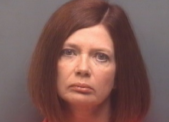
Kimberly R Hobson

The former director of finance for UNC Regional Physicians was charged Tuesday with embezzling more than $1.5 million while she worked at High Point (N.C.) Regional Health, part of Chapel Hill, N.C.-based UNC Health Care.

The former High Point Regional Health employee, Kimberly Hobson, was charged with felonious embezzlement, according to the Winston-Salem Journal.

Hospital officials discovered the alleged embezzlement July 28 and subsequently fired Ms. Hobson.

She is being held at High Point jail on $1 million bail. Her next court date is set for Sept. 15.

The investigation into the alleged embezzlement is ongoing on the state and federal levels, according to the report.

IRS revokes hospital’s tax-exempt status for failure to comply with ACA rule

http://www.beckershospitalreview.com/finance/irs-revokes-hospital-s-tax-exempt-status-for-failure-to-comply-with-aca-rule.html

Image result for IRS

The Internal Revenue Service has revoked the tax-exempt status of an unnamed nonprofit hospital for failure conduct a community health needs assessment, adopt an implementation strategy and make it widely available to the public.

In a letter dated Feb. 14, 2017, and released earlier this month, the IRS said it revoked the hospital’s tax-exempt status for failure to comply with section 501(r) of the Internal Revenue Code.

The ACA added new requirements that hospitals must meet to qualify as a tax-exempt facility under section 501(c)(3) of the Internal Revenue Code. Specifically, the ACA added section 501(r), which imposes four new requirements, one of which requires hospitals to conduct a community health needs assessment at least once every three years and adopt an implementation strategy to address community health needs identified in the assessment.

The IRS revoked the tax-exempt status of the unnamed hospital for what the agency referred to as “egregious failures when reviewed in the context of [section] 501(r).” Although the name of the hospital is not included in the letter from the IRS, previous correspondence from the agency identified the facility as a disproportionate share hospital and a critical care access facility.

The IRS noted a revenue agent met with the hospital’s CEO, CFO and COO during the audit, and the administrators made it clear the organization “had neither the will, the financial resources, nor the staff to follow through with the CHNA process.”

Dignity Health, UCSF Health Announce Bay Area Collaboration

https://www.definitivehc.com/news/dignity-health-ucsf-health-announce-bay-area-collaboration?source=newsltr-news&utm_source=newsltr-news&utm_medium=email&utm_campaign=08-15-17

Image result for ucsf medical center san francisco

Image result for dignity health

Dignity Health and UCSF Health have formalized an affiliation that will combine the best of academic medicine and community-based care, increasing access to high-quality, affordable care and improving the overall health care experience for patients in the San Francisco Bay Area.

The affiliation will bring UCSF Health’s academic medical center expertise to three Dignity Health hospitals in the Bay Area: Sequoia Hospital in Redwood City, and Saint Francis Memorial Hospital and St. Mary’s Medical Center in San Francisco. The organizations also have signed a Letter of Intent for physicians at Dignity Health Medical Group Sequoia and at Dignity Health Medical Group Saint Francis/St. Mary’s, both services of Dignity Health Medical Foundation, to collaborate with UCSF clinical faculty in sharing best practices and improving access, quality, efficiency and coordination of care for shared patients. In addition, these three Dignity Health hospitals have joined the Canopy Health accountable care network, to provide a strong continuum of care as patients’ health needs transition between primary and specialty care.

“Health care works best when we collaborate to offer the best thinking and the latest medical advances to our patients,” said Shelby Decosta, senior vice president and chief strategy officer for UCSF Health. “Dignity Health’s focus on excellent care, as well as the humanity of that care in a community setting, is the perfect balance for UCSF Health’s depth of knowledge and specialty services. Together, we can draw upon each other’s expertise for quality and service improvements, and best practices, and to provide specialty care with shorter wait times and a better patient experience.”

This new affiliation will enhance medical, surgical and related health care services in the Bay Area by bringing together UCSF’s and Dignity Health’s expertise, while providing patients with a more seamless experience between primary and specialized care in a community hospital setting.

“UCSF Health is an excellent partner in the Bay Area, and we are looking forward to a collaboration that provides increased patient access to high-quality care,” said Todd Strumwasser, MD, senior vice president of operations for Dignity Health Bay Area. “We are pleased to welcome UCSF physicians to our community hospitals, and offer patients a continuum of care never before available in the Bay Area.”

The alliance brings together the two longest-serving health providers in San Francisco, and reflects a long-standing and evolving relationship between Dignity Health and UCSF Health – two health systems known for their clinical excellence and missions to provide quality, affordable care to all, including the underserved. Dignity Health and UCSF Health have previously collaborated to improve pediatric burn care, acute rehabilitation, and cardiac arrhythmia, among other conditions.


Trump administration, HHS stepping away from Affordable Care Act promotion, bundled payments

http://www.healthcarefinancenews.com/news/trump-administration-hhs-stepping-away-affordable-care-act-promotion-bundled-payments?mkt_tok=eyJpIjoiWlRsaE56QTFZMk00WVdVdyIsInQiOiJPV2NZVXpmSXoxY2s2blNFdG9DYmt0UHh1bnkzc0NcL0R3YnpCcEhqdm5lWVwvNlJrN2xDVlwvUFZ5ZFBzOElGY253OGFMZWVKVnh5a3dTSDM1RFwvdFN3cklQTGd0NmN0YzFrQjIrK21WUW5UTWhaUXVUdUhZZU41dGNwcUtvYmZUaEMifQ%3D%3D

New bundled payment models for cardiac care may be on chopping block, along with changes to joint replacement.

Lacking a repeal and replacement bill for the Affordable Care Act, President Trump appears to be following through on his Twitter promise to “let Obamacare implode.”

The Trump administration and the Department of Health and Human Services is distancing itself from several groups which in the past have helped market open enrollment, according to talkingpointsmemo.

HHS has not reached out to the Latino Affordable Care Act Coalition, the United Methodist Church, the American Congress of Obstetricians and Gynecologists, the American Medical Student Association, the National Urban League, the National Latina Institute for Reproductive Health, the National Hispanic Medical Association, and the National Partnership for Women and Families, according to the report.

Open enrollment in the ACA marketplace starts November 1.

The new bundled payment model for cardiac care coordination and cardiac rehabilitation may also be on the chopping block, along with unspecified changes to the joint replacement model, according to a proposed rule published August 10 in the Office of Management and Budget.

The models were introducted by the Centers for Medicare and Medicaid Services’ Innovatoin Center, or CMMI, run by Patrick Conway, MD, who last week announced he was leaving CMS to head Blue Cross Blue Shield North Carolina.

HHS Secretary Tom Price, an orthopedic surgeon appointed by the president, has consistently voiced his opposition to mandatory bundled payment programs.

Chinese billionaire Tianqiao Chen makes big stock buy in CHS, brings stake to 22.1%

http://www.healthcarefinancenews.com/news/chinese-billionaire-tianquo-chen-makes-big-stock-buy-chs-brings-stake-221?mkt_tok=eyJpIjoiWlRsaE56QTFZMk00WVdVdyIsInQiOiJPV2NZVXpmSXoxY2s2blNFdG9DYmt0UHh1bnkzc0NcL0R3YnpCcEhqdm5lWVwvNlJrN2xDVlwvUFZ5ZFBzOElGY253OGFMZWVKVnh5a3dTSDM1RFwvdFN3cklQTGd0NmN0YzFrQjIrK21WUW5UTWhaUXVUdUhZZU41dGNwcUtvYmZUaEMifQ%3D%3D

Image result for Chinese billionaire Tianqiao Chen

The purchases were made through Chen’s various Shanda affiliates, documents showed.

Chinese billionaire Tianqiao Chen is once again raising eyebrows in the healthcare sector, after significantly increasing his stake in struggling healthcare organization Community Health Systems, which is based in Franklin, Tennessee.

According to a filing with the Securities and Exchange Commission, now owns 22.1 percent of CHS‘ outstanding shares of common stock after buying up roughly 9.8 million additional shares over the last week. The price per share varied from $6.1 to $8 per share.

The purchases were made through Chen’s various Shanda affiliates, documents showed.

The big stock buy will inevitably be viewed by at least some as a move to take a bigger interest in the struggling company, something that has been speculated about in the past when Chen first came on the scene and bought a large block of stock in the company last year.

A spokesperson for Shanda Group issued the following statement. “Shanda maintains a good relationship with the CYH management team and intends to engage with them regarding business and operations, and the status of CYH’s ongoing turnaround strategy.”

CHS has been in the news lately as it forges ahead with its ambitious divestiture plan to offload 30 hospitals in hopes of alleviating its billions-large debt load and tightening up its operations. So far the company has sold 20 of those hospitals and has plans in the works to unload the remaining ten. It has also said in a recent earnings call that they are entertaining plans to sell even more, but no definitive details have been released.