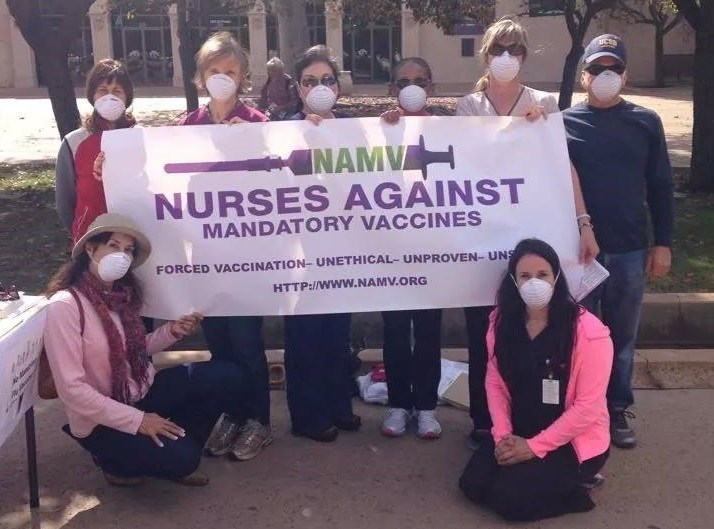
Essentia to continue mandatory flu shot policy

https://www.beckershospitalreview.com/human-capital-and-risk/essentia-to-continue-mandatory-flu-shot-policy.html?origin=bhre&utm_source=bhre

Related image

Duluth, Minn.-based Essentia Health rolled out a mandatory flu shot policy last year, and the health system will continue the program this year.

Under the program, employees had until Nov. 20, 2017, to receive a flu shot, obtain a medical/religious exemption or face termination. Essentia reported more than 99.5 percent compliance with the program.

For 2018, Essentia will continue its mandatory flu shot program, which also applies to students who train and vendors who operate at the health system’s facilities, as well as people who volunteer through Essentia programs.

To ensure there is plenty of time to review medical/religious exemptions before this year’s Nov. 20 compliance deadline, Essentia moved up the deadline to submit exemption requests.

“The first year [is] the most difficult because everyone [is] doing first-time medical and religious exemption requests,” said Rajesh Prabhu, MD, infectious disease and chief patient quality and safety officer for the system. “Those granted medical exemptions last year still [have their medical exemptions] in place. For religious exemptions, they just have to confirm their belief hasn’t changed from last year.”

He expects compliance to increase this year since fewer people need to request medical exemptions for the first time. Essentia now has 14,700 employees and began its flu shot campaign Oct. 2.

Dr. Prabhu encouraged other systems or hospitals considering a mandatory flu shot program to focus on the reasoning behind beginning the program.

“It’s not just a technical change. You have to get everyone to feel why this is important for not only our employees but [also] the patients we serve. We focus a lot of efforts on that end,” he said.

Dr. Prabhu said support from leadership helped make the first year of Essentia’s mandatory flu shot program a success.

“We had support from our CEO and everyone in leadership,” he said. “[They had] direct, in-person communication with some of those hesitant to get vaccinated because sometimes it’s good to talk to people to understand their concerns and barriers.”

Lessons learned

Essentia announced its mandatory flu shot program in September 2017 and some employees felt they didn’t get enough notice to comply. However, Dr. Prabhu said he believes some employees would not have complied with the program even if they were given more time.

“No matter how much lead time you give, I don’t think it will change the minds of people who are resistant to get the influenza vaccine,” he said.

Essentia’s flu shot policy encountered opposition from unions as well. The Minnesota Nurses Association and some other labor groups that represent Essentia employees continue to challenge the flu shot policy. In July, an arbitrator sided with Essentia over the United Steelworkers Union regarding the policy.

Despite the opposition and a few challenges in the initial rollout, Dr. Prabhu said Essentia needed the policy. He said the system was not going to get to where it wanted to be with its previous voluntary policy, which had 82 percent compliance. And, after evaluating the first year, Essentia decided it was necessary to continue the policy into the 2018-19 flu season.

2018-19 flu season

For this flu season, the CDC recommends everyone 6 months and older receive a flu vaccine by the end of October. Nasal spray FluMist was not recommended last season, but it is recommended for 2018-19 as an option for flu vaccination of nonpregnant individuals age 2 to 49.

It’s unclear how severe the 2018-19 flu season will be. Last year’s flu season was particularly severe, with about 900,000 people hospitalized and about 80,000 people dead due to the virus.

Dr. Prabhu said the flu season hasn’t hit the Duluth area yet, but Essentia is trying to do everything possible to prevent the spread of the virus among patients and staff.



California health system’s bankruptcy challenged by employee union

https://www.beckershospitalreview.com/finance/california-health-system-s-bankruptcy-challenged-by-employee-union.html

Image result for California health system's bankruptcy challenged by employee union

El Segundo, Calif.-based Verity Health System, the nonprofit operator of six hospitals, filed for bankruptcy protection Aug. 31. The bankruptcy proceedings are being challenged by SEIU-UHW, a union representing 2,000 workers at Verity Health hospitals.

The hospitals were originally owned by Los Altos, Calif.-based Daughters of Charity Health System. The financially troubled system began seeking a buyer for the hospitals in 2014, and Integrity Healthcare, a company created by BlueMountain Capital Managementtook over the facilities in 2015 and renamed them Verity Health System. Billionaire Patrick Soon-Shiong, MD, bought Integrity in July 2017, according to the Los Angeles Times.

Dave Regan, president of SEIU-UHW, expressed concern about Verity entering bankruptcy.

“When Verity bought these hospitals from Daughters of Charity four years ago, they made promises to these communities that they would not lose access to the care they needed,” he said in a press release. “Now it looks like Verity’s billionaire owner wants to go back on those commitments.”

In the bankruptcy filing, Verity seeks court permission to sell the hospitals from any liens and encumbrances. SEIU-UHW contends this shows Verity’s “intent to nullify their obligations both to their union collective bargaining agreements and the conditions of sale imposed by former Attorney General Kamala Harris when Verity purchased the hospitals.”

By challenging the bankruptcy filing, SEIU-UHW intends to ensure the hospitals are kept open and continue to meet pension obligations and maintain current services and levels of employment.


‘Disrespected’: UC Davis health care workers say their proposed wage increase is ‘garbage’

https://www.sacbee.com/news/local/health-and-medicine/article215886990.html

Image result for ‘Disrespected’: UC Davis health care workers say their proposed wage increase is ‘garbage’

Dietitians, physical therapists and other health care professionals at UC Davis Health say that, over nearly a year of bargaining, the university’s labor negotiators have been skipping sessions and have not offered raises of more than 2 percent a year.

Ahead of one bargaining session attended by a Bee reporter this spring, labor negotiator Dan Russell asked dozens of the rank-and-file members of the University Professional and Technical Employees-Communications Workers of America: “How does that offer make you feel?”

Voices rose above a murmur of discontent, yelling, “not good,” “insulted” and “disrespected,” among other things.

Physical therapist Rachel Hammond told the UC bargaining team that day: “You can go onto the Social Security Administration website, and if you average out over the last 40 years, the average (cost-of-living adjustment) is 4 percent per year, so your offer of 2 percent a year is garbage. … When are you prepared to give us a fair contract?”

Claire Doan, a spokeswoman for the UC Office of the President, confirmed that the university system had offered raises of 2 percent a year over the life of a four-year contract. She said administrators also had offered to sweeten raises for employees in certain classifications, based on local market wages, to help ensure that pay for UC health care professionals remains competitive.

“Despite multiple proposals presented by the university, it took union leaders months to finally respond with a counter-proposal,” she said in a statement emailed to The Bee.

“UPTE leaders are demanding double-digit pay increases that are unreasonable and out of line with what other UC employees receive: 16.5 to 22 percent over the term of the agreement.”

Doan said President Janet Napolitano and other UC leaders would have no further comment because they believe the proper venue for detailed discussion of wages and related issues is at the negotiating table, not the media.

While pay is a huge issue for the health care professionals in UPTE-CWA, they are just as concerned about what they see as UC’s attempts to treat them like second-class employees, said senior dietitian Greg Wine, a labor representative for 800-plus UPTE Local 6 UCD Medical Center employees.

One example is how the university system rewards UPTE-CWA health care professionals when it comes to holiday pay, said Brandon Sessler, a physician assistant at UC San Francisco. The union’s members receive overtime pay for just six holidays, while nurses get overtime for nine such days.

Respiratory therapists, physical therapists and other UPTE-CWA members are working side-by-side with nurses on those three additional holidays, he said.

Union representatives said UC negotiators have come to only six of 16 bargaining sessions.

Wine said UC Davis negotiators told him they are too short-staffed to show up, though he said they have done so for talks with the California Nurses Association and AFSCME 3299. The attendance record didn’t change, he said, until he voiced complaints to UC Davis Chancellor Gary May and UC Davis Medical Center CEO Anne Madden Rice.

“Our clinical lab scientists are working 16-hour, back-to-back shifts,” Wine said. “They don’t tell units that they are understaffed and we cannot perform their blood work. … We cannot say to the oncology ward or our cancer patients: ‘Because of our lack of staffing … we cannot provide any services to you for the next several months.’”

Wine and other UPTE-CWA members said their departments at UCDMC are severely understaffed because the university has a hard time recruiting since salaries aren’t comparable to Kaiser or Sutter in the Sacramento market.

Neurology dietitian Erin Lavin, a UC Davis graduate, said she came back to work at UCD because she had loved being part of research there during her years as an undergraduate and wanted to have the opportunity to continue doing it while also helping patients.

Lavin said she’s taught nutrition classes in the community and at UCDMC, but always on her own time, because UC Davis doesn’t offer her professional leave for that. That would be more palatable, Lavin said, if she at least earned as much as her peers at other local health systems.

“I want to be the best dietitian I can be, and I’ll never stop doing that,” she told UC negotiators, “but I would hope that you would also try to be the best you can be for me.”

Wine said that the university had offered to increase wage ranges for new hires in some occupations beyond the 2-percent-a-year offer, but they did not propose adjusting salaries for any current employees such as he and Lavin.

The university system wants to be competitive when it comes to labor recruitment, Wine said, but once employees are hired, the university has no mechanism to address market inequities in pay.

Wine and other UC union representatives said they are all facing demands from the UC president that would shift risk from the UC system onto employees.

The UPTE-CWA health care professionals contract, which expired in October, was one of the last of six UC labor agreements to lapse without prospect for settlement, Wine said. UPTE-CWA also represents technical workers and research-support professionals — roughly 15,000 UC employees in total — and both of those contracts expired in September 2017.

About 14,000 registered nurses at UC have been without a contract since September, when an extension ran out. They are represented by the California Nurses AssociationAFSCME 3299 represents 24.000 workers in the UC system: Its patient-care workers saw their contract expire in December, and its service-unit agreement lapsed in June 2017.

All of the unions worry that UC wants to move new union hires into 401(k)-style retirement plans and away from the traditional pension that promises set income for retirement.

In a traditional pension, companies make all payments to the retirement plan and take on all investment risk. In a 401(k), workers must contribute money from their salaries toward retirement and assume the investment risk.

Pension money managers have traditionally outperformed 401(k) money managers, and although some companies have reneged on their obligation, most have proven to be more effective contributors to pensions than U.S. workers have been to their 401(k) plans. A survey of 2,003 adults by Northwestern Mutual found that one in five Americans have nothing saved at all for their golden years, and one in three have less than $5,000 put away.

With this sort of record, Wine said, Medi-Cal — and that means taxpayers — could end up paying to care for UC retirees who choose a 401(k) option. But this is not the only shifting of risk that UC is attempting during current contract negotiations, Wine said.

“They want to eliminate any cap on the shared cost of our health benefits, and they want to eliminate any cap on parking costs for their employees,” Wine said. “When you do that, what cost-of-living increase are you really getting?…Currently, we believe if we accepted the 2 percent and we accepted elimination of these caps to the costs of benefits and parking, we believe the employee would actually take home less (money).”

Both UPTE leaders and UC officials said they will continue talks in hopes of bringing negotiations to a close with a fair agreement. Wine noted that during the last contract negotiations with UC, however, UPTE-CWA members went nearly three years without a contract before an agreement was reached.


Massive UC workers’ strike disrupts dining, classes and medical services

http://www.latimes.com/local/education/la-me-uc-workers-strike-20180507-story.html

Image result for Massive UC workers' strike disrupts dining, classes and medical services

A massive labor strike across the University of California on Monday forced medical centers to reschedule more than 12,000 surgeries, cancer treatments and appointments, and campuses to cancel some classes and limit dining services.

More than 20,000 members of UC’s largest employee union, the American Federation of State, County and Municipal Employees Local 3299, walked off their jobs on the first day of a three-day strike. They include custodians, gardeners, cooks, truck drivers, lab technicians and nurse aides.

Two altercations involving protesters and people driving near the rallies were reported at UCLA and UC Santa Cruz. At UCLA, police took a man into custody Monday after he drove his vehicle into a crowd, hitting three staff members. They were treated for minor injuries at the scene and released, said Lt. Kevin Kilgore of the UCLA Police Department.

The system’s 10 campuses remained open, largely operating on regular schedules, and protests were peaceful and even festive.

At UCLA, workers marched through campus in green union shirts that said “We run UC” and held signs calling for equality, respect and more staff. Some brought children and walked dogs. Drivers honked in solidarity. Hundreds of workers rallied in front of the Ronald Reagan UCLA Medical Center, taking taco breaks under green balloons.

Oscar Rubio, a UCLA food services worker, said that staffing at some dining hall stations has been cut from five workers to three, leading to more injuries for those who remain.

Top UC officials “make more money … while we suffer,” Rubio said. “We’re not asking to make like they make. We’re asking to support us enough to pay our rent.”

The walkout is expected to widen Tuesday, when two other unions will join sympathy strikes. About 14,000 members of the California Nurses Assn., who work at UC’s medical centers and student health clinics, are set to walk off their jobs, along with 15,000 members of the University Professional & Technical Employees, who include pharmacists, clinical social workers, physical therapists, physician assistants and researchers.

The union and university reached a bargaining impasse last year. Subsequent mediation efforts have failed to produce an agreement on wage increases, healthcare premiums and retirement terms. A recent union study on pay disparities angered workers, said AFSCME spokesman John de los Angeles. The study used UC data, union officials say, to show that starting wages of blacks and Latinos were about 20% lower than white workers in comparable jobs.

“The strong showing sent a clear message to administrators that our workers are very concerned about inequity and they’re willing to be on the picket line until UC comes up with a proposal to address their concerns,” De los Angeles said.

UC officials say they cannot confirm the study’s accuracy. They criticized the union’s demands, which include a multiyear contract with annual pay raises of 6%, no increase in healthcare premiums and continued full pension benefits at the retirement age of 60. The university is offering 3% annually over four years, which officials say is equal to raises given to other UC employees. UC also wants to raise the retirement age to 65 for new employees who choose a pension instead of a 401(k) plan and to raise monthly health insurance premiums by a maximum $25.

“Unfortunately, the only thing union leaders accomplished today is hurt the care we provide our patients and the services for our students,” UC spokeswoman Claire Doan said in an email Monday. “It will do nothing to change UC’s position on AFSCME’s unreasonable demands for excessive raises and benefits.”

At UC’s request, a Sacramento County Superior Court judge issued a temporary restraining order Friday barring certain essential employees, such as pharmacists and respiratory therapists, from participating in order to protect public health and safety. AFSCME also assembled a “patient protection task force” to respond to life-threatening emergencies.

UC’s five medical centers hired contract workers to fill in during the strike and scrambled to reschedule exams and treatments. UC San Francisco rescheduled more than 12,000 appointments for surgeries and treatments, including chemotherapy and radiation.

UC Davis rescheduled several hundred appointments, including more than 100 cancer surgeries and 150 radiology exams. But campus spokeswoman Kimberly Hale said 78% of UC Davis health workers showed up for work. UC San Diego directed emergency room patients to other hospitals.

At UC Santa Cruz, where more than 150 protesters assembled at both entrances Monday, Chancellor George Blumenthal canceled most morning classes. Services were limited for hours at the student health center and some libraries and dining halls. Santa Cruz Metro buses did not enter the campus, dropping riders off at the entrance.

Samuel Walcoff, a sophomore studying computer science, said he had to trek up the hills to get to his afternoon lab and scrounge for food.

“I’m not at all opposed to people protesting and striking, but to have students who are powerless pay the price is extremely unfair,” he said.

At UC Berkeley, however, freshman Ella Smith said she supported the workers even though there was no Peet’s Coffee service inside the Golden Bear Cafe.

“Us not getting our morning coffee does not compare to the injustice UC workers face due to the inequity and inequality in their work experience,” she said in an email.

Some faculty members chose to teach off-campus to avoid crossing the picket line or to use the strike to discuss labor rights.

Paul Spickard, a UC Santa Barbara professor, has invited striking workers to speak Tuesday to the more than 300 students in his modern world history class.

“The UC system has been starved of money by the state,” he said in an email. “We have chosen to pay even lower wages to staff … than to faculty. That is shameful. They are our colleagues and the university would not run without them.”

Reyna and Dennis Avila both work at UCLA Medical Center — he as a hospital assistant, she as a secretary, monitor technician and nurse’s assistant. To juggle their schedules with one car and different work shifts, the couple leave their home in Inglewood at 2:45 a.m. Dennis starts work at 4 a.m. while Reyna sleeps in the car until her shift begins at 7 a.m. He takes the car home, and she returns by bus.

Reyna said her pay increases over two decades at UCLA have not kept up with rising rent.

“It’s gotten harder to make ends meet,” she said.


SEIU health workers set to protest potential Kaiser layoffs

https://www.healthcaredive.com/news/seiu-health-workers-set-to-protest-potential-kaiser-layoffs/522428/

Dive Brief:

  • “Thousands of healthcare workers” organized by SEIU-UHW are set to protest from May 1-18 at 33 California hospitals owned by Kaiser Permanente, the union said Friday.  At issue are a variety of announced plans to lay off pharmacy warehouse workers and relocate call center jobs.
  • Kaiser Permanente wrote to Healthcare Dive in an email that the decision to outsource the pharmacy storage and distribution network came after extensive discussions with SEIU-UHW and other unions. The company pointed to the “many regulatory, technological and efficiency challenges we face now and in the future,” as factors that influenced its decision.
  • But Service Employees International Union-United Healthcare Workers West argues that the decision is unbecoming of a nonprofit organization that had its profits rise 22% in 2017 with $28 billion in reserves on hand.

Dive Insight:

The protests appear to be the continuation of similar actions earlier this year when SEIU organized protests at 32 hospitals in February and March.

The company recently issued an official notice to lay off 61 pharmacy warehouse workers in Downey, California. According to SEIU-UHW, the company plans to lay off 175 more pharmacy warehouse employees in Oakland, Livermore and Los Angeles and relocate 700 call center jobs to cheaper areas of the state.

The union noted that 55,000 Kaiser Permanente employees in California are members of SEIU-UHW. The national agreement with Kaiser for a broader group of unions expires Sept. 30.

John Nelson, vice president of communications at Kaiser Permanente, called the claims by SEIU-UHW misleading.

“Kaiser Permanente is growing, and we are adding jobs overall. As one of the largest private employers in California with more than 149,000 employees and 16,000 physicians in the state, since 2015, we have added more than 13,000 jobs in California and continue to add jobs with more than 12,000 open staff positions and hundreds of physician positions,” Nelson said in a statement.

It appears that politics may be coming into play. Several elected officials have sent letters including California Democrat Reps. Tony Cardenas, Grace Napolitano, Adam Schiff, Lucille Roybal-Allard and Brad Sherman urging Kaiser Permanente to reconsider its plans.

“It is imperative that Kaiser Permanente continue to flourish by providing quality healthcare to patients while also being a good partner when it comes to job creation which benefits our community,” former California Senate President Pro Tempore Kevin De León wrote in a letter.


California Unions Secure 12% Raises from Kaiser Permanente, Dignity Health

http://www.healthleadersmedia.com/nurse-leaders/california-unions-secure-12-raises-kaiser-permanente-dignity-health?utm_source=edit&utm_medium=ENL&utm_campaign=HLM-Daily-SilverPop_03202018&spMailingID=13157517&spUserID=MTY3ODg4NTg1MzQ4S0&spJobID=1361851715&spReportId=MTM2MTg1MTcxNQS2

Image result for flexing muscles

Under the terms of separate, five-year contracts, about 34,000 workers in the state expect their wages to rise at least 12%, with lump sum payments added thereafter.

Two labor unions in California announced Monday that they have reached separate contract deals with major providers in the state.

Oakland-based Kaiser Permanente, which operates 21 medical centers and other facilities in central and northern California, agreed to a 12% across-the-board wage increasefor the 19,000 registered nurses and nurse practitioners it employs, according to the California Nurses Association (CNA).

San Francisco-based Dignity Health, which operates throughout California, agreed to a 13% wage increase over five years for the 15,000 union members it employs as healthcare workers, according to SEIU-United Healthcare Workers (UHW) West.


The five-year deal with Kaiser Permanente is pending ratification by CNA members, while SEIU-UHW members already ratified their five-year deal with Dignity Health.

“Our new contract maintains employer-paid family healthcare and provides rising wages, and that security and peace of mind enables us to focus on caring for our patients,” Dennis Anderson, a laboratory assistant who works for Dignity at Mercy Hospital in Folsom, California, said in a statement.

The deal details: Kaiser Permanente

The tentative agreement with Kaiser Permanente will ultimately benefit patients, according to CNA Executive Director Bonnie Castillo.

“Protecting the economic security of our future RNs is essential to defending the health of everyone who will be a patient today and tomorrow,” Castillo said in a statement. “This agreement gives us a strong foundation for health security for Kaiser nurses and patients for the next five years in a turbulent time of health care in our state and nation.”

Key provisions of the contract, according to CNA, include the following:

  • Additional staffing: Kaiser will add 150 RN full-time-equivalents to assist in its migration to a new computer system, with 106 of those positions to be posted within 90 days of the contract’s ratification.
  • One wage scale: Kaiser agreed to withdraw a proposed four-tier wage scale for RN/NP new hires—a proposal the union said would otherwise “promote workplace divisions between current nurses and new RN graduates.”
  • Wage increases: The agreement calls for 12% wage increases for all RNs and NPs, with a 3% lump sum over five years.

The agreement also calls for 600 formerly non-union RN patient care coordinators to be included in the contract with the other RNs and NPs employed by Kaiser.

A spokesperson for Kaiser Permanente could not be immediately reached Tuesday for comment.

The deal details: Dignity Health

The ratified agreement between SEIU-UHW and Dignity Health—which lasts through April 30, 2023—includes the following key provisions, according to the union:

  • Benefits: Union members employed by Dignity will keep their fully paid, employer-provided family healthcare.
  • Wage increases: Workers secured 13% raises over five years, with a 1% bonus in the second year.
  • Funding for training: Dignity also agreed to contribute another $500,000 annually to a joint labor-management training program designed to keep workers on top of the latest changes in healthcare, the union said.

This deal comes as Dignity Health prepares to merge with Catholic Health Initiatives, based in Chicago, which would form one of the largest nonprofits in the country.

A spokesperson for Dignity Health could not be immediately reached Tuesday for comment.

Judge rules against Berkshire Medical Center in court battle over planned nurse strike

https://www.beckershospitalreview.com/human-capital-and-risk/judge-denies-berkshire-medical-center-s-request-to-halt-nurse-strike.html

Image result for nurse strike

Pittsfield, Mass.-based Berkshire Medical Center lost its court battle to avert a planned Oct. 3 nurse strike, according to a report on iBerkshires.com.

The 298-bed community hospital filed a legal request for an injunction to avert the planned strike last month. However, U.S. District Judge Mark Mastroianni in Springfield, Mass., denied Berkshire Medical Center’s request Friday, meaning the 24-hour walkout is still scheduled, according to the report.

In response to the judge’s ruling, the Massachusetts Nurses Association, which represents nearly 800 Berkshire Medical Center nurses, told Becker’s via email: “If the hospital was really serious about doing anything to stop the strike, they would negotiate in good faith over the patient care conditions nurses are seeking. As [the] federal judge’s ruling shows, nurses have a legally protected right to advocate for themselves and their patients. BMC nurses are prepared to strike for 24 hours, but still hope that management does this right thing, returns to the bargaining table and seeks a fair agreement.”

Berkshire Medical Center expressed disappointment in the judge’s ruling.

“This strike does not serve anyone’s best interests — not the nurses, not the hospital’s and not the community’s, and can only serve to harm all three,” the hospital said in an emailed statement to Becker’s. “We are fully prepared to provide uninterrupted care throughout the five-day period and have been preparing for this eventuality for several months. The fact that this is the third such strike by the MNA since June makes it evident that this is a tactic the union is using to promote its statewide political agenda.”

Both sides have been negotiating for about a year, with key sticking points including staffing and health insurance. The 24-hour strike is scheduled to begin at 7 a.m. Oct. 3 and last until 7 a.m. Oct. 4. At that point, hospital officials have said nurses won’t be able to return to work for another four days because Berkshire Medical Center hired replacement workers for a minimum five-day contract. The MNA has also scheduled a “patient safety vigil” Oct. 2 prior to the planned strike.


Nursing strikes can cause harm well beyond labor relations

http://www.healthcaredive.com/news/nursing-strikes-can-cause-harm-well-beyond-labor-relations/447627/

Image result for hospital labor strike

hen officials at Tufts Medical Center in Boston refused to allow nurses just off of a one-day strike return to their jobs, the footage spread across TV news programs and social media. Boston Mayor Martin Walsh, a former labor leader, spoke in favor of the striking nurses and the hospital found itself in an uncomfortable spotlight.

About 1,200 nurses went on a one-day strike after their union, the Massachusetts Nurses Association, and Tufts couldn’t come to a new contract agreement after more than a year of negotiations. Tufts, in turn, locked out the nurses when they attempted to return to work the next day.

Officials said the lockout was required because they needed to give at least five-day contracts to 320 temporary nurses brought in to fill the gap. The nurses are back on the job now without a new contract, but the strike and subsequent lockout got the public’s attention.

Hospital strikes aren’t that common — usually, the sides agree to a new contract. Strikes or threatened strikes in recent years have typically involved conflicts over pay, benefits and staff workloads.

When strikes do happen, however, they can hurt a hospital’s reputation, finances and patient care.

Strike’s effect on patient safety

study on nurses’ strikes in New York found that labor actions have a temporary negative effect on a hospital’s patient safety.

Study authors Jonathan Gruber and Samuel A. Kleiner found that nurses’ strikes increased in-patient mortality by 18.3% and 30-day readmission by 5.7% for patients admitted during the strike. Patients admitted during a strike got a lower quality of care, they wrote.

“We show that this deterioration in outcomes occurs only for those patients admitted during a strike, and not for those admitted to the same hospitals before or after a strike. And we find that these changes in outcomes are not associated with any meaningful change in the composition of, or the treatment intensity for, patients admitted during a strike,” they said.

They said a possible reason for the lower quality is fewer major procedures performed during a strike, which could lead partially to diminished outcomes. The study authors found that patients that need the most nursing care are the ones who make out worst during strikes.

“We find that patients with particularly nursing-intensive conditions are more susceptible to these strike effects, and that hospitals hiring replacement workers perform no better during these strikes than those that do not hire substitute employees,” they wrote.

Allina Health’s Abbott Northwestern Hospital in Minneapolis faced a patient safety issue during a strike last year that resulted in the CMS placing the hospital in “immediate jeopardy” status after a medication error. A replacement nurse administered adrenaline to an asthmatic patient through an IV rather than into the patient’s muscle. The patient, who was in the emergency room (ER), wound up in intensive care for three days because of the error. Allina said the error was not the nurse’s fault, but was the result of a communication problem.

The CMS accepted the hospital plan of correction, which included having a nurse observer when needed and retraining ER staff to repeat back verbal orders.

A strike’s financial impact

Hospitals also take a financial hit during strikes. Even the threat of a one- or two-day nurse strike can cost a hospital millions.

Bringing in hundreds or thousands of temporary nurses from across the country is costly for hospitals. They need to advertise the positions, pay for travel and often give bonuses to lure temporary nurses.

The most expensive recent nurse strike was when about 4,800 nurses went on strike at Allina Health in Minnesota two times last year. The two strikes of seven days and 41 days cost the health system $104 million. The hospital also saw a $67.74 million operating loss during the quarter of those strikes.

To find temporary replacements, Allina needed to include enticing offers, such as free travel and a $400 bonus to temporary nurses.

Even the threat of a strike can cost millions. Brigham and Women’s Hospital in Boston spent more than $8 million and lost $16 million in revenuepreparing for a strike in 2016. The 3,300-nurse union threatened to walk out for a day and much like Tufts Medical Center, Brigham & Women’s said the hospital would lock out nurses for four additional days if nurses took action.

At that time, Dr. Ron Walls, executive vice president and chief operating officer at Brigham and Women’s Hospital, said the hospital spent more than $5 million on contracting with the U.S. Nursing Corp. to bring on 700 temporary nurses licensed in Massachusetts. The hospital also planned to cut capacity to 60% during the possible strike and moved hundreds of patients to other hospitals. They also canceled procedures and appointments in preparation of a strike.

The Massachusetts Nurses Association and Brigham & Women’s were able to reach a three-year agreement before a strike, but the damage was already done to the hospital’s finances.

Richard L. Gundling, senior vice president of healthcare financial practices at Healthcare Financial Management Association, told Healthcare Dive that healthcare organizations need to plan for business continuity in case of an event, such as a labor strike, natural disaster or cyberattack.

“Business continuity is directly related to the CFO’s responsibility for maintaining business functions. The plan should include having business continuity insurance in place to replace the loss associated with diminished revenue and increased expenses during the event,” Gundling said.

These plans should provide adequate staffing, training, materials, supplies, equipment and communications in case of a strike. Hospitals should also keep payers, financial agencies and other important stakeholders informed of potential issues.

“It’s also key to keep financial stakeholders well informed; this includes insurance companies, bond rating agencies, banks, other investors, suppliers and Medicare/Medicaid contractors,” he said.


“Business continuity is directly related to the CFO’s responsibility for maintaining business functions. The plan should include having business continuity insurance in place to replace the loss associated with diminished revenue and increased expenses during the event.”

Richard Gundling

Senior vice president of healthcare financial practices, Healthcare Financial Management Association


Impact to a hospital’s reputation

Hospital strikes, particularly nurses’ strikes, can also wreak havoc on a hospital’s reputation. Nurses are a beloved profession. They work hard, often long hours and don’t make a fortune doing it. The median registered nurses’ salary is about $70,000, according to the Bureau of Labor Statistics.

Nurses’ contract disputes involving staffing levels are a sticky situation for hospitals. Nurses will almost always win the PR battle against hospital executives.

If a hospital can’t avoid a strike, Seitel said two keys for the organization are telling the truth and not being passive about untrue statements from the other side. They don’t want to be adversarial and escalate the situation, but go with a more measured approach.

Fraser Seitel, president of Emerald Partners, a communications management consulting company, told Healthcare Dive there are two ways that hospital leadership can avoid a strike.

“The best way to prevent a strike is by the management of the hospital having a robust communications program with the staff of the hospital as well as keeping competitive in terms of salaries and benefits,” said Seitel, who has helped hospitals during times of labor strife.

Seitel said labor issues often crop up when management isn’t communicative. Communication, transparency and competitive compensation are the best preventative medicine for a strike, he said.

Allina nurses reject contract, remain on strike

http://www.startribune.com/allina-nurse-voting-underway/395751251/?utm_campaign=KHN%3A+Daily+Health+Policy+Report&utm_source=hs_email&utm_medium=email&utm_content=35296430&_hsenc=p2ANqtz-8gHTYiuu9s2-hzZYnd1K270pbRMyWvz5PDcZt1i3W3MLFf53479V9qmXTqnKTYCGtVf9r4rk273AF7mRMZfoQlf_qMDg&_hsmi=35296430

itemprop

Allina Health hospital nurses voted Monday night to reject a contract offer from their employer, increasing the likelihood that their walkout over health benefits, staffing and safety concerns will go down as the longest nursing strike in Minnesota history.

While the Minnesota Nurses Association had not recommended a “no” vote, many nurses said they felt Allina’s latest offer was too similar to one they rejected in August, and to the terms their union negotiators rejected during last-ditch negotiations in September to avert a strike.

A new sign reading “New Lipstick, Same Pig” appeared at the picket line outside Allina’s Abbott Northwestern Hospital in Minneapolis Monday morning, foreshadowing the vote result that the union announced at 10:30 p.m. in St. Paul.

While she declined to provide exact results, MNA executive director Rose Roach called the vote margin “resounding” and said it sent a clear message from front-line nurses to go back to the bargaining table. “Each of them voted with their conscience, and with their patients and their families in mind,” she said.

The results mean that strikes will continue at Abbott as well as United Hospital in St. Paul, Mercy Hospital in Coon Rapids, Unity Hospital in Fridley and the Phillips Eye Institute in Minneapolis.

More than 4,000 nurses have been on strike for 29 days, since Labor Day, after a one-week walkout in June. The state’s longest nursing strike, in 1984, lasted 38 days.

Judge sides with hospitals over California ballot initiative to cap executive pay

http://www.mercurynews.com/elections/ci_30057620/judge-sides-hospitals-over-california-ballot-initiative-cap

Executive Compensation