What creates a toxic hospital culture?

https://www.kevinmd.com/blog/2015/10/what-creates-a-toxic-hospital-culture.html

Image result for toxic culture


Hospital culture is largely influenced by the relationship between administrative and clinical staff leaders. In the “old days” the clinical staff (and physicians in particular) held most of the sway over patient care. Nowadays, the approach to patient care is significantly constricted by administrative rules, largely created by non-clinicians. An excellent description of what can result (i.e., disenfranchisement of medical staff, burn out, and joyless medical care) is presented by Dr. Robert Khoo.

Interestingly, a few hospitals still maintain a power shift in the other direction — where physicians have a stranglehold on operations, and determine the facility’s ability to make changes. This can lead to its own problems, including unchecked verbal abuse of staff, inability to terminate bad actors, and diverting patients to certain facilities where they receive volume incentive remuneration. Physician greed, as Michael Millenson points out, was a common feature of medical practice pre-1965. And so, when physicians are empowered, they can be as corrupt as the administrations they so commonly despise.

As I travel from hospital to hospital across the United States (see more about my “living la vida locum” here), I often wonder what makes the pleasant places great. I have found that prestige, location, and generous endowments do not correlate with excellent work culture. It is critically important, it seems, to titrate the balance of power between administration and clinical staff carefully — this is a necessary part of hospital excellence, but still not sufficient to insure optimal contentment.

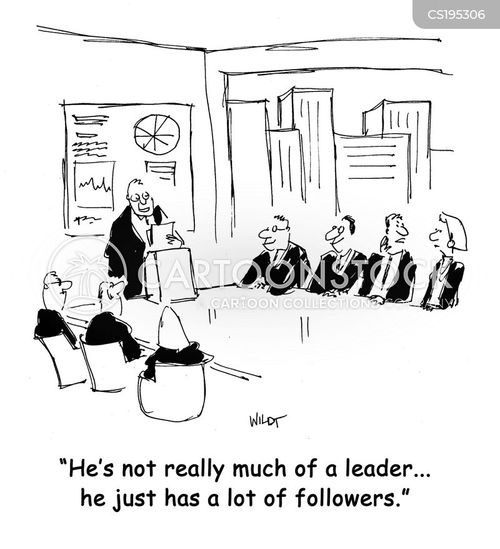
In addition to the right power balance, it has been my experience that hospital culture flows from the personalities of its leaders. Leaders must be carefully curated and maintain their own balance of business savvy and emotional IQ.  Too often I find that leaders lack the finesse required for a caring profession, which then inspires others to follow suit with bad behavior. Unfortunately, the tender hearts required to lead with grace are often put off by the harsh realities of business, and so those who rise to lead may be the ones least capable of creating the kind of work environment that fosters collaboration and kindness. I concur with the recent article in Forbes magazine that argues that poor leaders are often selected based on confidence, not competence.

The very best health care facilities have somehow managed to seek out, support and respect leaders with virtuous characters. These people go on to attract others like them. And so a ripple effect begins, eventually culminating in a culture of carefulness and compassion. When you find one of these gems, devote yourself to its success because it may soon be lost in the churn of modern work schedules.

Perhaps your hospital work environment is toxic because people like you are not taking on management responsibilities that can change the culture. Do not shrink from leadership because you’re a kind-hearted individual. You are desperately needed. We require emotionally competent leaders to balance out the financially driven ones. It’s easy to feel helpless in the face of a money-driven, heavily regulated system, but now is not the time to shrink from responsibility.

Be the change you want to see in health care.


What value-based care really needs: change management

http://www.healthcarefinancenews.com/news/what-value-based-care-really-needs-change-management?mkt_tok=eyJpIjoiWXpKbVlqbGxNREE0WWpsbSIsInQiOiJVaVI2M1wva2VlZDZScVVUNHcyb0NwdVVpYmQrR3V6QitlSXVFYzNmWXh0ZWd5TTRydXdhRlY0d2xmeUZseEgxNHNDVTRlS3ZwbGJFdlRVZ01OQXRlc0Y5VnFLelFiK3JySFp6UVBodmpjNWh1bituNHNLZ2F2OXIwUTRRTTRmVkIifQ%3D%3D

The transition is one careers will be built on, if health executives align their delivery systems properly, deploy analytics, and maintain focus.

Hospital executives have a tough balancing act regarding the transition to value-based payment models. While the industry is steadily moving toward this new framework, many providers and services still operate on the old fee-for-service model, which is becoming more and more obsolete. That means C-suite leadership has to make the switch to value a high priority for their organizations.

They’re under tremendous pressure these days. There’s been a significant market shift. Providers and their associated patient panels — a list of patients assigned to each care team in the practice — are shifting toward government business, and government business has a more pronounced focus on value-based care.

According to Jeff Smith, senior vice president of U.S. markets at Lumeris, the move to value has been accelerated by a shift in payer mix away from commercial and more toward Medicare, which yields lower margins. And the commercial rates providers have been receiving are on the downswing.

“Underlying their business model today, health systems have to profitably manage their fee-for-service business while making this transition to value,” Smith said. “It’s like having one foot on the dock and one in the canoe. They often don’t have the understanding or expertise to make that strategic shift and successfully move toward value. It’s a new frontier for many of these providers.”

What providers need, said Smith, is more robust alignment with their delivery system around the new model. It’s about having an engaged, aligned network that focuses not just on the patient in front of them, but on an entire population.

“It really is an enterprise-wide change management initiative. This the kind of transition that careers are built on,” Smith said. “Some of the things they need to avoid are embarking on this journey with a lack of, I would say, panel density, and aligned incentives with their physician network. It’s problematic if this is nothing more than a nuisance. It really has to be a strategic focus.”

An organization also has to have the right governance and leadership in place, he said. Even though something worked under the old model, it’s a mistake to assume that it will naturally evolve and adapt to the new. A successful transition requires significant practice transformation.

All that, and an organization still has to maintain a high standard of care. That’s where advanced analytics come in.

“It really requires an understanding of where the opportunities are,” Smith said, “and that’s driven by advanced analytics and practical insights, and where to apply their investments to get the maximum return. They also need to have a really strong plan in governance, and this really requires support from the C-suite. It has to start with the CEO.”

Because every hospital, health system and physician practice is different, a good place to begin is with a market assessment of provider and business opportunity, which can show how to align strategies around a blueprint for successful profitability. Alignment truly is a key component of success, as everyone needs to be on the same page, from the CEO down to the physicians delivering care.

And time is of the essence. Smith expects the journey to value to be near-complete within about three years.

“The transition has been remarkable to me,” he said. “The amount of change we’re seeing year over year is remarkable. It was primarily led by these government programs, but the private payers have really adopted a lot of these changes. There are significant changes in the payer community in general, and more to come.”


The CFO Confidence Crisis

https://www.kornferry.com/institute/CFO-succession-plan?mkt_tok=eyJpIjoiTlRJM09UWmxNREpqT1RGaSIsInQiOiJMcEhLaTZabUw0N1QxcTN3OUlqWVA4eldPcG1XRlwvWXJzbzVnM3c1M1JUYkNuRGhvTWFQTG9PenhJbnByOXkwcitLazlkbTh1UTBKQzEwRmx5YmMwZE9aWU1Hb0ZhdTkwVUp1RGhOUTJSNDU4UVpzcFZVSm9mVjE3K1NNTWkrNHIifQ%3D%3D

Few roles are as important as the chief financial officer at most companies, but the CFOs today who are thinking about tomorrow are growing nervous about a key talent issue. They just don’t think anyone else in the company can assume their role.

Indeed, according to a new Korn Ferry survey, 81% of CFOs surveyed say they want to groom the next CFO internally, but they don’t believe that there’s a viable candidate in-house. Currently, about half of new roles are filled internally. 

“The current CFO is the one charged with identifying and developing that talent, and since they know best the skills required to meet what’s coming, they are realizing the internal bench isn’t fully prepared,” says Bryan Proctor, senior client partner and Global Financial Officers practice lead at Korn Ferry.

The lack of confidence is owed in part to CFOs feeling that their firms’ leadership development programs haven’t kept up with the rapidly changing role of CFO. Core functions such as finance and accounting are increasingly being combined under one role, with CFOs citing a lack of resources or skills and career development opportunities as reasons for the merging. Korn Ferry surveyed more than 700 CFOs worldwide, asking them about their own internal talent pipelines. The top two abilities CFOs feel their direct reports need to develop are “leadership skills and executive presence” and “strategic thinking.” 

“The tapestry of skills and experiences CFOs of today and tomorrow need are vastly different than what was needed in the past,” says John Petzold, senior client partner and CXO Optimization lead at Korn Ferry. “The reason subfunctions are merging is because the focus is less on a role or person and more about the capabilities that need to be covered by a set of individuals.”

In essence, the CFO function is being deconstructed for optimization. Leaders are breaking down necessary functions based on their organization’s strategy and identifying people with a combination of those skills and piecing them together to get the right set of talent to execute against that plan. Core financial functions such as taxes, capital allocation, and M&A still need to be done accurately and in compliance with regulations, of course. But experts say the CFO role is becoming more about adapting and deploying talent in the most efficient manner possible. 

“The leadership profile of the future CFO is less about tactical, direct experience, and more about learning agility, adaptability, and big-picture global perspective,” says Proctor. “That kind of nimbleness and ability to pivot isn’t naturally ingrained in the typical CPA.” 


Turn-Around Efforts Start with a Look at Operations

http://www.healthleadersmedia.com/community-rural/turn-around-efforts-start-look-operations?spMailingID=13157517&spUserID=MTY3ODg4NTg1MzQ4S0&spJobID=1361851715&spReportId=MTM2MTg1MTcxNQS2

Image result for erosionSt

Even before a hospital shows signs of financial distress, the responsible action is to take a head-to-toe look at hospital operations to fully address financial and performance issues.

Hospital leaders may recognize the need for improvement but may not know where to turn. Since operations span the entire hospital, a head-to-toe operational assessment may be warranted to fully address financial and performance issues.

Following are high-level best practice tips that serve as cost-reduction and revenue enhancement strategies, and can help redirect an ailing situation toward a partial or full turnaround.

Evaluate labor and its costs. 
Labor costs typically account for 50 to 60 percent of a hospital’s operating revenue, so a thorough review of productivity is critical. While a productivity tool can help to set productivity targets, it also integrates a level of accountability toward helping to control labor expenses. Productivity standards, manager involvement, and executive oversight will move you toward your goals of greater efficiency while reducing labor costs.

Analyze supply costs.  
Second only to labor costs, supply spend represents significant expense for hospitals. Often, small hospitals don’t have the negotiating power, so look to the expertise of a group purchasing organization (GPO), or evaluate whether you have the right GPO with your interests in mind. The right GPO relationship can mean supply savings from 10 to 14 percent.

One key area to look at is your supply inventory. Have quantities been adjusted based on volumes, or types of procedures such as those performed in orthopedics or the cath lab? It may be possible to work with vendors to be charged for supplies when they’re needed (just-in-time delivery) versus overstocking for procedures that may be scheduled; this practice helps to free up dollars for other purposes. Also examine inventory “turns,” the number of times per year that supplies are being replaced. Based on our experience, a reasonable level of inventory turn is 9 to 12 times per year.

Examine revenue cycle management. 
Because the revenue cycle is a complex function, points in the process may be overlooked or broken. Your hospital may also face common challenges such as keeping your chargemaster current and competitively priced, and keeping up with each payer’s unique rates and payment methodology.

Additional areas to evaluate and address: ·

  • Have managed care contracts been updated or renegotiated? ·
  • Compare charges to reimbursement. Although you may be charging for an item at a fixed cost, it doesn’t necessarily mean that you will be reimbursed at that level.

Move ahead with greater confidence. 
Your overall action plans should identify who is responsible and accountable for each area of evaluation and opportunity. The discipline of frequent review helps to ensure that you are not drifting off the plan and that progress is occurring across all areas. A new level of accountability across team members is one indication that you have arrived. Be mindful that it does take time and diligence to impact turnaround efforts.