Leadership Thought of the Day


Despite recent uncertainty about the government’s commitment to value-based care, healthcare organizations remain focused on efforts to improve quality, patient care and employee engagement.
In 2017 the Centers for Medicare & Medicaid Services cancelled mandatory bundled payment models for hip fractures and cardiac care and also asked providers for feedback on other value-based payment models.
But healthcare organizations seem committed to the initiatives they have already put in place to improve quality. Indeed, last year healthcare leaders shared their successes, challenges and lessons learned as they worked to improve quality and patient outcomes. We’ve rounded up the most memorable quotes from these healthcare thought leaders about quality, the importance of physician engagement and how to achieve a culture of patient safety.
Here are six of our favorite quotes from our interviews and industry news and event coverage over the past 12 months:
Gary Kaplan, M.D., chairman and CEO of Virginia Mason Health System, explained in a webinar this fall how the Seattle system improved patient safety using a patient-centered approach. Virginia Mason’s safety culture transformation began in 2001, Kaplan said, when system leaders realized that a physician-centered approach alone would not improve patient care.
Felipe Osorno, an executive administrator at Keck Medicine of the University of Southern California, spoke at the Institute for Healthcare Improvement’s annual quality forum about strategies to engage physicians in improvement initiatives. The secret was designing a program in which physicians were respected for their competency and skills, their opinions were valued, they had good relationships with their medical colleagues, they had a broader sense of meaning in their work and they had a voice in clinical operations and processes, he said.
Wanda Cole-Frieman, vice president of talent acquisition at Dignity Health, talked to FierceHealthcare this summer after the California system was named by an online job platform as the best place to interview in 2017. Among its techniques: It assesses candidates’ behavioral competencies for human kindness, compassion and the human experience.
Gary Yates, M.D., a partner in strategic consulting at Press Ganey, explained in an interview that building and promoting a culture of safety at healthcare organizations is important to retain current staff members, but is also an especially effective recruiting tool for millennials, who will make up half of the workforce by the year 2020.
“People talk, and people ask about the culture inside different organizations,” Yates said. Putting the spotlight on safety and quality could “tip the scales” for young people.
FierceHealthcare caught up with Nicholas “Nico” R. Tejeda, CEO of The Hospitals of Providence Transmountain Campus in El Paso, Texas, at an American College of Healthcare Executives event. He talked about opening a new teaching hospital and establishing the culture of the organization from the beginning and with every hire.
There are no acceptable levels of errors, he said. And while it may be nearly impossible to achieve zero incidents, he still wants the organization he leads to strive for perfection.
A few years ago, Anthem decided to make a “rigorous” effort to boost the quality of its plans. And it’s demonstrating results, Anthem’s then-CEO Joseph Swedish said during the 2017 AHIP Institute & Expo. Now, more than half of the insurer’s Medicare Advantage enrollees reside in 4-star plans, compared to just 22% the year before.

Nearly 50% of Upper-Level Managers Avoid Holding People Accountable

46% of upper-level managers are rated “too little” on the item, “Holds people accountable … .” (HBR)
You missed the point if accountability is:
Accountability:
Accountability recognizes strength and honors performance.
Mutual accountability:
I’ve never been asked to lead a workshop on how to hold ourselves accountable. It’s always about others. That is the heart of the problem.
Accountability is something to work on together, not mandate from on high.
One-sided accountability:
Mutual accountability:
Jim Whitehurst, CEO of Red Hat, said, “Go into every interaction with those who work for you believing that you are as accountable to them for your performance as they are to you for their performance.”, and author of, “The Open Organization.”
Practice accountability:
Blurry responsibility leads to vague accountability. Vague accountability is no accountability.
Complexity is like fog to accountability.
What might mutual accountability look like in your organization?
How might leaders lift accountability out of the category of punishment?

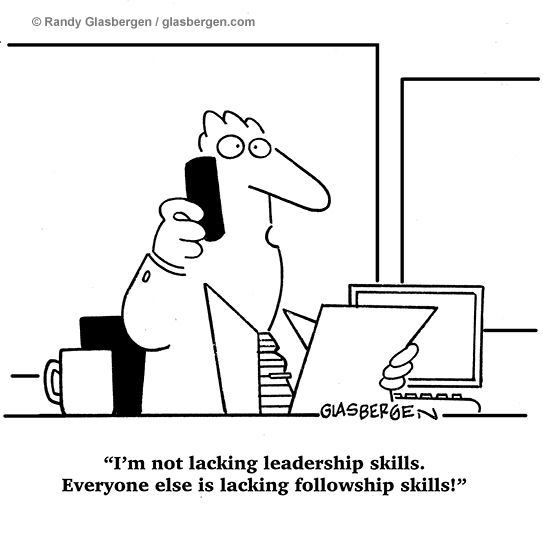

Leaders who suck the life out of people promote failure and embrace defeat.
The first four enemies of vitality:
#1. Distrust.
#2. Disrespect.
#3. Proper channels.
#4. Excluding the outside.
#5. Isolation: the message that others don’t matter
3 ways ineffective leaders practice isolation:
#6. Favoritism: discouragement for the masses. Energy for the favorites.
Leaders play favorites when they:
Suck-ups get ahead because flattery works.
#7. Lousy meetings: insulting the brains around the table
Talkative leaders suck the life out of meetings.
Rule of thumb: The leader of any meeting speaks no more than 25% of the time. (15 minutes in a 60 minute meeting.)
The worst romance is infatuation with the sound of your own voice.
#8. Cowardice: playing it safe is rewarded with advancement
Cowardly leaders:
Cowardly leaders suck the life out of people who want to get something done.
Which one of the eight enemies of vitality is most deadly?
What leadership behaviors suck the life out of people?