What all these health care mergers mean for patients

The health care industry is on a mergers-and-acquisitions bender right now. But, as my colleague Bob Herman reports this morning, it’s not clear whether all of that consolidation will leave patients any better off.

  • Five proposed megamergers have been announced just within the past few weeks. They would create the top two largest non-profit hospital systems in the country. The proposed CVS-Aetna deal alone would be creating a giant pharmacy chain, clinic operator, pharmacy benefit manager and health insurer — all under one roof.

Why now? As more Baby Boomers age into Medicare and more low-income families gain coverage through the ACA’s Medicaid expansion, hospitals are taking on a lot more patients whose bills get paid by the government.

  • Merging into bigger, more concentrated health systems gives them more bargaining power with private insurance, where they can command higher rates than what they get from Medicare and Medicaid

Yes, but: The risk to the broader system is that health care companies might see savings from mergers, but people won’t feel the benefits.

  • “If you become too big, you don’t have the incentives to turn that into lower prices for consumers. That’s sort of the sticking point for when the merger gets out of hand for its size and scope,” says Tim Greaney, a former Department of Justice antitrust official who’s now a health law professor at the UC Hastings.

Image result for axios

Scripps Sees ‘Sober Warning,’ Slashes CEO Positions

http://www.healthleadersmedia.com/finance/scripps-sees-%E2%80%98sober-warning%E2%80%99-slashes-ceo-positions?spMailingID=12525418&spUserID=MTY3ODg4NTg1MzQ4S0&spJobID=1300773426&spReportId=MTMwMDc3MzQyNgS2#

Image result for balancing act

Organizational overhaul prompted by signs of ‘harder times to come.’

Scripps Health failed to meet its operating budget last fiscal year for the first time in 15 years, prompting the San Diego-based health system to restructure its executive team and look to cut corporate services costs by $30 million.

Although the system remains on solid financial footing, the news came as “a sober warning of harder times to come,” Scripps president and CEO Chris Van Gorder wrote in a memo to staff and physicians last week. The memo, which Scripps released in full to HealthLeaders Media, was as much a rallying cry as it was a bulletin of somber news.

“We can sit back and fool ourselves into thinking change is not really needed, and risk the consequences,” Van Gorder wrote. “Or like our founders, we can have the courage to boldly move ahead and do what’s needed for our patients, our community and their legacy.”

The memo outlined several organizational changes coming to Scripps in the next 30-60 days, including the following:

  • CEOs: Rather than keeping a CEO at each Scripps hospital, the system will establish three regional CEOs.
  • COOs: In the absence of a CEO, COOs will take over daily operations at each hospital.
  • Corporate services: Scripps will look to cut costs on corporate services by $30 million. It will evaluate a shared-services model for corporate services to improve accountability.

The southern region—which will get one of the three new CEO positions—includes Scripps Mercy San Diego and Chula Vista, overseen by current CEO Tom Gammiere. The northern region will include sites in Encinitas, Green, and La Jolla, which are overseen by CEOs Carl J. EtterRobin B. Brown Jr., and Gary G. Fybel, respectively. The third region will comprise Scripps ancillary services.

It appears Etter, Brown, and Fybel are the most likely candidates to fill the new northern-region CEO and ancillary-services CEO positions. It’s possible, though, that Scripps could bring in outside talent, promote from within, or even shift Gammiere to the northern region. This is an overhaul, after all.

Scripps Not Alone

In his memo last week, Van Gorder noted that Scripps is far from the only healthcare organization to face the kind of financial pressures that prompted these changes.

“Hospitals and health systems across the country, small and large, are being affected in similar ways,” he wrote, citing two peer institutions: Partners HealthCare and the Cleveland Clinic.

Partners HealthCare, based in Boston, reported an operating loss of $108 million last year, Van Gorder noted. Last spring, Partners offered buyouts to 1,600 workers at its Brigham and Women’s Hospital and announced plans to cut costs by more than $600 million over three years, as The Boston Globereported.

“This is an effort fundamentally to change not our values and our culture, but how we manage ourselves, how we focus on efficiency, the patient experience, the service we deliver, and try to be reflective of the pressures of being efficient,” Partners CFO Peter K. Markell told the Globe.

Cleveland Clinic, meanwhile, saw its operating income slump 71% last year, Van Gorder noted. The clinic’s president and CEO, Toby Cosgrove, MD, said the healthcare challenges putting pressure on systems these days are “unprecedented in their size, speed, and scope.”

Harvard Business Review (HBR) and other publications have covered the problem, Van Gorder told his team, noting that declining reimbursement rates are squeezing healthcare organizations nationwide.

“For the past decade, the consensus strategy among hospital and health-system leaders has been to achieve scale in regional markets via mergers and acquisitions, to make medical staffs employees, and to assume more financial risk in insurance contracts and sponsored health plans,” HBR’s Jeff Goldsmith wrote in October. “In the past 18 months, the bill for this strategy has come due, posing serious financial challenges for many leading U.S. health systems.”

Dignity Health, CHI Announce Major Merger Deal

http://www.healthleadersmedia.com/leadership/dignity-health-chi-announce-major-merger-deal?spMailingID=12518385&spUserID=MTY3ODg4NTg1MzQ4S0&spJobID=1300681161&spReportId=MTMwMDY4MTE2MQS2#

Related imageRelated image

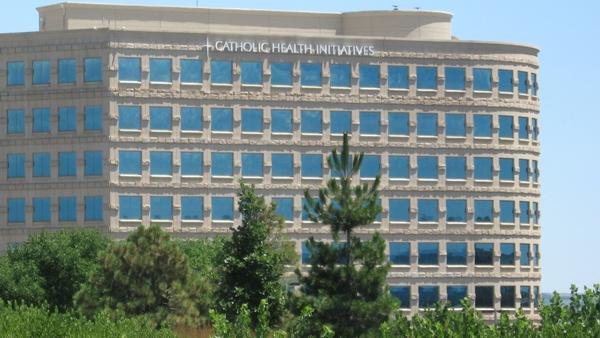
After a year of negotiations, Dignity Health and Catholic Health Initiatives have signed a definitive agreement to merge operations.

The new, as-yet unnamed health system will be one of the largest in the nation, including more than 700 care sites and 139 hospitals, approximately 159,000 employees and more than 25,000 physicians and other advanced practice clinicians.


Hospital Market Consolidation

https://www.beckershospitalreview.com/hospital-management-administration/54-health-systems-with-the-most-hospitals.html

Image result for hospital consolidation

The following health systems contain the most short-term acute care hospitals in the United States.

The number of short-term acute care hospitals is based on data from the American Hospital Directory, which is based on hospitals’ CMS cost reports. Data was accessed Dec. 4. The list includes nonprofit, public and for-profit organizations. There are 54 organizations listed here; numbering does not serve as a ranking or reflect ties in the number of hospitals.

Note: Figures reflect facilities that fall under the category of “short term acute care” as defined by CMS. Numbers do not include psychiatric, rehabilitation, children’s, critical access, long-term or “other” types of hospitals, and may differ from systems’ marketing materials.

1. HCA Healthcare (Nashville, Tenn.) — 174
2. U.S. Department of Veterans Affairs (Washington, D.C.) — 143
3. Community Health Systems (Franklin, Tenn.) — 119
4. Ascension Health (St. Louis) — 78
5. Tenet Healthcare (Dallas) — 59
6. LifePoint Health (Brentwood, Tenn.) — 45
7. Trinity Health (Livonia, Mich.) — 44
8. Prime Healthcare Services (Ontario, Calif.) — 42
9. Providence Health & Services (Renton, Wash.) — 41
10. Kaiser Permanente (Oakland, Calif.) — 39
11. Dignity Health (San Francisco) — 36
12. Catholic Health Initiatives (Englewood, Colo.) — 34
13. Steward Health Care System (Boston) — 32
14. Adventist Health System (Winter Park, Fla.) — 31
15. Indian Health Service (Rockville, Md.) — 31
16. UPMC (Pittsburgh) — 29
17. Universal Health Services (King of Prussia, Pa.). — 28
18. Christus Health (Irving, Texas) — 26
19. Quorum Health (Brentwood, Tenn.) — 26
20. Sutter Health (Sacramento, Calif.) — 26
21. Baylor Scott & White Health (Dallas) — 20
22. Banner Health (Phoenix) — 19
23. Mercy Health (Cincinnati) — 18
24. SSM Health (St. Louis) — 18
25. Intermountain Healthcare (Salt Lake City) — 17
26. Mercy (Chesterfield, Mo.) — 17
27. UnityPoint Health (Des Moines, Iowa) — 17
28. Northwell Health (Great Neck, N.Y.) — 16
29. Prospect Medical Holdings (Los Angeles) — 15
30. Adventist Health (Roseville, Calif.) — 14
31. Centura Health (Englewood, Colo.) — 14
32. Aurora Health Care (Milwaukee) — 13
33. BayCare Health System (Clearwater, Fla.) — 13
34. Franciscan Health (Mishawaka, Ind.) — 13
35. Memorial Hermann (Houston) — 13
36. Texas Health Resources (Arlington) — 13
37. Ardent Health Services (Nashville, Tenn.) — 12
38. Baptist Memorial Health Care Corp. (Memphis) — 12
39. Cleveland Clinic — 12
40. Duke LifePoint (Brentwood, Tenn.) — 12
41. Hospital Sisters Health System (Springfield, Ill.) — 12
42. Sentara Healthcare (Norfolk, Va.) — 12
43. Bon Secours Health System (Marriottsville, Md.) — 11
44. Carolinas HealthCare System (Charlotte, N.C.) — 11
45. Hackensack Meridian Health (Edison, N.J.) — 11
46. Mayo Clinic (Rochester, Minn.) — 11 (includes short-term acute care hospitals in Rochester, Phoenix and Jacksonville, Fla., as well as those part of Mayo Clinic Health System)
47. McLaren Health Care (Flint, Mich.) — 11
48. NYC Health + Hospitals (New York City) — 11
49. Presence Health (Chicago) — 11
50. RWJBarnabas Health (West Orange, N.J.) — 11
51. Advocate Health Care (Downers Grove, Ill) — 10
52. Allina Health (Minneapolis) — 10
53. Novant Health (Winston-Salem, N.C.) — 10
54. University Hospitals (Cleveland) — 10


CVS merger with Aetna: Health care cure or curse?

https://theconversation.com/cvs-merger-with-aetna-health-care-cure-or-curse-88670?utm_medium=email&utm_campaign=Latest%20from%20The%20Conversation%20for%20December%206%202017%20-%2089557547&utm_content=Latest%20from%20The%20Conversation%20for%20December%206%202017%20-%2089557547+CID_461096d86af0ad8c2eedceabf8b8a42f&utm_source=campaign_monitor_us&utm_term=CVS%20merger%20with%20Aetna%20Health%20care%20cure%20or%20curse

The announcement that CVS plans to acquire Aetna for US$69 billion raises hope and concerns.

The transaction would create a new health care giant. Aetna is the third-largest health insurer in the United States, insuring about 46.7 millionpeople.

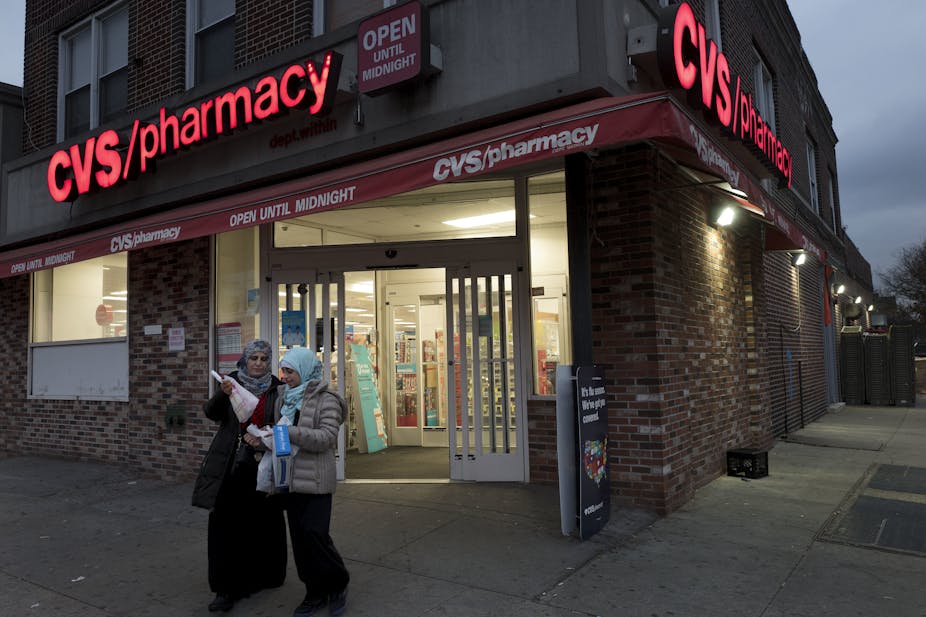
CVS operates 9,700 pharmacies and 1,000 MinuteClinics. A decade ago, it also purchased Caremark and now operates CVS/Caremark, a pharmacy benefits manager, a type of business that administers drug benefit programs for health plans. CVS/Caremark is one of the three largest pharmacy benefits managers in the United States. Along with ExpressScripts and OptummRXTogether, these three control at least 80 percent of the market.

Should American consumers be happy or concerned about the proposed merger? As a professor of health law and bioethics, I see compelling arguments on both sides.

Good for consumers, or for the companies?

CVS and Aetna assert they are motivated by a desire to improve services for consumers and that the merger will lower health care costs and improve outcomes.

Many industry experts have postulated, however, that financial gain is at the heart of the deal.

CVS has suffered declining profits as consumers turn to online suppliers for drugs. Reports that Amazon is considering entry into the pharmacy business raise the specter of increasingly fierce competition.

The merger would provide CVS with guaranteed business from Aetna patients and allow Aetna to expand into new health care territory.

The heart of the deal

The merger would eliminate the need for a pharmacy benefits manager because CVS would be part of Aetna.

Pharmacy benefits managers, which sprang up in the early 2000s in response to rising costs of care, administer drug benefit programs for health plans. Most large employers contract with pharmacy benefits managers that are different from their health insurers.

Nevertheless, a consolidation along the lines of a CVS/Caremark and Aetna merger would not be unprecedented. The nation’s largest health insurance company, United Healthcare, operates its own pharmacy benefits manager, OptumRx.

Pharmacy benefits managers process and pay prescription drug claims, negotiate with manufacturers for lower drug prices, and can employ other cost-saving mechanisms. They thus act as intermediaries between the insurer and pharmacies.

They also make a lot of money. They have been controversial in recent years for how they do so, allegedly keeping a keener focus on profits than on patients.

The merger has not been finalized and requires approval from government regulators, which isn’t always easy to get. In 2016 the U.S. Department of Justice sued to block two health insurer mergers: one between Aetna and Humana and a second between Anthem and Cigna. The government objected on antitrust grounds, arguing that the mergers would unduly restrict competition. Both efforts were abandoned.

CVS and Aetna argue that their proposed merger is different. It is a vertical rather than a horizontal merger, which means that it would combine companies providing different services for patients (insurance and filling prescriptions) rather than two companies doing the same thing.

However, the Trump administration is currently opposing another vertical merger, that between AT&T and Time Warner. It is unclear whether the administration will likewise oppose the CVS/Aetna merger.

Benefits of a merger

There is some evidence that a merger could help consumers.

A merger could result in more negotiating power. Combining the power of a leading pharmacy and a top insurer may allow CVS/Aetna to negotiate more effectively for price discounts from drug and device manufacturers.

It also could cut out the middleman. PBMs themselves have been blamed for raising health care costs. They often do not pass on negotiated drug discounts to consumers, but rather keep the money themselves. In addition, many believe they “make money through opaque rebates that are tied to drug prices (so their profits rise as those prices do).” With the merger, CVS/Aetna would not need CVS/Caremark to function as an intermediary. Eliminating a profit-seeking middleman from the picture could lower consumer prices.

The merger could provide easy access to health care for minor injuries and illnesses. CVS said it plans to expand its MinuteClinics, walk-in clinics that provide treatment by nurse practitioners for minor conditions. Also, CVS said it would offer more services, such as lab work, nutritional advice, vision and hearing care, and more. Thus, CVS promises that its clinics will become “health hubs.”

Many patients could turn to these clinics instead of seeking more expensive care from physicians or emergency rooms. Furthermore, health hubs could provide “one-stop shopping” convenience for some patients. This could be particularly beneficial to elderly individuals or those with disabilities.

Another benefit could be improved and expanded data analytics, which could result in better care. Combining information from patients’ health insurers with that of their pharmacies, including nonprescription health purchases, may promote better care. CVS pharmacists and health hub providers would be able to monitor and counsel patients regarding chronic disease management, pain management, prenatal care and other matters. Such attention could reduce the risk of complications and hospitalizations and thus also decrease expenditures.

Increase of other risks?

Skeptics argue that the CVS/Aetna merger is unlikely to yield cost savings and improved outcomes. They note that mergers in the health care sector generally lead to higher, not lower, prices and worry about other adverse consequences.

If the market shrinks to fewer pharmacy benefits managers because of consolidation, costs may actually increase. The remaining pharmacy benefits managers may have little incentive to compete with each other by demanding discounts from drug companies. As noted above, they may actually profit from higher pharmaceutical prices and thus welcome increases.

After the merger, Aetna may require those it insures to use only CVS pharmacies. In addition, it may require individuals to turn to CVS MinuteClinics for certain complaints even if patients prefer to visit their own doctors. Such restrictions would mean less choice for consumers, and many may find them to be very distressing.

The merger could also decrease competition and bar other companies from entering the pharmacy market. For example, Aetna may refuse to cover prescription drugs that are not purchased from CVS. In that case, Amazon may find it extremely difficult if not impossible to break into the industry. Less competition, in turn, often means higher prices for consumers.

It is difficult to predict the precise consequences of a CVS/Aetna merger. One way or another, however, its impact will likely be significant.


Advocate-Aurora Merger Latest in Healthcare Consolidation Trend

http://www.healthleadersmedia.com/leadership/advocate-aurora-merger-latest-healthcare-consolidation-trend?spMailingID=12500545&spUserID=MTY3ODg4NTg1MzQ4S0&spJobID=1300449776&spReportId=MTMwMDQ0OTc3NgS2#

Image result for advocate health care headquarters

Image result for aurora health care headquarters

Deal likely to steer clear of FTC pitfall that foiled Advocate’s prior merger plans.

Advocate Health Care and Aurora Health Care announced plans Monday for a merger that would create the 10th-largest not-for-profit health system in the country.

The proposed deal would serve as a “50-50 merger” between Chicago-based Advocate and Milwaukee-based Aurora, with no job layoffs expected, the companies said. Should the deal receive regulatory approval, the merged system, which would go by the name Advocate Aurora Health, is projected to have a total operating revenue of about $11 billion and employ 70,000 people across hundreds of facilities in Illinois and Wisconsin, including 27 hospitals.

The announced merger continues a trend among health systems to merge, buy, or sell. Since the Tenet-Vanguard merger in 2013, a $4.3 billion acquisition, large-scale mergers between health systems have become routine to keep pace with an increasingly competitive and consolidated industry.

As health systems and hospitals adjust to the push for value-based care, alternative payments and accountable care organizations, systems with less experience and knowledge have to factor in how they will achieve those goals.

The attraction of corporate consolidation

David Chou, Chief Information and Digital Officer for Children’s Mercy Kansas City, says healthcare organizations are pursuing mega-merger deals in order to maintain relevance. A company used to need $6 billion to compete, a number that has since ballooned to $10 billion, he says.

Companies have pushed toward consolidation also to achieve scale, which can enable cost-reduction and improve financial viability. Chou says healthcare companies ultimately aim to mirror the “classic Kaiser model,” referencing industry giant Kaiser Permanente of Oakland, California. In 2016, Kaiser Permanente’s total operating revenue was $64.6 billion.

Sarah Wilson, a senior analyst with Decision Resources Group, says a specific amount, such as Chou’s $10 billion figure, isn’t always a prerequisite to staying relevant, but she agreed that large-scale mergers have become increasingly common in the healthcare sector. She attributes this to the increasing cost of healthcare delivery despite the push to drive down costs.

Distance makes the heart grow fonder

Ken Field, JD, MBA, who worked for the FTC from 2006 through 2012 and now co-chairs Jones Day’s global healthcare practice, says Advocate’s proposed merger with Aurora is likely to sidestep the controversy that spoiled Advocate’s prior plan to merge with NorthShore University HealthSystem.

Given their respective geographic footprints, Advocate and Aurora appear to be complements to one another, not substitutes, Field says. While Aurora, located 93 miles north of Chicago, does serve some patients in northern Illinois, its primary clientele base hails from Wisconsin.

By contrast, Advocate’s failed NorthShore merger entailed two systems serving some of the same Chicagoland areas. Advocate defended its merger plans successfully at trial, but the decision was overruled on appeal. The prolonged and expensive legal fight ended last March.

The FTC’s acting chair, Maureen K. Ohlhausen, cited the foiled Advocate-NorthShore merger as among her team’s 2017 victories in the fight to protect competition in healthcare markets—a series of victories that mark a shift in the case law affecting the business of healthcare.

“Last year we successfully blocked two major hospital mergers, winning victories in cases involving healthcare systems in the suburbs of Chicago and the Harrisburg area of Pennsylvania,” Ohlhausen said during a speech last month at the American Bar Association’s fall forum, according to her remarks as prepared for delivery. “Together, these two cases moved an important area of the law into a much more settled place and will likely serve both the agency and the public for many years to come. We have already started building on that very sound foundation.”

Field says these two cases affirmed the FTC’s analytical framework for hospital competition as the appropriate interpretation of the law. So now there’s precedent to support the FTC’s model, which could soon prove decisive in a similar case in South Dakota, where the FTC and state attorney general are challenging Sanford Health’s planned acquisition of Mid Dakota Clinic.

Even with the new direction-setting in Washington under President Trump, the FTC’s approach to protecting competition in healthcare is expected to stay the course.

“The only indication so far is that they’re going to continue applying the same model and with the same vigor that we experienced in the last administration,” Field says.

The FTC declined to comment on Advocate’s planned Aurora merger, noting that the commission does not confirm the existence of any investigation.

Dust settling after the announcement

Wilson, the analyst, says effective mega-mergers rely on a significant amount of backend work prior to the announcement. After the plan is unveiled, companies must follow due diligence in meetings with federal and state regulatory authorities to secure approval.

“I think there’s that process of speaking with regulators, going through all of the paperwork and preparing for the actual merger to ensure you have alignment,” Wilson says. “Once you get down to the closing of the deal, [companies] make sure to have their mission, vision and values lined up. It’s a lot of work getting everything ready, speaking with employees and working through best practices.”

The risk of duplication of duties remains at a company with two CEOs, which is an interesting obstacle to face. Chou said he will be interested to see who “calls the shots” after the merger is formalized.

Citing her experience in handling health system mergers and acquisitions, Wilson says “50-50 mergers” are not uncommon. The move to keep two CEOs could be successful since the companies do not compete in the same market, she says.

Another challenge includes how to combine each company’s assets and decide on how to implement practices which provide the best care to patients. Chou advised both companies to focus on fostering a cohesive environment for employees and providing the best care for patients, rather than fixating on the politics of the merger.

Wilson echoed Chou’s sentiments, saying the post-announcement process should be deliberative and ensure employees understand the merger and its effects on the company culture.


CVS Health to acquire Aetna for $69B: 5 things to know

https://www.beckershospitalreview.com/payer-issues/cvs-health-to-acquire-aetna-for-69b-5-things-to-know.html

Image result for CVS Health to acquire Aetna for $69B: 5 things to know

Image result for CVS Health to acquire Aetna for $69B: 5 things to know

CVS Health inked a definitive merger agreement to acquire all outstanding shares of Aetna for roughly $69 billion in cash and stock.

Here are five things to know.

1. The deal, unanimously approved by the boards of directors of each firm Dec. 3, is one of the largest transactions this year. It values Aetna at about $207 per share, higher than previous estimates of $200 to $205 per share. When including the assumption of Aetna’s debt, the transaction totals $77 billion.

2. Upon closing, Aetna’s Chairman and CEO Mark Bertolini will join CVS Health’s board of directors, along with two other Aetna leaders. Aetna will operate as a standalone business unit under the CVS Health umbrella, and the insurer’s management team will helm the subsidiary.

3. The companies said the deal will provide localized, community-based care across CVS Health’s 9,700-plus pharmacies and 1,100 clinics. Sources familiar with the deal told Reuters CVS Health plans to significantly extend health services at its pharmacies under the merger.

4. The transaction is slated to close in the second half of 2018. It is subject to regulatory approvals.

5. Rita Numerof, PhD, president of Numerof & Associates, said in an emailed statement to Becker’s Hospital Review, “Having the combined market clout puts Aetna more in a position akin to UnitedHealthcare in its ability to leverage an integrated PBM in negotiating prices and establishing preferred tiers with manufacturers.” She added, “With CVS’s large and growing clinical services footprint, Aetna can steer patients to CVS pharmacies and clinics — in many cases avoiding the costs of higher ER or other outpatient services. The merger can make expanded CVS services in-network and others out-of-network, putting additional pressure on conventional health systems to lower the costs of their outpatient services.”

The central questions behind the CVS-Aetna deal

https://www.axios.com/questions-behind-cvs-aetna-deal-2502001650.html

Image result for The central questions behind the CVS-Aetna deal

CVS Health’s proposed $66 billion buyout of Aetna, scooped by the Wall Street Journal, would create a sprawling health care empire with roughly $240 billion of annual revenue. Only Walmart would be larger, in terms of annual revenue among U.S. companies.

Looking ahead: Health insurance, prescription drug coverage, quick clinic visits and behind-the-scenes negotiating on drug prices would all be under one umbrella. But a slew of questions surround any potential deal, and the companies aren’t commenting on “rumors or speculation.”

The proposed transaction highlights the desire within the health care industry to consolidate more. Acquiring Aetna would give CVS even more patient data, as well as more leverage to get lower drug prices from pharmaceutical companies. But it’s not a slam dunk the deal would reach the finish line.

The biggest potential obstacles:

  • Antitrust: CVS and Aetna don’t have a lot of overlapping businesses, making it appear the deal would have better odds of passing antitrust muster than Aetna’s failed deal for Humana. The companies do, however, have sizable footprints in Medicare Part D prescription drug plans. They have 7.6 million combined Part D members, according to the latest federal data, which equates to about 17% of Medicare’s Part D enrollment.
  • Savings: The companies would presumably tout savings (i.e., money saved from layoffs and consolidating vendor contracts). But would the combined CVS-Aetna undoubtedly lead to lower health insurance premiums and better deals for drugs at the pharmacy counter? This is arguably the most central question.
  • Other relationships: CVS just signed a deal with Anthem, a major insurance competitor to Aetna, to run some of the operations of Anthem’s new pharmacy benefit manager. The Aetna buyout would complicate CVS’ new Anthem agreement.
  • The Trump wild card: Trump made it clear in his latest executive order that his administration will “focus on promoting competition in health care markets and limiting excessive consolidation.” The CVS-Aetna deal is a direct challenge to that order.
  • What’s old is new again: Health insurers used to own pharmacy benefit managers but sold them off several years ago. Now they are integrating back together. Will they eventually splinter off again if Wall Street demands it?

We’re on the brink of a health care M&A binge

Related image

CVS Health is extremely close to cementing its $66 billion takeover of Aetna, the Wall Street Journal reported yesterday. It’d be the biggest deal of the year, and Axios’ Bob Herman notes that more health care deals could also be in the offing:

  • Humana recently altered its executive compensation and severance policies in case the health insurer is bought out or merges with another company. Wall Street views Humana as a ripe acquisition target for Cigna because of Humana’s huge Medicare business.
  • Express Scripts is about to lose its large, lucrative pharmacy benefits contract with Anthem. Express Scripts’ CEO said at a Forbes health care conference yesterday he “would be open” to striking a merger deal with a health insurer or partnering with Amazon.
  • Catholic Health Initiatives and Dignity Health, two large hospital systems, likely will provide more details into their merger discussions when they chat with bondholders next week.

Get smart: Health care mergers and acquisitions have been in vogue for years, and big deals would be almost certain to happen if Congress also passes its tax cut bill — which would give companies more money to play with through vastly lower corporate tax rates.

Image result for axios