It’s the Monopolies, Stupid!

http://www.commonwealthfund.org/publications/blog/2018/may/drug-monopolies-pricing?omnicid=EALERT1410094&mid=henrykotula@yahoo.com

Image result for pharmaceutical monopoly

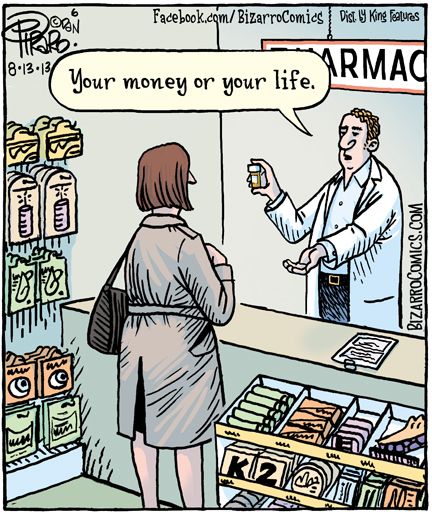
At the core of the nation’s drug pricing problem is one fundamental fact: Drug companies enjoy government-sanctioned and -enforced monopolies over the supply of many drugs.

These monopolies result from patents awarded under federal law for novel molecules. Patents allow manufacturers to prevent competitors from selling the same drug for 20 years from the time the patent is filed. Given that the process of gaining regulatory approval to market their new drug takes time, research suggests new drugs have, on average, 12 to 13 years of market exclusivity.

Once new drugs are approved by the Food and Drug Administration, the monopolies assured by patents enable pharmaceutical companies to charge any price they choose. They generally pick prices that not only cover their development costs, but also generate profits that exceed those of most other industries: for example, the average profit margin for the 25 largest software companies (which are cited as having the same high R&D investment and low production and distribution costs as pharmaceutical companies) was 13.4 percent in 2015, while the average profit margin for the 25 largest drug companies was 20.1 percent in 2015. Drugmakers are also free to raise prices whenever they want at rates they alone determine.

The existence of patents does not totally prevent competition. Often, other companies introduce drugs that are distinct enough to justify their own separate patents and accomplish the same therapeutic goal. This results in competition that lowers drug prices, but often by not enough to make the medications affordable for many patients. In addition, the makers of patented drugs — for example, Mylan’s EpiPen and the weight-loss drug Suprenza — have developed effective mechanisms to extend the lives of their patents beyond 20 years. These approaches include making minor modifications in the formulations or packaging of drugs that have no clinical significance, as well as paying potential generic competitors not to introduce generic drugs.

That said, patents eventually expire, at which point generic drug companies can manufacture the drug and sell it at a much lower price. But even generic drug competition has been weakened recently by generic drug market monopolies, as these manufacturers have bought up their competition. As a result, the prices of old and familiar drugs have risen dramatically. The price of the cardiac drug isuprel has increased more than sixfold between 2013 and 2015, and the price of the antibiotic doxycycline has soared 90-fold over the same period.

As long as drug companies (or a small group) hold monopoly (or oligopoly) power over potent new therapies, there is no free market solution to lowering drug prices. Only a countervailing nonmarket force of equal strength can bring those prices down. Other western industrial countries, recognizing this, authorize their governments to step in and moderate drug prices for the benefit of their citizenry. Some set prices by fiat, while other negotiate with drug companies. In the latter case, the negotiations are sometimes guided by comparative effectiveness analysis that estimates the value of new drugs to patients. Of course, drug companies are free to walk away from such deals, but they generally choose not to, presumably because they still make money from those sales.

Drug companies say their monopoly earnings are necessary to sustain the research and development that produce new drugs. In effect they are saying that they need to be able to charge the very high prices we now see for patented drugs so they can innovate. This raises the questions of how much money society should allocate toward pharmaceutical innovation and who should decide. Setting those questions aside for the moment, we should be very clear about one thing: As long as pharmaceutical companies have uncontested market power to set prices for many patented and generic drugs, those prices will remain a huge problem for Americans and their elected representatives.

California Hospital Giant Sutter Health Faces Heavy Backlash On Prices

http://www.healthleadersmedia.com/quality/california-hospital-giant-sutter-health-faces-heavy-backlash-prices?utm_source=silverpop&utm_medium=email&utm_campaign=20180516_HLM_Daily_resend%20(1)&spMailingID=13521389&spUserID=MTY3ODg4NTg1MzQ4S0&spJobID=1401466260&spReportId=MTQwMTQ2NjI2MAS2


The state’s top cop is suing Sutter, accusing one of the nation’s biggest health systems of systematically overcharging patients and illegally driving out competition.

Cooking dinner one night in March, Mark Frizzell sliced his pinkie finger while peeling a butternut squash and couldn’t stop the bleeding.

The 51-year-old businessman headed to the emergency room at Sutter Health’s California Pacific Medical Center in San Francisco. Sutter charged $1,555 for the 10 minutes it treated him, including $55 for a gel bandage and $487 for a tetanus shot.

“It was ridiculous,” he said. “Health insurance costs are through the roof because of things like this.”

California Attorney General Xavier Becerra couldn’t agree more. The state’s top cop is suing Sutter, accusing one of the nation’s biggest health systems of systematically overcharging patients and illegally driving out competition in Northern California.

For years, economists and researchers have warned of the dangers posed by large health systems across the country that are gobbling up hospitals, surgery centers and physicians’ offices — enabling them to limit competition and hike prices.

Becerra’s suit amounts to a giant test case with the potential for national repercussions. If California prevails and is able to tame prices at Northern California’s most powerful, dominant health system, regulators and politicians in other states are likely to follow.

“A major court ruling in California could be a deterrent to other hospital systems,” said Ge Bai, an assistant professor at Johns Hopkins University who has researched hospital prices nationwide. “We’re getting to a tipping point where the nation cannot afford these out-of-control prices.”

Reflecting that sense of public desperation, Sutter faces two other major suits — from employers and consumers — which are wending their way through the courts, both alleging anticompetitive conduct and inflated pricing. Meanwhile, California lawmakers are considering a bill that would ban some contracting practices used by large health systems to corner markets.

Sutter, a nonprofit chain, is pushing back hard, denying anticompetitive behavior and accusing Becerra in court papers of a “sweeping and unprecedented effort to intrude into private contracting.” Recognizing the broader implications of the suit, both the American Hospital Association and its California counterpart asked to file amicus briefs in support of Sutter.

In his 49-page complaint, Becerra cited a recent study finding that, on average, an inpatient procedure in Northern California costs 70 percent more than one in Southern California. He said there was no justification for that difference and stopped just short of dropping an expletive to make his point.

“This is a big ‘F’ deal,” Becerra declared at his March 30 news conference to unveil the lawsuit. In an interview last week, he said, “We don’t believe it’s fair to allow consolidation to end up artificially driving up prices. … This anticompetitive behavior is not only bad for consumers, it’s bad for the state and for businesses.”

To lessen Sutter’s market power, the state’s lawsuit seeks to force Sutter to negotiate reimbursements separately for each of its hospitals — precluding an “all or nothing” approach — and to bar Sutter employees from sharing the details of those negotiations across its facilities. Becerra said Sutter has required insurers and employers to contract with its facilities systemwide or face “excessively high out-of-network rates.”

Heft In The Marketplace

Overall, Sutter has 24 hospitals, 36 surgery centers and more than 5,500 physicians in its network. The system boasts more than $12 billion in annual revenue and posted net income of $958 million last year.

The company’s heft in the marketplace is one reason why Northern California is the most expensive place in the country to have a baby, according to a 2016 report. A cesarean delivery in Sacramento, where Sutter is based, cost $27,067, nearly double what it costs in Los Angeles and New York City.

For years, doctors and consumers have also accused Sutter of cutting hospital beds and critical services in rural communities to maximize revenue. “Patients are the ones getting hurt,” said Dr. Greg Duncan, an orthopedic surgeon and former board member at Sutter Coast Hospital in Crescent City, Calif.

Sutter says patients across Northern California have plenty of providers to choose from and that it has held its average rate increases to health plans to less than 3 percent annually since 2012. It also says it does not require all facilities to be included in every contract — that insurers have excluded parts of its system from their networks.

As for emergency room patients like Frizzell, Sutter says its charges reflect the cost of maintaining services round-the-clock and that for some patients urgent-care centers are a less costly option.

“The California Attorney General’s lawsuit gets the facts wrong,” Sutter said in a statement. “Our integrated network of high-quality doctors and care centers aims to provide better, more efficient care — and has proven to help lower costs.”

Regulators in other states also have sought to block deals they view as potentially harmful.

In North Carolina, for instance, the state’s attorney general and treasurer both expressed concerns about a proposed merger between the University of North Carolina Health Care system and Charlotte-based Atrium Health. The two dropped their bid in March. The combined system would have had roughly $14 billion in revenue and more than 50 hospitals.

Last year, in Illinois, state and federal officials persuaded a judge to block the merger between Advocate Health Care and NorthShore University HealthSystem. The Federal Trade Commission said the new entity would have had 60 percent market share in Chicago’s northern suburbs. Still, Advocate won approval for a new deal with Wisconsin’s Aurora Health Care last month, creating a system with $11 billion in annual revenue.

Antitrust experts say states can deliver a meaningful counterpunch to health care monopolies, but they warn that these cases aren’t easy to win and it could be too little, too late in some markets.

“How do you unscramble the egg?” said Zack Cooper, an assistant professor of economics and health policy at Yale University. “There aren’t a lot of great solutions.”

A Seven-Year Investigation

California authorities took their time sounding the alarm over Sutter — a fact Sutter is now using against the state in court.

The state attorney general’s office, under the leadership of Democrat Kamala Harris, now a U.S. senator, started investigating Sutter seven years ago with a 2011 subpoena, court documents show. Sutter said the investigation appeared to go dormant in March 2015, just as Harris began ramping up her Senate campaign.

Becerra, a Democrat and former member of Congress, was appointed to replace Harris last year, took over the investigation and sued Sutter on March 29. His aggressive action comes as he prepares for a June 5 primary against three opponents.

Sutter faces a separate class-action suit in San Francisco state court, spearheaded by a health plan covering unionized grocery workers and representing more than 2,000 employer-funded health plans. The plaintiffs are seeking to recoup $700 million for alleged overcharges plus damages of $1.4 billion if Sutter is found liable for antitrust violations. Sutter also has been sued in federal court by five consumers who blame the health system for inflating their insurance premiums and copays. The plaintiffs are seeking class-action status.

San Francisco County Superior Court Judge Curtis E.A. Karnow granted Becerra’s request to consolidate his case with the grocery workers’ suit, which is slated for trial in June 2019.

The judge sanctioned Sutter in November after finding that Sutter was “grossly reckless” in intentionally destroying 192 boxes of evidence that were relevant to antitrust issues. As a result, Karnow said, he will consider issuing jury instructions that are adverse to Sutter.

In a note to employees, Sutter chief executive Sarah Krevans said she deeply regretted the situation but “mistakes do happen.”

In an April 27 court filing, Sutter’s lawyers criticized the state for piggybacking onto the grocery workers’ case. “The government sat on its hands for seven years, exposing the public to the alleged anticompetitive conduct. … Rather than driving the agenda, the Attorney General seeks to ride coattails.”

Outside court, California legislators are taking aim at “all or nothing” contracting terms used by Sutter and other hospital chains. The proposed law stalled last year amid opposition from the hospital industry. But consumer and labor groups are seeking to revive it this year.

In the meantime, Frizzell said he will probably wind up at one of Sutter’s hospitals again despite his disgust over his ER bill. “Most of the hospitals here are Sutter,” he said. “It’s difficult to avoid them.”

Gubernatorial Hopefuls Look To Health Care For Election Edge

Gubernatorial Hopefuls Look To Health Care For Election Edge


California’s leading gubernatorial candidates agree that health care should work better for Golden State residents: Insurance should be more affordable, costs are unreasonably high, and robust competition among hospitals, doctors and other providers could help lower prices, they told California Healthline.

What they don’t agree on is how to achieve those goals — not even the Democrats who represent the state’s dominant party.

“Health care gives them the perfect chance to crystalize that divide” between the left-wing progressives and the “moderate pragmatists” of the Democratic Party, said Thad Kousser, a political science professor at the University of California-San Diego.

Consider the top two Democratic candidates, who both aim to cover everyone in the state, including immigrants living here without authorization.

Lt. Gov. Gavin Newsom — billed as a liberal Democrat — supports a single-payer health care system. That means gutting the health insurance industry to create one taxpayer-funded health care program for everyone in the state.

But former Los Angeles Mayor Antonio Villaraigosa has called single-payer “unrealistic.” He advocates achieving universal health coverage through incremental changes to the current system.

Under California’s “top-two” primary system, candidates for state or congressional office will appear on the same June 5 ballot, regardless of party affiliation. The top two vote-getters advance to the November general election.

A poll in late April by the University of California-Berkeley Institute of Governmental Studies puts Newsom in first place with the support of 30 percent of likely voters, followed by Republicans John Cox, with 18 percent, and Travis Allen with 16 percent. Trailing behind were Democrats Villaraigosa, with 9 percent, John Chiang with 7 percent and Delaine Eastin with 4 percent. Thirteen percent of likely voters remained undecided.

Health care is in the forefront of this year’s gubernatorial campaign because of recent federal attempts to repeal the Affordable Care Act, which would have threatened the coverage of millions of Californians, said Kim Nalder, professor of political science at California State University-Sacramento. California has pushed back hard against Republican efforts in Congress to dismantle the law.

“There’s more energy in California around the idea of universal coverage than you see in lots of other parts of the country,” Nalder said. Democrats and those who indicate no party preference make up almost 70 percent of registered voters. Those voters care more about health coverage than Republicans, she said.

“Whoever is most supportive [of universal health care] is likely to win the votes,” she said.

The top Republican candidates, Cox and Allen, are not fans of increased government involvement, however. They favor more market competition and less regulation to lower costs, expand choice and improve quality.

“Governments make everything more expensive,” said Cox, a former adviser to former House Speaker Newt Gingrich during his presidential run. “The private sector looks for efficiencies.”

California Healthline reached out to the top six candidates based on the institute’s poll, asking about their positions on health insurance, drug prices, the opioid epidemic and hospital consolidation.

71% of Healthcare Orgs Say Mergers and Acquisitions Will Increase

http://www.healthleadersmedia.com/leadership/71-healthcare-orgs-say-mergers-and-acquisitions-will-increase?utm_source=edit&utm_medium=ENL&utm_campaign=HLM-Best-SilverPop_05042018&utm_source=silverpop&utm_medium=email&utm_campaign=20180504_HLM_BestOf%20(1)&spMailingID=13437465&spUserID=MTY3ODg4NTg1MzQ4S0&spJobID=1400286374&spReportId=MTQwMDI4NjM3NAS2

Image result for hospital consolidation


Compelling results from the new HealthLeaders Media Intelligence Report indicate that M&A activity levels will remain strong for some time.

Healthcare industry merger, acquisition, and partnership (MAP) activity remains strong, with little change in momentum after years of consolidation activity.

According to the 2018 HealthLeaders Media Mergers, Acquisitions, and Partnerships Survey, 71% of respondents expect their organizations’ MAP activity to increase within the next three years, a compelling result indicating that MAP activity levels will remain strong for some time. Only 20% say they expect MAP activity to remain the same, and only 2% expect this to decrease.

“I believe that the healthcare market is still under a lot of pressure from continuing reimbursement and regulatory challenges,” says Pamela Stoyanoff, MBA, CPA, FACHE, executive vice president, chief operating officer at Methodist Health System, a Dallas-based nonprofit integrated healthcare network with 10 hospitals and 28 family health centers.

“The competitive landscape is also changing, with companies entering the healthcare space that haven’t been there before, like Amazon, and unique partnerships forming like Optum buying the Health Care Advisory Board and CVS buying Aetna,” she says.

Sustained activity levels

The case for sustained activity levels over the next few years can be seen in the following: 36% of respondents say that their organization’s MAP plans for the next 12–18 months consist of both exploring potential deals and completing deals underway.

If you combine this result with the response for exploring potential deals (32%), the total reveals that 68% of respondents say they are exploring potential deals, a strong indicator for future MAP activity. Only 12% of respondents say they will be completing deals underway and mention no plans for future MAP activity.

Another aspect that reflects bullish sentiment is the dollar value of MAP activity, with 73% of respondents expecting the dollar value of their organization’s MAP activity to increase within the next three years.

Only 15% expect MAP dollar value to remain the same, and only 2% expect it to decrease. These results are considerably more positive than last year’s survey results, which were increase (55%), remain the same (34%), and decrease (12%).


Healthcare megadeals may have major long-term impact, Moody’s says

https://www.healthcaredive.com/news/healthcare-megadeals-may-have-major-long-term-impact-moodys-says/521578/

Image result for mega deals

Dive Brief:

  • CVS Health’s plan to buy Aetna could have a significant impact on hospitals, health insurers and pharmacy benefit managers (PBMs), according to Moody’s Investors Service’s Healthcare Quarterly.
  • Payers’ vertical integration strategies are credit negative for hospitals, but hospitals’ plans to make generic drugs and other new strategies are positives, Moody’s said.
  • On the payer side, Moody’s said mergers between health insurers and PBMs are credit negative in the short-term because of increased debt and risk associated with integration. However, in the long run, these deals may lower costs.

Moody’s said hospitals may feel the impact of UnitedHealth’s Optum buying DaVita Medical and Humana investing in Kindred Healthcare. However, Cigna’s purchase of Express Scripts won’t have much of an effect on hospitals.

Payers’ vertical integration strategies, such as buying physician groups and non-acute care providers, are credit negative for nonprofit and for-profit hospitals and put more pressure on hospital volumes and margins, Moody’s said.

The issue comes from payer vertical integration being able to offer preventive, outpatient and post-acute care for lower costs than acute care hospitals. These initiatives will have an increasingly disruptive impact to hospitals’ credit quality, according to the report.

“These strategies would place insurers in direct competition with hospitals, which offer the same services and are also seeking to align with physician groups,” Moody’s said.

On the payer side, two recently announced megadeals, CVS-Aetna and Cigna-Express Scripts, are both designed to control rising medical costs and target drug prescriptions, which now account for nearly one-fifth of total health spending. While payers have been able to limit growth in utilization, medical inflation and sources of medical care, prescription drug costs continue to rise, Moody’s said.

Though Moody’s expects both deals to be credit negative in the short-term, they have the potential to turn credit positive in the long run, especially CVS-Aetna. “The combined company has the potential to lower medical costs as Aetna will be better able to engage with its members as they purchase drugs at CVS retail pharmacies or through its prescription drug programs,” Moody’s said.

These deals will result in most payers having to contract with a PBM owned by a competitor. Moody’s expects PBM competition to remain high. Payer-owned PBMs must still offer the same cost savings to competitors to keep customers.

Out of the recent megadeals, only CVS buying Aetna is expected to have “more significant impact” for payers. The other announced transactions aren’t expected to cause many problems for insurance companies, Moody’s said.

Looking at initiatives that are in development, Moody’s said none of the big-name plans are expected to have much of an impact on the healthcare segments. These include the Amazon, Berkshire Hathaway and J.P. Morgan Chase’s partnership, Apple opening medical clinics and entering the medical record business or nonprofit hospitals forming a generics company.


Walmart, Not Amazon, May Turn Out To Be The Real Health Care Disruptor

https://www.investors.com/news/walmart-humana-amazon-disrupt-health-care/

Image result for Walmart, Not Amazon, May Turn Out To Be The Real Health Care Disruptor

Every Amazon (AMZN) flirtation toward the health care industry has sent hearts racing on Wall Street. Yet Amazon appears to be having commitment issues, and others have leapt while Jeff Bezos hesitated. Now comes a possible Walmart (WMT)-Humana (HUM) merger. A Walmart acquisition of the insurer could fundamentally reshape health care delivery in ways that Amazon may have trouble matching.

A Walmart-Humana deal could potentially transform the health care market for seniors, a demographic that is critical for both companies.

Walmart already operates about 4,500 in-store pharmacies and 2,900 vision centers, but a Humana deal would likely accelerate its efforts in developing in-store clinics. The clinics haven’t been a knockout success, but Walmart has been learning, wrote Tracy Watts, U.S. health reform leader at Mercer, in a blog post. “This partnership could foster new ways to bring people what they want and need,” she wrote, highlighting health care access in rural areas.

CVS Health (CVS), which is in the process of acquiring Aetna (AET), is planning to revamp its drugstores to provide more health services. Walmart has greater financial wherewithal to execute the strategy and its supercenters may be a more natural fit for health services.

Strategic Merits For Walmart-Humana

A Walmart-Humana tie-up has strategic merits for the retail giant, wrote Stifel analyst Mark Astrachan. He expects it would drive greater store traffic and produce health care cost savings, helping the discounter to keep investing to fend off Amazon.

Savings would come from closer ties to Humana, the largest remaining independent pharmacy benefits manager. That would help to reduce drug prices for Walmart’s 1.5 million U.S. employees, Astrachan wrote.

Humana recently purchased a major stake in the home health care business of Kindred Healthcare, a natural fit for Walmart’s home delivery business.

Still, there would be challenges. Piper Jaffray analyst Sarah James sees hurdles to staffing up clinics amid a nursing shortage that’s pushing up wages. She also questioned how attractive a merger would be for Humana. Humana has an enviable Medicare position while Walmart has a smaller store base compared to CVS Health and Walgreens Boots Alliance (WBA).

Still, Humana shares rose 4.4% on the stock market today, even as the Dow Jones, S&P 500 index and Nasdaq composite all lost about 2% or more. Meanwhile, shares of Walmart lost 3.8% and Amazon skidded 5.2%.

Amazon Threat Spurs Action

So far Amazon’s disruptive impact on health care has been all about what others are doing. Since reports last summer that Amazon might enter the retail prescription industry, the shockwaves have set in motion one deal after another. First it was CVS buying Aetna and beginning to offer same-day delivery in major markets, and next-day nationwide. Albertsons grabbed the Rite Aid (RAD) stores not bought by Walgreens. Last month, Cigna (CI) announced the purchase of Express Scripts (ESRX), the largest of the pharmacy benefit managers.

Options to enter the prescription drug business have narrowed for Amazon but haven’t been closed off entirely. One potential avenue would be acquiring Walgreens.

In January, Amazon announced a health care venture with JPMorgan Chase (JPM) and Berkshire Hathaway (BRKB). Health care stocks tumbled amid fear that Amazon would use the same formula that slayed book sellers and department stores. The scariest part: The companies say they have no intent to earn a profit from the effort. Yet they also confessed to a lack of any coherent plan for putting still-to-be-formed cost-saving ideas to work.


Global M&A activity hits record high on mega US health care deals

https://www.cnbc.com/2018/04/04/global-ma-activity-hits-record-high-on-mega-us-health-care-deals.html

A CVS Pharmacy store is seen in the Manhattan borough of New York City, New York, U.S., November 30, 2017.


  • In the first three months of 2018, there were 3,774 deals globally, totaling $890.7 billion.
  • So far this year, there have been $393.9 billion invested in U.S. companies.
  • Domestic activity was also particularly strong in China.

Merger and acquisition (M&A) activity across the world has hit a seventeen-year-record high in the first quarter of 2018, according to a report by research firm Mergermarket.

In the first three months of 2018, there were 3,774 deals globally, totaling $890.7 billion, it said Wednesday. This was the strongest start to the year since 2001, when Mergermarket began recording the data, and represents an 18 percent increase in value compared to the first quarter of 2017.

“The extraordinary surge in dealmaking seen at the end of 2017 has carried through into 2018,” Jonathan Klonowski, research editor at Mergermarket said in the quarterly report, citing pressure from shareholders and a search for innovation as the main drivers.

“Amazon’s move into pharmaceuticals appears to have been a catalyst for dealmaking in health care-related areas with the CVS/Aetna deal announced in December and the Cigna/Express Scripts transaction this quarter,” he added.

Amazon announced a partnership with J.P. Morgan and Berkshire Hathaway’s Warren Buffett in January to reduce health costs for U.S. employees. The move has sparked fears that the retail giant could enter and compete with traditional health care businesses. As result, the sector has consolidated to fight possible future competition from Amazon.

Cigna bought Express Scripts in a $54 billion cash-and-stock deal in early March. CVS also approved the acquisition of Aetna for about $69 billion in cash and stock last month.

Such deals have been particularly relevant in the U.S., where M&A activity during the first quarter of the year represented 44.2 percent of the total global share.

So far this year, there have been $393.9 billion invested in U.S. companies, according to the report. This represented a 26.1 percent increase from the same period a year ago. “Domestic dealmaking has been a key factor registering 952 deals worth $330.8 billion,” the report said.

But it’s not only U.S. companies that seem to be consolidating in their own market. Domestic activity was also particularly strong in China, where firms spent $68.7 billion — this was the highest first quarter on record.

“Domestic M&A accounts for 85.2 percent of Chinese acquisitions in Q1 (first quarter) 2018, a significant increase from the 61.6 percent and 71.3 percent seen during 2016 and 2017,” Mergermarket said.

Hearing Planned In Boston For Proposed 13-Hospital Merger

http://boston.cbslocal.com/2018/04/08/massachusetts-hospital-merger-boston-council-hearing/

Image result for Hearing Planned In Boston For Proposed 13-Hospital Merger


The Boston City Council is planning to hold a public hearing on one of the largest hospital mergers ever proposed in Massachusetts.

The 13-hospital deal would result in the merger of Beth Israel Deaconess Medical Center hospitals, The Lahey Health system, along with New England Baptist Hospital in Boston, Mount Auburn Hospital in Cambridge, and Anna Jaques Hospital in Newburyport.

The hospitals hope to create a health network that can compete with Partners HealthCare, the parent company of Massachusetts General and Brigham and Women’s hospitals.

Not everyone is on board. Critics say creating a second hospital behemoth is the wrong direction for the state.

The hearing is scheduled for Tuesday morning at Boston City Hall.

A staff report from the state Department of Public Health has recommended the deal’s approval.

Consolidating California: Concentrated Provider Markets and Rising Prices

http://www.healthleadersmedia.com/finance/consolidating-california-concentrated-provider-markets-and-rising-prices?utm_source=edit&utm_medium=ENL&utm_campaign=HLM-FIN-SilverPop_04092018&spMailingID=13279518&spUserID=MTY3ODg4NTg1MzQ4S0&spJobID=1380773897&spReportId=MTM4MDc3Mzg5NwS2#

A UC Berkeley study suggests that provider and insurer consolidation is increasing, reducing competition in regional markets, and leading to higher healthcare prices across California.

In the midst of a nationwide consolidation trend, California is witnessing a swell of mergers among health providers and insurers, resulting in higher prices for consumers and large-scale employers across the state.

A recent study found most counties in California, especially those in the rural northern portion of the state, have highly concentrated hospital markets, noting provider consolidation rose as average insurer consolidation decreased statewide.

The report, released last month by the Nicholas C. Petris Center on Health Care Markets and Consumer Welfare School of Public Health at the University of California, Berkeley, concluded that Californians pay for healthcare services that are “considerably above what a more competitive market would produce.”

Of the 54 counties surveyed, 44 were highly concentrated hospital markets and six were moderately concentrated. According to the study, seven of these counties warrant “concern and scrutiny” by the Department of Justice and the Federal Trade Commission.

The report found from 2010 to 2016, there was a 15% increase in physicians working for a foundation owned by a hospital or health system rather than physician practices, due in part to health system mergers, as well as a 13% increase for primary care physicians, and a 29% increase for specialist physicians.

Additionally, the study found 42 counties surveyed for commercial health plans were highly concentrated while 16 were moderately concentrated. The study also recommended federal agencies review the concentration levels of the insurer market in seven counties.

Breeding anticompetitive behavior

Bill Kramer, MBA, executive director for national health policy at the Pacific Business Group on Health, told HealthLeaders Media the consolidation trend in California is a “serious problem” that employers have been dealing with for years.

Kramer said large health systems, physician groups, and health plans recognize that consolidation leads to increased market power, which in turn provides the opportunity to raise healthcare service prices above what is allowed in a competitive marketplace.

Two weeks ago, California Attorney General Xavier Becerra sued northern California’s Sutter Health, for anticompetitive practices. Sutter, a health system with $12.4 billion in operating revenue in 2017, is charged with foreclosing price competition on its competitors, imposing prices for healthcare services exceeding a competitive market value, and restricting negotiations with insurers to an “all-or-nothing” basis.

Since 2014, Sutter has also been the focus of a class-action lawsuit filed by a grocery worker’s health plan alleging violation of antitrust and unfair competition laws.

“When a provider or any other healthcare entity gains significant market share, it can use that power to negotiate higher prices,” Kramer said. “But they also can put in place mechanisms that strengthen their market power further. That’s what [Becerra] and complainants in this other lawsuit have alleged, that anticompetitive behavior further strengthens their market power and their ability to raise prices. It’s all part of the same picture.”

State and federal blocks on insurers, not providers

Becerra’s lawsuit against Sutter is not the first time state or federal officials have stepped in to address concerns in California’s healthcare industry.

In June 2016, California Insurance Commissioner Dave Jones requested the federal government block the proposed Aetna-Humana merger, citing concerns about an “already heavily concentrated commercial insurance” market. A federal judge agreed with his request and blocked the move in January 2017.

Despite recent and growing recognition among state and federal officials that action must be taken, Kramer says provider consolidation remains an issue without a simple solution. Efforts to enact antitrust statutes against health system mergers in recent years have not always been successful, and are often looked at as the “nuclear option” by industry watchers.

A potential path to offsetting provider consolidation is greenlighting insurer consolidation, though Kramer says there is mixed evidence about whether that would be effective. He said some argue that two large industries competing against each other can result in lower prices, while others claim there is no guarantee that consumers will see lower prices if savings are secured by insurers.

The Berkeley report recommends legislative and regulatory action to address “significant variation” in prices and Affordable Care Act (ACA) premiums across the state, specifically suggesting the implementation of reference pricing by public marketplaces and private employers.

Kramer says the consolidation dilemma is not unique to California, which offers state officials a chance to adopt proactive measures taken by other states to address rising healthcare costs associated with consolidation.

In 2011, Massachusetts Attorney General Martha Coakley authored a report similar to the Berkeley study that analyzed the rise in high prices due to health system mergers. The study ultimately led to the creation of the Health Policy Commission in 2012, with the purpose of monitoring healthcare prices in the state.

NoCal versus SoCal

Another important aspect of the consolidation trend in California is the divide between the rural northern counties and the more populous southern metropolitan area.

Northern California is a sparsely populated region dominated by large health systems, giving insurers less leverage to negotiate prices. A 2017 study from the Bay Area Council Economic Institute (BACEI), the Center for Health Policy at Brookings, and The Nelson A. Rockefeller Institute of Government found that the hospital concentration in northern counties, where only two insurers cover the entire region, is five times higher than the Inland Empire.

Micah Weinberg, PhD, president of BACEI, told HealthLeaders Media the consolidation trend is not tied to one particular factor such as geography.

BACEI’s report cited the consolidation of a few health systems in northern California as a “perennial concern” and driver of rate variation between regions. However, Weinberg said that when low-price, for-profit systems in southern California are removed from the equation, there is a fair amount of parity between prices charged there compared to those charged in northern California.

Related: 3 Reasons Why Health Insurers and PBMs Are Merging

According to Weinberg, another aspect to California’s healthcare market that affects prices has been the implementation of a “very successful experiment” in managed competition through the state exchange. In 2010, California became the first state to create its own insurance marketplace under the ACA.

He argues that Covered California, the state’s insurance marketplace, has standardized healthcare products, instituted financial incentives for providers to embrace limited networks, and fostered competition.

“What that does is it emphasizes the importance of not only payers and providers, but of the structure of the marketplace, in which consumers are making choices across different provider groups linked to particular insurance plans,” Weinberg said.

The BACEI report did cite the ACA as an unintended driver of increased regional consolidation among providers, which has made achieving profitability in northern California a challenge for insurers such as UnitedHealth Group Inc., which exited the statewide ACA marketplace entirely in 2016.


Why DOJ must block the Cigna-Express Scripts merger

Why DOJ must block the Cigna-Express Scripts merger

Why DOJ must block the Cigna-Express Scripts merger

If one message is becoming clear, it’s that increased concentration is harming consumers and leading to less competition, decreased choice and higher cost. The need for corporations to compete is dampened when markets are dominated by a small number of firms. Worse, when consumers don’t have the ability to discipline markets there is a lack of transparency or accountability.

Nowhere is that more true than in the market for Pharmacy Benefit Managers (PBMs) — the unregulated entities that control the reimbursement of drugs. These little known, unregulated middlemen are able to ramp up the cost of drugs by demanding rebates and other payments from drug manufacturersand because of a lack of transparency and choice they are able to pocket much of these rebates, escalating the cost of drugs.

The Council of Economic Advisors, after a comprehensive review of rising drug costs, identified the lack of PBM competition as a major culprit. It found that only three PBMs controlled more than 85 percent of the market, “which allows them to exercise undue market power against manufacturers and against the health plans and beneficiaries they are supposed to be representing, thus generating outsized profits for themselves.”

The effect of market power on rebates and other payments to PBMs is clear. As one study found pharmaceutical manufacturer rebates skyrocketed 108 percent from 2011 to 2016 — rising from $66 billion to $127 billion in those five years.

Do skyrocketing rebates benefit consumers? Not much. As Health and Human Services Secretary Alex Azar has observed, “this thicket of negotiated discounts makes it impossible to recognize and reward value, and too often generates profits for middlemen rather than savings for patients.” Consumers pay more because their copays are based on list prices that are inflated by the rebates and other payments secured by the PBMs.

You do not need a Ph.D. in economics to figure out that the market is not competitive and that consumers are paying more than they otherwise would. FDA Commissioner Scott Gottlieb observed, “Kabuki drug-pricing constructs — constructs that obscure profit taking across the supply chain that drives up costs; that expose consumers to high out of pocket spending; and that actively discourage competition.”

Gottlieb identifies the lack of PBM competition and transparency as the real culprit. “The consolidation and market concentration make the rebating and contracting schemes all that more pernicious. And the very complexity and opacity of these schemes help to conceal their corrosion on our system — and their impact on patients.”

Now the two largest PBMs seek to merge with two insurance giants — CVS Caremark’s proposed acquisition of Aetna and Cigna’s proposed acquisition of Express Scripts. I have already observed how the CVS deal will harm competition and consumers. Adding another deal is like fighting a fire with gasoline.

These mergers rightly face tough scrutiny before the Antitrust Division of the Department of Justice. As the American Antitrust Institute’s recent comprehensive white paper documents in detail, these mergers significantly threaten competition in health insurance, pharmacy and PBM markets and must be blocked.

And as Rep. Rick Crawford’s (R-Ariz.) recent letter to Attorney General Jeff Sessions opposing the CVS/Aetna merger nicely emphasizes, such “vertical integration does not encourage competition or lower prices, but rather, could limit the choices and access for patients, driving out competitors while driving up prices and reimbursements for themselves.”

The reasons are straightforward and compelling. Many insurance companies want the service of an independent PBM — one not aligned with a rival insurance company. PBM services and the ability to control pharmaceutical costs are a crucial input for any insurance company, especially since the costs of drugs is an increasing part of the costs that need to be controlled.

Such reforms would include meaningful transparency and disclosure of rebates to payers, eliminating pharmacy gag clauses that prevent pharmacists from disclosing lower priced drugs, preventing PBMs from egregious reimbursement practices that force pharmacists to dispense below cost, and proper disclosure of pricing to pharmacists. As a basic first step both Express Scripts and Cigna must commit to pass through rebates to lower consumer costs as UnitedHealthcare has done.

But even these commitments are probably not enough. History tells a dismal story — past mergers have harmed consumers through less choice and higher costs as PBM profits have soared. No promises of good conduct can overcome the excessive concentration in the PBM market. The CEA recommended, “policies to decrease concentration in the PBM market … can increase competition and further reduce the price of drugs.” DOJ can begin this process by preventing the market from getting worse and simply blocking these mergers.