Pasadena doctor who falsely claimed patients were terminally ill is sentenced to four years for fraud

http://www.latimes.com/local/lanow/la-me-ln-pasadena-doctor-prison-20160824-snap-story.html?utm_campaign=CHL%3A+Daily+Edition&utm_source=hs_email&utm_medium=email&utm_content=33409508&_hsenc=p2ANqtz–KDKuU4PH1yztKbkXarPsY58B6-80M433Uz-u6qd86BDE6zJ4zbv5sPgwskL5rfPSDgOeUJw0jeuHlEK79jrfz4jh2Jg&_hsmi=33409508

Image result for false claims for hospiceImage result for false claims for hospice

A Pasadena doctor convicted of falsely certifying that more than 79 patients were terminally ill as part of a scheme to bilk Medicare and Medi-Cal was sentenced by a federal judge to four years in prison.

U.S. District Judge S. James Otero also ordered Boyao Huang, 43, to pay $1,344,204 in restitution last week. In May, Huang was found guilty of four counts of healthcare fraud at the conclusion of a two-week trial that centered on a ploy to defraud the government of $8.8 million by making it pay for hospice-related services. Huang could have received up to 10 years in prison for each of the counts.

Presidential election: 4 things managed care should watch

http://managedhealthcareexecutive.modernmedicine.com/managed-healthcare-executive/news/presidential-election-4-things-managed-care-should-watch?GUID=A13E56ED-9529-4BD1-98E9-318F5373C18F&rememberme=1&ts=24082016

As the 2016 presidential election approaches, analysts and experts are advising healthcare executives to watch and monitor certain issues, such as pharmaceutical spending and healthcare reform, which will surely impact the health insurance industry. Here’s a look at what they recommend keeping a close eye on in particular.

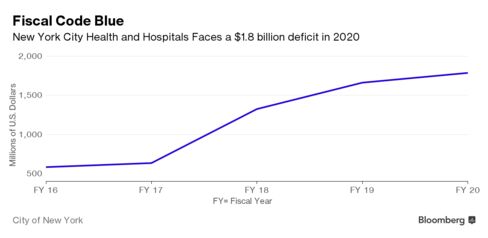
New York Hospitals Facing Fiscal Code Blue

http://www.bloomberg.com/politics/articles/2016-08-22/new-york-city-hospitals-seen-unwilling-to-take-stronger-medicine?utm_campaign=KHN%3A+Daily+Health+Policy+Report&utm_source=hs_email&utm_medium=email&utm_content=33278487&_hsenc=p2ANqtz–Ua5Q-PC5Hs3i1ni8bTaDNOfHhzF8R8meSEL9ZdWL6LejSQMUC3wLCDN9J_cuBB9IHRmZmF7BdmyqhMlNtFPa8KBOrzA&_hsmi=33278487

New York City’s public hospitals are in critical condition with rising costs and plummeting revenue. There’s no dispute about that diagnosis. The problem is with Mayor Bill de Blasio’s proposed cure, according to health policy makers, hospital administrators and budget watchdogs.

As NYC Health + Hospitals President Ram Raju describes it, the largest U.S. municipal-healthcare provider is an ailing system of 11 hospitals that’s losing revenue because of increased competition from non-profit hospitals for Medicaid patients and drastic cuts in federal and state aid for indigents.

His prescription: shift its 40,000-plus employees into a system of neighborhood clinics and transform campuses into affordable housing and long-term care, build enrollment of its MetroPlus insurance plan and persuade federal and state governments to spend more. That aid is projected to fall by almost $1 billion -– from $2.2 billion in FY16 to $1.4 billion in 2020.

Drug and Device Makers Pay Thousands of Docs with Disciplinary Records

http://www.healthleadersmedia.com/physician-leaders/drug-and-device-makers-pay-thousands-docs-disciplinary-records?spMailingID=9400653&spUserID=MTMyMzQyMDQxMTkyS0&spJobID=981898992&spReportId=OTgxODk4OTkyS0

Physicians whose state boards have sanctioned them for harming patients, unnecessarily prescribing addictive drugs, bilking federal insurance programs, and even sexual misconduct nonetheless continue to receive payments for consulting, giving talks about products, and more.

Cut Healthcare Spending or Face the Public Option

http://www.healthleadersmedia.com/finance/cut-healthcare-spending-or-face-public-option?spMailingID=9394331&spUserID=MTMyMzQyMDQxMTkyS0&spJobID=981810720&spReportId=OTgxODEwNzIwS0#

“If we don’t get a handle on spending at some point, we will have a government-financed system,” predicts the head of the Pacific Business Group on Health.”

Former Sacred Heart physician gets 2 years for role in kickback scheme

http://www.chicagotribune.com/news/ct-sacred-heart-hospital-sentencing-met-20160812-story.html

Sacred Heart sentence

Venkateswara Kuchipudi, right, walks with his lawyer Theodore Poulos outside the Dirksen U.S Courthouse on Aug. 12, 2016, after Kuchipudi was sentenced to two years in prison for his part in a fraud scheme at the now-shuttered Sacred Heart Hospital.

http://www.beckershospitalreview.com/legal-regulatory-issues/former-sacred-heart-physician-gets-2-years-for-role-in-kickback-scheme.html


Is UC Davis Medical Center Skimping On Care For The Poor?

Is UC Davis Medical Center Skimping On Care For The Poor?

Leslie Love_770

For at least 20 years, Leslie Love relied on the UC Davis Medical Center’s hospital and clinics for her health care. Her children and grandchildren went to the same doctors there.

“They cared about me,” said Love, a 57-year-old teacher’s assistant who lives near the academic medical center, which is located in Sacramento. “There’s people there that I can trust.”

But that trust was recently broken: Love has been fighting for follow-up care since her knee surgery at UC Davis in 2014. Love’s current Medi-Cal managed care plan, Health Net, ended its contract with the UC Davis Health System in January 2015. As a result, Love could no longer see the physicians there who had treated her knee.

The pullout, which affected an estimated 3,700 patients at the time, means that Health Net’s now nearly 123,000 Medi-Cal managed care enrollees in Sacramento County can no longer seek primary care at UC Davis.

Ever since, tension has been building over what some critics say is limited access for Medi-Cal patients at UC Davis’ health clinics.

Because it is financed partly by state taxpayers, the UC Davis Health System — like all University of California hospitals and clinics — is considered a public institution with a mandate to care for the poor.

That’s why some patients and their advocates are frustrated. They say UC Davis is not fulfilling its mission as a public hospital because the health system generally no longer accepts primary care patients covered by Medi-Cal managed care contracts. Medi-Cal patients still can receive specialized and emergency room care, as well as in-hospital stays.

A state-by-state breakdown of 71 rural hospital closures

http://www.beckershospitalreview.com/finance/a-state-by-state-breakdown-of-71-rural-hospital-closures.html

More than 70 rural hospitals have closed since 2010 — and many more may be headed down the same path.

Rural hospitals are facing a myriad of financial challenges, and those in states that have not expanded Medicaid are feeling the most financial pressure. Sixty-three percent of hospitals vulnerable to closure are in states that have not expanded Medicaid, according to a report from iVantage Health Analytics, a firm that compiles a hospital strength index based on data about financial stability, patients and quality indicators.

Here are 25 states that have closed at least one rural hospital since 2010, according to research from the North Carolina Rural Health Research Program. For the purposes of its analysis, the NCRHRP defined a hospital closure as the cessation in the provision of inpatient services. Although all of the facilities listed below no longer provide inpatient care, many of them still offer services, including outpatient care, imaging, emergency care, urgent care, primary care or skilled nursing and rehabilitation services.

What will happen with healthcare policy under President Trump … or … Clinton?

http://www.modernhealthcare.com/article/20160723/MAGAZINE/307239984

The November elections surely won’t end the nonstop, eight-year political war over the shape of the U.S. healthcare system. But the ballot results likely will determine whether the changes driven by the Affordable Care Act continue in the same direction or the system returns to its less-regulated, pre-ACA contours.

Heading into this week’s Democratic National Convention, Hillary Clinton has promised to preserve and expand the ACA’s coverage expansions and delivery system reforms. Donald Trump, who accepted the Republican nomination last week, says he wants to repeal them, without offering much detail about what he would put in their place. The fate of the victor’s proposals, however, will depend heavily on the partisan makeup of Congress.

The clearest scenario is if Trump wins and his party retains control of both the House and the Senate, which would enable conservatives to repeal or roll back the ACA and implement at least some of the proposals outlined in the GOP party platform and the recent House Republican leadership white paper on healthcare. But there are divisions even among conservatives over issues such as Medicare restructuring and how to help Americans afford health insurance. And Senate Democrats almost certainly would use their filibuster power to block major ACA changes.

If Clinton wins and Democrats take control of both the Senate and the House—which is considered unlikely—she might be able to push through proposals such as increasing funding for federally qualified community health centers. But Senate Republicans also could use the filibuster to foil her. In the more likely scenario of a Democratic-controlled Senate and a GOP-controlled House, it’s not clear how much Clinton could achieve through the legislative process.

Could Trump loss spur ACA deal with Clinton?

http://www.modernhealthcare.com/article/20160806/MAGAZINE/308069967?utm_campaign=KHN:%20Daily%20Health%20Policy%20Report&utm_source=hs_email&utm_medium=email&utm_content=32680906&_hsenc=p2ANqtz-8nP5ZXs-xTx8YLmsU1xy2D7TA9W-YZGGEprO1iMVPktjne-ajvgjdNOgE7EhYYIrcsUGRYbMfLZjXQgfzB6vtOj6qj7w&_hsmi=32680906

With Donald Trump’s presidential campaign faltering, Republican health policy experts are gaming out Plan B for working with a Hillary Clinton administration to achieve conservative healthcare goals.

Their focus is on a possible “grand bargain” that would give conservative states greater flexibility to design market-based approaches to make coverage more affordable and reduce spending in exchange for covering low-income workers in non-Medicaid expansion states. A key element, conservative experts say, would be for a Clinton administration to make it easier for states to obtain Section 1332 waivers under the Affordable Care Act. Those waivers allow states to replace the law’s insurance exchange structure with their own innovative models.

While none are ready to sign on yet, congressional Republicans would have to agree to shore up the ACA’s struggling exchange markets by paying insurers for enrolling sicker populations and continuing to help low-income enrollees’ with cost-sharing responsibilities. House Republicans are challenging the cost-sharing subsidies in court.