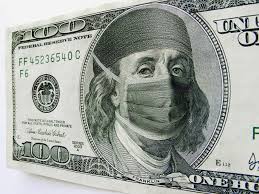
US For-profit Hospital Outlook Holds Stable

http://www.healthleadersmedia.com/finance/us-profit-hospital-outlook-holds-stable?spMailingID=10772724&spUserID=MTY3ODg4NTg1MzQ4S0&spJobID=1140471104&spReportId=MTE0MDQ3MTEwNAS2

Moody’s foresees modest revenue growth, flat margins over the next 12 to 18 months; Profit margins will stabilize after a significant drop between 2015 and 2016.

The outlook for the for-profit hospital industry remains stable over the near term, with earnings expected to grow in the low-single digits over the next 12 to 18 months, while volume and pricing trends will continue to be modestly positive, Moody’s Investors Service says.

“Positive same-facility revenue growth and flat margins drive our stable outlook for the US for-profit hospital sector,” Moody’s Senior Vice President Jessica Gladstone said in a media release Thursday.

“Aggregate EBITDA will grow between 2.5% and 3.5% over the next year or so. Margins will hold steady as company-specific actions offset multiple industry challenges, including higher wage and benefits expense stemming from nursing shortages and increased physician employment.”

Gladstone says many companies’ margins will benefit as they integrate acquisitions and divest less-profitable hospitals and other facilities.

Moody’s projects patient volumes to increase 1% to 2% over the next 12 to 18 months, with declining unemployment and an aging population among the macro trends that will spur demand for healthcare.

However, structural shifts in payer programs that to reduce utilization and the cost of care by shifting patients to lower-cost settings will offset these positive trends, Moody’s says.

Higher private payer rates will be the main driver of revenue growth over Moody’s outlook period. Medicare rates for inpatient services will rise, though cuts to laboratory and outpatient reimbursement and reduced Medicaid disproportionate share hospital payments will constrain growth.

Hospitals will continue to employ specialist physicians and make capital improvements for more profitable procedures, contributing to pricing growth.

Political uncertainty doesn’t change long-term outlook for healthcare, Fitch says

http://www.beckershospitalreview.com/finance/political-uncertainty-doesn-t-change-long-term-outlook-for-healthcare-fitch-says.html

Image result for long term healthcare industry outlook

Fitch Ratings said it maintains a stable outlook and sector rating for healthcare, even as the current political climate generates uncertainty.

The agency initially published its 2017 outlook for the industry last December, shortly after the 2016 presidential election. Since then, the agency said rating actions on healthcare companies have primarily been affirmations, and it believes the medium- to long-term fundamental outlook for healthcare is intact. Fitch analysts added the drivers of healthcare trends have not significantly changed.

“As the industry struggles to meet the cost burden of increasing healthcare demand, the long-term solution will require finding a balance between an individual’s access to healthcare and its affordability,” Megan Neuburger, managing director of U.S. Corporates at Fitch, said in a news release. “Without any concrete solutions currently on the table, near-term uncertainty may force providers to rethink aspects of their business, but this is unlikely to overhaul the industry’s broader dynamics.”

Fitch cites a number of issues it believes are current risks to healthcare, including repeal and replacement of the ACA, drug pricing, the shift from fee-for-service to value-based care and healthcare consumerism.

The GOP’s ACA replacement plan was pulled from the House floor last month. However, Fitch said HHS could still potentially cut funding for federal cost-sharing subsidies that help individuals purchase insurance coverage.

Additionally, Fitch said federal lawmakers have introduced legislation with the goal of lowering drug prices. “Policy objectives are aimed at addressing both drug manufacturers taking advantage of supply dislocations to increase prices on established products and hefty price tags for new, truly innovative therapies,” the agency said.

As far as the shift to value-based care, the agency believes “both political parties are philosophically aligned on the benefits of alternative payment models like the Medicare Comprehensive Joint Replacement bundle, so they are likely to continue in some form, although the role government will explicitly play is still up for debate.” And regarding healthcare consumerism, Fitch noted patients’ desire for price transparency will continue as they take on more financial responsibility for their care.

Moody’s maintains stable outlook on for-profit hospital sector

http://www.beckershospitalreview.com/finance/moody-s-maintains-stable-outlook-on-for-profit-hospital-sector-033117.html

OR Efficiencies

Moody’s Investors Service has maintained its stable outlook on the U.S. for-profit hospital sector for 2017, as it expects higher reimbursement rates from private payers to drive revenue growth.

Over the next 12 to 18 months, Moody’s expects for-profit hospitals to benefit from a 1 to 2 percent rise in patient volumes. The debt rating agency said the increase will be driven by higher demand for healthcare services due to decreasing unemployment and an aging population. However, programs that aim to reduce utilization and cost of care will offset this positive trend, according to Moody’s.

The debt rating agency expects higher private payer rates to drive revenue growth at for-profit hospitals. Moody’s said this growth will be constrained by cuts to laboratory and outpatient reimbursement and reduced Medicaid disproportionate share hospital payments.

“Positive same-facility revenue growth and flat margins drive our stable outlook for the U.S. for-profit hospital sector,” said Moody’s Senior Vice President Jessica Gladstone. “Margins will hold steady as company-specific actions offset multiple industry challenges, including higher wage and benefits expense stemming from nursing shortages and increased physician employment.”

Many for-profit hospital operators are divesting less-profitable facilities and integrating acquisitions, which will benefit their margins, according to Ms. Gladstone.

5 health systems with strong finances

http://www.beckershospitalreview.com/finance/5-health-systems-with-strong-finances-032117.html

Here are five health systems with strong operational metrics and solid financial positions according to recent reports from Fitch Ratings, Moody’s Investors Service and S&P Global Ratings.

Note: This is not an exhaustive list. Health system names were compiled from recent credit rating reports and are listed in alphabetical order.

1. Froedtert Health has an “AA-” rating and positive outlook with S&P. The system has healthy financial metrics, and its market share in a competitive service area is improving, according to S&P. The debt rating agency expects Froedtert’s financial profile to remain consistent over the next one to two years.

2. St. Joseph, Mich.-based Lakeland Hospitals has an “AA-” rating and stable outlook with Fitch. The health system has a strong financial profile and leading market position, according to Fitch.

3. Mercy Health has an “Aa3” rating and stable outlook with Moody’s. The St. Louis-based system’s balance sheet measures and financial performance have improved in the last three years, according to Moody’s. The debt rating agency expects Mercy Health’s operating margins to continue to improve.

4. Seattle Children’s Healthcare System has an “Aa2” rating and stable outlook with Moody’s. The system has strong balance sheet measures and operating performance, according to Moody’s. The debt rating agency expects Seattle Children’s Healthcare System’s overall profitability to remain strong and its debt coverage measures to improve.

5. Richmond-based Virginia Commonwealth University Health System has an “Aa3” rating and stable outlook with Moody’s. The health system has solid operating performance and a strong credit profile, according to Moody’s. The debt rating agency expects the health system to sustain cash flow margins at close to current levels and maintain its liquidity.

Fitch: Changes to Medicaid in ACA repeal bill pose risks for hospitals

http://www.beckershospitalreview.com/finance/fitch-changes-to-medicaid-in-aca-repeal-bill-pose-risks-for-hospitals.html

Image result for hospital credit ratings

House Republicans’ proposed ACA repeal and replacement plan, known as the American Health Care Act, calls for changes to Medicaid that expose states and hospitals to new fiscal risks, according to a Fitch Ratings report.

The AHCA would eliminate Medicaid’s entitlement structure and restructure the program’s federal funding to a per-capita cap system on Jan. 1, 2020. This change is intended to slow Medicaid spending growth. The Kaiser Commission on Medicaid and the Uninsured estimates switching to a per-capita cap system would reduce federal spending on Medicaid by $1 trillion (or 26 percent) over 10 years. This reduction would require states to make significant budgetary changes and could result in reduced reimbursement for hospitals, according to the report.

The AHCA calls for the government to freeze expanded Medicaid programs on Jan. 1, 2020, and restrict funding only to people who were enrolled in the expanded programs as of Dec. 31, 2019. Under the ACHA, states that expanded Medicaid “will be faced with a unique policy predicament of denying Medicaid access to individuals who would otherwise qualify beginning in 2020, or taking on significant costs they had anticipated would be bored largely by the federal government,” according to Fitch.

Moody’s: GOP’s American Health Care Act is credit negative for nonprofit hospitals

http://www.beckershospitalreview.com/finance/moody-s-gop-s-american-health-care-act-is-credit-negative-for-nonprofit-hospitals.html

OR Efficiencies

If House Republicans’ proposed ACA repeal and replacement plan, known as the American Health Care Act, were to become law in its current form it would be credit negative for nonprofit hospitals, according to Moody’s Investors Service.

The components of the AHCA most likely to negatively affect hospitals are transitioning federal Medicaid payments to a per-capita payment to the states, the Medicaid expansion freeze in 2020 and how subsidies are calculated for individuals who purchase insurance on the exchanges, according to Moody’s.

Under the legislation, the uninsured rate would rise, which would cause hospitals’ bad debt and uncompensated care costs to increase, according to Moody’s.

The AHCA’s retention of Medicaid expansion and elimination of scheduled disproportionate share cuts for states that did not expand Medicaid would have a positive impact on nonprofit hospitals, according to Moody’s. However, the rating agency said the positive effects are not enough to compensate for the credit negative components of the AHCA.

3 Republican concepts for replacing the ACA — and what they mean

http://www.healthcaredive.com/news/3-republican-concepts-for-replacing-the-aca-and-what-they-mean/437475/

The bottom line

These policy ideas popular among conservatives could certainly push health insurance costs down for some — like those with few healthcare needs and reliable income — but they also would undoubtedly offer fewer benefits to those with low incomes and high healthcare costs.

“The value of the policies that insurers are offering is going to go down under all these options,” Blumberg said. “They’re going to end up attracting the higher needs population and they can’t sustain that.”

Hospitals would see significant revenue losses if millions lose coverage under repeal of the ACA and are unable to afford new coverage under the replacement plans the GOP has put forward. Some executives have warned they would have to cut vital services, such as behavioral health.

A report prepared for the American Hospital Association found that hospital revenues would decrease nearly $400 billion between 2018 and 2026 with ACA repeal. The plans put forward by Republicans would barely dent that projection, experts say.


Hospital revenues are projected to decrease by $400 billion between 2018 and 2026 under ACA repeal, according to the AHA.


The leaders of the American Hospital Association and Federation of American Hospitals have written to President Donald Trump asking him not to repeal the ACA without an adequate replacement.

“Losses of this magnitude cannot be sustained and will adversely impact patients’ access to care, decimate hospitals’ and health systems’ ability to provide services, weaken local economies that hospitals help sustain and grow, and result in massive job losses,” they wrote. “As you know, hospitals are often the largest employer in many communities, and more than half of a hospital’s budget is devoted to supporting the salaries and benefits of caregivers who provide 24/7 coverage, which cannot be replaced.”

Republicans continue to debate whether, how and when to replace the ACA. Just as the reform law had major impacts on the industry, the process of finding alternatives will have significant consequences as well.


CHS to sell 25 more hospitals after $1.7B loss in 2016

http://www.healthcaredive.com/news/chs-to-sell-25-more-hospitals-after-17b-loss-in-2016/436555/

Dive Brief:

Dive Insight:

The downfall of CHS continued into the fourth quarter of 2016, although it could have been worse. On a per share basis, earnings came in at 46 cents per share while financial analysts had predicted earnings of 12 cents per share, according to an Associated Press report.

How CHS will proceed from here remains unclear. The hospital operator divested from dozens of hospitals last year and deals to sell additional hospitals are in the works. Reports surfaced last year that CHS was considering a sale, but it may be difficult to find a buyer willing to take on debt accumulated by CHS.

In 2016, CHS’ net losses were “primarily related to impairment charges totaling approximately $315 million to reduce the value of long-lived assets,” the earnings report states. “These impairment charges were partially offset by the gain of $91 million on the sale of a majority ownership interest in the company’s home care division, which closed on Dec. 31, 2016.”

CHS has made some progress paying off its debt, but there is still a long way to go. Long-term debt totaled $16.5 billion at the end of 2015 and dipped to $14.8 billion at the end of 2016. The hospital operator has entered into agreements and letters of intent, “consisting of ten separate contemplated transactions,” to divest the additional 25 hospitals, which represent about $3.0 billion of 2016 net revenue.

6 latest hospital bankruptcies, closures

http://www.beckershospitalreview.com/finance/6-latest-hospital-bankruptcies-closures-020717.html

Image result for hospital bankruptcies

From reimbursement landscape challenges to dwindling inpatient volumes, many factors lead hospitals to file for bankruptcy or close.

Here are six hospitals that have filed for bankruptcy or closed since Dec. 1, starting with the most recent.

1. Louisiana Heart Hospital in Lacombe and its affiliated medical group filed for Chapter 11 bankruptcy Jan. 30 and will close by the end of February. The hospital has faced financial challenges in recent years, as it struggled to balance shrinking reimbursements with rising operating costs.

2. North Texas Medical Center, which is owned by the Gainesville Hospital District, filed for Chapter 9 bankruptcy Jan. 17. The hospital’s board approved a partnership agreement with King of Prussia, Pa.-based Universal Health Services in December. On Jan. 24, the bankruptcy court approved a debtor-in-possession loan that will allow UHS to provide financial support to North Texas Medical Center during the course of the bankruptcy case.

3. The public trust that operates Atoka (Okla.) County Medical Center filed for Chapter 9 bankruptcy Jan. 10. The critical access hospital is about $16 million in debt.

4. North Philadelphia Health System filed for Chapter 11 bankruptcy Dec. 30 after years of financial troubles. NPHS currently operates two facilities in Philadelphia: Girard Medical Center, a 168-bed psychiatric hospital, and Goldman Clinic, a substance abuse treatment center.

5. Marshalltown-based Central Iowa Healthcare, which includes a 49-bed acute care hospital, an outpatient center and four primary care clinics, filed for Chapter 11 bankruptcy Dec. 20. Interested parties are bidding on CIH’s assets. A hearing to approve a sale to the highest bidder is scheduled for March 17.

6. Indianapolis-based Community Health Network closed Community Westview Hospital Dec. 16 after a gradual step-down of services over the past few years. When the hospital closed, many of its services were relocated to other Community Health Network sites in the area.

CHI’s operating loss swells to $153.9M in Q2

http://www.beckershospitalreview.com/finance/chi-s-operating-loss-swells-to-153-9m-in-q2.html

Cash HospitalCash Hospital

Catholic Health Initiatives, a nonprofit 103-hospital system based in Englewood, Colo., saw revenue increase in the second quarter of fiscal year 2017 but ended the period with an operating loss, according to recently released bondholder documents.

CHI said operating revenues climbed to $4.2 billion in the second quarter of FY 2017, up from $4 billion in the same period of the year prior. The increase was largely attributable to higher net patient service revenue, which grew 5.2 percent year over year to $4 billion in the second quarter of FY 2017. CHI said $93.4 million of net patient service revenue was due to recently completed acquisitions.

However, after factoring in a year-over-year increase in expenses, CHI ended the most recent quarter with an operating loss. CHI reported an operating loss of $153.9 million in the second quarter of fiscal year 2017, compared to an operating loss of $112.1 million in the same period of the year prior.

CHI said operating results declined in the second quarter of FY 2017 across several of its regions, including Nebraska, Texas, Kentucky, Arkansas, North Dakota, Minnesota and Iowa. The declining results in those regions were partially offset by improvements in the Ohio, Tennessee, Colorado and Pacific Northwest regions.

In a statement to Becker’s, a CHI spokesman said, “While financial results in the second quarter of the 2017 fiscal year demonstrated a favorable trend over the previous quarter, CHI continues its focus on a comprehensive performance-improvement and expense-reduction program, implementing a wide array of clinical and operational changes. The organization is confident that this disciplined, rigorous effort will yield further positive results in financial performance over the next six months of this fiscal year.”

In the first quarter of FY 2017, CHI reported an operating loss of $217.8 million, compared to an operating surplus of $7.8 million in the same period of the year prior.